 Oil-
Oil-
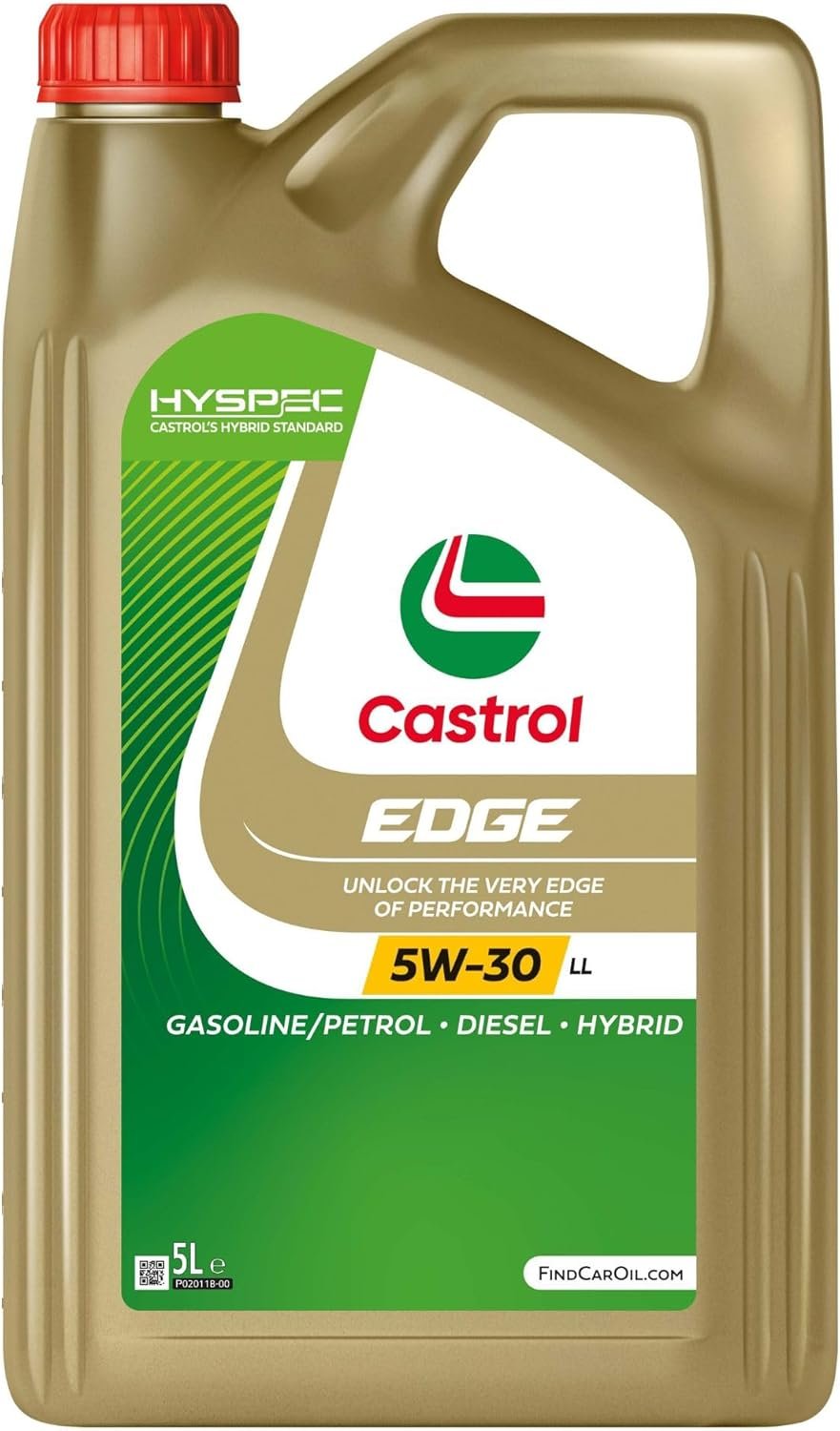
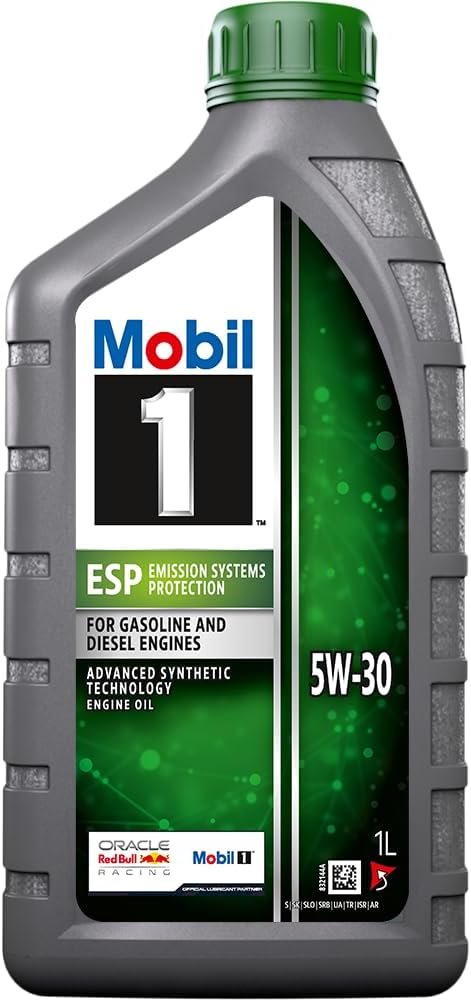
As an Amazon Associate, we may earn from qualifying purchases. This doesn't affect our recommendations — we only suggest oils that hold the exact OEM approval for your engine.
Best Engine Oil for Renault Megane 2 1.5 dCi (K9K 732) – Capacity & Specifications
The Renault Megane 2 1.5 dCi is powered by the K9K 732, one of the most significant small diesel engines ever built. Since its debut in 2001, the K9K family has been produced in excess of 25 million units, making it one of the most widely manufactured small diesel engines in automotive history. Its combination of low fuel consumption, reasonable performance, and compact dimensions saw it adopted not only across Renault’s own range but also licensed to Nissan, used in Dacia models, and even found under the bonnet of the Smart Forfour and some early Dacia Lodgy variants.
For the Megane 2, the K9K 732 variant was available in 86 hp and 106 hp outputs between 2002 and 2009. Despite its widespread popularity, this engine has specific and well-documented lubrication requirements. Using the correct oil — both in specification and viscosity — directly affects how long the turbocharger lasts, whether the injectors seal properly, and how long the main bearings survive. Getting the oil choice wrong on this engine is an expensive mistake.
Quick Answer: Recommended Oil
- Primary specification: ACEA C3 / Renault RN0720, 5W-30
- Alternative viscosity: 5W-40 (ACEA C3, RN0720 approved) if 5W-30 is unavailable
- Oil capacity (without filter): 4.3 litres
- Oil capacity (with filter change): 4.5 litres
- Change interval: 12,000 miles or 12 months under normal conditions; 6,000–9,000 miles recommended for high-mileage engines or urban use
The K9K 732 Engine
The K9K is a 1,461 cc four-cylinder diesel engine built around a cast-iron block with an aluminium cylinder head. It uses a single overhead camshaft (SOHC) with belt drive, common rail direct injection, and a variable geometry turbocharger (VGT). Bore is 76 mm, stroke is 80.5 mm, and compression ratio sits at 18.0:1 across both power outputs. The 86 hp version produces 200 Nm of torque, while the 106 hp variant delivers 240 Nm.
The K9K was engineered for frugality. In standard form it returns well over 50 mpg on a combined cycle, which made the Megane 2 one of the more economical family hatches of its era. The variable geometry turbocharger — supplied by Garrett on most units — allows the engine to generate strong low-rev torque without a large, laggy turbine. This same VGT mechanism is one of the engine’s more sensitive components, and its longevity is directly tied to oil quality and change frequency.
The engine shares its fundamental architecture across a wide platform. Nissan used it as the HR15DE’s diesel counterpart in the Qashqai J10, Juke, and Note. Dacia fitted it to the Sandero, Logan, and Duster. This cross-platform use means parts, failure patterns, and remedies are well-documented across multiple owner communities.
Understanding Renault Oil Specifications: RN0720 vs RN0710
Renault’s engine oil approval system uses proprietary designations that sit above standard ACEA categories. For the Megane 2 1.5 dCi, the correct specification is RN0720 — and understanding why this matters, particularly compared to the older RN0710, is important when the K9K is fitted with a diesel particulate filter (DPF).
RN0710 is Renault’s older diesel oil norm. It corresponds broadly to ACEA B3/B4 and was designed for pre-DPF diesel engines. It has no restriction on sulphated ash content, which means it can cause DPF blockage over time.
RN0720 is a low-SAPS (low sulphated ash, phosphorus, and sulphur) specification. It aligns with ACEA C3 and was introduced specifically for engines with diesel particulate filters. The 1.5 dCi K9K in later Megane 2 variants — particularly post-2006 with Euro 4 compliance equipment — may carry a DPF, and even on earlier DPF-free versions, RN0720’s superior thermal stability and reduced deposit formation make it the correct choice.
In practical terms, RN0720 oils resist oxidation at the elevated temperatures seen around the turbocharger, maintain film strength during cold starts, and leave fewer combustion byproducts that could clog injector nozzles. Using a non-low-SAPS oil in a DPF-equipped K9K can accelerate filter regeneration cycles and shorten DPF service life significantly.
Always use RN0720 on the K9K 732. Do not substitute RN0710 on post-2004 vehicles.
Technical Specifications
| Specification | Detail |
|---|---|
| Engine family | Renault K9K |
| Variant | K9K 732 |
| Displacement | 1,461 cc |
| Layout | Inline-4, SOHC |
| Bore × Stroke | 76.0 mm × 80.5 mm |
| Compression ratio | 18.0:1 |
| Power output | 86 hp (63 kW) / 106 hp (78 kW) |
| Torque | 200 Nm (86 hp) / 240 Nm (106 hp) |
| Fuel system | Common rail direct injection (Delphi) |
| Turbocharger | Garrett VGT (variable geometry) |
| Oil capacity (sump) | 4.3 litres |
| Oil capacity (with filter) | 4.5 litres |
| Recommended viscosity | 5W-30 |
| Alternative viscosity | 5W-40 |
| OEM oil norm | Renault RN0720 |
| ACEA category | C3 |
| Recommended interval | 12,000 miles / 12 months |
Oil Change Intervals
Renault’s official service interval for the Megane 2 1.5 dCi runs to around 12,000 miles or 12 months, whichever comes first. However, K9K specialists and independent mechanics who work regularly on high-mileage examples broadly agree that this interval is conservative only for vehicles used predominantly on motorway routes where the engine reaches and sustains full operating temperature.
For urban or mixed driving — the profile of the majority of Megane 2 owners — a more cautious interval of 6,000 to 9,000 miles is strongly recommended. Stop-start urban driving causes more fuel dilution in the sump oil, which thins the lubricant and reduces its protective film strength. Cold-start wear is disproportionately high on any diesel engine, and the K9K’s turbo and main bearings are among the first components to suffer when oil quality degrades.
If the vehicle is used as a taxi, for delivery driving, or predominantly in low-speed city conditions, treat 6,000 miles as the effective maximum. Always replace the oil filter at every change — an oil filter that carries contaminated oil from the previous service negates much of the benefit of a fresh fill.
Why Correct Oil Matters on the K9K
The K9K 732 relies on oil pressure arriving at the turbocharger shaft within seconds of cold start. The Garrett VGT unit on this engine uses variable vanes to control boost across the rev range. These vanes are actuated by engine oil pressure and are machined to tight tolerances. Even brief oil starvation — caused by degraded oil that has lost viscosity, or a slow-filling cold-start on a partially blocked filter — creates metal-to-metal contact at the vane actuator and bearing surfaces.
The main bearings on the K9K are another area where lubrication quality is critical. The engine’s relatively high compression ratio and the mechanical loads from the injection system place sustained stress on the crankshaft and connecting rod bearings. ACEA C3 oils are formulated with additive packages that specifically protect these bearing surfaces under the temperature and shear conditions present in small high-compression diesels.
The DPF interaction is also meaningful for oil choice. A DPF-equipped K9K regenerates the filter by injecting additional fuel to raise exhaust temperature. Some of that fuel enters the sump through the cylinder walls. Low-SAPS C3 oil has a higher tolerance for fuel dilution before its protective properties are compromised, and its reduced ash content means combustion byproducts do not accelerate filter blockage during regeneration.
Common K9K Problems Related to Oil
Turbocharger wear and failure is the most frequently reported serious failure on the K9K 732. The VGT unit is particularly sensitive to delayed oil changes. When sump oil degrades, it loses its ability to carry heat away from the turbo shaft. The bearing surfaces score, the shaft develops play, and eventually the turbine vanes contact the housing. Early symptoms include a high-pitched whine under load, reduced power, and blue smoke on deceleration. In most cases, this is directly preventable with clean, correctly specified oil changed at appropriate intervals.
Injector copper washer leaks (“Black Death”) are the second major failure mode. The K9K uses Delphi common rail injectors sealed at the cylinder head with copper crush washers. Over time — particularly when an injector is removed and refitted, or when it has been in service for high mileage — these washers fail to seal completely. Combustion gases escape around the injector body and carbonise on the exterior of the injector. The accumulated carbon deposit, commonly called Black Death by Renault technicians and owners, can lock an injector in place so firmly that removal requires specialist tooling. Correct engine oil specification does not prevent Black Death directly, but using the right oil reduces combustion temperatures at the injector tip, slowing the rate of carbon accumulation. Any injector removal on the K9K should be followed by fitting new copper washers — reusing old washers is a false economy.
Main bearing wear on Euro 4 variants (roughly 2005 onward) has been documented in owner communities and in independent assessments of the engine family. This failure typically presents as a knocking noise from the lower engine at idle, worsening with engine load. It is most commonly associated with extended oil change intervals, use of non-approved oil grades, or a combination of both. There is no repair for worn main bearings short of engine replacement or a full bottom-end rebuild. Prevention is straightforward: ACEA C3, RN0720 approved oil, changed no later than every 9,000 miles on a vehicle with a mixed or urban driving profile.
EGR valve fouling is common across all K9K variants. While not a direct oil-related failure, a partially blocked EGR valve increases combustion temperatures and soot loading. Using correctly specified low-SAPS oil reduces the rate at which soot accumulates in the sump, which in turn reduces the abrasive contamination that reaches bearing surfaces through the oil circuit.
Conclusion
The Renault Megane 2 1.5 dCi K9K 732 is a durable and efficient engine when maintained correctly. Its global adoption across Renault, Nissan, Dacia, and other platforms is a testament to its fundamental design, but it demands consistent and correct lubrication to deliver the high mileages it is theoretically capable of. Use 5W-30, ACEA C3, Renault RN0720 approved oil, fill to 4.5 litres with a filter change, and change no later than every 9,000 miles for mixed driving. Respect those parameters and the K9K will serve reliably well beyond 150,000 miles. Neglect them and the turbo or bearings will reach their limit long before that figure.
Our Top Picks
As an Amazon Associate, we may earn from qualifying purchases. This doesn't affect our recommendations — we only suggest oils that hold the exact OEM approval for your engine.