 Oil-
Oil-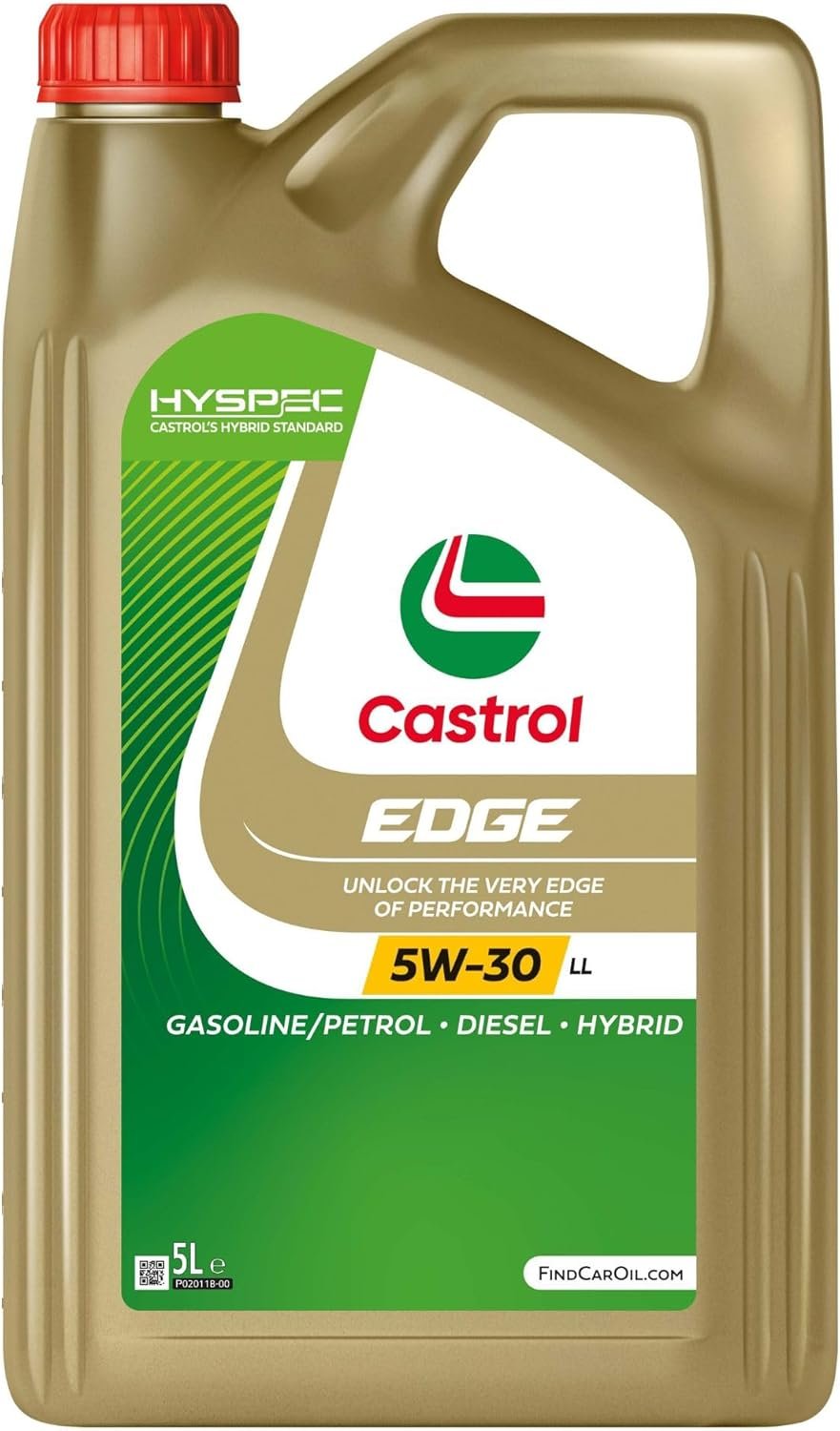
As an Amazon Associate, we may earn from qualifying purchases. This doesn't affect our recommendations — we only suggest oils that hold the exact OEM approval for your engine.
Best Engine Oil for Renault Captur 1.3 TCe (130/140 HP)
The second-generation Renault Captur (2019 onwards) uses the H5Ht turbocharged 1.3-litre petrol engine. Co-developed by the Renault-Nissan-Mitsubishi Alliance and Mercedes-Benz, the H5Ht shares its architecture with the Nissan HR13DDT and the Mercedes M282. It delivers strong low-end torque for a compact crossover, but it has specific oil requirements and several well-documented weak points. This guide covers the correct specification, why RN17 approval is mandatory, and what to watch for as mileage accumulates.
Quick Answer: Recommended Oil
For Renault Captur 1.3 TCe (130/140 HP):
- Recommended viscosity: SAE 5W-30 (alternative: 0W-30)
- Oil capacity: 5.5 litres with filter (5.2 L without)
- Required norms: ACEA C3, RN17
Key point: The H5Ht requires oil meeting the Renault RN17 specification, which aligns with ACEA C3. Using oil that only meets ACEA C2 or a lower-tier specification does not provide adequate protection for the turbocharger and 250-bar direct injection system. Always verify RN17 approval on the bottle before purchase.
The H5Ht Engine: Three Manufacturers, One Block
The H5Ht is the product of an unusual collaboration. Renault and Nissan contributed turbocharging expertise; Mercedes-Benz brought manufacturing precision and direct injection calibration. Built at the Renault factory in Valladolid, Spain, the same hardware appears as the Nissan HR13DDT in the Qashqai and the Mercedes M282 in the A-Class, each with brand-specific calibration.
In the Captur, the H5Ht displaces 1,332cc from four cylinders with an aluminium block and head, a single-scroll water-cooled turbocharger, and 250-bar direct fuel injection. The 130 HP version produces 240 Nm from 1,600 RPM; the 140 HP variant pushes this to 260 Nm. Both use a timing chain, and the cylinder head features an integrated exhaust manifold to minimise turbo spool time. The engine pairs with a six-speed manual or seven-speed EDC dual-clutch automatic.
Technical Specifications: H5Ht
| Specification | Value |
|---|---|
| Displacement | 1,332cc (1.3 litres) |
| Layout | Inline-4, transverse, aluminium block and head |
| Valvetrain | DOHC, 16 valves, timing chain |
| Turbocharger | Single-scroll, water-cooled |
| Power | 130 HP or 140 HP @ 5,500 RPM |
| Torque | 240 Nm (130 HP) / 260 Nm (140 HP) @ 1,600 RPM |
| Fuel System | Direct injection, 250 bar |
| Fuel Type | Petrol, 95 RON minimum |
| Recommended Viscosity | SAE 5W-30 |
| Alternative Viscosity | SAE 0W-30 |
| Oil Capacity (without filter) | 5.2 litres |
| Oil Capacity (with filter) | 5.5 litres |
| ACEA Norm | C3 |
| OEM Norm | RN17 |
Why RN17 and ACEA C3 Are Non-Negotiable
RN17 is Renault’s oil specification for its current turbocharged petrol engines. It mandates a mid-SAPS (Sulphated Ash, Phosphorus, Sulphur) additive package balancing turbocharger bearing protection at extreme temperatures, catalytic converter longevity, and resistance to fuel dilution from direct injection.
ACEA C3 is the European baseline upon which RN17 builds. C3 requires a High Temperature High Shear (HTHS) viscosity of at least 3.5 mPa.s, ensuring the oil film protects turbo bearings under maximum load when oil temperature exceeds 150 degrees Celsius. This is the critical distinction from ACEA C2, which permits a lower HTHS viscosity for marginal fuel economy gains at the cost of reduced high-temperature protection. The H5Ht’s compact turbocharger and relatively high piston speeds for a 1.3-litre engine both demand this additional film strength.
RN17 also specifies oxidation resistance beyond the C3 minimum. The 250-bar direct injection system causes fuel dilution during cold starts as unburned fuel washes past the piston rings into the sump. An RN17-approved oil maintains its viscosity grade and protective properties despite this contamination over a full service interval.
Known Issues: What to Watch For
The H5Ht is fundamentally sound, but several issues have emerged consistently across all three badge-engineered variants.
Timing Chain Stretch
The chain stretches gradually as links wear against sprockets and guides, reaching its service limit around 220,000 km. Symptoms begin with a metallic rattle on cold starts, progressing to rough idle, camshaft timing deviation fault codes, and eventually misfires. If the chain jumps a tooth, the result is bent valves and a destroyed engine. Preventive replacement around 200,000 km is increasingly recommended by independent specialists. Oil quality directly influences chain life because the tensioner depends on consistent oil pressure to maintain correct tension.
Turbo Boost Pipe Detachment
The pipes connecting the turbocharger to the intercooler are secured with factory clamps that are inadequate for the task. Under thermal cycling and boost pressure, these clamps loosen and the pipes detach, causing sudden loss of all boost pressure at any speed. The fix is cheap — upgraded clamps or repositioning existing ones — but the issue recurs, suggesting the factory design is marginal. Garages familiar with the H5Ht often proactively replace the clamps with stronger aftermarket alternatives during routine service.
Carbon Buildup on Intake Valves
Because the H5Ht uses direct injection exclusively, no fuel washes across the intake valves to keep them clean. Crankcase vapours and EGR deposits accumulate as hard carbon on the valve faces, gradually restricting airflow. Symptoms include power loss, hesitation, and misfires. Short urban trips accelerate the problem significantly. Walnut-blasting the intake valves is the established remedy, typically needed between 60,000 and 80,000 miles. Using RN17-approved oil helps indirectly by producing fewer volatile compounds in crankcase vapours.
Oil Consumption
The aluminium block develops measurable oil consumption as piston ring-to-bore clearances open up over time, particularly in engines subjected to frequent cold starts and low-load urban driving. Consumption of 0.5 litres per 1,000 miles is not uncommon above 80,000 miles and does not necessarily indicate a fault, but regular dipstick checks are essential.
Fuel Quality Sensitivity
The 250-bar direct injection system is sensitive to fuel quality. Low-grade petrol accelerates injector fouling and combustion deposits. Using 95 RON from reputable filling stations is the minimum; 97-99 RON premium fuel can reduce the rate of carbon buildup on intake valves.
Best Value: Total Quartz INEO MC3 5W-30 The most affordable RN17-approved option at £30-36 for 5 litres. TotalEnergies is a long-standing Alliance lubricant partner, and this oil is formulated with direct input from the engineers who designed the H5Ht. It lacks premium brand cachet but is engineered specifically for this application. The pragmatic choice for owners who change oil on schedule.
Oil Change Intervals
Renault Official Recommendation:
- Standard service: 15,000 miles or 12 months, whichever comes first
- Maximum extended interval (flexible service): up to 18,600 miles or 2 years
Recommended Practice: 9,000 miles (approximately 15,000 km) or 12 months, whichever comes first.
Renault’s extended interval assumes ideal conditions that rarely exist in British motoring. Direct injection fuel dilution, turbo heat, and the H5Ht’s tendency toward oil consumption mean the oil degrades faster than the service indicator suggests. Independent specialists consistently recommend 15,000 km intervals rather than stretching to the 30,000 km maximum that some service plans permit.
Consider 6,000-8,000 mile intervals if:
- Predominantly short urban journeys under 10 miles
- Frequent cold starts without reaching full operating temperature
- Regular towing or sustained high-load driving (fully loaded on motorway inclines)
- The vehicle has covered more than 80,000 miles
- Oil consumption is noticeable between services
- Previous service history is unknown or inconsistent
Monitor the oil level monthly. A falling level needs topping up with the same specification oil. A rising level signals fuel dilution and warrants an early oil change. Either condition left unchecked stresses the turbocharger bearings, timing chain tensioner, and piston rings.
Conclusion
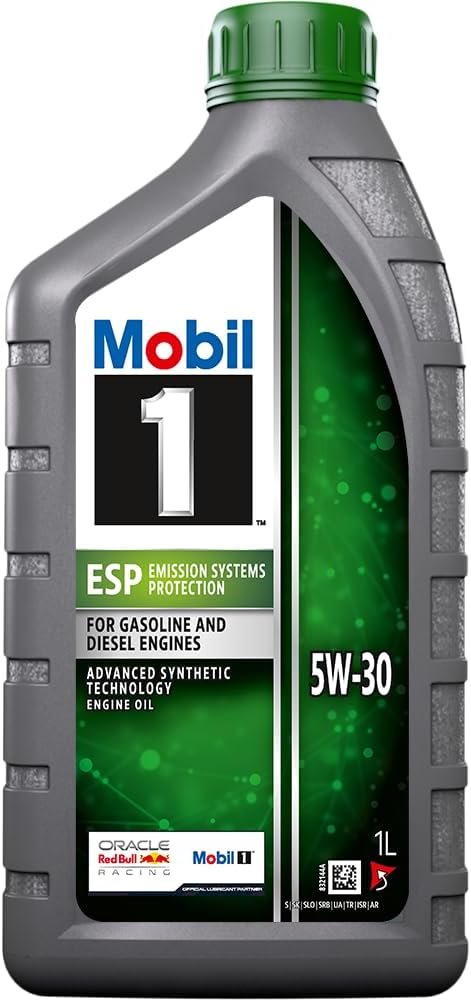
The Renault Captur 1.3 TCe requires SAE 5W-30 engine oil meeting ACEA C3 and RN17, with a capacity of 5.5 litres including the filter. Elf Evolution Full-Tech FE 5W-30 is the factory-fill and safest default. Mobil 1 ESP 5W-30 and Castrol EDGE 5W-30 LL offer premium alternatives for maximum thermal stability. Total Quartz INEO MC3 5W-30 delivers Alliance-developed chemistry at the lowest price. Verify RN17 approval on the bottle, respect 15,000 km change intervals, and check the dipstick monthly. The H5Ht rewards disciplined maintenance with smooth, torquey performance for the life of the car.
Our Top Picks
As an Amazon Associate, we may earn from qualifying purchases. This doesn't affect our recommendations — we only suggest oils that hold the exact OEM approval for your engine.