 Oil-
Oil-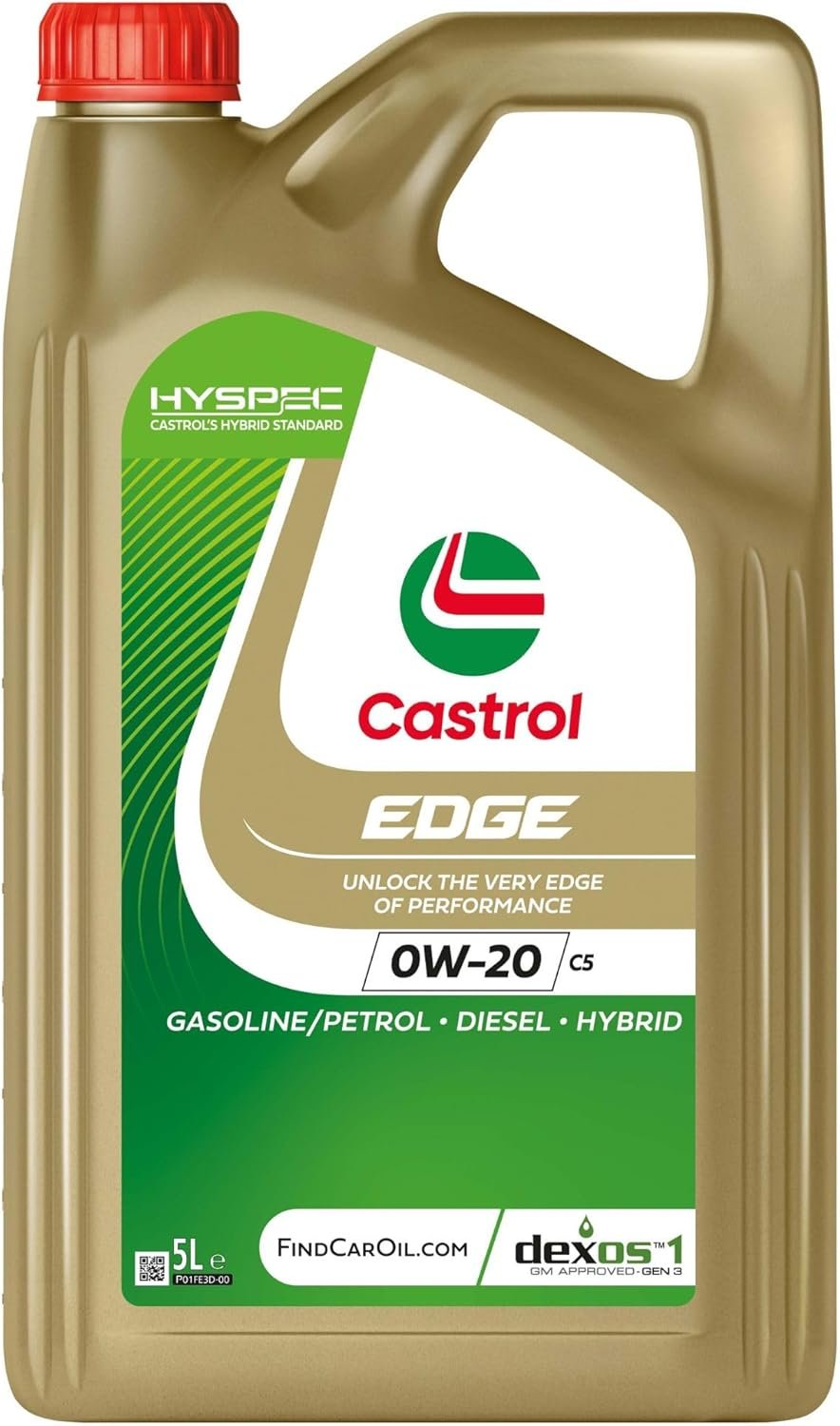
As an Amazon Associate, we may earn from qualifying purchases. This doesn't affect our recommendations — we only suggest oils that hold the exact OEM approval for your engine.
Best Engine Oil for Mazda CX-5 KF 2.0 SKYACTIV-G (165 hp)
The Mazda CX-5 KF, launched in 2017, was built around a simple but bold engineering ambition: extract maximum efficiency from a naturally aspirated petrol engine without resorting to turbocharging. The 2.0-litre SKYACTIV-G carrying the internal code PE-VPS is central to that story. Running a 14.0:1 compression ratio — extraordinarily high for a mass-market petrol unit — it demands lubricant precision that many owners underestimate. Get the oil right and this engine is a long-lived, refined powerplant. Use the wrong grade and the thermal stresses of that compression ratio will find every weakness.
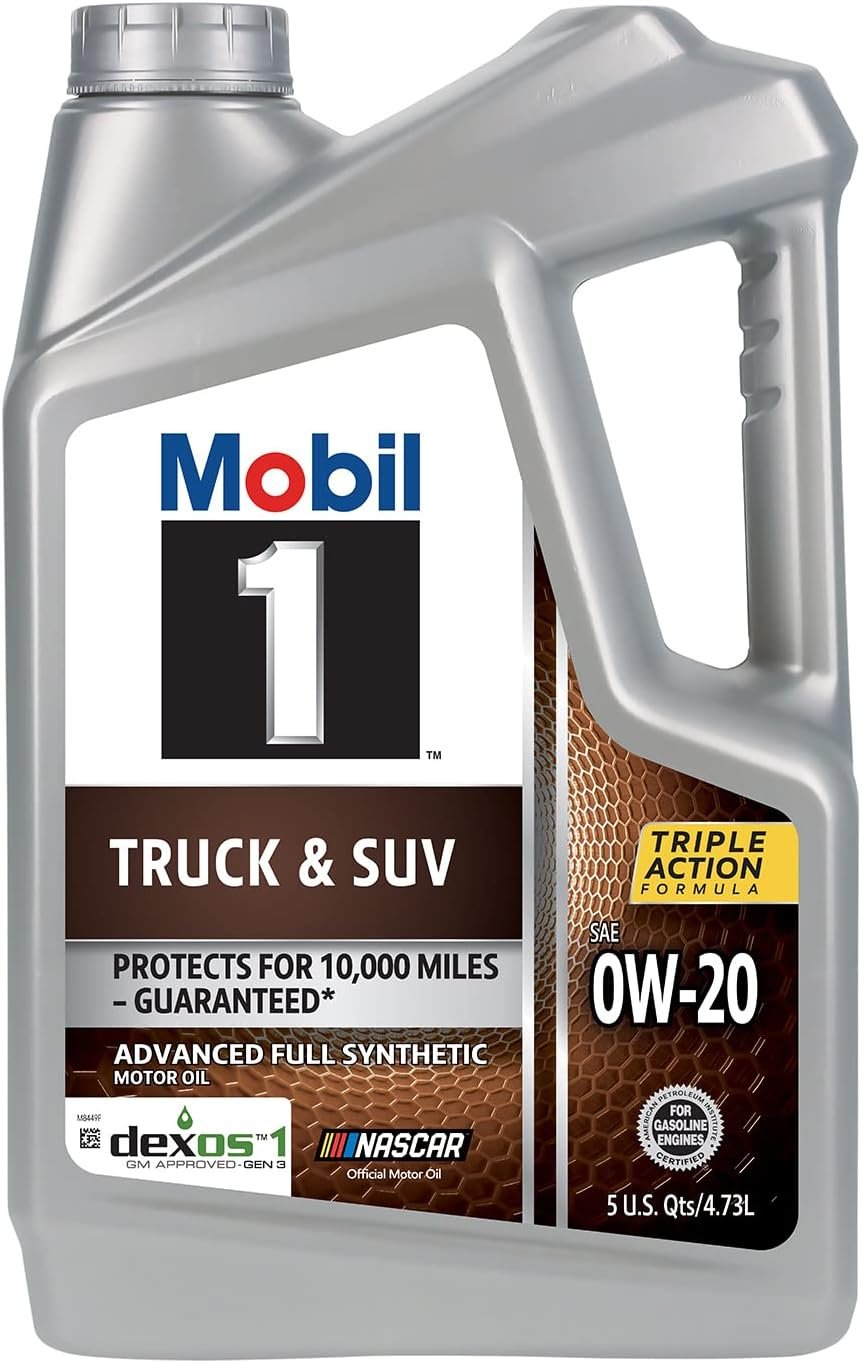
Quick Answer: Recommended Oil
- Primary specification: API SP / ILSAC GF-6A, 0W-20
- Alternative viscosity: 5W-30 (API SP / ILSAC GF-6), acceptable in warm climates or for high-mileage engines
- Oil capacity (drain only): 4.0 litres
- Oil capacity (with filter): 4.2 litres
The PE-VPS 2.0 SKYACTIV-G Engine
SKYACTIV-G is Mazda’s first-generation naturally aspirated direct-injection petrol family, developed in the early 2010s as a response to the prevailing industry trend of downsizing and turbocharging. Mazda took a different route: instead of adding forced induction, engineers pushed geometric compression ratio to 14.0:1 — a figure more commonly associated with diesel engines — while managing knock through an exhaust system designed to extract residual gases rapidly and reduce charge temperature.
The PE-VPS displaces 1,998 cc across a four-cylinder inline layout. Bore and stroke are 83.5 mm × 91.2 mm, giving a mildly over-square long-stroke characteristic that favours low-rpm torque. Maximum power is 165 hp at 6,000 rpm, with 213 Nm of torque peaking at 4,000 rpm. In the CX-5 KF this engine is paired with a 6-speed manual or 6-speed automatic transmission.
The direct injection system operates at up to 200 bar and uses a split injection strategy — injecting fuel in two separate events per cycle — to cool the charge and suppress knock at high compression. Variable valve timing (S-VT) operates on both intake and exhaust camshafts. The exhaust manifold is integrated into the cylinder head, a design that accelerates catalyst light-off and improves thermal management, reducing the likelihood of prolonged rich-running during cold starts.
At 14.0:1 compression, piston ring and cylinder wall clearances are tightly calibrated. The oil film between ring and bore must maintain integrity under peak cylinder pressures higher than typical naturally aspirated engines of similar displacement. This is the mechanical reason behind Mazda’s insistence on low-viscosity, low-HTHS (high-temperature high-shear) lubricants.
Understanding Mazda’s API SP / ILSAC GF-6A Specification
European drivers accustomed to ACEA sequences and OEM-specific approvals sometimes find Mazda’s oil specification unusual. Mazda references API and ILSAC rather than ACEA because SKYACTIV-G engines were engineered primarily to North American and global market standards — markets where API/ILSAC classifications dominate. In practice, the specification is rigorous and fully appropriate for the PE-VPS.
ILSAC GF-6A (International Lubricant Standardization and Approval Committee, category 6A) is the current gold-standard for passenger car petrol engine oils. It was introduced in 2020 and supersedes GF-5. GF-6A requires:
- Low-speed pre-ignition (LSPI) protection tests — critical for turbocharged engines but relevant to any high-compression design
- Improved timing chain wear protection
- Fuel economy retention over the drain interval
- Enhanced oxidation resistance for extended service
API SP is the API classification aligned with ILSAC GF-6A, covering the same test battery. An oil carrying both designations (API SP / ILSAC GF-6A) meets the most current performance requirements.
Why 0W-20? Despite the high compression ratio, Mazda specifies a very low-viscosity 0W-20 for the UK market. This is deliberate. Higher viscosity oils create greater internal drag; in a naturally aspirated engine where every fraction of a percent of mechanical efficiency counts, that drag translates directly into fuel consumption. The SKYACTIV-G was designed with bearing clearances optimised for 0W-20 flow characteristics. The oil also reaches operating viscosity faster at cold start, reducing the window of boundary lubrication when cylinder pressures are already elevated before the engine fully warms.
When to use 5W-30: If the vehicle has accumulated high mileage and oil consumption is a concern, or if you are operating in sustained high-temperature conditions, 5W-30 API SP / ILSAC GF-6 is an acceptable alternative. The slightly higher viscosity provides marginally greater film thickness at operating temperature. Mazda permits this grade but treats 0W-20 as the primary recommendation for new and low-mileage engines.
Technical Specifications
| Parameter | Specification |
|---|---|
| Engine code | PE-VPS |
| Displacement | 1,998 cc |
| Layout | Inline-4, DOHC 16v |
| Bore × Stroke | 83.5 mm × 91.2 mm |
| Compression ratio | 14.0:1 |
| Power output | 165 hp (121 kW) @ 6,000 rpm |
| Torque | 213 Nm @ 4,000 rpm |
| Fuel injection | Direct injection (GDI), up to 200 bar |
| Valve timing | Dual S-VT (intake + exhaust) |
| Recommended oil viscosity | 0W-20 |
| Alternative viscosity | 5W-30 |
| Oil specification | API SP / ILSAC GF-6A |
| Oil capacity (without filter) | 4.0 litres |
| Oil capacity (with filter) | 4.2 litres |
Oil Change Intervals
Mazda recommends oil and filter changes every 12 months or 12,500 miles (approximately 20,000 km) under normal driving conditions, whichever comes first. The CX-5 KF uses an oil life monitoring system based on time and mileage rather than adaptive algorithms.
For UK owners, the 12-month cadence is a sensible hard limit regardless of mileage. Short urban trips are particularly hard on engine oil in naturally aspirated engines because they prevent the oil from reaching full operating temperature, allowing water and fuel vapour to accumulate in the sump. If your driving profile consists mainly of journeys under 10 miles, consider an annual change irrespective of mileage.
In demanding conditions — frequent towing, sustained motorway driving in summer, or track use — a 6-month or 6,000-mile interval is appropriate. The PE-VPS’s high compression ratio means combustion blow-by is marginally greater than lower-compression equivalents, increasing the rate at which soot and acids contaminate the oil.
Why Correct Oil Matters for the PE-VPS
At 14.0:1 compression, the PE-VPS operates with peak cylinder pressures that test the limits of a naturally aspirated petrol engine. The lubricant must maintain an adequate hydrodynamic film on the piston rings and cylinder walls at temperatures well above 100°C at the crown. An oil that shears out of grade — dropping from 0W-20 effective viscosity to something lower under sustained stress — will leave the ring zone underprotected.
Conversely, using an oil that is too viscous (say 5W-40 or 10W-40) causes unnecessary drag on the crankshaft and auxiliary drive. This is not merely a fuel economy concern: thicker oils flow more slowly to the variable valve timing actuators on cold mornings, increasing camshaft wear during the critical first seconds after start-up.
The integrated exhaust manifold also means the oil in the cylinder head is exposed to higher radiated heat than in engines with a separate exhaust manifold. An oil with strong thermal stability and oxidation resistance — both mandated by ILSAC GF-6A — is essential to prevent varnish and deposit formation around the DVVT actuators.
Known PE-VPS Problems Related to Oil
The 2.0 SKYACTIV-G is, by most measures, a reliable engine with a clean record. Failures are relatively uncommon compared to turbocharged competitors. However, a few issues worth noting:
Carbon deposit build-up on intake valves. Direct injection engines spray fuel directly into the cylinder, bypassing the intake valves. Unlike port-injection designs, there is no fuel wash to clean the valve stems and heads. Over time, carbon deposits accumulate on the backs of the intake valves, restricting airflow and causing rough idle, hesitation, or loss of power above 50,000 miles. This is a design consequence of GDI technology rather than an oil-related failure, but using an oil with strong detergency (as required by ILSAC GF-6A) slows the rate of oil mist carbonisation on the valve backs.
Oil consumption in higher-mileage examples. The PE-VPS is not known for excessive oil consumption, but some owners of engines above 80,000 miles report consumption between 0.3 and 0.5 litres per 5,000 miles. This is within Mazda’s acceptable range. Checking the oil level monthly is good practice; on a 4.2-litre fill this engine has limited reserve compared to larger-sump units. Using the correct 0W-20 grade helps here — thicker oils can actually increase consumption in worn engines by raising combustion chamber pressure and forcing oil past ring seals.
Low oil pressure on very early SKYACTIV-G engines (pre-KF). Mazda issued a Technical Service Bulletin addressing oil pump pressure relief valve issues on 2012–2014 engines. The KF generation (2017 onwards) does not carry this problem — the oil pump design was revised — but it is worth knowing when buying a used example to confirm you are looking at a post-2016 build.
Cold-start camshaft noise. A light ticking or rattle at cold start, disappearing within 30 seconds of idle, is reported on some higher-mileage PE-VPS units. This usually relates to the DVVT actuators draining overnight. Using a 0W-20 oil — which flows to the actuators faster than thicker grades — minimises the duration of this condition.
Conclusion
The Mazda CX-5 KF 2.0 SKYACTIV-G is one of the more engineering-coherent naturally aspirated petrol engines in the compact SUV segment. Its 14.0:1 compression ratio is the defining characteristic: it is the source of the engine’s efficiency advantage and the reason Mazda specifies 0W-20 API SP / ILSAC GF-6A rather than the heavier grades common in European OEM specifications. Fill to 4.2 litres with filter, change annually or every 12,500 miles, and check the level monthly. Do that and this engine will reward you with a long, largely trouble-free service life.
Our Top Picks
As an Amazon Associate, we may earn from qualifying purchases. This doesn't affect our recommendations — we only suggest oils that hold the exact OEM approval for your engine.