 Oil-
Oil-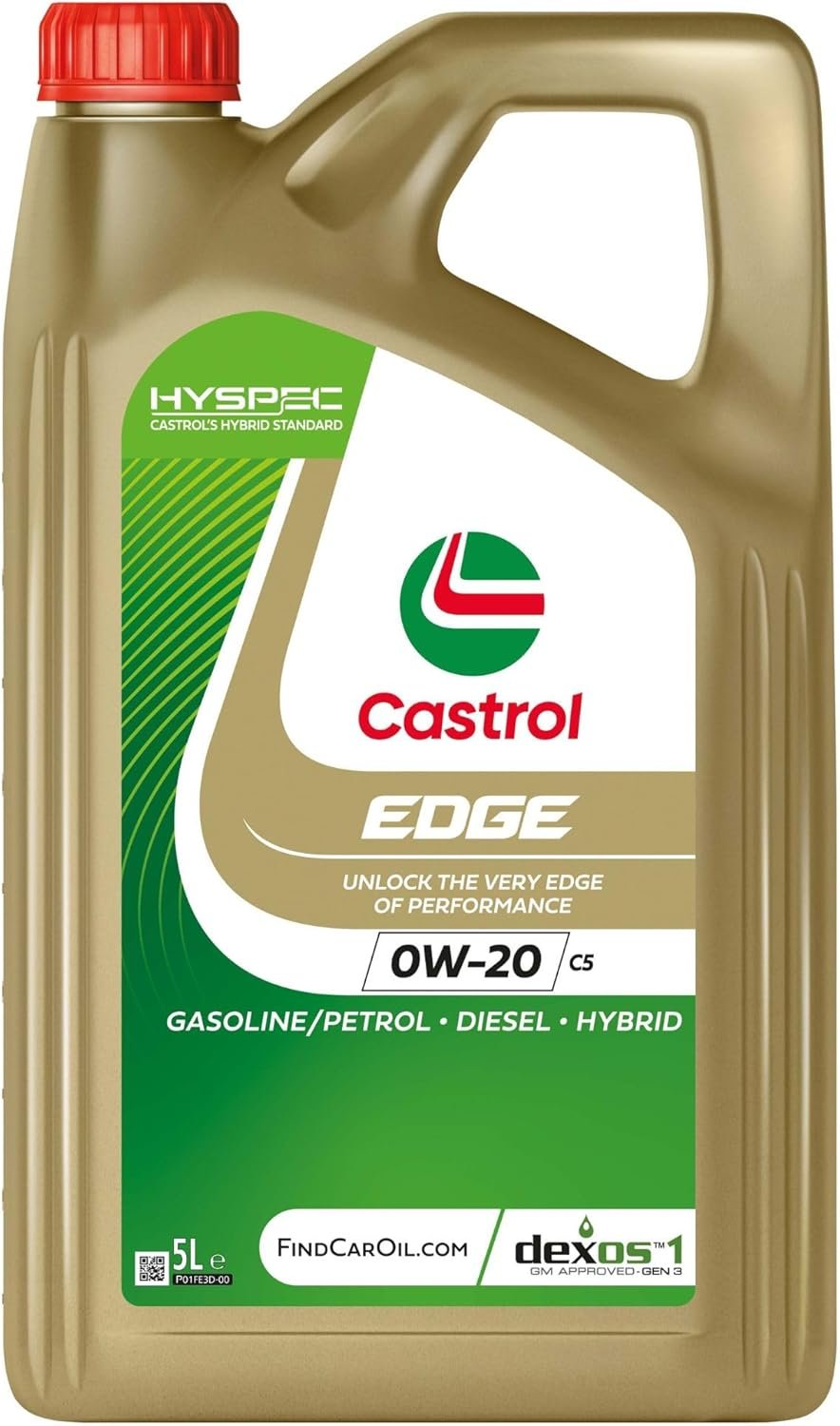

As an Amazon Associate, we may earn from qualifying purchases. This doesn't affect our recommendations — we only suggest oils that hold the exact OEM approval for your engine.
Best Engine Oil for Ford Kuga 3rd Gen 2.5 PHEV (225 hp)
The Ford Kuga 3rd generation arrived in 2020 as Ford’s answer to growing demand for electrified family SUVs. At its heart sits the BGDA 2.5-litre Atkinson-cycle Duratec four-cylinder, paired with a 14.4 kWh lithium-ion battery pack and an electric motor mounted on the rear axle. Together they deliver a combined 225 hp and up to 56 miles of pure electric range on the WLTP cycle. For a family SUV that can genuinely cover most daily commutes on electricity alone, this architecture is clever — but it introduces a maintenance challenge that standard petrol owners never face: severe oil dilution from frequent cold-engine starts.
Choosing the right engine oil for this system is not a formality. Ford specifies a very particular low-viscosity formulation to protect Atkinson-cycle internals while keeping fuel economy from suffering. Getting it wrong accelerates wear in a powertrain that has already attracted significant attention for battery-related reliability concerns.
Quick Answer: Recommended Oil
- Recommended viscosity: 0W-20
- Alternative viscosity: 5W-20 (where 0W-20 is unavailable)
- Ford specification: WSS-M2C948-B
- ACEA norm: C5
- Oil capacity (sump only): 5.0 litres
- Oil capacity (with filter change): 5.4 litres
- Oil change interval: 12 months or 12,000 miles — shorter in PHEV use (see below)
The BGDA 2.5 Duratec Hybrid Engine
The BGDA unit is a 2,488 cc naturally aspirated four-cylinder operating on the Atkinson cycle — a thermodynamic strategy that extends the power stroke relative to the compression stroke by delaying intake valve closure. The result is higher thermal efficiency but lower specific output than an equivalent turbocharged Otto-cycle engine. Ford compensates for the reduced power with the supplementary electric motor, letting the petrol engine operate in its most efficient band while the electric system handles peak demands.
The block is aluminium-alloy with a 87.5 mm bore and 103.5 mm stroke — an unusually long stroke for a modern naturally aspirated unit, which contributes to the engine’s efficiency characteristics but also means piston ring and cylinder bore wear is more sensitive to oil film quality. The engine runs a high 13.0:1 compression ratio, enabled by the Atkinson cycle’s reduced effective compression, and uses dual overhead camshafts with continuously variable timing on both intake and exhaust.
Critically for oil choice, this engine is designed to shut off entirely whenever the battery state of charge and driving conditions allow the car to run on electricity alone. In urban use, the petrol engine may complete dozens of cold start-warm up-shutdown cycles in a single week, each one a brief stress event where the oil must reach operating temperature quickly and maintain film strength throughout.
Understanding WSS-M2C948-B: Ford’s PHEV-Grade Oil Standard
WSS-M2C948-B is Ford’s specification for 0W-20 low-SAPS (Low Sulphated Ash, Phosphorus and Sulphur) oils intended for use in hybrid powertrains. It sits within the ACEA C5 performance category, which was created specifically to address the needs of modern low-friction, fuel-economy-optimised engines in electrified vehicles.
The key characteristics demanded by WSS-M2C948-B are:
Ultra-low HTHS viscosity. High Temperature High Shear (HTHS) viscosity at 150 °C is limited to the C5 band of 2.6–2.9 mPa·s. This is lower than conventional C3 or C2 oils, minimising viscous drag in the bearings and valve train — which matters greatly for an engine that must not impose unnecessary fuel consumption when it does run.
Low-SAPS formulation. The BGDA does not use a diesel particulate filter, but limiting SAPS protects the catalytic converter, which must operate effectively even after very short engine runs where it may not reach full light-off temperature every cycle.
Fuel economy and cold-flow performance. The 0W prefix ensures the oil reaches all bearing surfaces rapidly at cold start — a particularly urgent requirement when the engine may run for only four or five minutes before the battery takes over again. A 5W-20 is an acceptable alternative where 0W-20 is temporarily unavailable, provided it also carries WSS-M2C948-B approval.
Do not use a 5W-30 or any ACEA C3/A3-B4 oil in this engine. Conventional thicker oils increase friction losses when the Atkinson engine runs, reduce fuel efficiency, and can interfere with the precise variable valve timing control that the BGDA relies on across its operating range.
Technical Specifications
| Parameter | Detail |
|---|---|
| Engine code | BGDA |
| Displacement | 2,488 cc |
| Configuration | Inline-4, DOHC |
| Bore × Stroke | 87.5 × 103.5 mm |
| Compression ratio | 13.0:1 |
| Cycle | Atkinson |
| Petrol engine output | 152 hp / 113 kW |
| Combined system output | 225 hp / 165 kW |
| System torque | 200 Nm (petrol) + electric assist |
| Electric range (WLTP) | Up to 56 miles |
| Battery capacity | 14.4 kWh (usable: ~12 kWh) |
| Recommended oil | 0W-20 WSS-M2C948-B / ACEA C5 |
| Oil capacity (sump) | 5.0 litres |
| Oil capacity (with filter) | 5.4 litres |
Oil Change Intervals in PHEV Use: Change More Frequently
Ford’s standard service interval for the Kuga PHEV is 12 months or 12,000 miles — whichever comes first. That interval assumes reasonably mixed driving. In practice, many Kuga PHEV owners use it almost entirely on electricity for daily commuting, starting the petrol engine only occasionally for longer trips or battery charging runs.
This pattern creates a well-documented problem: fuel dilution. Each cold engine start injects a small quantity of unburned fuel into the cylinder bores, which migrates past the piston rings into the sump. In a car that accumulates 10,000 miles predominantly on electric power over 12 months, the engine may have completed only a fraction of the combustion hours that a conventional petrol vehicle would. Yet the oil’s additive package is degrading through oxidation and moisture contamination regardless of mileage.
If your usage is predominantly electric — fewer than four or five petrol engine hours per week on average — consider changing oil at six months or 6,000 miles, whichever comes first. This is especially relevant in winter, when cold ambient temperatures worsen fuel dilution and the engine is more likely to run to warm the cabin via the heating system.
The Ford Kuga PHEV Battery Recall: What You Need to Know
No discussion of the 3rd-generation Kuga PHEV is complete without addressing its well-publicised battery issues. Ford issued a significant safety recall affecting Kuga PHEV models built between 2020 and 2025 after discovering that certain high-voltage battery cells could develop an internal short circuit due to cell contamination during manufacturing. The fault could cause the battery to overheat and, in serious cases, catch fire.
Affected owners were instructed to limit charging to 80% of battery capacity as an immediate precaution, and Ford suspended deliveries of new Kuga PHEVs during the investigation period in 2020. The remedy — a software update that provides early warning monitoring and limits the charge envelope — was rolled out progressively, with further software updates planned through 2026.
The battery recall does not affect the engine oil specification or change intervals. However, it is relevant context when buying a used Kuga PHEV: confirm that any recall work has been completed via a Ford dealer or the government’s vehicle recall checker before purchase. Cars with outstanding recall actions may behave unexpectedly in ways that affect the petrol engine’s running patterns.
If you notice a “Stop Safely Now” warning or a battery warning icon, stop driving and contact Ford Roadside Assistance — do not attempt to diagnose or continue driving the vehicle.
Why Correct Oil Matters for an Atkinson-Cycle PHEV Engine
The Atkinson cycle’s extended expansion ratio squeezes more work out of each combustion event, but it also means the piston is travelling further and faster relative to the power being extracted. Oil film strength in the cylinder bore and on the wrist pins is therefore more critical than in an equivalent naturally aspirated Otto-cycle engine.
Using an oil heavier than 0W-20 — for instance, a 5W-30 mistakenly purchased because it was available — increases parasitic drag each time the engine starts. Over time this also affects the variable camshaft timing system: the intake and exhaust VCT actuators rely on precise oil pressure delivered at low temperature, and a thicker oil delays hydraulic response, which can cause rough idling, hesitation, or camshaft position fault codes on cold mornings.
Conversely, using an oil without WSS-M2C948-B approval — even one with the right viscosity on the label — risks inadequate additive protection for an engine that endures repeated thermal cycling between cold ambient temperature and normal operating temperature, sometimes multiple times per day.
Common Problems Related to Oil
Fuel dilution leading to oil level rise. If the dipstick reads above the maximum mark, this is a strong indicator of fuel contamination in the oil. Do not top up — change the oil immediately and monitor the level after the next change. Persistent over-level readings warrant a dealer inspection.
VCT actuator hesitation on cold start. The variable camshaft timing system can produce a brief rattle on startup — typically lasting under two seconds — if the oil is old or contaminated. If the rattle persists beyond a few seconds, the oil condition is likely compromised.
Catalytic converter inefficiency after short trips. With the engine running only briefly, the catalyst may not reach full operating temperature consistently. While not directly an oil issue, using a SAPS-compliant oil (ACEA C5) ensures you are not accelerating catalyst poisoning during the periods when the catalyst is doing its hardest work.
Conclusion
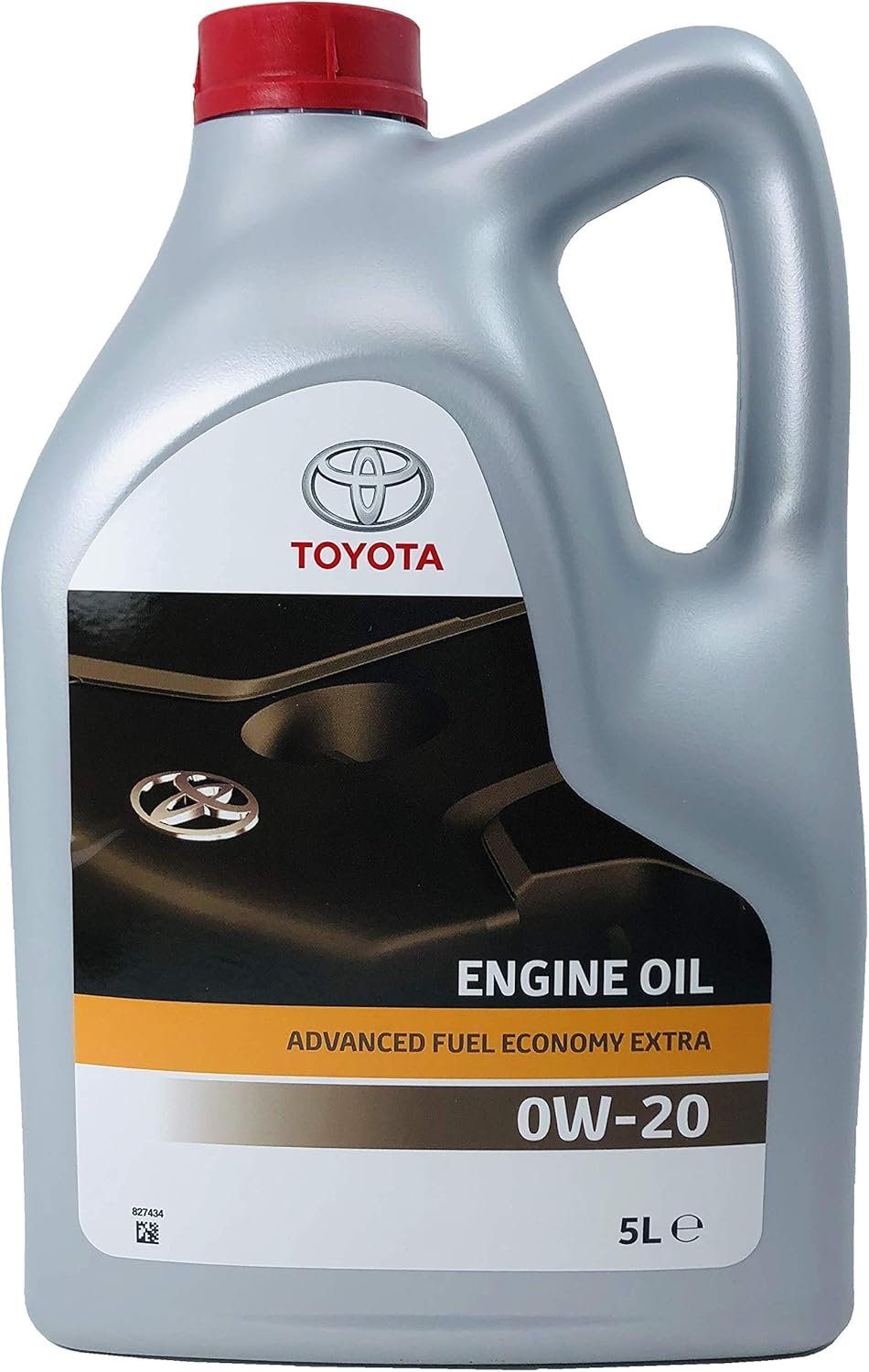
The Ford Kuga 3rd Gen 2.5 PHEV requires a 0W-20 oil meeting Ford specification WSS-M2C948-B and ACEA C5. Fill to 5.4 litres when changing the filter, 5.0 litres for a sump-only drain. Do not use conventional C3 or A3-B4 oils: they are too viscous for this Atkinson-cycle engine and incompatible with its low-friction design targets.
If you use your Kuga mostly on electric power, shorten the oil change interval to six months or 6,000 miles to avoid fuel dilution problems. And if you own an early Kuga PHEV and have not yet had the battery recall work completed, book that in with a Ford dealer before the next service — it is an important safety issue that operates entirely separately from routine oil maintenance.
Our Top Picks
As an Amazon Associate, we may earn from qualifying purchases. This doesn't affect our recommendations — we only suggest oils that hold the exact OEM approval for your engine.