 Oil-
Oil-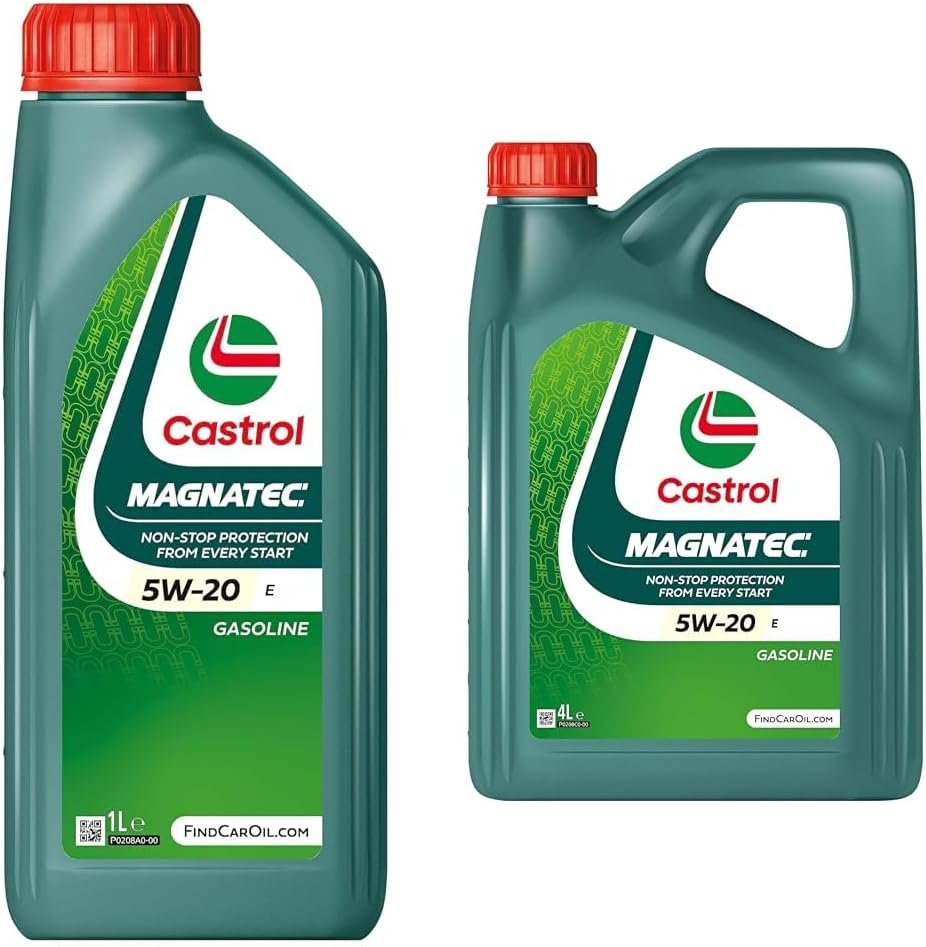
As an Amazon Associate, we may earn from qualifying purchases. This doesn't affect our recommendations — we only suggest oils that hold the exact OEM approval for your engine.
Best Engine Oil for Ford Kuga 1.5 EcoBoost (150 HP)
The third-generation Ford Kuga arrived in 2020 as a genuinely competitive mid-size crossover, and its 1.5 EcoBoost petrol engine represents a significant step forward from the older 1.6 EcoBoost it replaced. The B7DA engine code identifies a 1.5-litre turbocharged three-cylinder unit producing 150 HP, sharing its fundamental architecture with the award-winning 1.0 EcoBoost but scaled up to deliver the torque a family SUV demands. It is a far more reliable engine than its predecessor, but it still places strict requirements on oil specification. Ford’s WSS-M2C948-B approval is mandatory, and deviation from this standard risks accelerated wear on the turbocharger, timing drive, and direct injection components. This guide covers the correct oil, the engineering reasons behind the specification, and the known issues every Kuga owner should understand.
Quick Answer: Recommended Oil
For Kuga 1.5 EcoBoost (150 HP, B7DA):
- Primary specification: Ford WSS-M2C948-B with SAE 5W-20
- ACEA norm: C2
- Oil capacity: 5.5 litres with filter (5.2 L without)
Key warning: Only use oil carrying the Ford WSS-M2C948-B approval. This specification governs additive chemistry, viscosity profile, and compatibility with the timing drive system. Generic 5W-20 oil without this approval is not a safe substitute.
The B7DA Engine: 1.5 EcoBoost in Detail
The B7DA is a 1.5-litre turbocharged three-cylinder engine that shares its fundamental design philosophy with the smaller 1.0 EcoBoost family. Despite the displacement difference, both engines use the same three-cylinder inline layout, direct fuel injection, and turbocharger arrangement. The 1.5-litre version achieves its extra capacity through a larger bore and stroke, producing 150 HP and 240 Nm of torque across a broad midrange band that suits the Kuga’s weight and character.
Direct injection sprays fuel at high pressure directly into the combustion chamber, improving efficiency and power density but introducing the trade-off of carbon buildup on the intake valves. Unlike port-injected engines, where fuel washes the back of the intake valves and keeps them clean, direct injection leaves the valves exposed to oil vapour and combustion byproducts that bake into hard carbon deposits over time. This is an inherent characteristic of the technology, not a defect, but it means oil quality directly influences how quickly deposits accumulate.
The turbocharger operates at extreme temperatures and rotational speeds, with the shaft supported on bearings that depend entirely on engine oil for both lubrication and cooling. When the engine is shut down, residual heat can “coke” oil trapped in the bearing housing if the oil lacks adequate thermal stability. This is why the WSS-M2C948-B specification demands fully synthetic base stocks with strong oxidation resistance.
Early production B7DA engines (roughly 2020-2021 models) used a wet timing belt, the same belt-in-oil design found in the smaller 1.0 EcoBoost. Later production shifted to a timing chain. In either configuration, WSS-M2C948-B approval remains mandatory: for wet belt engines, the oil must maintain chemical compatibility with the belt rubber; for chain engines, it must provide adequate anti-wear protection for tensioners and guides.
The Kuga’s version carries a larger sump than the Fiesta and Focus variants, requiring 5.5 litres at a full service. This larger volume provides a modest advantage in dilution tolerance but does not change the fundamental requirement for correct specification oil.
A Major Improvement Over the 1.6 EcoBoost
The older 1.6 EcoBoost earned a poor reputation for coolant system failures leading to overheating, cylinder head warping, and in severe cases complete engine failure. The 1.5 EcoBoost resolves these thermal management issues with a revised cooling architecture and improved head gasket design. Overheating failures of the type that plagued the 1.6 are essentially absent from the B7DA’s service history, making it a substantially more durable engine provided it receives correct oil and timely service.
Known Issues: The 2020-2022 Fire Risk Recall
Ford issued a recall affecting 2020-2022 Kuga models fitted with the 1.5 EcoBoost for a risk of oil and fuel vapour leaking onto hot exhaust components. Under specific conditions, vapour from the engine could accumulate beneath the undertray and ignite. The recall remedy involved modification of the undertray to improve ventilation and prevent vapour accumulation.
If you own or are purchasing a 2020-2022 Kuga 1.5 EcoBoost, verify that the recall work has been completed. Any Ford dealer can check this using the vehicle’s VIN. The recall is a modification, not a repair of an existing fault, so affected vehicles may show no symptoms prior to completion.
This issue underscores the importance of maintaining the engine in good condition. Oil leaks from degraded seals or overfilling the sump can contribute to vapour generation, making correct oil level and condition an active safety concern on these models.
Carbon Buildup on Intake Valves
Because fuel is injected directly into the cylinder rather than onto the back of the intake valves, there is no fuel wash to remove oily deposits that gradually accumulate on valve surfaces. Over 40,000-60,000 miles, these carbon deposits restrict airflow, causing rough idle, hesitation, and reduced fuel economy.
Oil quality plays a direct role. Low-quality oil produces more volatile byproducts that recirculate through the PCV system and deposit on the intake valves. WSS-M2C948-B approved oils use low volatility base stocks and controlled ash content (ACEA C2 compliant) to minimise this contribution. Walnut blasting at 60,000-80,000 mile intervals is the accepted remediation, but correct oil meaningfully slows the rate of accumulation.
Technical Specifications: 1.5 EcoBoost (B7DA)
| Specification | Value |
|---|---|
| Displacement | 1,498cc (1.5 litres) |
| Layout | Inline-3, transverse, aluminium block |
| Valvetrain | DOHC, 12 valves, wet belt (early) / chain (later) |
| Turbocharger | Single-scroll, wastegate |
| Power | 150 HP @ 6,000 RPM |
| Torque | 240 Nm @ 1,600-4,500 RPM |
| Fuel Type | Petrol, 95 RON minimum |
| Recommended Viscosity | SAE 5W-20 |
| Oil Capacity (without filter) | 5.2 litres |
| Oil Capacity (with filter) | 5.5 litres |
| ACEA Norm | C2 |
| Ford Norm | WSS-M2C948-B |
Oil Change Intervals
Ford Official Recommendation:
- Standard service: 12,500 miles or 1 year
- Flexible service (later models): up to 18,000 miles or 2 years
Recommended Practice: 8,000-10,000 miles or annually, whichever comes first.
The Kuga’s 1.5 EcoBoost works harder than the same engine in lighter cars like the Focus. The additional 200-300 kg of vehicle weight means higher average engine loads, more frequent turbo boost, and greater thermal stress on the oil. Ford’s official intervals assume a mix of driving conditions, but few owners achieve the ideal balance of sustained motorway cruising that maximises oil life.
Consider 6,000-mile intervals if:
- Predominantly short urban journeys under 10 miles
- Frequent cold starts without reaching full operating temperature
- Regular towing or roof box use (sustained high load)
- Vehicle has covered over 60,000 miles
- Oil level rises on the dipstick between services (indicating fuel dilution)
- Any unknown service history from a previous owner
Direct injection fuel dilution is a real concern with the B7DA. Short journeys prevent the oil from reaching the temperature needed to evaporate accumulated fuel from the sump. Over time, this thins the oil beyond its designed viscosity, reducing both bearing protection and turbo lubrication. Checking the dipstick monthly is a simple habit that catches dilution before it causes damage.
Why WSS-M2C948-B Cannot Be Substituted
The Ford WSS-M2C948-B specification defines a complete package of base oil chemistry, additive formulation, volatility limits, and HTHS (High Temperature High Shear) viscosity engineered as an integrated system. A generic ACEA C2 oil at 5W-20 viscosity may appear to match on paper, but without WSS-M2C948-B testing and approval, there is no guarantee its additive package is compatible with the timing belt material or that its thermal stability meets the turbo’s requirements. Belt degradation from incompatible oil is well-documented across the EcoBoost family, and turbo bearing failures from oil coking are a known failure mode.
Independent garages sometimes substitute a familiar 5W-30 or 5W-40 on the basis that thicker oil provides better protection. This logic does not apply to the B7DA. Ford designed the bearing clearances, oil pump output, and oil circuit around 5W-20 viscosity. Thicker oil reduces flow to critical areas, increases parasitic drag, and alters the thermal profile of the turbo bearing. It is not a conservative choice; it is a deviation from the engineering intent.
Conclusion
The Ford Kuga 1.5 EcoBoost (B7DA) requires 5.5 litres of Ford WSS-M2C948-B approved SAE 5W-20 engine oil at every service, meeting ACEA C2 standards. This is a significantly more reliable engine than the 1.6 EcoBoost it replaced, free from the overheating tendencies that plagued the earlier unit, but it remains sensitive to oil quality due to its turbocharged, direct-injected architecture and timing drive requirements.
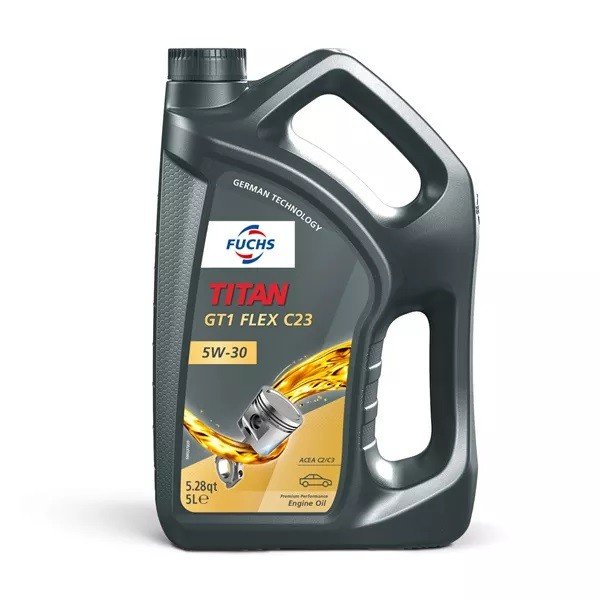
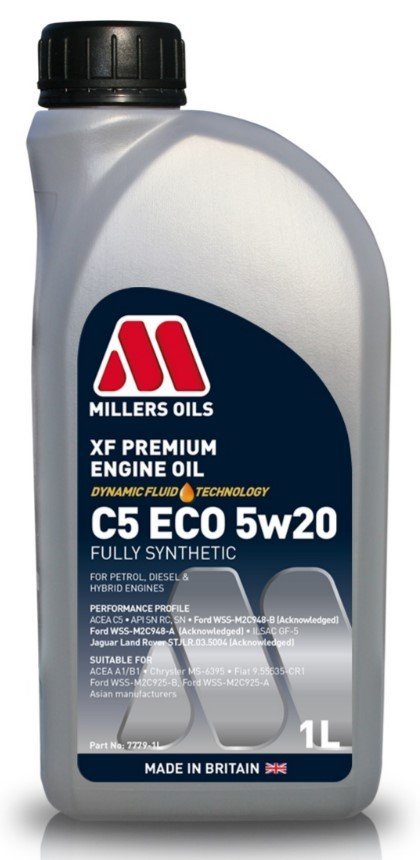
Verify the recall status on 2020-2022 models, change the oil at 8,000-10,000 mile intervals with an approved product, and check the dipstick monthly for fuel dilution. Ford Castrol Magnatec Professional E 5W-20 is the safest default choice at £30-40 for 5 litres, while Mobil 1 ESP x2, Fuchs Titan GT1 Pro V, and Millers Oils XF Premium offer excellent WSS-M2C948-B approved alternatives between £35 and £50. Confirm the approval on every bottle you purchase, and never allow a workshop to substitute a generic oil regardless of its marketing claims. With correct maintenance, the B7DA will deliver dependable service well beyond 150,000 miles.
Our Top Picks
As an Amazon Associate, we may earn from qualifying purchases. This doesn't affect our recommendations — we only suggest oils that hold the exact OEM approval for your engine.