 Oil-
Oil-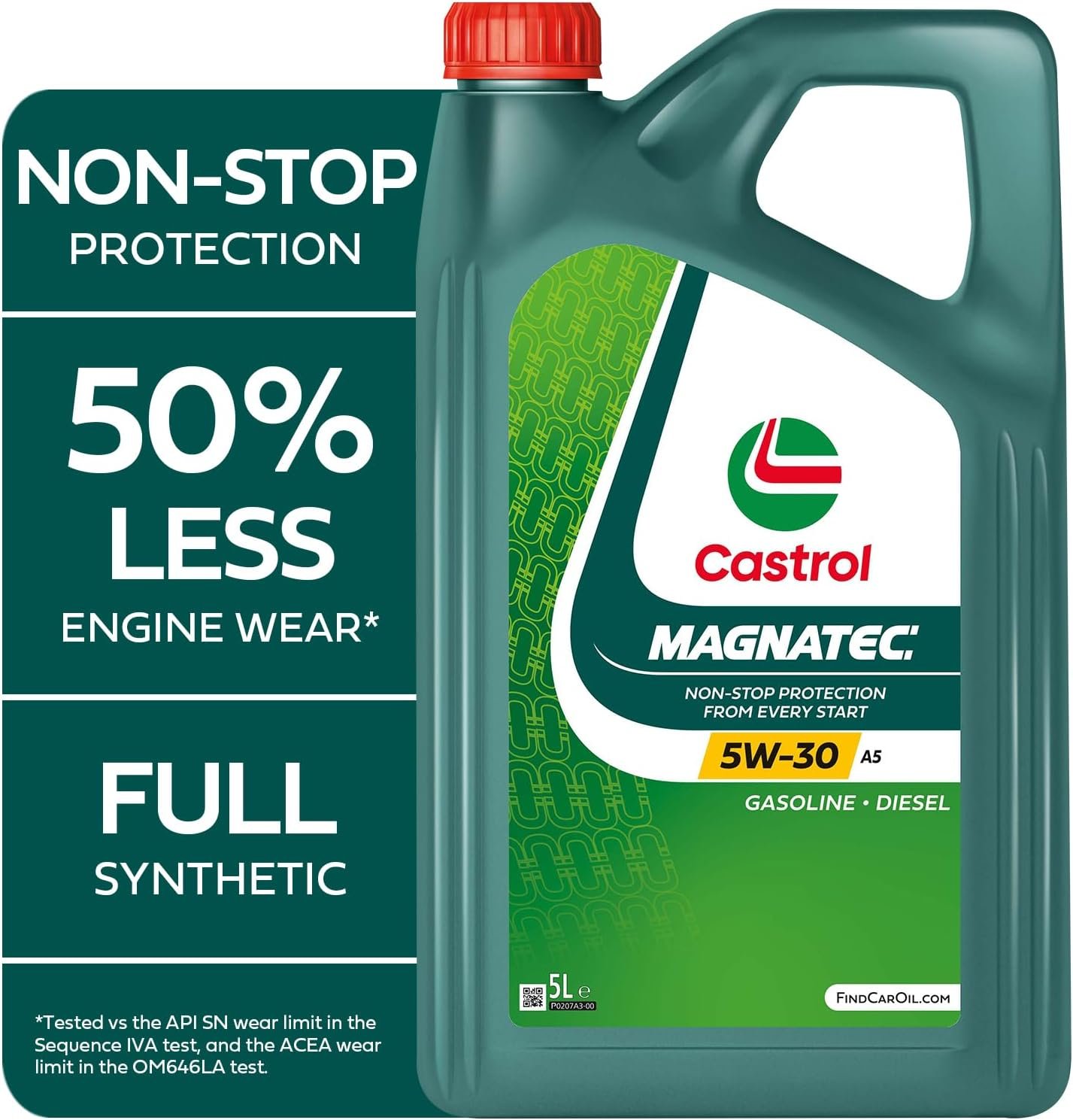
As an Amazon Associate, we may earn from qualifying purchases. This doesn't affect our recommendations — we only suggest oils that hold the exact OEM approval for your engine.
Best Engine Oil for Ford Focus Mk2 1.6 TDCi (90/110 hp) – Specifications & Guide
The Ford Focus Mk2 1.6 TDCi was one of the most popular diesel choices in Britain during the mid-2000s, balancing frugal running costs with a usable spread of torque for everyday driving. Under the bonnet sits a co-developed PSA-Ford DV6 diesel engine — the same family powering millions of Peugeots, Citroëns, and Minis across Europe. That shared architecture is both a strength and a vulnerability: certain failure modes are well-documented across every car that uses it, and the right engine oil — applied on time, to the right specification — is your single most effective defence against them.
Whether you are running the 90 hp variant or the punchier 110 hp tune, the lubrication requirements are identical. Getting the specification right is not merely about warranty compliance; it directly determines how long the turbocharger, injector system, and cylinder head last.
Quick Answer: Recommended Oil for Ford Focus Mk2 1.6 TDCi
- Primary viscosity: 5W-30
- Alternative viscosity: 0W-30 (low-temperature climates or short-run driving)
- Required norm: Ford WSS-M2C913-D
- ACEA classification: A5/B5
- Oil capacity (without filter): 3.6 litres
- Oil capacity (with filter change): 3.8 litres
Always check the dipstick after filling and top up to the upper mark. Do not overfill — excess oil can be drawn into the intake via the crankcase ventilation system.
The DV6 Engine: A Ford–PSA Partnership
The G8DA engine code used in the Focus Mk2 belongs to the PSA DV6 family, developed jointly by Ford and PSA Peugeot Citroën. Launched in 2004, it was designed to meet increasingly stringent European emissions targets while delivering strong fuel economy in the sub-2.0-litre diesel segment.
The DV6 is a 1,560 cc four-cylinder unit with a cast-iron block and aluminium cylinder head. It uses a fixed-geometry turbocharger (VGT on some variants), high-pressure common-rail direct injection, and an exhaust gas recirculation (EGR) system to manage NOx emissions. The same fundamental architecture appears in the Peugeot 206, 207, and 307, the Citroën C3 and C4, the Volvo C30 1.6D, and the Mini One D — giving it one of the broadest real-world reliability datasets of any diesel engine of its era.
Ford’s version uses the engine management and emission calibration tuned specifically for Focus platform variants, but the core mechanicals — including the oil circuit, turbo lubrication arrangement, and EGR routing — are shared with the PSA applications. Crucially, this means the known failure patterns are also shared.
Understanding Ford WSS-M2C913-D
The Ford WSS-M2C913-D specification is the controlling norm for this engine. It supersedes the earlier WSS-M2C913-C and defines the performance envelope of the lubricant across the oil change interval — not just at initial fill.
What WSS-M2C913-D requires:
- Low HTHS viscosity (High-Temperature High-Shear): capped at approximately 2.9–3.5 mPa·s. This is what makes these oils “fuel-economy grade” and is defined by the A5/B5 ACEA classification.
- Low-SAPS formulation (mid-SAPS): reduced sulphated ash, phosphorus, and sulphur content to protect the diesel particulate filter (DPF) and catalytic converter.
- Thermal and oxidative stability: the oil must maintain its protective film across long drain intervals under turbo operating temperatures.
The A5/B5 ACEA classification aligns with these requirements. A5 covers petrol applications; B5 covers diesel — you need both when selecting an oil for the 1.6 TDCi.
Do not use:
- Fully SAPS (high-ash) oils such as those meeting only API CF or older ACEA B3/B4 norms — they accelerate DPF clogging.
- Standard 5W-40 or 10W-40 mineral-based oils — the HTHS viscosity is too high and fuel economy suffers disproportionately.
- Oils labelled only for petrol engines — the B5 diesel rating matters for soot-handling capacity.
Technical Specifications
| Specification | Detail |
|---|---|
| Engine family | PSA DV6 (Ford G8DA) |
| Displacement | 1,560 cc |
| Configuration | Inline-4, SOHC, 8v |
| Bore × Stroke | 75.0 mm × 88.3 mm |
| Compression ratio | 18.0:1 |
| Power output | 90 hp (66 kW) / 110 hp (81 kW) |
| Peak torque | 215 Nm @ 1,750 rpm (90 hp) / 240 Nm @ 1,750 rpm (110 hp) |
| Fuel system | Bosch common-rail direct injection |
| Turbocharger | Fixed or variable geometry (variant-dependent) |
| Oil capacity (dry) | 3.6 L |
| Oil capacity (with filter) | 3.8 L |
| Recommended viscosity | 5W-30 (Ford WSS-M2C913-D) |
| Alternative viscosity | 0W-30 |
| ACEA norm | A5/B5 |
Oil Change Intervals
Ford’s official service interval for the Focus Mk2 1.6 TDCi is typically up to 12,500 miles (20,000 km) or 12 months, whichever comes first, using the correct WSS-M2C913-D oil. However, the real-world advice from specialist workshops and long-term owners is more conservative.
For UK driving conditions — frequent short urban journeys, stop-start traffic, cold starts — an annual change at 10,000 miles or fewer is strongly recommended. The DV6 has a well-documented sensitivity to oil degradation in its turbocharger feed circuit (more on this below), and stretching intervals beyond 10,000 miles on cars used predominantly in town meaningfully increases the risk of turbo failure.
If the vehicle has done fewer than 5,000 miles since its last service but is more than 12 months old, change the oil by time, not mileage. Moisture and fuel contamination accumulate even in low-mileage cars used mainly for short trips.
Why Correct Oil Matters on the DV6
The DV6’s turbocharger is lubricated and cooled by engine oil. Unlike some larger diesel turbos that use water-cooling as a primary heat-soak medium, the 1.6 TDCi relies substantially on a continuous oil feed to keep bearing temperatures within range.
Using the wrong viscosity — particularly oils that are too thick at operating temperature — reduces oil flow through the narrow feed pipe galleries. Over time, degraded or high-SAPS oil also promotes lacquer and carbon deposit formation inside those galleries.
Equally important is the oil’s ability to withstand the sustained heat encountered during and after engine-off “heat soak” — the period when the turbo retains its operating temperature but oil circulation has stopped. A high-quality synthetic meeting WSS-M2C913-D retains its viscosity characteristics under this thermal cycling far better than a conventional or semi-synthetic oil.
Common DV6 Problems Linked to Oil Condition
Turbo Oil Feed Pipe Blockage
This is the most widely reported failure mode on the 1.6 TDCi and has affected Focus, C-Max, Fiesta, Peugeot 207, and Citroën C4 variants using the same engine. The turbocharger’s oil feed pipe incorporates a fine gauze filter at the banjo union. Over time — particularly if oil changes are overdue or the wrong specification has been used — carbon deposits and oil sludge accumulate in this gauze and reduce or block oil flow to the turbo bearings entirely.
Once oil starvation begins, turbo bearing wear accelerates rapidly. The first symptoms are often a high-pitched whine under boost, excessive smoke from the exhaust, and eventually turbo seizure. Ford revised the oil feed pipe design for the Mk2.5 facelift (2008 onwards), but the underlying sensitivity to oil quality remains.
Prevention is straightforward: use a full synthetic oil meeting WSS-M2C913-D, do not stretch service intervals, and if purchasing a used example, inspect the oil feed pipe union for signs of partial blockage or heat discolouration.
EGR Valve Clogging
The EGR (exhaust gas recirculation) system recirculates a portion of exhaust gas back into the intake manifold to reduce combustion temperatures and NOx output. On the DV6, the combination of diesel soot in the exhaust stream and oil vapour from the crankcase ventilation system creates a sticky carbon paste inside the EGR valve and intake manifold ports.
While EGR fouling is partly a function of driving style (predominantly short journeys at low loads are worst), oil quality plays a role. High-SAPS oils contribute more combustion residue to the EGR deposit cycle. Using a correctly specified mid-SAPS A5/B5 oil reduces — but does not eliminate — deposit accumulation.
Symptoms of EGR problems include lumpy idle, loss of power below 2,000 rpm, and increased smoke on initial acceleration. The valve can be cleaned or replaced; many owners also fit blanking plates on high-mileage examples, though this has emissions and MOT implications.
Injector Seal Degradation
On higher-mileage DV6 units, the injector copper seating washers can deteriorate, allowing combustion gases to leak around the injector body. This produces a distinctive metallic ticking noise when cold and — critically — can force combustion gas and carbon debris into the oil feed circuit, directly contributing to the turbo gauze blockage described above. If injector seal failure is suspected, address it promptly; delay turns a relatively inexpensive repair into a turbo replacement.
Conclusion
The Ford Focus Mk2 1.6 TDCi is a capable, economical diesel that can comfortably reach 150,000 miles with attentive maintenance. The DV6 engine’s Achilles’ heel is its turbocharger oil feed circuit — a failure chain that begins with deferred oil changes and wrong-specification lubricants. Using a full-synthetic 5W-30 meeting Ford WSS-M2C913-D (ACEA A5/B5), changed annually or at 10,000 miles in typical UK usage, addresses the root cause of the most common and costly failures on this engine. Do not be tempted by cheaper oils that lack the correct specification: the saving on a service is trivial compared to the cost of a turbocharger replacement.
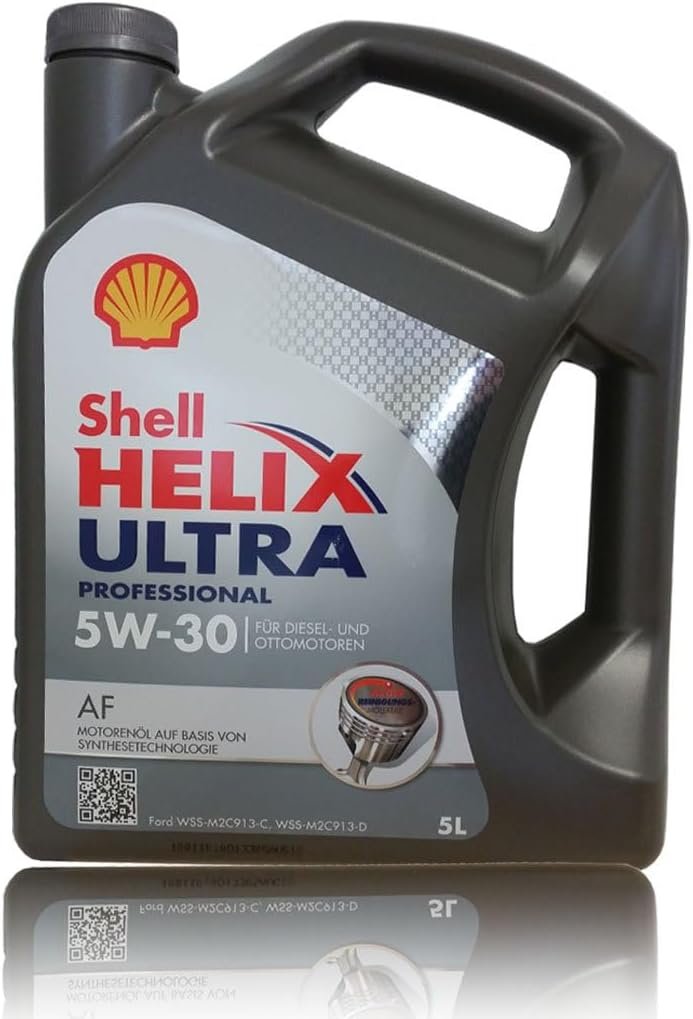
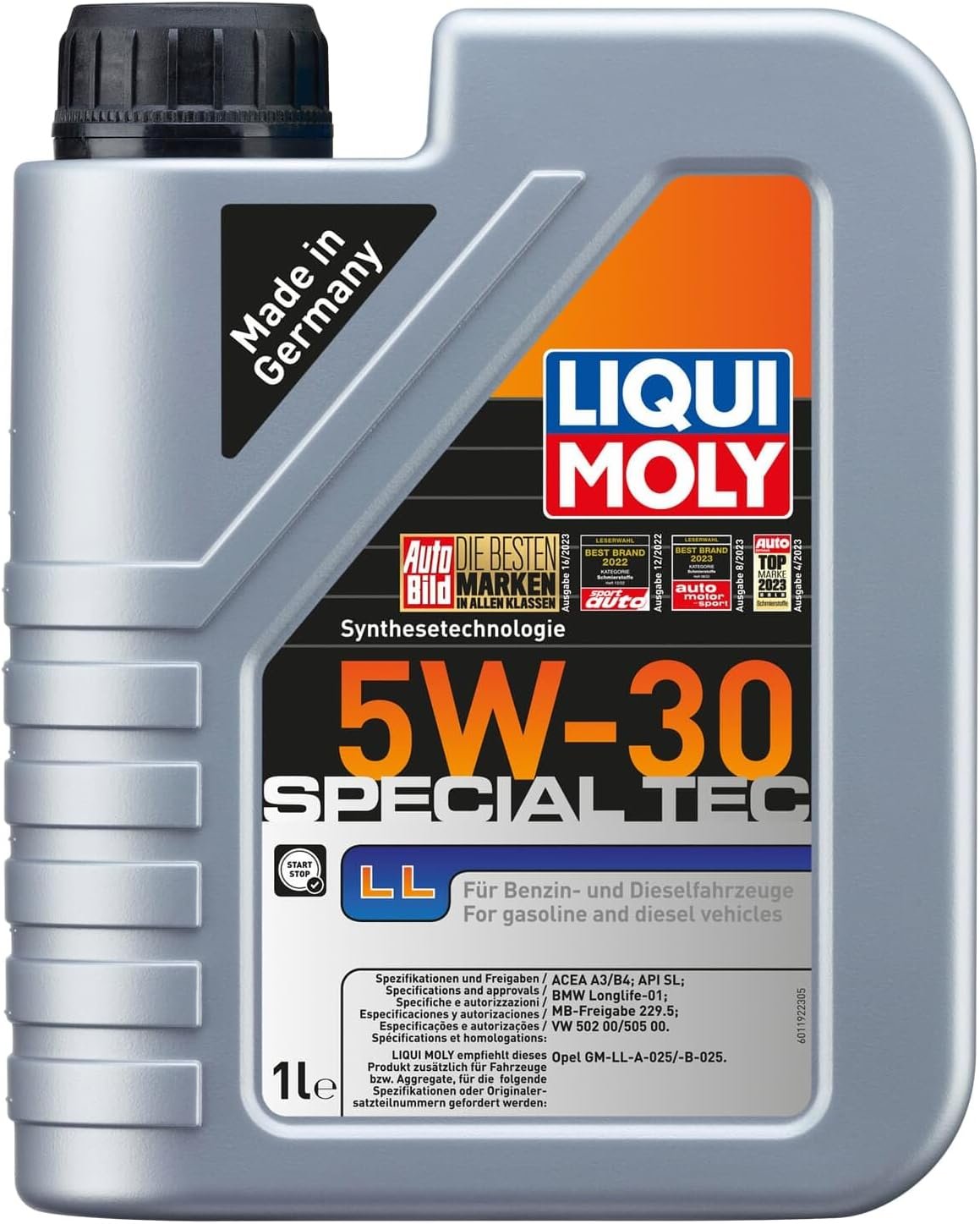
Our Top Picks
As an Amazon Associate, we may earn from qualifying purchases. This doesn't affect our recommendations — we only suggest oils that hold the exact OEM approval for your engine.