 Oil-
Oil-
As an Amazon Associate, we may earn from qualifying purchases. This doesn't affect our recommendations — we only suggest oils that hold the exact OEM approval for your engine.
Best Engine Oil for Volvo V40 2nd Gen 2.0 D2 Diesel (120 hp)
The Volvo V40 2nd Generation brought genuine Scandinavian premium values to the compact hatchback segment — and under the bonnet, it introduced one of the most technically unconventional diesel specifications in its class. The 2.0 D2 diesel, available throughout the V40’s 2012–2019 production life, is a Volvo Drive-E family engine specifying 0W-20 oil — an ultra-low viscosity grade typically associated with modern petrol hybrids, not European diesel hatchbacks. Understanding why Volvo mandates this unusual specification, and what it means for long-term reliability, is central to owning this engine correctly.
Quick Answer: Recommended Oil
- Specification: Volvo VCC RBS0-2AE (ACEA C5), 0W-20
- Alternative: 0W-30 ACEA C5 (where 0W-20 VCC RBS0-2AE is unavailable)
- Oil capacity with filter: 5.2 litres
- Oil capacity without filter: approx. 4.8 litres
The D4204T8 and D4204T13 Engines
The V40 2.0 D2 uses one of two closely related engine codes depending on model year. The D4204T8 covers 2012–2014 production; the D4204T13 is the revised Euro 6-compliant variant from 2015 onward. Both share the same 1,969 cc all-aluminium DOHC block — bore × stroke 82.0 mm × 93.2 mm, compression ratio 16.0:1 — producing 120 hp and 280 Nm through a single small-frame Garrett turbocharger. Power and torque figures are identical between variants; the T13 revision was primarily an emissions calibration update.
This engine family is part of Volvo’s Drive-E program, which aimed to replace all previous engine architectures — including the Ford-PSA 1.6 D2 that early V40s used — with a fully in-house modular platform. The Drive-E diesel uses an all-aluminium block and head (significantly lighter than the cast-iron DV6 it replaced), a rear-mounted timing chain (at the flywheel/transmission end rather than the front), and a cooled EGR system. The DPF is standard; no SCR/AdBlue system is fitted to the D2 variant.
It is important to verify which engine your V40 carries. Early UK V40s (2012–mid-2014) may be fitted with the 1.6 D2 (engine code D4162T), a Ford-PSA DV6-family unit that uses an entirely different oil specification — 5W-30 ACEA C4. The 2.0 D2 Drive-E is identifiable by its 1,969 cc displacement; confirm via the VIN or service record before ordering oil.
Understanding 0W-20 and Volvo VCC RBS0-2AE
The 0W-20 viscosity grade is exceptional for a diesel engine. Most European diesel applications specify 5W-30 ACEA C3 as a minimum; 0W-20 is typically found in modern Japanese petrol hybrids or Atkinson-cycle engines where fuel economy is the primary design objective. Volvo chose it for the Drive-E diesel for the same reason: measurable friction reduction across the engine’s operating range.
ACEA C5 is the standard classification for low-viscosity, low-SAPS oils. C5 oils combine an ultra-low HTHS (High Temperature High Shear) viscosity floor of 2.6 mPa·s — compared to 3.5 mPa·s for ACEA C3 — with sulphated ash limits that protect the DPF. The lower HTHS means the oil film between moving parts at high temperature is intentionally thinner than in a conventional diesel lubricant. This is an engineering choice, not a compromise: the Drive-E engine’s tolerances and surface finish are designed around this thinner film. Using a thicker oil does not add protection; it adds friction losses and potentially causes oil to not reach tight tolerances adequately.
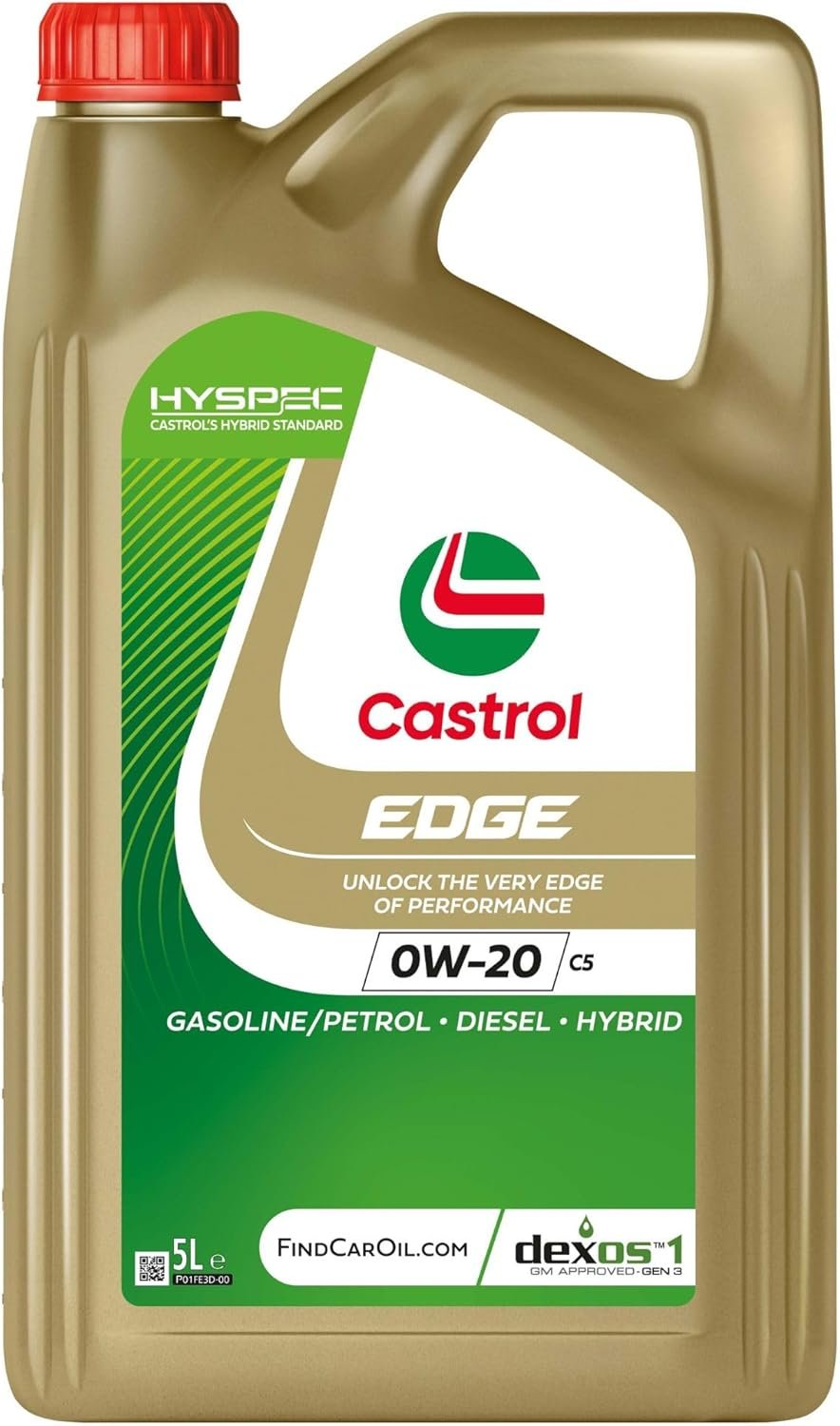
Volvo VCC RBS0-2AE is Volvo’s proprietary approval sitting above the ACEA C5 minimum. It adds tighter controls on oxidation stability, base number retention, and low-temperature performance specific to Volvo’s hardware. Oils carrying the VCC RBS0-2AE approval are available from Castrol (Edge 0W-20 C5), Mobil 1 (ESP 0W-20), and Volvo’s own branded product. Using a generic 0W-20 without VCC RBS0-2AE approval may not meet all requirements.
The consequence of using the wrong oil is two-fold: a 5W-30 ACEA C3 oil is both too viscous (increasing friction beyond design specification) and uses different additive chemistry (C3 vs C5 ash limits). Neither choice improves protection — both diverge from engineering intent.
Technical Specifications
| Specification | Value |
|---|---|
| Displacement | 1,969 cc |
| Layout | 4-cylinder inline, DOHC, turbodiesel |
| Engine codes | D4204T8 (2012–2014) / D4204T13 (2015–2019) |
| Power / Torque | 120 hp / 280 Nm |
| Bore × stroke | 82.0 mm × 93.2 mm |
| Compression ratio | 16.0:1 |
| Timing system | Timing chain (rear-mounted) |
| Turbocharger | Single Garrett, fixed geometry |
| DPF | Standard; no SCR/AdBlue |
| Oil capacity (with filter) | 5.2 litres |
| Oil capacity (without filter) | approx. 4.8 litres |
| Recommended viscosity | 0W-20 |
| Alternative viscosity | 0W-30 |
| Volvo OEM norm | VCC RBS0-2AE |
| ACEA classification | C5 |
Oil Change Intervals
Volvo’s variable service indicator can extend oil change intervals to 15,000 km or 12 months. For the D2 diesel in UK conditions, 12,000 km or 12 months is the recommended maximum for normal mixed driving.
For predominantly urban use — where the small Garrett turbo and modest exhaust temperatures make passive DPF regeneration unreliable — reduce to 10,000 km or 10 months. The V40 D2’s compact, low-output diesel runs relatively cool; regeneration requires sustained higher-speed driving that urban routes rarely provide.
The rear-mounted timing chain has an additional implication for service intervals. Because the chain is at the transmission end of the engine rather than the front, replacement requires removing the gearbox — a significant labour cost. Annual oil changes with VCC RBS0-2AE oil are the primary available preventive measure against chain guide wear.
Common D4204 Problems Related to Oil
EGR valve fouling: The most frequently reported D2 issue on UK V40 forums. Carbon deposits accumulate progressively on the EGR valve and cooler, particularly on short-journey use. Symptoms include rough idle, hesitation, and reduced power. Correct low-SAPS oil reduces combustion by-products; periodic motorway driving helps clear EGR deposits.
DPF blockage: Short urban commutes prevent passive regeneration. The small, conservatively-tuned Garrett turbo and cooler exhaust temperatures compared to higher-output Drive-E variants make this engine more dependent on active regen. Regular 30-minute motorway runs are essential for DPF health.
Timing chain: Rear mounting makes replacement expensive. Annual oil changes with VCC RBS0-2AE 0W-20 maintain correct chain lubrication; extended or incorrect-oil intervals are the primary documented cause of chain wear on this engine family.
Turbo oil sealing: A minority of high-mileage reports mention slight oil consumption from turbo seal wear above 100,000 miles. Regular oil level checks are advisable.
Conclusion
The Volvo V40 2nd Gen 2.0 D2 is a refined and fuel-efficient diesel hatchback built around a genuinely innovative engine specification. The 0W-20 ACEA C5 Volvo VCC RBS0-2AE requirement is not conventional, and it is not optional — the Drive-E diesel was engineered around this low-viscosity chemistry. Using a thicker, more conventional diesel oil does not improve reliability; it adds friction against design intent and uses different additive chemistry incompatible with the DPF and engine hardware. Annual changes with approved oil, periodic motorway use for DPF health, and attention to the rear timing chain form the basis of reliable long-term ownership.
Our Top Picks
As an Amazon Associate, we may earn from qualifying purchases. This doesn't affect our recommendations — we only suggest oils that hold the exact OEM approval for your engine.