 Oil-
Oil-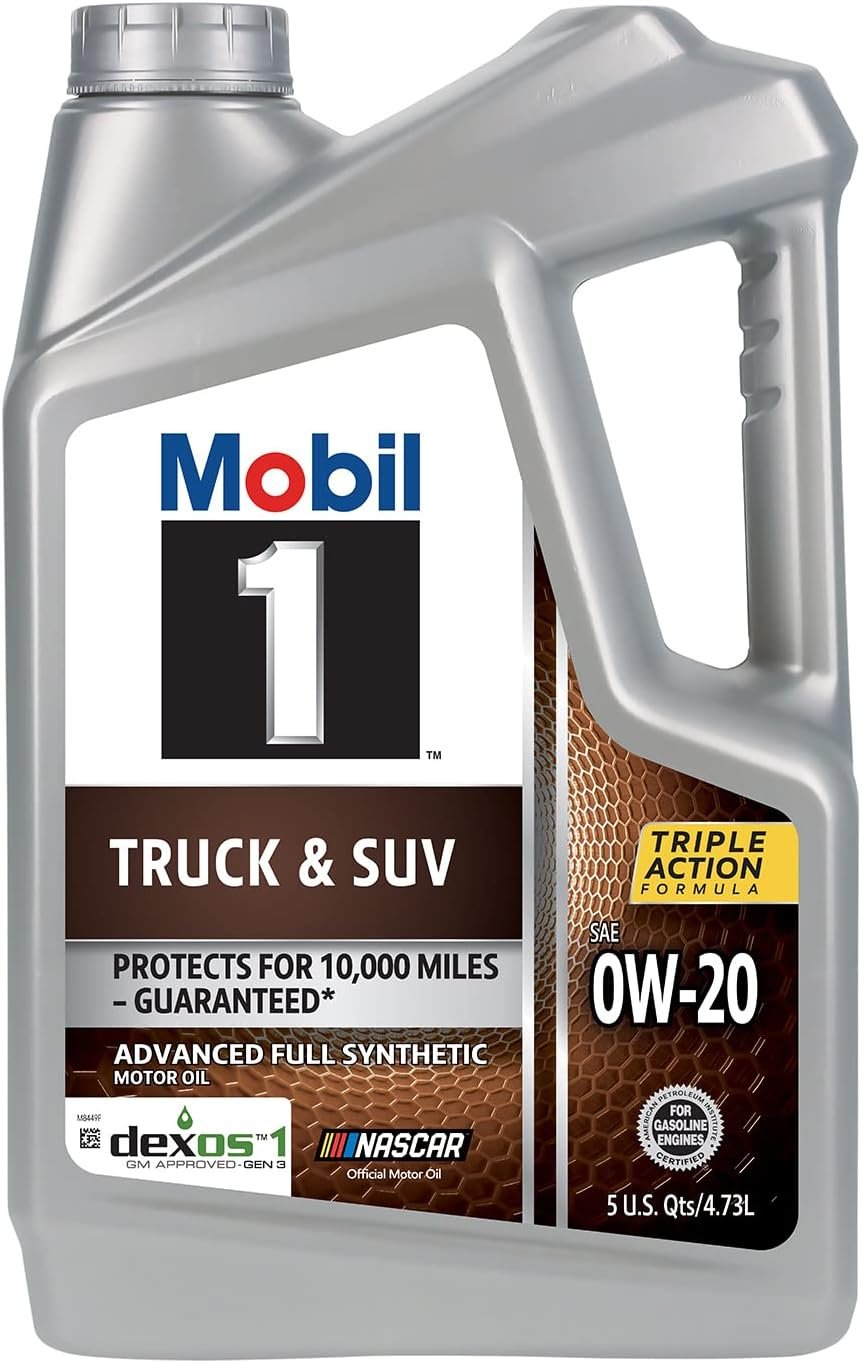
As an Amazon Associate, we may earn from qualifying purchases. This doesn't affect our recommendations — we only suggest oils that hold the exact OEM approval for your engine.
Best Engine Oil for Toyota Tundra XK50 5.7L i-FORCE V8 (381 hp)
The Toyota Tundra 2nd generation (XK50, 2007–2021) entered production carrying the 3UR-FE 5.7L V8 — a 381 hp iron-block, DOHC 32-valve engine designed from the outset for maximum durability in demanding towing and hauling applications. This engine’s architecture represents a deliberate engineering philosophy: where American competitors increasingly moved to aluminium blocks for weight savings, Toyota retained iron for the 3UR-FE specifically to handle the thermal cycling, sustained loads, and extended drain intervals typical of a work truck. Understanding the 3UR-FE’s characteristics — including its two documented maintenance-related failure patterns and the logic behind its 0W-20 oil specification — is the foundation of reliable long-term Tundra ownership.
Quick Answer: Recommended Oil
- Specification: ILSAC GF-6A (API SP), 0W-20 (full synthetic)
- Alternative: 5W-20 full synthetic (if 0W-20 unavailable)
- Oil capacity with filter (2010–2021): 7.5 litres (7.9 US quarts)
- Oil capacity with filter (2007–2009): 7.0 litres (7.4 US quarts)
- Oil capacity without filter (2010–2021): approx. 7.0 litres (7.4 US quarts)
The 3UR-FE i-FORCE Engine
The 3UR-FE is 5,663 cc — the largest engine Toyota has produced for a pickup truck application. DOHC 32-valve layout with four valves per cylinder, bore × stroke 94.0 mm × 102.0 mm. The long-stroke geometry maximises torque generation at lower RPM — essential for a truck that needs to pull 10,100 lb from a standing start on a trailer ramp without excessive engine stress.
Cast iron block: The 3UR-FE uses a cast iron block rather than the aluminium construction found on most contemporary V8 engines. Iron is dimensionally more stable under the wide temperature excursions of a work truck — repeated full-cold starts, sustained maximum towing on a summer afternoon, followed by cooling overnight. Iron tolerates these cycles without the thermal expansion-related bore distortion that aluminium can develop at extremes. It also provides better resistance to the side-loading from heavy trailer hitch forces. The trade-off is weight: the iron block adds approximately 20–30 kg over an equivalent aluminium design, but Toyota determined this penalty was acceptable for the durability benefits in truck service.
Dual VVT-i: Both intake and exhaust camshafts use Toyota’s conventional hydraulic variable valve timing, advancing and retarding cam timing based on load and RPM. This dual-phasing system improves low-RPM torque for towing while maintaining acceptable high-RPM power. Both cam phasers are hydraulically actuated by oil pressure.
Firing order and balance: The 3UR-FE uses a 1-8-4-3-6-5-7-2 firing order — the standard cross-plane V8 layout. The 90-degree cylinder banks provide inherent primary balance without a balancer shaft.
The 2010 Oil Capacity Increase
One important practical detail for 3UR-FE Tundra service: the oil capacity changed between 2007–2009 and 2010+ model years:
- 2007–2009: 7.4 US quarts with filter (7.0 litres)
- 2010–2021: 7.9 US quarts with filter (7.5 litres)
Toyota revised the oil pan design for the 2010 model year refresh. The larger pan increased capacity by approximately 0.5 quarts. The additional volume improves thermal buffering under sustained towing loads — a truck towing 10,000 lb on a summer afternoon generates more heat than a passenger car in equivalent operation, and more oil volume means more heat absorption per cycle before oil temperature peaks. Before any oil service, confirm your model year to fill to the correct capacity.
0W-20 for a Large Iron-Block V8: Why?
The 0W-20 specification for the 3UR-FE is the question most Tundra owners ask — this is a large-displacement, heavy-duty iron-block V8, and 0W-20 is the grade typically associated with small-displacement economy cars. Toyota’s reasoning is primarily regulatory: CAFE (Corporate Average Fuel Economy) fleet targets require every vehicle in a manufacturer’s lineup to contribute to the average. The 3UR-FE’s 0W-20 specification provides measurable fuel economy improvement over 5W-20 or 5W-30, contributing to Toyota’s fleet compliance.
The engine’s precision machining — tight bearing clearances, smooth bore finish — supports 0W-20 film strength at operating temperature. The iron block’s thermal stability means bearing clearances remain consistent across operating temperature range, so the thinner oil film is not challenged by bore distortion that might occur in a poorly-controlled aluminium design.
For towing at maximum capacity: Many Tundra owners who regularly tow at or near the 10,100 lb rating choose 0W-30 or 5W-30 full synthetic for summer towing events. At sustained full-load towing speeds in 30°C+ ambient temperatures, oil temperatures can exceed 120°C; 0W-20 HTHS viscosity at these temperatures provides the minimum required protection, while 5W-30 provides additional margin. Toyota’s specification remains 0W-20; the heavier grade for towing is an owner choice within the engine’s design tolerances. Return to 0W-20 for non-towing use.
Technical Specifications
| Specification | Value |
|---|---|
| Displacement | 5,663 cc |
| Layout | V8, DOHC 32v |
| Engine code | 3UR-FE |
| Power / Torque | 381 hp / 401 lb-ft |
| Bore × stroke | 94.0 mm × 102.0 mm |
| Block material | Cast iron |
| Cylinder heads | Aluminium |
| Dual VVT-i | Both intake and exhaust |
| Max tow rating | 10,100 lb |
| Oil capacity w/ filter (2010-21) | 7.5 L (7.9 qt) |
| Oil capacity w/ filter (2007-09) | 7.0 L (7.4 qt) |
| Recommended viscosity | 0W-20 |
| Alternative viscosity | 5W-20 |
| ILSAC classification | GF-6A (API SP) |
Oil Change Intervals
Toyota specifies 10,000 miles or 12 months under normal conditions. The recommended practical interval for the XK50 Tundra is 5,000–7,500 miles or 12 months for mixed use, and 5,000 miles or 6 months for trucks used for towing, commercial work, or off-road use with dusty conditions.
A Tundra towing at maximum capacity accelerates oil degradation through thermal load, combustion blow-by from the forced-induction-equivalent combustion events at full load, and the physical demands on the oil pump from supplying the VVT phasers and rod/main bearings simultaneously. Conservative intervals cost $70–100 per service; the 3UR-FE’s two documented failure modes — described below — both benefit from clean oil delivered on schedule.
Documented 3UR-FE Problems and Why Oil Matters
Exhaust manifold cracking: The most-documented structural issue on the XK50 Tundra, affecting all model years. The exhaust manifolds — thin-wall cast units — crack under heat cycling, typically starting at the collector flange area. Cracked manifolds produce a ticking noise and can cause manifold-to-head stud shearing during removal for repair. Replacement involves extracting sheared studs from the head — a $1,200–$3,500 job depending on stud condition. This is not an oil-related failure — it is a metallurgical design limitation — but it is the most common unexpected repair on this engine and should be in every Tundra owner’s awareness. Aftermarket headers eliminate the problem permanently.
Cam tower oil leaks (FIPG sealant degradation): This is directly related to oil maintenance. The 3UR-FE’s camshaft towers — the bearing caps that span the camshaft journals in the cylinder head — are sealed to the head using FIPG (Formed-In-Place Gasket), an RTV-type silicone sealant applied as a bead and cured in place during assembly. Over time and heat cycling, this sealant shrinks, cracks, and allows oil to seep around the cam tower perimeter. Oil seeping onto the hot exhaust manifold produces a burning smell and smoke; on early-production engines (2007–2010), the leak typically appears at 80,000–120,000 miles. Post-2010 production shows better sealant durability.
Repair involves removing the camshafts, cleaning all mating surfaces, and applying fresh FIPG — a labour-intensive job. The cause is heat cycling of the sealant, not oil specification; however, extended drain intervals with degraded oil that carries higher acidity and oxidation products may accelerate sealant degradation more than fresh oil would. Annual oil changes with current-specification ILSAC GF-6A 0W-20 represent the available preventive measure for maintaining oil chemistry that is least aggressive to FIPG compounds.
Spark plug fouling: Toyota specifies iridium spark plug replacement at 120,000 miles. Trucks operated primarily on short trips or with extended plug intervals can develop fouling on the plugs serving cylinders that run rich during cold-start management. Replace at the specified interval without extension.
Dual VVT-i phaser wear: Cold-start cam phaser rattle on high-mileage 3UR-FE engines (above 150,000 miles) is reported in Tundra forums — typically a brief rattle clearing within 10–20 seconds as oil pressure builds. Fresh 0W-20 that flows promptly to the phaser actuators on cold start minimises the oil-related contribution to phaser wear.
Conclusion
The Toyota Tundra XK50 5.7L 3UR-FE is a long-proven, high-capacity truck engine with two well-understood maintenance considerations: exhaust manifold cracking (structural, not oil-related) and cam tower FIPG seal degradation (managed by correct oil and annual changes). ILSAC GF-6A 0W-20 full synthetic at 5,000–7,500 miles is the correct specification, protecting the dual VVT-i system and providing adequate film strength under the iron block’s demanding thermal profile. For maximum towing use in summer heat, 5W-30 provides additional viscosity margin beyond factory specification — a legitimate owner choice that the iron block’s stable bore tolerances support.
Our Top Picks
As an Amazon Associate, we may earn from qualifying purchases. This doesn't affect our recommendations — we only suggest oils that hold the exact OEM approval for your engine.