 Oil-
Oil-
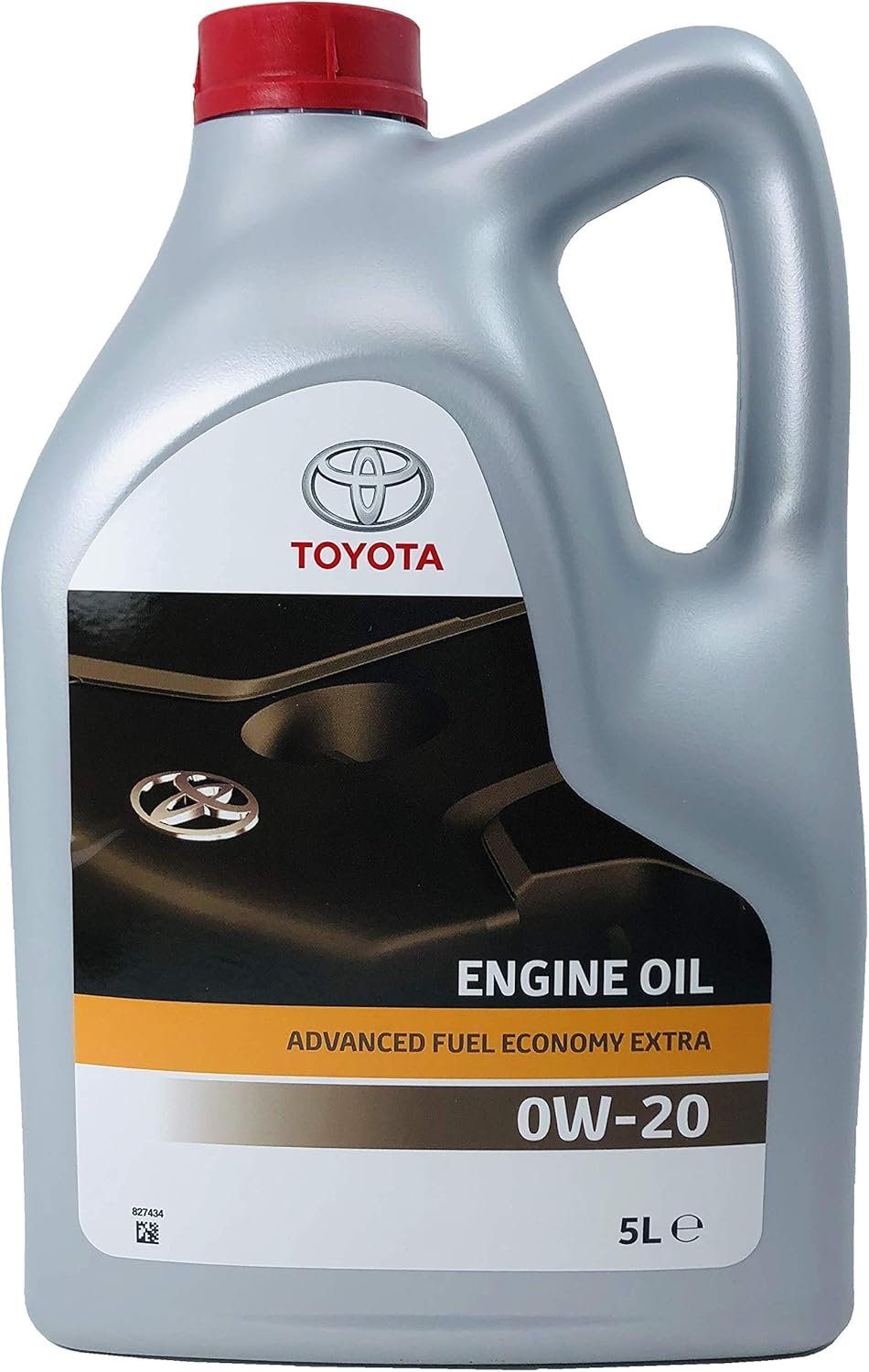
As an Amazon Associate, we may earn from qualifying purchases. This doesn't affect our recommendations — we only suggest oils that hold the exact OEM approval for your engine.
Best Engine Oil for Toyota Prius XW50 1.8 Hybrid (122 hp)
The Toyota Prius XW50 arrived in 2016 as the fourth-generation Prius and brought a complete platform and powertrain overhaul to the world’s most recognised hybrid nameplate. The XW50 sits on Toyota’s TNGA-C architecture, uses a revised version of the familiar 2ZR-FXE 1.8-litre Atkinson-cycle petrol engine, and pairs it with a new transaxle and higher-capacity lithium-ion battery for improved electric-mode capability. The result is a combined system output of 122 hp and real-world fuel economy figures of 55–65 mpg under UK mixed conditions.
Choosing the correct oil for a hybrid engine requires understanding that the 2ZR-FXE operates differently from a conventional petrol engine — it cycles on and off with the electric system and runs in Atkinson cycle mode, conditions that place unusual demands on oil formulation and make viscosity selection particularly important.
Quick Answer: Recommended Oil
- Specification: Toyota Genuine Motor Oil 0W-20 or equivalent API SN / SP, ILSAC GF-5 / GF-6
- Viscosity: 0W-20 (mandatory, not a preference)
- Alternative viscosity: 5W-20 (only acceptable when 0W-20 unavailable; not preferred)
- Capacity with filter change: 3.7 litres
- Capacity without filter change: 3.5 litres
Toyota specifies 0W-20 as the mandatory viscosity for the 2ZR-FXE in the Prius XW50. This is not interchangeable with the 5W-30 or 5W-40 grades used in many conventional petrol engines — the fuel economy and emission compliance figures are calibrated to the lower-viscosity 0W-20, and using a thicker oil imposes measurable fuel economy penalties. Toyota’s UK recommendation explicitly states 0W-20 meeting API SN or later.
The 2ZR-FXE Engine in the XW50
The 2ZR-FXE is a 1,798cc inline-four petrol engine, but its operating strategy is fundamentally different from conventional petrol units. In the Prius XW50, it operates in three regimes: Atkinson cycle for most part-load conditions, Otto cycle for higher loads, and stop-start cycling that shuts the engine completely at low speeds and during gentle deceleration.
Atkinson cycle operation: Unlike the Otto cycle used in conventional petrol engines, the Atkinson cycle holds the intake valve open during part of the compression stroke, effectively reducing the compression ratio below the expansion ratio. This loses peak power but converts a higher proportion of heat energy to mechanical work, dramatically improving thermal efficiency. The trade-off is that Atkinson cycle engines produce lower peak output per litre than conventional petrol engines — the 2ZR-FXE’s 98 hp ICE output reflects this — with the electric motor making up the difference for performance.
Compression ratio: The 2ZR-FXE in the XW50 runs a geometric compression ratio of 13.0:1 — unusually high for a port-injected petrol engine and enabled by the Atkinson valve timing strategy that prevents knock. This high compression demands a thermally stable oil that doesn’t break down under combustion heat.
Stop-start cycling: The Prius engine shuts off completely and restarts many times per journey — up to hundreds of times in urban driving. Each restart is a cold start at the bearings and valve train for the first second of operation. This places more cumulative cold-start stress on the oil than a conventional engine that starts once and runs continuously. The 0W-20 grade’s exceptional cold flow properties (viscosity as low as any common grade at cold start) minimise wear during these frequent restart events.
Engine cooling integration: The 2ZR-FXE uses Toyota’s Exhaust Heat Recirculation system (EHR) in the XW50, which captures exhaust heat to accelerate engine warm-up. This reaches normal operating temperature faster than most petrol engines, reducing the duration of cold-start oil stress per restart cycle.
Understanding Toyota’s 0W-20 Specification
Toyota specifies 0W-20 for the Prius across markets, but the underlying API standard differs slightly between the UK and global specifications.
| Standard | Current version | Supersedes | Suitable for XW50 |
|---|---|---|---|
| API SP | Current (2020+) | SN Plus, SN | Yes (preferred) |
| API SN | Previous generation | SM | Yes |
| ILSAC GF-6A | Current (0W-20 grade) | GF-5 | Yes |
| ILSAC GF-5 | Previous | GF-4 | Yes |
| ACEA A1/B1 | European equivalent | — | Yes (for UK market) |
Toyota’s primary recommendation is API SP / ILSAC GF-6A for the most current XW50 production. The GF-6 standard introduced stricter limits on Timing Chain Wear, Low Speed Pre-Ignition (LSPI) protection, and oxidation stability — all relevant to the 2ZR-FXE’s operating conditions.
Why 0W-20 specifically: The “0W” cold rating delivers excellent flow at sub-zero temperatures. Combined with the “20” high-temperature rating (a lighter grade than the 30 or 40 suffixes common in European vehicles), the 0W-20 provides minimum internal friction at normal operating temperature — critical for maximising hybrid system efficiency where the ICE already operates in its most thermally efficient window. Fitting a 5W-30 imposes a measurable friction penalty that reduces fuel economy by 1–2% compared to the specified 0W-20.
Is 5W-20 acceptable? Toyota permits 5W-20 as an alternative “when 0W-20 is not available.” In practice, 0W-20 is widely available across the UK from all major brands, so this exception should rarely apply. The 5W-20 is functionally adequate but does not deliver the cold-start protection of 0W-20 and is considered an emergency substitute.
Can I use 5W-30? No. Toyota does not approve 5W-30 for the 2ZR-FXE in the XW50. While you won’t immediately damage the engine, you will compromise fuel economy and the emissions compliance calibration. Toyota’s dealer network uses 0W-20 exclusively for warranty-status services.
Technical Specifications
| Parameter | Value |
|---|---|
| Displacement | 1,798 cc |
| Configuration | Inline-4, transverse |
| Valvetrain | DOHC, 4 valves/cylinder |
| Bore × Stroke | 80.5 × 88.3 mm |
| Compression ratio | 13.0:1 (geometric) |
| Cycle | Atkinson (part load) / Otto (high load) |
| Power (ICE) | 72 kW / 98 hp @ 5,200 rpm |
| System power | 90 kW / 122 hp |
| Fuel system | Port injection (D-4 in later variants) |
| Valve timing | Toyota Dual VVT-i |
| Battery | 1.3 kWh lithium-ion |
| Emissions | Euro 6 |
| Oil specification | API SP / ILSAC GF-6A |
| Viscosity | 0W-20 |
| Oil capacity (with filter) | 3.7 litres |
Oil Change Intervals
Toyota UK specifies a 10,000-mile or 12-month service interval for the Prius XW50 under normal conditions, whichever comes first. This is Toyota’s standard interval and is appropriate for the 2ZR-FXE’s operating pattern.
In hybrid vehicles, the conventional argument for shorter intervals — that urban driving means fewer hot-running hours per mile — is partially offset by the frequent engine stops that reduce total engine running time. A Prius covering 10,000 miles in urban conditions might only run the engine for 4,000–5,000 actual miles, which concentrates oil contamination into fewer engine-running hours.
However, Toyota’s recommended 10,000-mile/annual interval is conservative enough to manage this. UK Prius specialists and independent Toyota mechanics generally advise sticking to the Toyota interval rather than extending it. The oil capacity is small (3.7 litres with filter) and oil changes are inexpensive — there is no reason to delay.
For very high mileage XW50s (beyond 100,000 miles), many owners opt for annual changes regardless of mileage, as oil’s contribution to maintaining seals and internal surfaces becomes more important in older engines.
Why Correct Oil Matters on the Prius XW50
Stop-start bearing protection: Every Prius ICE restart under electric-priority operation is a low-speed restart from cold bearings. Main and rod bearing clearances in the 2ZR-FXE are specified with 0W-20 in mind — the oil’s extremely low cold viscosity ensures it is distributed to critical surfaces within the first rotation. A heavier oil delays this distribution moment during each of the hundreds of restarts in a typical day’s urban driving.
VVT-i solenoid response: The Dual VVT-i system on the XW50 adjusts both intake and exhaust cam timing in real time to optimise the Atkinson-to-Otto cycle transition. The solenoids controlling cam advance are fed through tiny oil passages and require clean, correctly viscous oil to respond accurately. In the Prius, correct VVT response is also linked to the hybrid ECU’s management of the ICE’s contribution relative to the electric motor — sluggish cam phasing shows up as unexpected ICE activation patterns.
Fuel economy calibration: Toyota’s Prius fuel economy figures are certified using 0W-20 oil. Using a heavier oil grade doesn’t just increase friction in the engine — it also causes the hybrid ECU’s efficiency calculations to be slightly off, potentially altering when and how aggressively the electric motor is deployed to supplement the ICE.
Common 2ZR-FXE Problems Related to Oil
Occasional oil consumption (high mileage): Some XW50 and predecessor Prius models have been reported to consume small amounts of oil between services at higher mileages, typically beyond 100,000 miles. This is more common in examples with extended oil change histories. The correct 0W-20 grade helps maintain piston ring sealing by flowing into the ring grooves quickly on each restart. Checking the oil level at each fuel fill is good practice on any Prius over 80,000 miles.
Water contamination on short trips: In very cold weather, extremely short trips (under 3 km) may not allow the engine to reach full operating temperature before shutdown. The 2ZR-FXE’s stop-start strategy can result in condensation in the oil that doesn’t fully evaporate if the engine never fully warms. Signs: milky appearance on the dipstick or oil filler cap. In the UK climate this is uncommon outside deep winter, but if you drive predominantly very short distances, an occasional longer run to fully thermally cycle the oil is worthwhile.
Thermostat and EHR maintenance: The Exhaust Heat Recirculation system is designed to accelerate warm-up. If the thermostat or EHR system develops faults, engine warm-up is prolonged, increasing cold-start stress. Routine servicing catches thermostat degradation before it becomes an oil-related issue.
Conclusion
The Toyota Prius XW50 2ZR-FXE requires 0W-20 oil meeting API SP (or SN minimum) and ILSAC GF-6A (or GF-5). This is Toyota’s mandatory specification — not a recommendation — and should not be substituted with 5W-30 or any other grade. Capacity is 3.7 litres with a filter change.
Change oil annually or at 10,000 miles, whichever comes first. On a vehicle used predominantly in urban stop-start conditions, keeping to this interval protects the engine’s bearing surfaces during the frequent restart cycles that define hybrid operation. The Prius XW50 2ZR-FXE is a well-proven engine with excellent reliability when maintained correctly — and correct oil is the single most important maintenance input.
Sources: Toyota UK Prius XW50 owner’s manual, Toyota Motor Corporation 2ZR-FXE technical documentation, API SP oil specification, ILSAC GF-6 standard, UltimateSpecs — Prius XW50 specifications, Toyota UK service information.
Our Top Picks
As an Amazon Associate, we may earn from qualifying purchases. This doesn't affect our recommendations — we only suggest oils that hold the exact OEM approval for your engine.