 Oil-
Oil-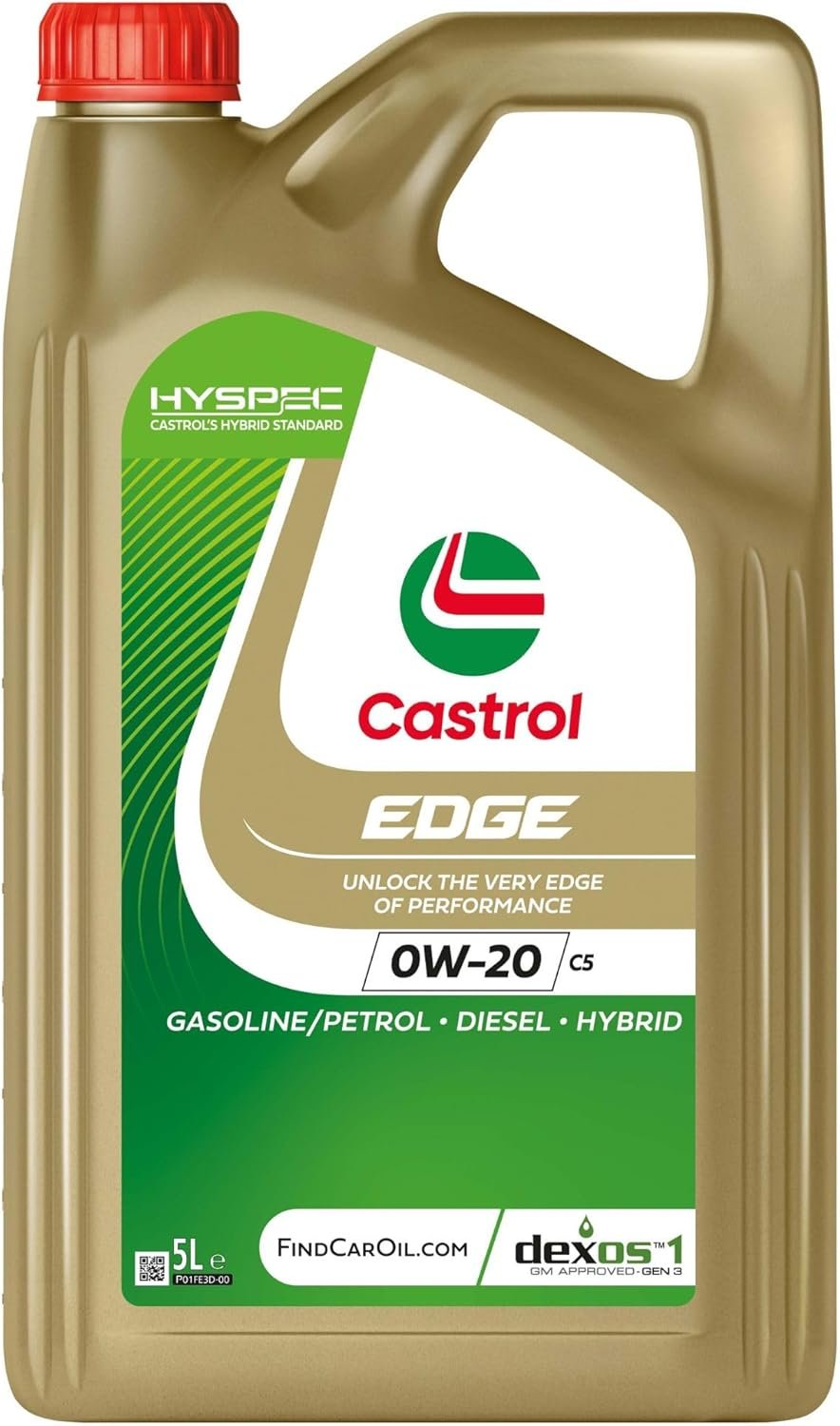

As an Amazon Associate, we may earn from qualifying purchases. This doesn't affect our recommendations — we only suggest oils that hold the exact OEM approval for your engine.
Best Engine Oil for Kia Sportage NQ5 1.6 T-GDi PHEV (265 hp)
The Kia Sportage NQ5 Plug-in Hybrid is the range-topping powertrain in the fifth-generation Sportage lineup. Launched in the UK in 2022, it pairs the 1.6-litre Smartstream G4FT turbocharged petrol engine with a 13.8 kWh battery and a permanent magnet electric motor integrated into the six-speed automatic transmission, producing a combined 265 hp. With up to 43 miles of pure electric range, many owners cover substantial distances without engaging the combustion engine at all — and that shift in usage pattern has direct consequences for engine oil management.
Getting the oil specification right is especially critical in a PHEV. Unlike a conventional petrol or diesel car that warms up on every journey, the G4FT in PHEV mode can run intermittently, never fully reaching thermal equilibrium. The result is accelerated oil contamination through fuel dilution. Using the correct low-viscosity oil, meeting ACEA C5 and API SP, is non-negotiable for protecting this engine’s most sensitive components.
Quick Answer: Recommended Oil
For the Kia Sportage NQ5 1.6 T-GDi PHEV (265 hp):
- Primary viscosity: SAE 0W-20
- Alternative viscosity: 5W-30 (only where 0W-20 is unavailable)
- Oil capacity: 4.8 litres with filter (4.5 L without)
- Required norm: ACEA C5 / API SP
The G4FT Smartstream Engine
The G4FT belongs to Kia’s Smartstream family — the same 1,598cc four-cylinder turbocharged unit used across the NQ5 Hybrid and NQ5 PHEV variants. The architecture is shared with the Hyundai Tucson NX4 PHEV and features a twin-scroll turbocharger, direct injection (GDI), and Kia’s proprietary CVVD (Continuously Variable Valve Duration) system.
CVVD is the defining technology of this generation of Hyundai-Kia engines. Unlike conventional systems that vary valve timing or lift, CVVD adjusts how long the intake valve stays open — from a short, early-closing duration at low load (improving efficiency via the Atkinson-like cycle) to a full, late-closing duration at high load (maximising power). The control mechanism uses an eccentric shaft driven by a motor and worm gear assembly, operating under oil pressure. Thin, high-quality 0W-20 oil reaches the CVVD actuator and camshaft bearings faster after a cold start than thicker grades, which is critical because the G4FT in PHEV mode starts and stops dozens of times per journey.
The block and cylinder head are aluminium, the crankshaft is forged steel, and the combustion chambers are shaped for tumble flow to improve atomisation of direct-injected fuel. In PHEV configuration, the engine develops 180 hp on its own, supplemented by the electric motor’s 66 kW (88 hp) for a combined 265 hp.
Understanding ACEA C5 and API SP for PHEVs
ACEA C5 is a mid-SAPS (mid sulphated ash, phosphorus and sulphur) specification designed for petrol and diesel engines with DPFs or TWCs, and is particularly well-suited to low-viscosity grades. The C5 category mandates high fuel economy performance — the same friction-reduction characteristics that benefit conventional hybrids are even more important in a PHEV, where the engine operates in short, thermally inefficient bursts.
API SP, the current top-tier American Petroleum Institute petrol engine standard, adds protection against low-speed pre-ignition (LSPI), a combustion anomaly particularly associated with small-displacement turbocharged GDI engines like the G4FT. LSPI occurs when fuel-oil droplets in the cylinder auto-ignite before the spark event, generating extreme cylinder pressures that can crack pistons or bend connecting rods. API SP chemistry reduces this risk through careful control of calcium and other detergent additives.
5W-30 as an alternative: If 0W-20 meeting ACEA C5 is genuinely unavailable, a 5W-30 of equivalent quality (ACEA C3 minimum, preferably C5) is acceptable for a single fill. Return to 0W-20 at the next service. The difference in cold-start oil film delivery — particularly to the CVVD mechanism — is measurable, especially during winter starts.
Technical Specifications: G4FT PHEV
| Specification | Value |
|---|---|
| Displacement | 1,598cc |
| Layout | Inline-4, transverse, aluminium block and head |
| Valvetrain | DOHC, 16 valves, CVVD + CVVT |
| Turbocharger | Twin-scroll |
| Combined System Power | 265 hp |
| Engine Power (petrol only) | 180 hp @ 5,500 RPM |
| Engine Torque | 265 Nm @ 1,500–4,500 RPM |
| Electric Motor | 66 kW permanent magnet |
| Battery | 13.8 kWh lithium-ion |
| Electric Range | Up to 43 miles (WLTP) |
| Recommended Viscosity | SAE 0W-20 |
| Oil Capacity (with filter) | 4.8 litres |
| ACEA Norm | C5 |
| API Norm | SP |
Oil Change Intervals
Kia official: 10,000 miles or 12 months, whichever comes first.
Practical recommendation for PHEV drivers: The 10,000-mile interval is designed with mixed driving in mind. However, owners who use the Sportage PHEV primarily for short urban trips — relying on electric mode and only occasionally running the combustion engine — may accumulate service mileage very slowly. In this situation, the annual 12-month interval becomes the operative trigger, regardless of mileage. Do not extend beyond 12 months in service life.
Kia’s 7-year/100,000-mile warranty (UK) is contingent on documented servicing at an authorised dealer or with proof of specification-correct oil. Retain receipts and oil packaging. Oil changes must be performed within 1,000 miles or 30 days of the due date to remain within warranty compliance.
The PHEV Oil Dilution Challenge
Fuel dilution is the single most important oil-specific risk factor for PHEV engines, and the G4FT is not immune. Here is how it happens: when the combustion engine starts cold, a richer fuel mixture is delivered to aid ignition. Some of this unburnt fuel condenses on cold cylinder walls and migrates past the piston rings into the crankcase, blending with the engine oil. In a conventional car, long highway journeys eventually boil off this accumulated fuel through oil temperature. In a PHEV, the engine may never sustain operation long enough for oil temperatures to reach the 90–100°C range where fuel evaporation is effective.
The symptoms are gradual: the oil level on the dipstick rises (the opposite of burning oil), the oil smells faintly of petrol, and the fluid becomes thinner than it should be. Diluted oil has reduced viscosity at operating temperature, weakening the oil film at camshaft lobes, turbocharger bearings, and CVVD actuator surfaces.
Practical mitigation steps for PHEV owners:
- Check the dipstick regularly — rising oil level is an early warning sign of dilution
- Monthly motorway runs: 20–30 minutes at sustained speed fully warms the oil, driving off accumulated fuel
- Do not extend oil change intervals — even on low mileage, the 12-month limit exists precisely because of this risk
- Use 0W-20: its low base viscosity provides a wider safety margin when mild dilution occurs compared to a 5W-30 that becomes dangerously thin when diluted
Why Correct Oil Matters for the G4FT PHEV
CVVD mechanism: The eccentric shaft controlling valve duration operates via oil pressure at the control motor. Contaminated or excessively diluted oil reduces hydraulic response, causing sluggish transitions and potential error codes (P-codes related to variable valve timing). Low-quality or incorrect oil can accelerate wear on the worm gear and eccentric bearing.
Turbocharger: The twin-scroll turbocharger spins to over 200,000 RPM on a film of engine oil. During PHEV stop-start cycles, the turbo cools rapidly between engine-off periods, then receives high-energy combustion gases immediately on restart. Oil reaching the turbo bearings quickly — enabled by 0W-20’s low cold-viscosity — minimises dry-start wear at the journal bearings.
GDI carbon buildup: Direct injection sprays fuel directly into the cylinder, bypassing the intake valves. Unlike port injection, there is no fuel wash to clean carbon deposits off the back of the intake valves. Over time — typically 60,000–80,000 miles — carbon deposits accumulate on intake valve stems, disrupting airflow and causing rough idling, misfires, and reduced power. This is not an oil specification issue but a known characteristic of all GDI engines. Using high-quality oil with robust detergent additives (as mandated by API SP) slows crankcase carbon formation, though intake valve cleaning remains a periodic maintenance consideration regardless of oil choice.
LSPI protection: Small-displacement turbocharged GDI engines are the most susceptible category to low-speed pre-ignition. Kia’s combustion design mitigates this risk, but the oil chemistry plays a supporting role. API SP-rated oils are specifically formulated to reduce LSPI frequency — a critical specification that lower-rated oils (SP-C, SN+) may not meet as reliably.
Common G4FT PHEV Problems Related to Oil
Oil dilution and rising level: As described above, this is the primary PHEV-specific maintenance concern. Check the dipstick every 2,000 miles and follow the annual change interval strictly.
GDI intake valve deposits: Carbon buildup on intake valves affects idle quality and cold-start smoothness by approximately 60,000–80,000 miles. This is distinct from oil quality but is a known characteristic of GDI engines — some dealers offer walnut blasting (abrasive media cleaning) as a corrective service.
Turbo bearing wear: Reported on higher-mileage G4FT units, often linked to infrequent oil changes or incorrect oil specification. The twin-scroll design is efficient but demands clean, correctly-specified oil. Oil pressure loss at the turbo bearings manifests as whistling, smoke on startup, or oil consumption.
Timing chain: Early G4FT engines across the Hyundai-Kia range have shown occasional timing chain stretch at higher mileages. Using the correct 0W-20 grade ensures adequate chain tensioner hydraulic pressure during cold starts, which is a primary contributor to chain elongation.
Conclusion
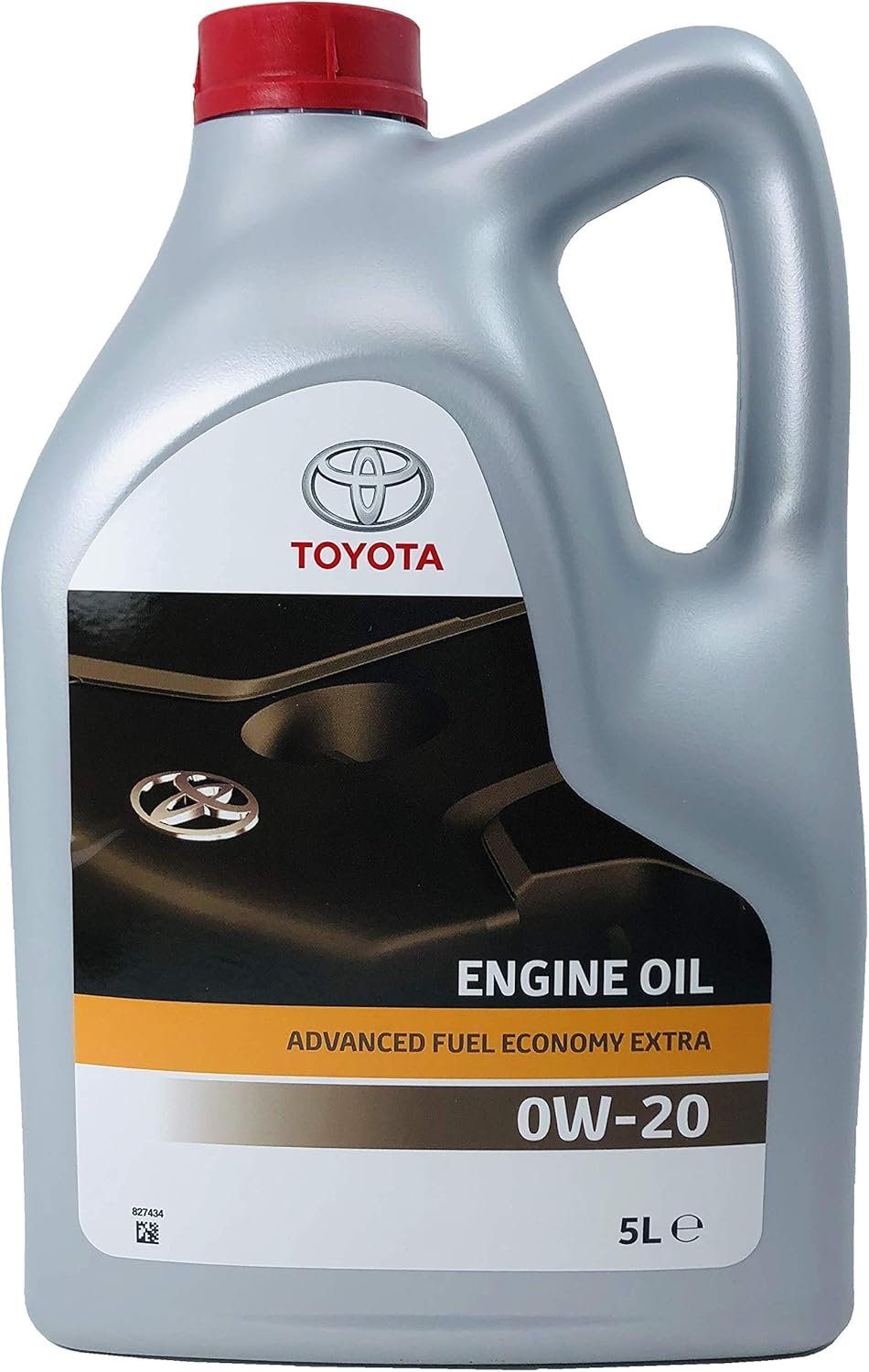
The Kia Sportage NQ5 1.6 T-GDi PHEV requires SAE 0W-20 meeting ACEA C5 and API SP, with a 4.8-litre capacity including the filter. The PHEV usage profile — short, intermittent engine cycles — makes oil dilution the principal maintenance concern, and the annual service interval is as important as the mileage trigger for this powertrain. Change oil every 12 months or 10,000 miles regardless of which comes first, check the dipstick every two months, and include occasional sustained motorway driving to thermally condition the oil. The CVVD system, twin-scroll turbo, and GDI combustion all depend on clean, correctly-specified lubricant to reach the potential of this well-engineered 265 hp plug-in hybrid powertrain.
Our Top Picks
As an Amazon Associate, we may earn from qualifying purchases. This doesn't affect our recommendations — we only suggest oils that hold the exact OEM approval for your engine.