 Oil-
Oil-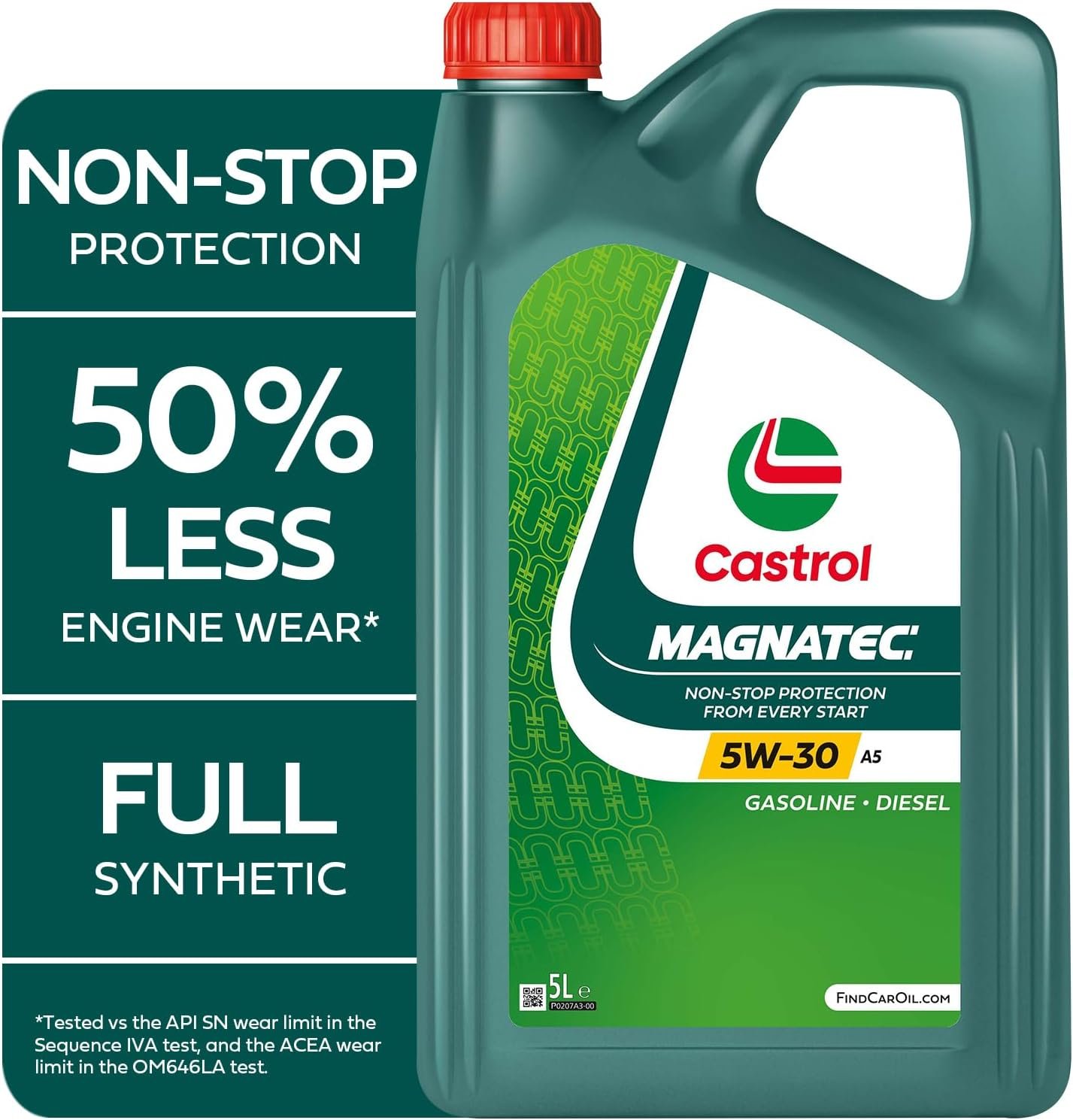
As an Amazon Associate, we may earn from qualifying purchases. This doesn't affect our recommendations — we only suggest oils that hold the exact OEM approval for your engine.
Best Engine Oil for Ford Focus Mk3 1.6 TDCi (115 hp)
The Ford Focus Mk3 1.6 TDCi 115 hp was one of the most popular diesel Focus variants throughout its 2011–2018 production run, combining strong fuel economy, affordable running costs, and a compact turbodiesel character that suited both family and fleet use. The T1DA engine — a joint Ford-PSA development sharing its fundamental architecture with the Peugeot 308 1.6 HDi and Citroën C4 — is an accomplished unit, but it comes with specific oil and maintenance requirements that owners must understand to protect it long-term.
Quick Answer: Recommended Oil
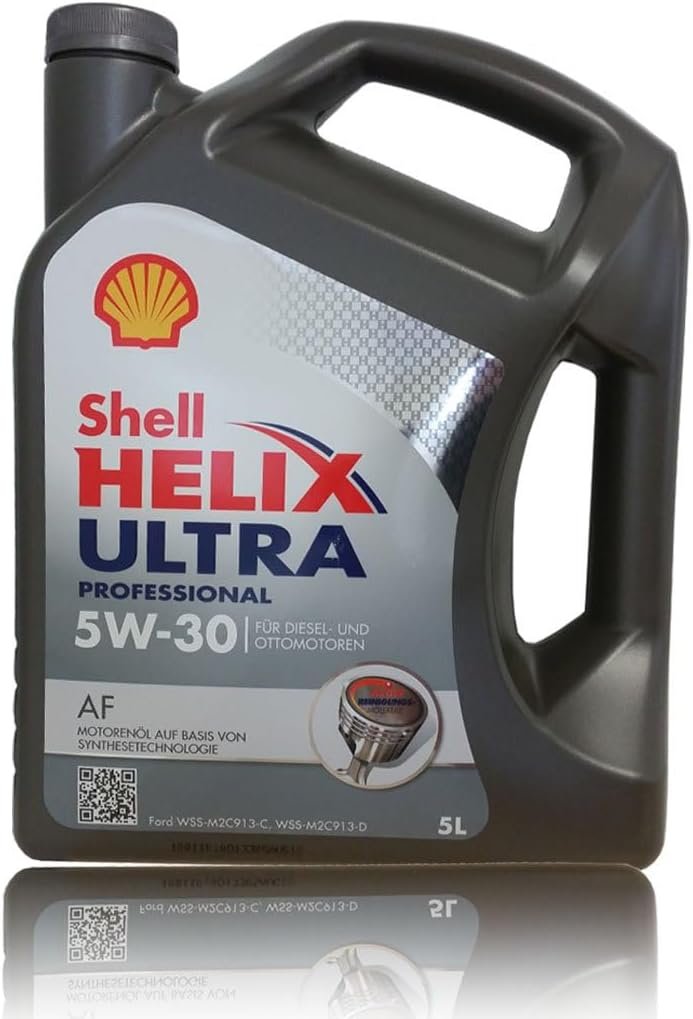
- Specification: Ford WSS-M2C913-D (ACEA A5/B5)
- Viscosity: 5W-30
- Alternative: 0W-30 (same specification required)
- Oil capacity with filter: 3.85 litres
- Oil capacity without filter: approx. 3.45 litres
The 1.6 TDCi T1DA Engine
The DV6C (Ford code T1DA at 115 hp) is a 1,560cc four-cylinder, eight-valve, single-overhead-cam diesel developed jointly between Ford and PSA under their long-running engine sharing arrangement. Bore and stroke: 75mm × 88.3mm. Common-rail direct injection feeds a single variable-geometry turbocharger, achieving strong torque across a wide rev range while meeting Euro 5 emissions standards. A diesel particulate filter (DPF, called FAP in PSA applications) is fitted as standard.
A critical distinction for maintenance: this engine uses a timing belt, not a chain. Ford and PSA specify belt replacement at up to 125,000 miles / 10 years, but independent mechanics typically recommend 80,000–100,000 miles on higher-mileage examples. The DV6C is an interference engine, meaning a snapped cambelt leads to bent valves and potential head damage — the consequences of belt failure are severe.
The 3.85-litre oil capacity with filter is modest, reflecting the compact sump design of this family-car diesel.
Understanding Ford WSS-M2C913-D
Ford specifies WSS-M2C913-D (ACEA A5/B5, 5W-30) for the 1.6 TDCi — a specification that often surprises owners familiar with ACEA C3 on other diesels. The A5/B5 classification differs from C3 in important ways: A5/B5 is a low HTHS viscosity (fuel economy) grade rather than the ultra-low-ash ACEA C-sequence. Ford designed the DV6C-T1DA for this specification because the DPF system on this application can tolerate slightly higher SAPS levels than the strictest C1/C4 specs require.
In practice, an ACEA C3 5W-30 will not harm this engine — C3 oils are generally equally low-SAPS or lower. However, the OEM specification is WSS-M2C913-D (A5/B5), and oils carrying this approval (alongside an approved Ford viscosity) satisfy the warranty requirement.
The WSS-M2C913 family (-A, -B, -C, -D) shares a common chemistry basis; -D is the current iteration and the one to specify for 2011-onward Focus Mk3 production.
Technical Specifications
| Specification | Value |
|---|---|
| Displacement | 1,560 cc |
| Layout | 4-cylinder inline, 8-valve SOHC, turbodiesel |
| Engine code | T1DA (115 hp) |
| Power output | 115 hp / 270 Nm |
| Injection system | Common-rail direct injection |
| Timing system | Cambelt (not chain — service interval 125,000 miles) |
| Turbocharger | Variable-geometry turbocharger |
| Oil capacity (with filter) | 3.85 litres |
| Oil capacity (without filter) | approx. 3.45 litres |
| Recommended viscosity | 5W-30 |
| Alternative viscosity | 0W-30 |
| Ford OEM norm | WSS-M2C913-D |
| ACEA classification | A5/B5 |
Oil Change Intervals
Ford specifies up to 20,000 km / 12 months under its Intelligent Oil Life Monitor. In practice, 15,000 km or 12 months is a safer real-world ceiling for normal mixed driving.
For owners doing predominantly short urban trips — commuting, school runs, local use — the DPF risk multiplies significantly. Short journeys prevent passive regeneration, increasing the frequency of active forced regen events, which in turn risk diesel wash-down into the sump oil. For this driving profile, 10,000 km or 10 months is the recommended maximum, with monthly dipstick checks for oil dilution advisable.
The modest 3.85-litre capacity provides less thermal buffering than a larger sump — degradation from short-trip use is more rapid per unit of oil.
Why Correct Oil Matters for the 1.6 TDCi
The variable-geometry turbocharger is highly sensitive to oil quality. The T1DA VGT vanes must pivot freely under high exhaust temperatures; carbon deposits from degraded or incorrect oil bake onto the vane mechanism and can cause sticking or seizure. A stuck VGT typically presents as turbo failure — an expensive and unnecessary outcome of incorrect lubrication.
Using a conventional ACEA A3 or B4 5W-40 oil (higher SAPS, common in older vehicles) will exceed permissible ash levels and accelerate DPF clogging, shortening the filter’s service life and increasing forced regeneration frequency.
Common 1.6 TDCi Problems Related to Oil
DPF blockage: The most common workshop presentation for Focus Mk3 1.6 TDCi owners. Short-trip use prevents passive regeneration; over time, soot accumulates until active regeneration or DPF replacement is needed. Correct low-SAPS oil slows ash loading; periodic motorway runs address the regeneration problem.
EGR valve fouling: Carbon buildup in the EGR valve and inlet manifold causes rough idle, power loss, and fault codes. Regular oil changes with WSS-M2C913-D prevent excessive combustion by-products contributing to EGR fouling.
Turbocharger failure: Predominantly caused by oil starvation or extended oil intervals. Fresh 5W-30 WSS-M2C913-D maintains adequate film strength at the VGT bearings.
Cambelt failure: Not directly oil-related, but the most catastrophic risk on this engine. Never exceed the recommended belt change interval; many specialists recommend 80,000 miles as the practical limit rather than the maximum 125,000 miles.
Injector carbon lock: The DV6 injectors can carbon-lock at high mileage if copper sealing washers degrade. Correct oil reduces deposits around injector seats; early detection prevents the worst-case extraction scenario.
Conclusion
The Ford Focus Mk3 1.6 TDCi 115 hp is a proven and economical diesel when properly maintained. The WSS-M2C913-D 5W-30 specification is the correct oil choice — different from the ACEA C3 oils common across many European diesels, but well-matched to this engine’s design. Combine correct oil with realistic service intervals and periodic longer runs to support DPF regeneration, and the T1DA engine offers rewarding long-term reliability. The cambelt is the other critical maintenance item — never defer it.
Our Top Picks
As an Amazon Associate, we may earn from qualifying purchases. This doesn't affect our recommendations — we only suggest oils that hold the exact OEM approval for your engine.