 Oil-
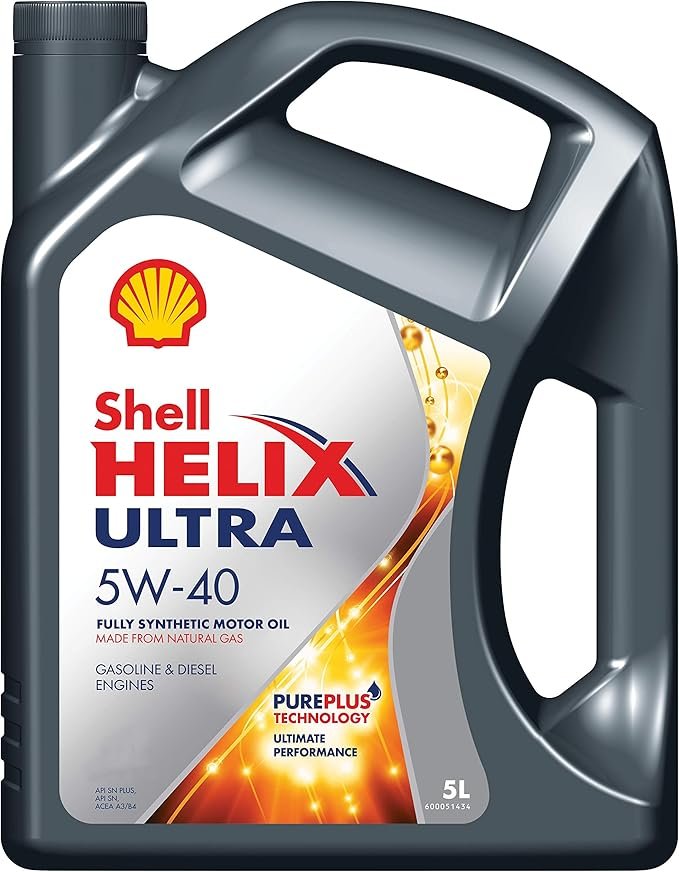
As an Amazon Associate, we may earn from qualifying purchases. This doesn't affect our recommendations — we only suggest oils that hold the exact OEM approval for your engine.
Best Engine Oil for Audi TT 8J 2.0 TFSI (211 hp)
The Audi TT 8J with the 2.0 TFSI is one of the defining sport coupes of its era — sharp, focused, and powered by the first generation of Volkswagen Group’s EA888 turbocharged petrol engine. The CESA and CCZA engine codes cover the 211 hp variants of this unit, which appeared in the TT from 2006 through to the 8J’s end of production in 2014. The EA888 Gen 1 (CESA) and Gen 2 (CCZA) are technically related but have different characteristics, and both require close attention to oil specification and change intervals — primarily because early examples of this engine family have a well-documented oil consumption issue that is directly influenced by oil quality.
The TT’s sport positioning means the 2.0 TFSI is used harder than the same engine in a Golf or A3. Engine oil in the TT 8J works under higher thermal and mechanical stress, and the consequences of neglected maintenance are correspondingly more severe.
Quick Answer: Recommended Oil
- Specification: VW 502 00, ACEA A3/B4
- Primary viscosity: 5W-40
- Alternative viscosity: 5W-30 (must meet VW 502 00)
- Capacity with filter change: 4.6 litres
- Capacity without filter change: 4.3 litres
The TT 8J 2.0 TFSI (CESA/CCZA) does not have a diesel particulate filter and does not require Low SAPS oil. VW 502 00 is the specification for VAG Group’s high-performance petrol engines without DPFs — it permits full SAPS chemistry with robust anti-wear and anti-oxidation packages. Using a Low SAPS oil (like VW 504 00) in the 2.0 TFSI is not harmful, but using A3/B4 full-SAPS 5W-40 is the specification and provides the thicker film at temperature that the EA888’s bearing loads benefit from in performance use.
The EA888 Gen 1 (CESA) and Gen 2 (CCZA)
CESA (Gen 1, 2006–2008): The original 2.0 TFSI in the TT 8J uses the EA888 Gen 1 architecture. Like all EA888 variants, it is a 1,984cc inline-four with direct injection, variable valve timing (single camshaft VVT on intake), and a single turbocharger producing 211 hp at 5,300–6,200 rpm and 280 Nm from 1,800–5,000 rpm. The Gen 1 is distinguished by cast iron cylinder liners and a specific piston ring design that, in early production, caused the engine’s most significant known issue: high oil consumption.
CCZA (Gen 2, 2008–2014): Volkswagen Group responded to the Gen 1’s problems with the EA888 Gen 2 in 2008, introduced with a revised piston ring pack and updated oil scraper rings to reduce oil consumption. The CCZA also added dual VVT (variable timing on both intake and exhaust camshafts — a significant upgrade) and minor combustion chamber revisions. Power remains at 211 hp. The Gen 2 is notably more reliable for oil consumption than the Gen 1, though not completely immune.
Both engines use a chain-driven timing system with the timing chain mounted at the front of the engine — unlike the rear-mounted N47 diesel chain that caused well-known issues in BMW applications. However, the EA888’s timing chain tensioner has a documented failure mode under cold starts when oil pressure has not fully built.
Understanding VW 502 00
The TT 8J 2.0 TFSI predates the widespread adoption of Low SAPS specifications in petrol performance applications. VW 502 00 is a traditional full-SAPS petrol engine specification.
| Specification | ACEA | SAPS | For TT 8J 2.0 TFSI? |
|---|---|---|---|
| VW 502 00 | A3/B4 | Full SAPS | Yes — correct |
| VW 504 00 | C3 | Low SAPS | Acceptable but not specified |
| VW 508 00 | C5 | Low SAPS | Not appropriate (wrong viscosity range) |
5W-40 versus 5W-30: VW 502 00 oils are available in both grades. The 5W-40 is the historically preferred grade for the EA888 Gen 1 and Gen 2 in performance applications, providing a thicker operating film at elevated temperatures that reduces oil consumption under hard use. The 5W-30 is technically within the 502 00 specification but gives a thinner film at temperature — some owners of Gen 1 CESA cars with known consumption issues specifically prefer 5W-40 to reduce the rate of oil loss.
Technical Specifications
| Parameter | CESA (Gen 1) | CCZA (Gen 2) |
|---|---|---|
| Displacement | 1,984 cc | 1,984 cc |
| Configuration | Inline-4, longitudinal | Inline-4, longitudinal |
| Bore × Stroke | 82.5 × 92.8 mm | 82.5 × 92.8 mm |
| Compression ratio | 9.6:1 | 9.6:1 |
| Power | 211 hp @ 5,300–6,200 rpm | 211 hp @ 5,300–6,200 rpm |
| Torque | 280 Nm @ 1,800–5,000 rpm | 280 Nm @ 1,800–5,000 rpm |
| Turbocharger | Single turbo + intercooler | Single turbo + intercooler |
| Fuel system | GDI (direct injection) | GDI (direct injection) |
| VVT | Single (intake) | Dual (intake + exhaust) |
| Timing | Chain, front-mounted | Chain, front-mounted |
| Emissions | Euro 4 | Euro 5 |
| Oil specification | VW 502 00 | VW 502 00 |
| Viscosity | 5W-40 | 5W-40 |
| Oil capacity (with filter) | 4.6 litres | 4.6 litres |
Oil Change Intervals
The TT 8J uses VAG’s service interval system, which can extend to 30,000 km or 24 months on the displayed indicator with Longlife oil.
For a performance car used as the TT 8J typically is — including track days, spirited road driving, and sustained high-speed motorway use — the extended Longlife interval is inappropriate. The EA888’s documented oil consumption and the thermal stresses of performance use make short intervals critical:
- 6,000–8,000 miles or annually for hard/track use
- 10,000 miles or annually for normal road driving
- Never extend beyond 12 months regardless of mileage
The Gen 1 CESA in particular: check oil level every 1,000–1,500 miles if you own an early example. Reported consumption rates of 0.5–1.0L per 1,000 miles are common on Gen 1 engines; running low causes accelerated wear. Early Gen 2 CCZA engines can also consume, typically at lower rates.
Why Correct Oil Matters on the TT 8J 2.0 TFSI
Oil consumption and piston ring sealing: The Gen 1 CESA’s high oil consumption is caused by piston rings that fail to adequately scrape oil from the cylinder walls, allowing it to enter the combustion chamber. Using a 5W-40 with a robust formulation and good shear stability helps maintain oil film control across the ring pack, reducing (though not eliminating) the consumption rate. An oil that shears down from 5W-40 to an effective 5W-30 or lower mid-interval provides even less ring-land film control.
Timing chain tensioner cold-start lubrication: The EA888’s timing chain tensioner is hydraulically actuated. In cold conditions, before oil pressure fully builds, the tensioner lacks hydraulic force to maintain chain tension — hence the characteristic cold-start rattle. A 5W-40 with excellent low-temperature flow establishes oil pressure marginally faster than a 10W-40 or inadequately specified oil. Short intervals keep the tensioner’s hydraulic circuit clean, preventing the sludging that worsens cold-start rattle.
Intake valve carbon (GDI specific): The TT 8J’s direct injection means intake valves are not cleaned by fuel on the induction stroke. Carbon from oil vapour accumulates on valve stems over time. Using correct-spec oil at short intervals, with good detergent content, reduces blow-by contribution to carbon accumulation.
Common TT 8J 2.0 TFSI Problems Related to Oil
Oil consumption (Gen 1 CESA primary issue): As described above, the Gen 1 EA888 has a known structural oil consumption issue linked to piston ring design. Volkswagen Group issued a Technical Service Bulletin (TSB) for affected vehicles, which includes a revised piston ring set for seriously affected engines. On engines not yet repaired, monitoring oil level every 1,000 miles and using a quality 5W-40 VW 502 00 oil is the primary management strategy. Do not wait for the oil warning light — at that point, significant oil loss has already occurred.
Timing chain tensioner rattle and eventual failure: The EA888’s timing chain tensioner can fail hydraulically, causing chain slack and a potentially catastrophic jumped timing event. Early symptoms: metallic rattle on cold start from the front of the engine (driver’s side, cam cover area) that reduces or disappears within 30–60 seconds of warm-up. If the rattle persists beyond warm-up or is heard at normal operating temperature, the tensioner needs immediate inspection. This is not directly an oil specification issue, but degraded oil with poor viscosity at cold start worsens the symptom.
PCV valve failure: The positive crankcase ventilation valve on the EA888 commonly fails with age, causing rough idle and lean running codes (P0171, P0507). Oil-related: failed PCV allows pressurised crankcase gases to enter the intake incorrectly, increasing oil contamination of the intake manifold. Regular oil changes don’t prevent PCV failure but a well-maintained engine puts less stress on the system.
Thermostat and water pump (plastic housing): The EA888 uses a plastic-housed thermostat and water pump that can fail with age. While not oil-related, an overheating event caused by cooling system failure can rapidly degrade oil quality — another reason to keep service intervals short on older examples.
Conclusion
The Audi TT 8J 2.0 TFSI (CESA/CCZA) requires VW 502 00 approved 5W-40 (ACEA A3/B4). Fill to 4.6 litres with a filter change. Change oil annually or every 8,000–10,000 miles — do not follow the extended service indicator on a performance car of this age.
Monitor oil level every 1,500 miles minimum, particularly on Gen 1 CESA engines. An engine that uses oil is not failing — it is normal for early EA888 examples — but running the level low causes accelerated wear that dramatically shortens engine life. Use 5W-40, check it regularly, change it often, and the TT 8J 2.0 TFSI will reward you with its characteristic combination of refinement and urgency for many years.
Sources: VW 502 00 specification, EA888 Gen 1 and Gen 2 technical documentation, TorqueCars.com — EA888 2.0 TFSI common problems, CherishYourCar.com — Audi 2.0 TFSI oil consumption overview, UltimateSpecs TT 8J database.
Our Top Picks
As an Amazon Associate, we may earn from qualifying purchases. This doesn't affect our recommendations — we only suggest oils that hold the exact OEM approval for your engine.