 Oil-
Oil-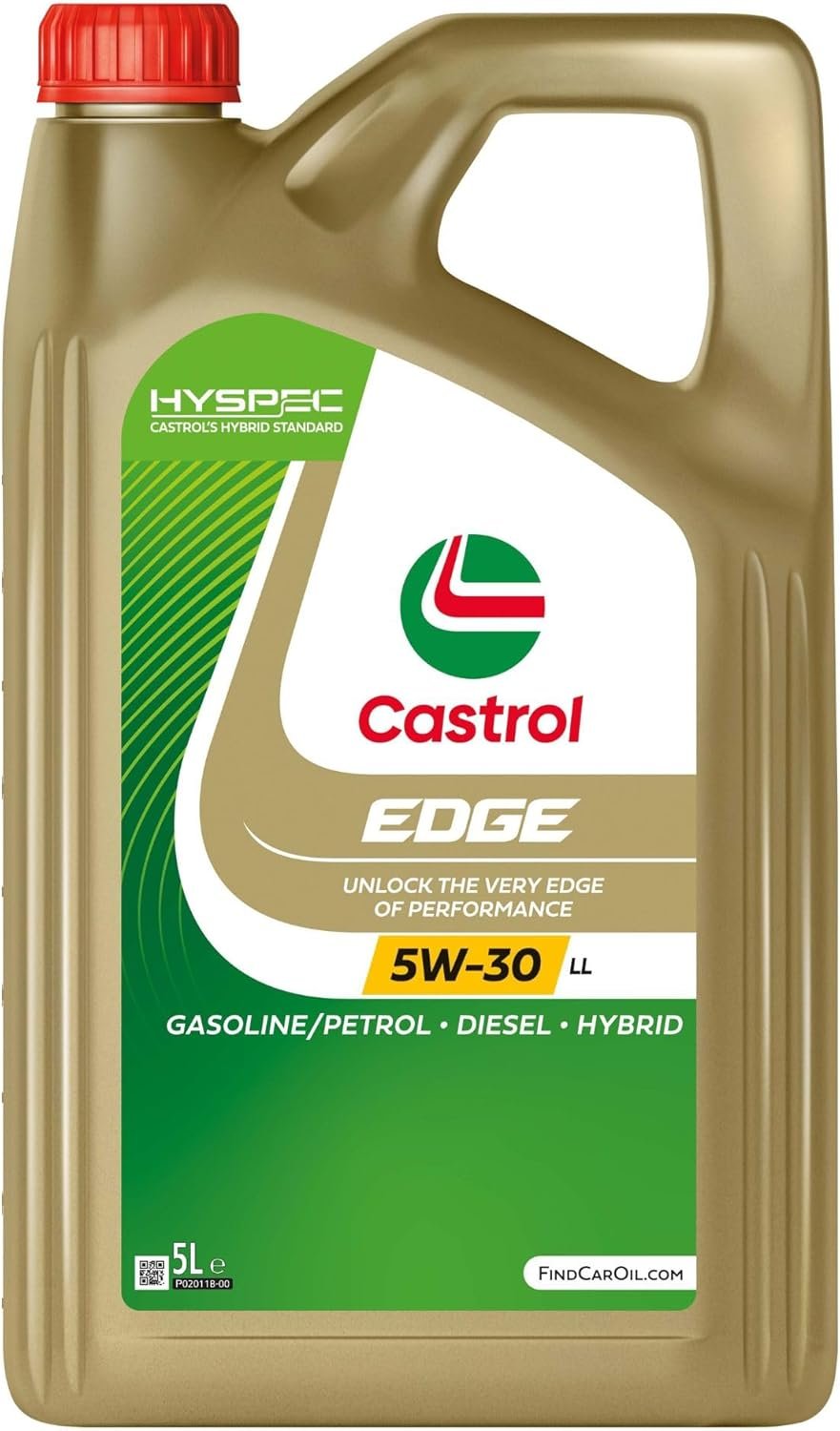
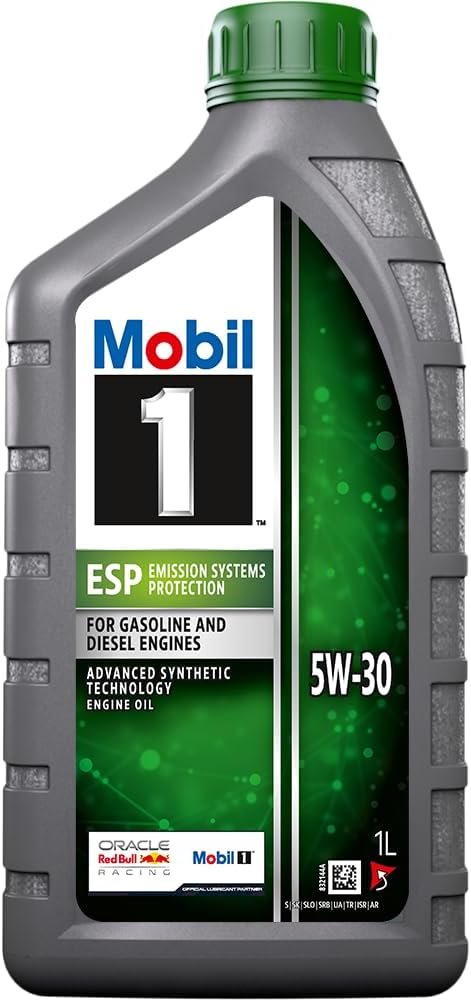
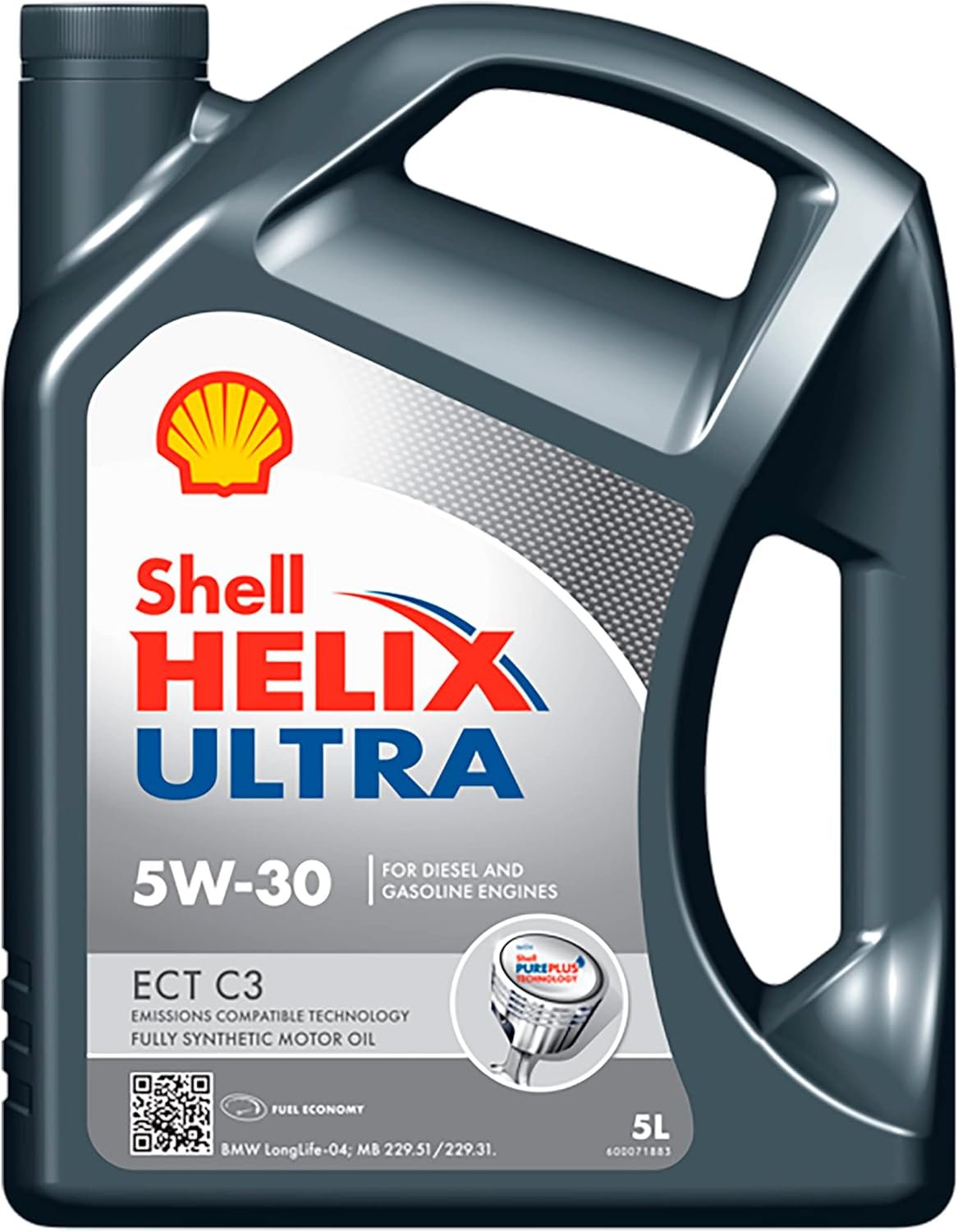
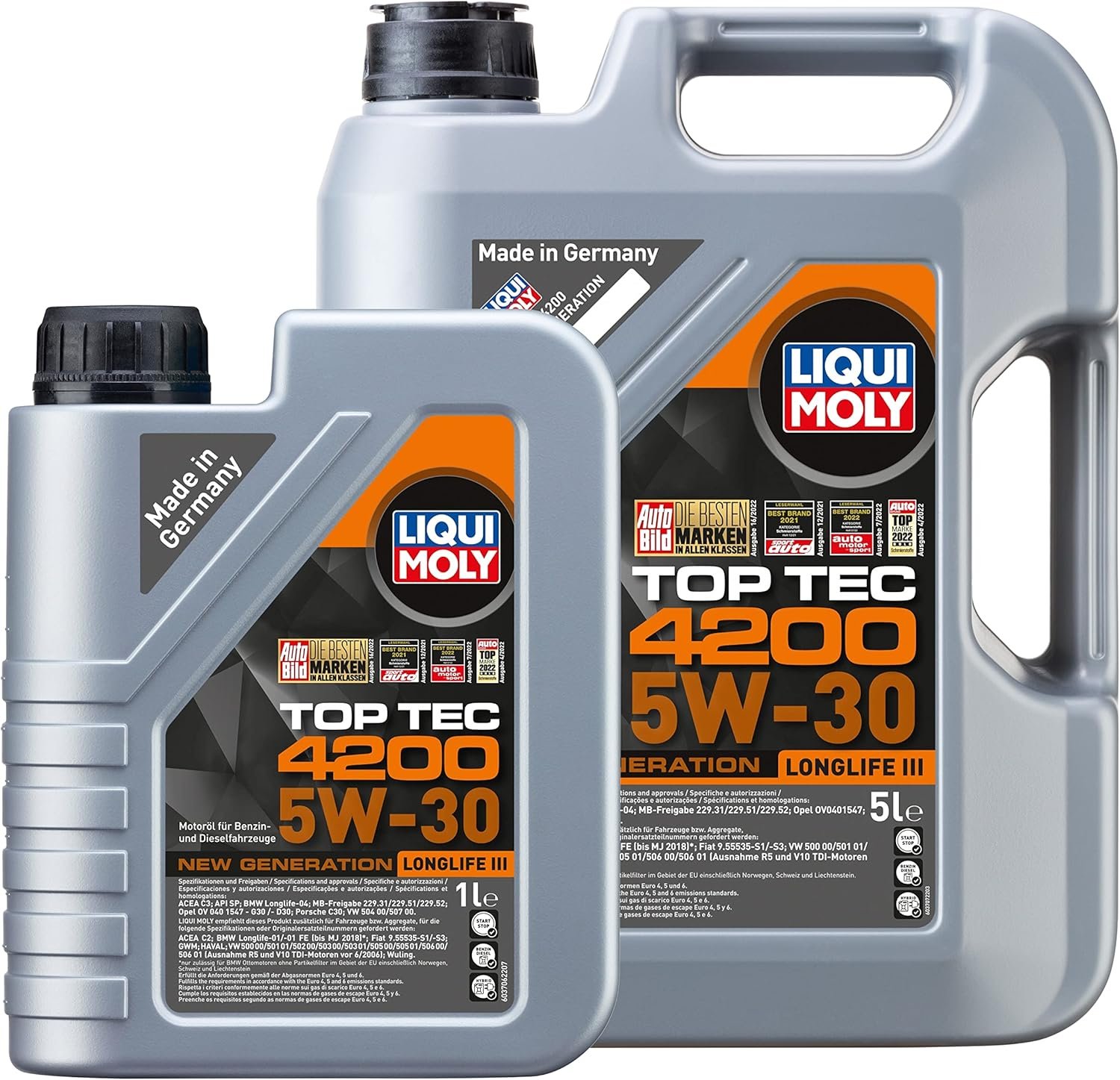
As an Amazon Associate, we may earn from qualifying purchases. This doesn't affect our recommendations — we only suggest oils that hold the exact OEM approval for your engine.
Best Engine Oil for Audi A3 8V 1.6 TDI (105/110 hp)
The Audi A3 8V is one of the most polished compact cars of its generation, and the 1.6 TDI is its most economical powertrain. Offered from 2012 through the 8V’s production run, the 1.6 TDI returns real-world figures of 55–65 mpg under mixed driving conditions, making it a popular choice for UK buyers prioritising running costs. But getting strong economy from a diesel means the engine is tuned for very specific oil properties — and deviating from the VAG Group specification has measurable consequences on DPF health, fuel economy, and long-term wear.
The 1.6 TDI uses two related engine codes — CLHA in its 105 hp configuration and CXXB in the later 110 hp update — both sharing the same lubrication requirements. They are third-generation VAG TDI units with piezo-electric common rail injection and an integrated DPF/SCR aftertreatment system, making the oil specification non-negotiable if you want the emission control hardware to survive.
Quick Answer: Recommended Oil
- Specification: VW 507 00, ACEA C3
- Primary viscosity: 5W-30
- Alternative viscosity: 0W-30 (approved for cold climates, equally valid year-round)
- Capacity with filter change: 4.3 litres
- Capacity without filter change: 4.0 litres
The VW 507 00 specification is mandatory for any 1.6 TDI engine equipped with a DPF — which includes every A3 8V sold in the UK. Oil meeting VW 507 00 must comply with Low SAPS chemistry (ACEA C3 minimum), which restricts sulphated ash to protect the diesel particulate filter. Standard A3/B4 diesel oils — the type used in older TDIs without DPFs — are not suitable and will accelerate DPF blockage.
The CLHA / CXXB Engine
The CLHA and CXXB are third-generation TDI units in the EA288 family, succeeding the EA189 platform that preceded VAG’s emissions scandal. Both engines share identical architecture: a 1.598cc inline-four diesel with DOHC valvetrain, 16 valves, and a single variable-geometry turbocharger.
The EA288 generation introduced several improvements over its predecessor. The combustion chamber geometry was revised for lower NOx production, which, combined with the SCR (Selective Catalytic Reduction) urea injection system on UK-spec cars, means the engine treats both DPF-loading (soot) and NOx differently from the EA189.
Injection is handled by a Bosch piezo-electric common rail system running at up to 2,000 bar injection pressure. At these pressures, the injectors are extremely sensitive to fuel quality and oil contamination — any oil that allows blow-by into the fuel circuit accelerates injector tip deposits.
The CXXB variant represents a minor refresh bringing output from 105 hp to 110 hp via revised injection mapping and slightly higher boost pressure, but the oil specification is unchanged between the two codes.
Understanding VW 507 00
VW Group’s oil specifications have evolved through several generations, and understanding where 507 00 sits in that hierarchy matters for making the right purchase decision.
| Specification | ACEA | Viscosity | DPF Compatible | Applies to |
|---|---|---|---|---|
| VW 507 00 | C3 | 5W-30 / 0W-30 | Yes | EA288 TDI (CLHA, CXXB) post-2014 |
| VW 504 00 | C3 | 5W-30 | Yes (with restrictions) | Petrol TSI, older TDI |
| VW 502 00 | A3/B4 | 5W-30 / 5W-40 | No | Pre-DPF TDI engines |
| VW 505 01 | B4 | 5W-30 | No | Older PD TDI (pumpe-düse) |
The critical difference between 507 00 and older VAG specs: 507 00 imposes stricter limits on sulphated ash (max 0.8% vs. 1.0% in 504 00), phosphorus (max 0.08%), and sulphur. These limits exist to protect the DPF substrate from being clogged by metallic ash from oil combustion, which is non-regenerable.
Can you use VW 504 00 instead of 507 00? Technically, 504 00 oils often meet 507 00 chemistry, and many approved products carry dual 504 00/507 00 certifications. However, only use a product that explicitly lists 507 00 approval — do not assume that 504 00 alone satisfies the 507 00 requirement.
0W-30 versus 5W-30: Both are approved for the CLHA/CXXB. The 0W-30 flows more quickly at cold start — useful in winter — but both grades are equally suitable year-round in the UK. The choice is preference; either approved product will do the job.
Technical Specifications
| Parameter | Value |
|---|---|
| Displacement | 1,598 cc |
| Configuration | Inline-4, transverse |
| Valvetrain | DOHC, 4 valves/cylinder |
| Bore × Stroke | 79.5 × 80.5 mm |
| Compression ratio | 16.5:1 |
| Power (CLHA) | 77 kW / 105 hp @ 3,500 rpm |
| Power (CXXB) | 81 kW / 110 hp @ 4,000 rpm |
| Torque | 250 Nm @ 1,500–3,000 rpm |
| Aspiration | Single VGT turbocharger |
| Fuel system | Bosch piezo common rail, up to 2,000 bar |
| Emissions | Euro 5 / Euro 6 (DPF + SCR on Euro 6) |
| Oil specification | VW 507 00 |
| Viscosity | 5W-30 (primary), 0W-30 (approved alternative) |
| ACEA | C3 |
| Oil capacity (with filter) | 4.3 litres |
Oil Change Intervals
Audi specifies a flexible service interval using the VCDS/ODIS Longlife service system, which calculates the next oil change based on driving conditions, oil temperature history, and engine load rather than a fixed mileage. Under this system, the interval can extend up to 30,000 km (approximately 18,600 miles) or 24 months, whichever comes first.
In practice, this extended interval is achievable only with genuine Longlife-rated 0W-30 or 5W-30 oil meeting VW 507 00. If a non-Longlife oil is used (for example, if a dealer uses a cheaper bulk oil during a service), the service interval is reset to a fixed 15,000 km (9,300 miles) or 12 months.
However, many independent garages and A3 owners who use their cars for mixed town and motorway driving prefer a 10,000-mile or 12-month interval regardless of the service indicator, particularly for UK conditions where short-trip and urban driving is common. Short trips cause oil dilution through condensation and unburned fuel, which cannot be detected by the temperature-based algorithm.
For predominantly motorway use, the Longlife interval is reasonable. For any car doing more than 30% of its mileage in urban stop-start conditions, annual changes at 10,000 miles are prudent.
Why Correct Oil Matters on the 1.6 TDI
The CLHA and CXXB are DPF-equipped diesels that depend on oil chemistry in two distinct ways: protecting the aftertreatment hardware and maintaining tight internal clearances in the injection system.
DPF contamination from wrong oil: Using a high-SAPS oil (A3/B4 category, like VW 502 00 or 505 01) means more metallic ash enters the combustion products and deposits in the DPF monolith. Unlike soot — which burns off during active regeneration — ash cannot be removed by heat. Over time, ash-loaded DPFs become restricted, trigger warning lights, and eventually require physical replacement (typically £800–1,500+ at a dealer for the combined DPF/SCR unit on newer A3s). The correct Low SAPS oil prevents this.
Injection system deposits: The high-pressure piezo injectors in the EA288 are intolerant of carbon buildup on their tips. Oil that oxidises prematurely — often a result of extended intervals with cheap oil — increases carbon-forming blow-by contaminants. Injector tip deposits cause uneven spray patterns, rough idle, and increased smoke. At the fuel system pressures the EA288 operates at, injector cleaning is expensive; prevention through correct oil is far cheaper.
Turbocharger bearing lubrication: The VGT (variable-geometry turbocharger) on the 1.6 TDI has a journal bearing assembly that requires clean, properly viscous oil at all operating temperatures. A 5W-30 provides adequate cold-start flow to prevent metal-on-metal contact during the critical first 30 seconds of operation, while its HTHS viscosity ensures adequate film thickness at high exhaust temperatures.
Common 1.6 TDI Problems Related to Oil
DPF blockage: The 1.6 TDI’s DPF is relatively small given the engine’s outputs, and UK-spec cars used primarily in urban environments rarely complete the full active regeneration cycle (which requires sustained motorway-speed running at elevated exhaust temperatures for 15–20 minutes). Cars covering predominantly short trips are at elevated risk of DPF blockage regardless of oil type, but using the correct Low SAPS oil slows the rate of ash accumulation. Early symptoms: repeated DPF warning lights, slightly higher fuel consumption, occasional limp mode. Resolution: a forced regeneration at a dealer, or preventing the blockage with the right oil and occasional motorway runs.
Oil dilution from failed regeneration: When a DPF active regeneration is interrupted — as happens when a short trip ends before the cycle completes — unburned diesel is injected into the cylinder to raise exhaust temperature but never fully combusts, passing instead into the oil sump. Signs: the oil level rises on the dipstick without having topped up, and there is a diesel smell in the extracted oil at service time. This is a structural issue with any short-trip DPF diesel, not specific to Audi, but it argues for shorter service intervals on urban-use cars.
EGR valve deposits: The EA288’s EGR (exhaust gas recirculation) system routes exhaust gases back into the intake at light load to reduce NOx. Over time, carbon deposits from these gases accumulate on the EGR valve and intake ports. Well-maintained oil intervals help by keeping blow-by contamination lower, but this is a known maintenance item regardless. Symptoms: rough idle at warm-up, hesitation at low throttle.
High-pressure fuel pump wear (early CLHA units): Early production CLHA engines from 2012–2013 had isolated incidents of high-pressure fuel pump wear. This is not primarily an oil issue — the fuel pump runs on diesel not oil — but contaminated oil accelerating wear elsewhere in the engine puts additional strain on components. Regular oil changes at appropriate intervals prevent the general engine health degradation that makes isolated component failures more likely.
Conclusion
The Audi A3 8V 1.6 TDI is a well-engineered, economical diesel that rewards owners who take its specification seriously. Use only VW 507 00-approved oil in 5W-30 or 0W-30 — it is the only viscosity and specification grade approved for these engines. Fill to 4.3 litres with a filter change, 4.0 litres without.
If your A3 does significant urban driving, target a 10,000-mile or annual interval rather than the displayed Longlife indicator. The cost of an early oil change is trivial compared to a DPF replacement or injector clean. Use the correct spec every time, and the CLHA or CXXB will comfortably reach well beyond 150,000 miles without significant powertrain work.
Sources: Volkswagen AG Service Information documentation VW 507 00 specification, Audi A3 8V owner’s manual (UK edition), VAG oil approval lists, UltimateSpecs EA288 TDI engine database, TotalEnergies/Castrol oil approval databases.
Our Top Picks
As an Amazon Associate, we may earn from qualifying purchases. This doesn't affect our recommendations — we only suggest oils that hold the exact OEM approval for your engine.