 Oil-
Oil-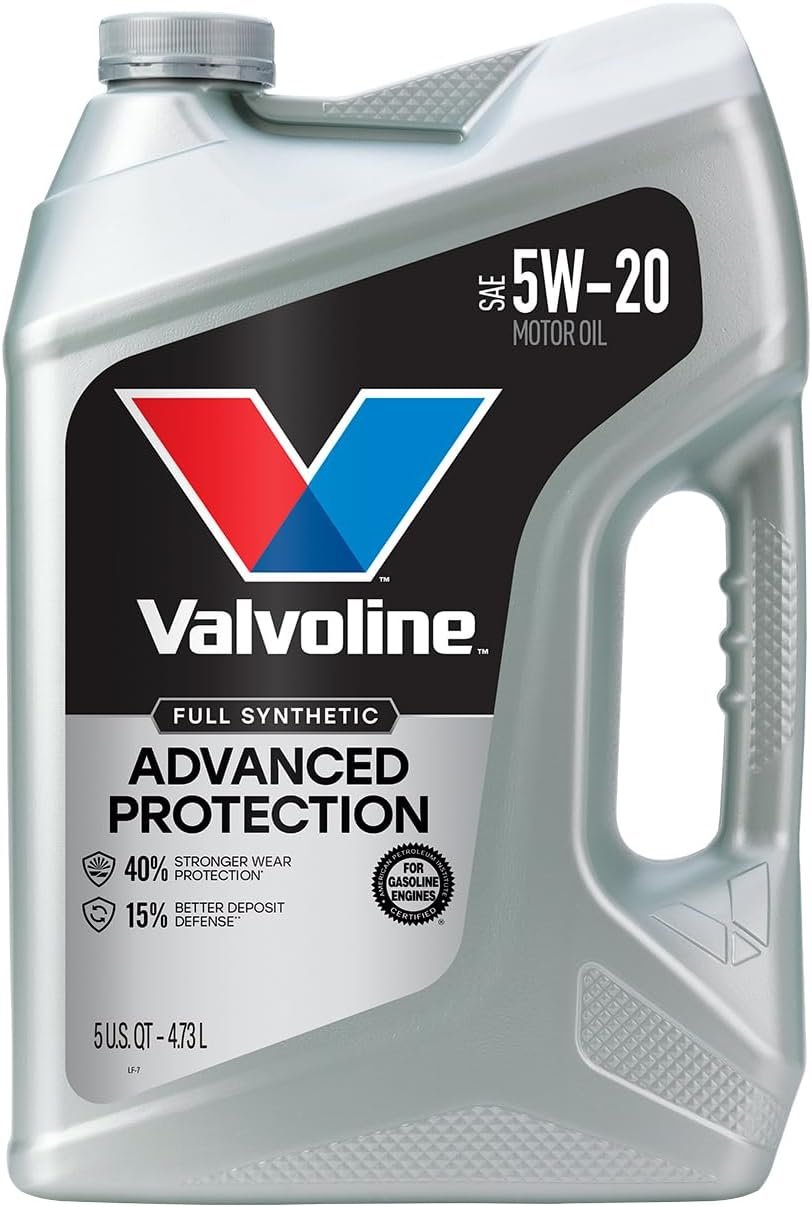
As an Amazon Associate, we may earn from qualifying purchases. This doesn't affect our recommendations — we only suggest oils that hold the exact OEM approval for your engine.
Best Engine Oil for Kia Telluride 3.8L V6 (291 HP) — Lambda II
The Kia Telluride arrived in 2020 as a surprise hit — a three-row SUV from a brand still shaking off its budget reputation, built in West Point, Georgia, and immediately winning North American Utility Vehicle of the Year. Under the hood sits the 3.8-liter Lambda II V6 producing 291 horsepower and 262 lb-ft of torque, paired with an eight-speed automatic and available all-wheel drive. It is a smooth, refined powertrain. It is also a gasoline direct injection engine with documented oil consumption problems, carbon buildup tendencies, and a plastic oil filter housing that cracks under heat cycling. The oil you put in this engine and how often you change it directly determines whether your Telluride reaches 200,000 miles or develops expensive problems well before that. This guide covers the correct specification, capacity, and best practices for keeping the Lambda II healthy under real-world American driving conditions.
Quick Answer: Recommended Oil
For Kia Telluride 3.8L V6 (291 HP, Lambda II):
- Specification: API SP / ILSAC GF-6A
- Viscosity: SAE 5W-20
- Alternative viscosity: SAE 5W-30 (acceptable per Kia for sustained high temperatures or heavy towing)
- Oil capacity: 6.1 quarts with filter (5.8 quarts without)
Critical: Use only 5W-20 full synthetic oil meeting API SP or ILSAC GF-6A. The Lambda II’s gasoline direct injection system, variable valve timing actuators, and hydraulic chain tensioners are calibrated for 5W-20 flow characteristics. Do not use 0W-20 thinking it will improve fuel economy — the Lambda II was not designed for it, and the thinner cold-start viscosity offers no benefit while potentially increasing oil consumption in an engine already prone to it.
The Lambda II 3.8L Engine
The Lambda II is a 3,778cc naturally aspirated 60-degree V6 that Hyundai Motor Group has used across the Telluride, Hyundai Palisade, Genesis GV80, and Kia Stinger. In the Telluride, it produces 291 horsepower at 6,000 RPM and 262 lb-ft of torque at 5,200 RPM. The engine uses gasoline direct injection (GDI), dual continuously variable valve timing (CVVT) on both intake and exhaust camshafts, a timing chain, and an aluminum block with aluminum heads.
GDI is central to the Lambda II’s efficiency but is also the root cause of its two most significant issues. Because fuel is injected directly into the combustion chamber at high pressure rather than through port injectors in the intake manifold, the intake valves never get washed by fuel. Over tens of thousands of miles, oil vapors drawn through the PCV system bake onto the hot intake valve surfaces, forming hard carbon deposits that restrict airflow and disrupt the air-fuel mixture. Unlike Toyota’s D-4S dual injection system, the Lambda II has no port injectors to periodically clean the valves. Every mile driven adds a microscopic layer of carbon.
The eight-speed automatic transmission is well-matched to the engine, keeping RPMs low during highway cruising and responding quickly during passing maneuvers. The AWD system uses a multi-plate clutch center differential that can send up to 50 percent of torque to the rear wheels. Neither the transmission nor the AWD system is problematic — the Lambda II engine itself is where maintenance attention must be focused.
Understanding Kia Oil Specifications
Kia does not use a proprietary OEM oil specification like Volkswagen’s VW 504 00 or BMW’s LL-01. Instead, Kia requires oils meeting the American Petroleum Institute (API) and International Lubricants Standardization and Approval Committee (ILSAC) certification systems. The current requirement is API SP, introduced in May 2020 to replace API SN Plus.
API SP matters for the Lambda II for two reasons. First, it includes enhanced protection against low-speed pre-ignition (LSPI). Although LSPI is more commonly associated with turbocharged engines, naturally aspirated GDI engines with high compression ratios can experience it under specific load conditions. The Lambda II’s 11.5:1 compression ratio and direct injection make LSPI protection relevant. Second, API SP provides improved chain wear protection, which directly benefits the Lambda II’s timing chain and CVVT actuator system.
ILSAC GF-6A is the companion fuel economy standard. Any oil displaying both the API SP “donut” mark and the ILSAC GF-6A “starburst” certification mark meets every requirement Kia specifies for the Telluride. API SP is backward compatible with all previous API service categories, so current SP-rated oils work in 2020 through 2025 model years without exception.
Technical Specifications: Lambda II 3.8L V6
| Specification | Value |
|---|---|
| Displacement | 3,778cc (3.8 liters) |
| Layout | 60-degree V6, aluminum block, aluminum heads |
| Valvetrain | DOHC, 24 valves, dual CVVT, timing chain |
| Fuel System | Gasoline Direct Injection (GDI) |
| Power | 291 HP @ 6,000 RPM |
| Torque | 262 lb-ft @ 5,200 RPM |
| Compression Ratio | 11.5:1 |
| Fuel Type | Regular unleaded (87 octane minimum) |
| Recommended Viscosity | SAE 5W-20 |
| Alternative Viscosity | SAE 5W-30 |
| Oil Capacity (without filter) | 5.8 quarts (5.5 liters) |
| Oil Capacity (with filter) | 6.1 quarts (5.8 liters) |
| Oil Specification | API SP / ILSAC GF-6A |
| Timing | Chain (no scheduled replacement) |
ExxonMobil’s flagship synthetic provides exceptional thermal stability and oxidation resistance. Strong detergent properties help manage PCV system deposits and keep oil passages clean. The anti-wear additive package protects timing chain and CVVT components over the full drain interval.
Castrol’s Fluid Titanium Technology maintains oil film strength under high-temperature, high-shear conditions. Effective LSPI protection and strong anti-wear properties. A solid choice for owners who tow frequently or drive in hot climates where oil temperatures run consistently high.
Best Value: Valvoline Advanced Full Synthetic 5W-20 (~$22-27/5 qt) Well-balanced additive package at the most competitive price point. Meets all API SP and ILSAC GF-6A requirements without compromise. Widely available at Walmart, AutoZone, O’Reilly, and Amazon. For owners who shorten change intervals to manage oil consumption, Valvoline’s lower cost per change makes it the practical choice.
Oil Change Intervals
Kia Official Recommendation:
- 7,500 miles or 12 months under normal conditions
- 5,000 miles or 6 months under severe conditions
Kia defines severe conditions as frequent short trips under 5 miles, stop-and-go driving, dusty environments, towing, extended idling, and extreme temperatures. If you live in the southern United States and tow a boat, you are in severe conditions. If you commute in stop-and-go traffic in Phoenix, you are in severe conditions. If you drive on gravel roads or in construction zones, you are in severe conditions. Most American driving patterns qualify.
Recommended practice: 5,000 miles or 6 months for any Telluride used for family hauling, towing, or predominantly city driving. Owners who drive exclusively on highways in moderate climates can safely extend to 7,500 miles. If your engine is consuming oil between changes, shortening the interval to 5,000 miles and monitoring the dipstick every 1,000 miles is essential. Fresh oil maintains its viscosity and detergent properties better than oil that has been thinned by fuel dilution from the GDI system.
Common Lambda II Problems Related to Oil
Oil Consumption: 1 Quart per 1,000 Miles
The most widely reported issue with the Lambda II in the Telluride is excessive oil consumption. Early 2020 models generated a significant volume of complaints from owners reporting consumption rates of 1 quart per 1,000 miles or more. The root cause is stuck piston rings. GDI engines run hotter combustion temperatures than port-injected engines, and carbon deposits from the combustion process migrate behind the piston rings, causing them to stick in their grooves. Stuck rings cannot maintain proper seal against the cylinder wall, allowing oil to pass into the combustion chamber where it burns.
Kia’s official position is that oil consumption of up to 1 quart per 1,000 miles is within the “normal” range. Many owners and independent mechanics disagree. In a 6.1-quart oil system, losing 1 quart every 1,000 miles means the engine is down to minimum safe oil level after approximately 3,000 miles — well before the next scheduled change. Running the engine at minimum oil level increases thermal stress, accelerates wear, and compounds the carbon buildup that caused the ring sticking in the first place.
What to do: Check your dipstick every 1,000 miles. If consumption exceeds 1 quart per 3,000 miles, document it with your dealer and request an oil consumption test. Use full synthetic 5W-20 with strong detergent properties to help keep rings clean. Consider Italian tune-ups — sustained highway driving at higher RPMs that raises cylinder temperatures enough to help burn off carbon deposits around the rings.
Fuel Dilution from GDI
Gasoline direct injection engines spray fuel at extremely high pressure directly into the combustion chamber. During cold starts and light-load driving, some fuel does not fully combust and washes past the piston rings into the crankcase, mixing with the engine oil. This fuel dilution gradually thins the oil, reducing its viscosity and load-carrying capacity. Combined with the oil consumption issue, fuel dilution means the oil in a Lambda II degrades faster than the mileage-based change interval suggests.
Plastic Oil Filter Housing Cracks
The Lambda II uses a cartridge-style oil filter with a plastic housing cap. This housing is subjected to repeated thermal cycling — heating to engine operating temperature and cooling back to ambient — thousands of times over the life of the engine. The plastic degrades, becomes brittle, and cracks. A cracked oil filter housing leaks oil externally, and if the crack is severe enough, it can cause rapid oil loss. Inspect the housing at every oil change. If you notice seepage, hairline cracks, or the plastic feels brittle, replace the housing before it fails completely. Aftermarket aluminum replacement housings are available and eliminate this failure mode permanently.
Why Correct Oil Matters for the Lambda II
The Lambda II’s combination of GDI, high compression, and documented ring-sticking issues makes oil selection more consequential than in a simpler engine. Full synthetic 5W-20 meeting API SP provides three critical protections that conventional or incorrect-viscosity oils cannot match.
First, thermal stability. Full synthetic base stocks resist breakdown at the elevated combustion temperatures GDI produces. Oil that breaks down thermally forms varnish and deposits that accelerate ring sticking — the exact problem the Lambda II is already predisposed to.
Second, detergent strength. API SP oils carry modern detergent and dispersant additives that hold combustion byproducts in suspension and keep piston ring grooves cleaner. This directly combats the carbon buildup mechanism that causes stuck rings and oil consumption.
Third, viscosity retention. Fuel dilution from GDI gradually thins the oil. Full synthetic base stocks maintain their viscosity grade longer under fuel contamination than conventional oils, providing a wider margin of protection between changes.
Conclusion
The Kia Telluride 3.8L V6 (Lambda II) requires 6.1 quarts of API SP compliant SAE 5W-20 full synthetic engine oil at every service. Use Kia Genuine 5W-20, Mobil 1 Advanced Full Synthetic, Castrol EDGE Advanced, or Valvoline Advanced Full Synthetic. Change the oil at 5,000 miles if your Telluride sees towing, city driving, or extreme temperatures.
Check your dipstick every 1,000 miles — the Lambda II’s oil consumption tendencies mean you cannot assume the oil level is safe between changes. Document any consumption exceeding 1 quart per 3,000 miles with your dealer. Inspect the plastic oil filter housing for cracks at every service. Budget for intake valve cleaning (walnut shell blasting) around 80,000 to 100,000 miles as GDI carbon buildup becomes noticeable.
The Lambda II is a capable and refined V6 that delivers strong performance in a family SUV. Its GDI-related issues are manageable with attentive maintenance. The $50-65 spent on quality 5W-20 oil every 5,000 miles, combined with regular dipstick checks, is the most effective investment you can make in the long-term reliability of your Telluride.
Our Top Picks
As an Amazon Associate, we may earn from qualifying purchases. This doesn't affect our recommendations — we only suggest oils that hold the exact OEM approval for your engine.