 Oil-
Oil-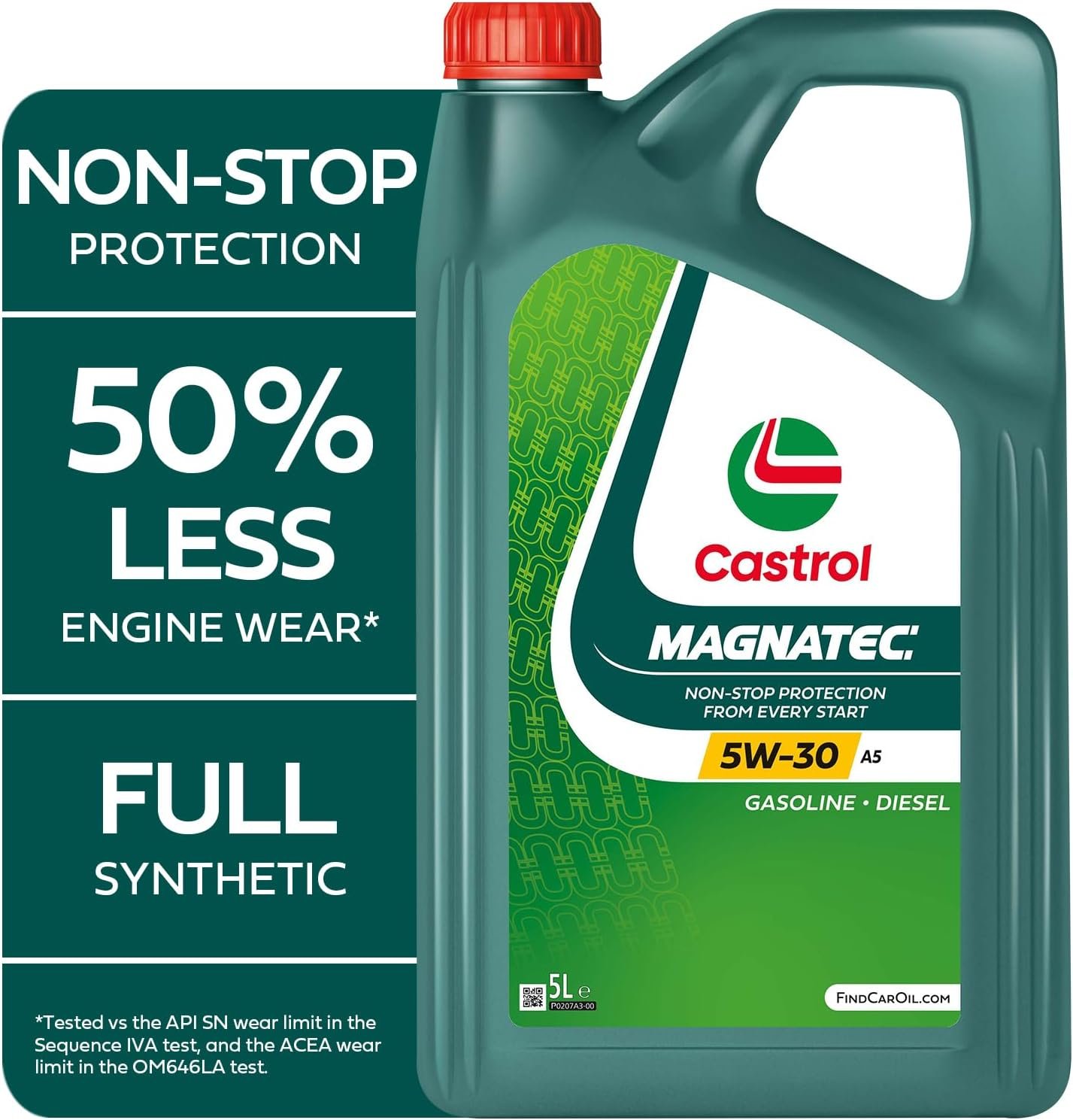
As an Amazon Associate, we may earn from qualifying purchases. This doesn't affect our recommendations — we only suggest oils that hold the exact OEM approval for your engine.
Best Engine Oil for Kia Picanto 3rd Gen 1.0 MPI (67 HP)
The Kia Picanto 3rd generation (JA), sold in the UK from 2017 onwards, is one of the most popular city cars on British roads. Powered by the 1.0-litre Kappa three-cylinder engine (G3LA or G3LD), the Picanto delivers affordable, fuss-free urban transport backed by Kia’s class-leading 7-year/100,000-mile warranty. The Kappa MPI is a naturally aspirated, multi-point injection engine with no turbocharger and no direct injection — mechanically almost identical to the unit found in the Hyundai i10. That simplicity is its greatest strength, but the engine’s tiny 3.2-litre sump means every drop of oil works harder than in larger powertrains. Kia specifies ACEA A5 rated SAE 5W-30 for the G3LA/G3LD, and using the correct grade is essential to protect the timing chain, hydraulic lifters, and close-tolerance bearings that keep this little engine running reliably toward its 200,000 km design life.
Quick Answer: Recommended Oil
For Kia Picanto 3rd Gen (JA) 1.0 MPI:
- Specification: ACEA A5
- Viscosity: SAE 5W-30 (alternative: 5W-20)
- Oil capacity: 3.2 litres with filter (2.9 L without)
Key point: The ACEA A5 rating is the critical specification. A5 oils are fuel-economy-grade, low-viscosity full synthetics with strong high-temperature film retention. Do not substitute with a generic ACEA A3/B4 oil — the different additive chemistry and higher HTHS viscosity increase friction, raise fuel consumption, and provide no additional protection for the Kappa engine’s design tolerances.
The Kappa 1.0 MPI (G3LA / G3LD) Engine
The Kappa engine family has been a cornerstone of Hyundai-Kia’s small car lineup since 2008. The Picanto JA uses the G3LA (or updated G3LD) variant: a 998cc inline three-cylinder producing 67 HP at 6,200 RPM and 96 Nm of torque at 3,500 RPM. The construction is an aluminium block with cast-iron cylinder liners and a DOHC 12-valve aluminium head. Valve timing is driven by a maintenance-free timing chain rather than a belt, eliminating one of the most common and expensive service items on small cars.
Multi-point fuel injection sprays fuel onto the intake ports, upstream of the intake valves. This means fuel constantly washes over the valve stems, preventing the carbon buildup that plagues modern direct-injection engines. There is no need for walnut blasting or intake cleaning — the valves stay clean for the life of the engine. The absence of direct injection also means no high-pressure fuel pump to fail and no injector coking to worry about.
There is no turbocharger. No intercooler, no wastegate, no variable geometry vanes. This removes an entire category of potential failures and means the oil never has to survive the extreme thermal cycling that turbo bearings inflict. There is no risk of oil coking after a hot shutdown, and no boost leaks to diagnose.
The three-cylinder layout does produce more inherent vibration and noise than a four-cylinder of similar displacement — this is a normal characteristic, not a fault. Kia fits balance shafts and tuned engine mounts to manage it, but the thrum at idle and under load is part of the three-cylinder experience.
Overall, the Kappa MPI is one of the simplest and most reliable engines in the modern small-car segment. With disciplined maintenance, owners routinely report reaching 200,000 km and beyond on original internals.
Understanding the ACEA A5 Specification
ACEA A5 is a European oil performance standard designed for engines requiring fuel-economy-grade, low-viscosity oils with extended drain capability. It differs from the more common ACEA A3/B4 in several key ways:
- Lower HTHS viscosity: A5 oils operate between 2.9 and 3.5 mPa.s at 150 degrees Celsius, compared to a minimum of 3.5 mPa.s for A3. This reduces internal friction and improves fuel economy.
- Superior film retention: Despite lower HTHS viscosity, A5 oils must demonstrate excellent wear protection through higher-quality base oils and additive packages.
- Oxidation resistance: Formulated for extended drain intervals in thermally stressed environments.
For the Kappa MPI, the A5 specification strikes the correct balance. This naturally aspirated engine does not generate the extreme oil film pressures of turbocharged units, so the lower HTHS viscosity is perfectly safe while delivering measurable fuel savings — important for a car chosen specifically for low running costs.
5W-20 as an alternative: Kia permits SAE 5W-20 as an alternative viscosity. This thinner oil further reduces friction and marginally improves fuel economy in cold weather. It is a reasonable choice for UK drivers who do predominantly short urban commuting. However, 5W-30 remains the primary recommendation and provides a wider safety margin during sustained motorway driving or hot summer conditions.
Technical Specifications: 1.0 MPI (G3LA / G3LD)
| Specification | Value |
|---|---|
| Displacement | 998cc (1.0 litre) |
| Layout | Inline-3, aluminium block with cast-iron liners |
| Valvetrain | DOHC, 12 valves, timing chain |
| Power | 67 HP @ 6,200 RPM |
| Torque | 96 Nm @ 3,500 RPM |
| Fuel System | Multi-point injection (MPI) |
| Recommended Viscosity | SAE 5W-30 |
| Alternative Viscosity | SAE 5W-20 |
| Oil Capacity (without filter) | 2.9 litres |
| Oil Capacity (with filter) | 3.2 litres |
| ACEA Norm | A5 |
Castrol’s Intelligent Molecules technology is designed to cling to critical engine surfaces during cold starts and idle periods, reducing wear during the first seconds of operation when most engine damage occurs. This is particularly relevant for a city car like the Picanto that endures frequent cold starts on short urban trips. The A5 specification ensures correct viscosity behaviour for the Kappa engine. Widely available across UK retailers at around £30-40 for 4 litres.
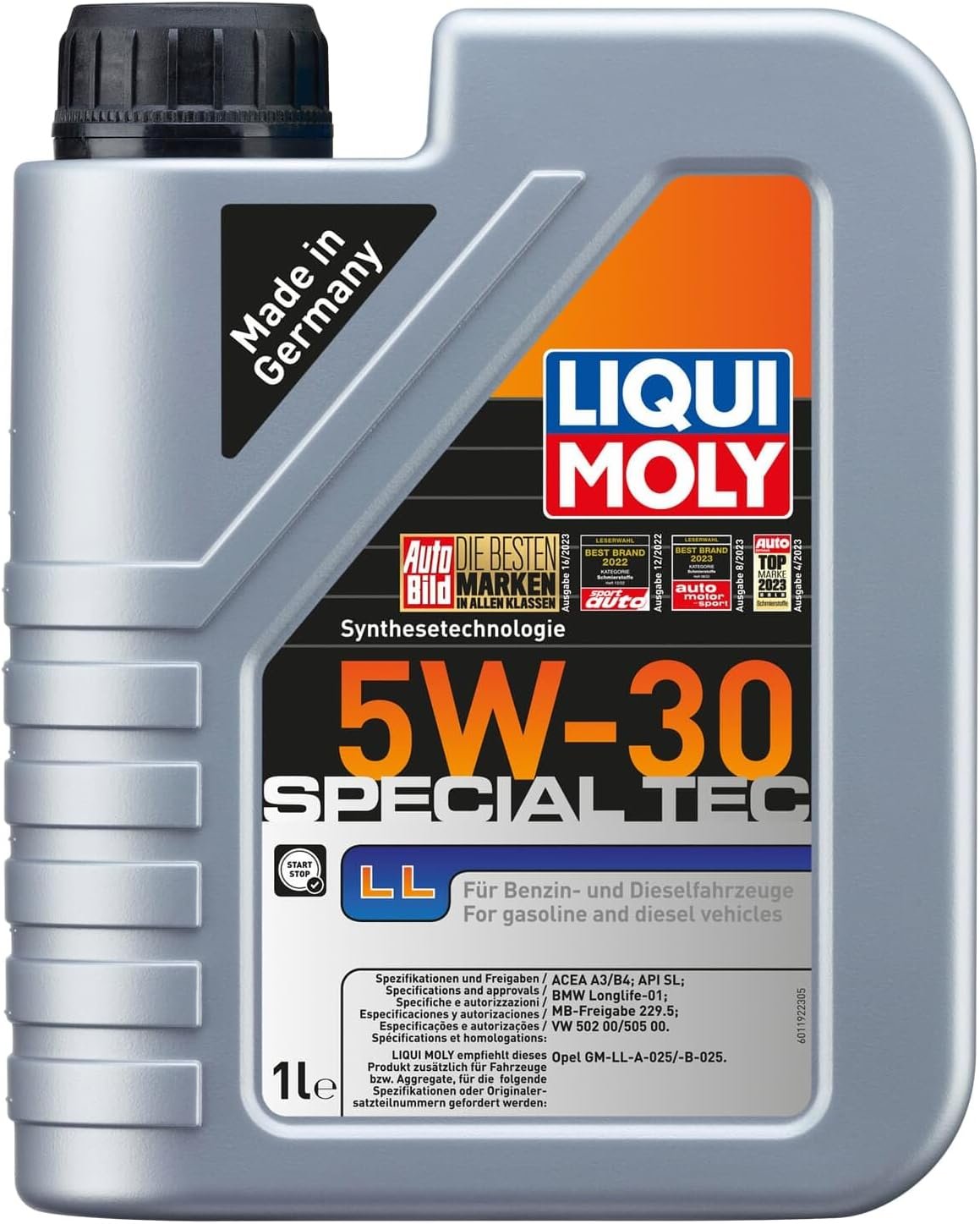
Best Value: Liqui Moly Special Tec AA 5W-30 German-engineered oil specifically designed for Asian and American vehicle specifications. The AA designation indicates formulation tailored to the requirements of Japanese and Korean manufacturers, making it an ideal match for Kia’s Kappa engines. Strong cold-start protection down to -30 degrees Celsius and reliable high-temperature stability. Outstanding value at around £28-35 for 4 litres — the most affordable quality option on this list.
Known Issues and the Role of Oil
Oil Consumption on Early Models
Some early Kappa G3LA engines have exhibited higher-than-expected oil consumption, typically traced to weak piston ring tension from the factory. On a 3.2-litre sump, even modest consumption of 0.3-0.5 litres between services represents a meaningful reduction in total oil volume. Check the dipstick at least monthly and top up with the same specification oil. If consumption exceeds 1 litre per 5,000 miles, have the engine inspected for worn rings or valve stem seals. Using correct ACEA A5 oil and maintaining proper change intervals helps preserve ring seal and minimises the progression of this issue.
PCV Valve Clogging from Short Trips
The positive crankcase ventilation (PCV) system on the Kappa engine is prone to clogging, particularly in cars used almost exclusively for short urban journeys. When the engine rarely reaches full operating temperature, condensation and fuel vapour accumulate in the crankcase and gradually block the PCV valve. A clogged PCV causes crankcase pressure to rise, which pushes oil past seals and gaskets, increases oil consumption, and can trigger warning lights. Short-trip drivers should inspect the PCV valve at each service and replace it if restricted. Frequent oil changes also help, as fresh oil produces fewer volatile byproducts during the warm-up phase.
Overheating and Cooling System Neglect
The Kappa engine’s compact cooling system is adequate under normal conditions but has limited thermal margin. If the radiator becomes clogged with debris, the coolant degrades, or the thermostat sticks, the engine overheats quickly. Overheating rapidly degrades oil quality, causes head gasket failure, and can warp the aluminium head. Ensure the coolant is changed every two years or 30,000 miles, and inspect the radiator for blocked fins — particularly on cars driven in urban environments where low-speed airflow is limited. If the temperature gauge ever climbs above normal, stop driving immediately. Change the oil after any overheating event, even if a service is not yet due.
Oil Change Intervals
Kia Official Recommendation:
- Standard service: 15,000 miles or 12 months (whichever comes first)
- Severe conditions: 7,500 miles or 6 months
Recommended Practice: 10,000 miles or annually for most UK driving.
Kia’s 15,000-mile interval assumes a balanced mix of motorway and urban driving under moderate conditions. In reality, many UK Picanto owners use their cars predominantly for short urban trips — which falls squarely into the “severe conditions” category. Short journeys prevent the engine from reaching full operating temperature, allowing condensation and fuel to accumulate in the oil. This dilution degrades the oil faster than steady motorway cruising ever would.
The cost of an oil change on the Picanto is minimal. 3.2 litres of quality ACEA A5 oil plus a filter totals roughly £30-45 in parts. Maintaining 10,000-mile or annual intervals provides a sensible safety margin without being wasteful.
Consider 5,000-mile intervals if:
- Almost exclusively short trips under 5 miles
- Frequent cold starts with limited warm-up time
- Vehicle sits unused for extended periods
- Any sign of milky residue on the oil filler cap (condensation contamination)
- Known PCV valve issues or rising oil consumption
The 7-Year Warranty and Oil Compliance
Kia’s industry-leading 7-year/100,000-mile warranty is one of the Picanto’s strongest selling points. However, the warranty requires that all servicing — including oil specification — complies with Kia’s recommendations. Using oil that does not meet the ACEA A5 standard, or stretching change intervals beyond the manufacturer’s schedule, gives Kia grounds to reject a warranty claim on engine-related components. Retain receipts for all oil purchases and service records. Independent garages can service the car without voiding the warranty under the Block Exemption Regulation, but only if they use the correct specification oil and follow Kia’s service schedule. If you are within the warranty period, this is not the place to cut corners on oil quality.
Why Correct Oil Matters — Even on a Simple Engine
The Kappa MPI’s reputation for reliability comes with a condition: that reputation was built on engines maintained with the correct oil. Even the most robust design suffers when lubrication is compromised.
Timing Chain Protection: The maintenance-free timing chain is a major advantage, but “maintenance-free” means the chain tensioner relies entirely on oil pressure to maintain correct tension. Degraded oil with reduced viscosity allows the tensioner to lose pressure, resulting in chain slack, rattle on cold starts, and eventually jumped timing. Chain replacement on a Kappa engine costs £300-500 — entirely preventable with regular oil changes.
Hydraulic Valve Lifter Function: The self-adjusting hydraulic lifters depend on clean oil at correct pressure to maintain zero valve clearance. Contaminated or degraded oil causes lifter collapse, producing a characteristic ticking noise on cold starts. While not immediately destructive, sustained lifter malfunction leads to uneven valve timing and accelerated camshaft wear.
Small Sump, Higher Stakes: With only 3.2 litres total capacity, the Picanto’s oil volume is among the smallest of any modern car. Every litre must absorb more combustion byproducts, neutralise more acids, and suspend more particulate matter than in a larger engine. Contaminants concentrate faster and the additive package depletes sooner, making both oil quality and change frequency more important than in cars with 5-6 litre sumps.
Conclusion
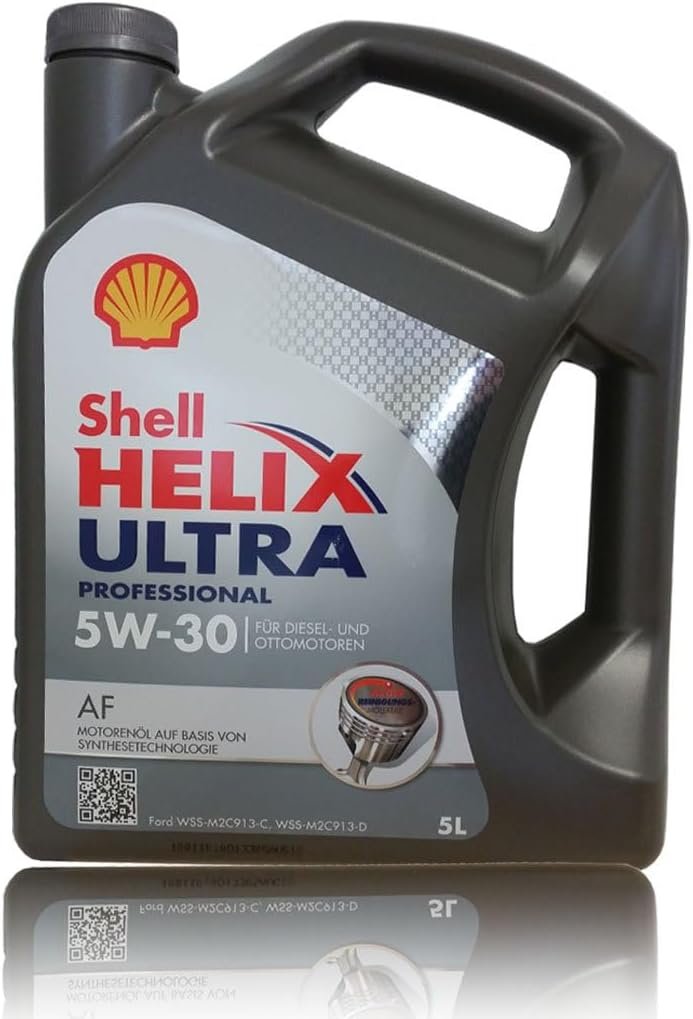
The Kia Picanto 3rd Gen 1.0 MPI requires ACEA A5 rated SAE 5W-30 engine oil, with a capacity of 3.2 litres including the filter. Choose from proven brands — Mobil 1 ESP 5W-30, Castrol Magnatec 5W-30 A5, Shell Helix Ultra AF 5W-30, or Liqui Moly Special Tec AA 5W-30 — and verify the ACEA A5 rating on every bottle.
The Kappa three-cylinder is a genuinely simple, reliable engine. No turbo, no direct injection, no timing belt — just a chain-driven, port-injected unit that asks very little of its owner. Honour that simplicity with correct oil at sensible intervals. The £30-45 spent annually on quality oil and a filter is the cheapest insurance available against the only things that can realistically harm this engine: neglect and incorrect specification. With proper lubrication and attention to the cooling system, a Kia Picanto Kappa engine will comfortably reach 200,000 km and beyond — and do so under the security of one of the longest manufacturer warranties in the industry.
Our Top Picks
As an Amazon Associate, we may earn from qualifying purchases. This doesn't affect our recommendations — we only suggest oils that hold the exact OEM approval for your engine.