 Oil-
Oil-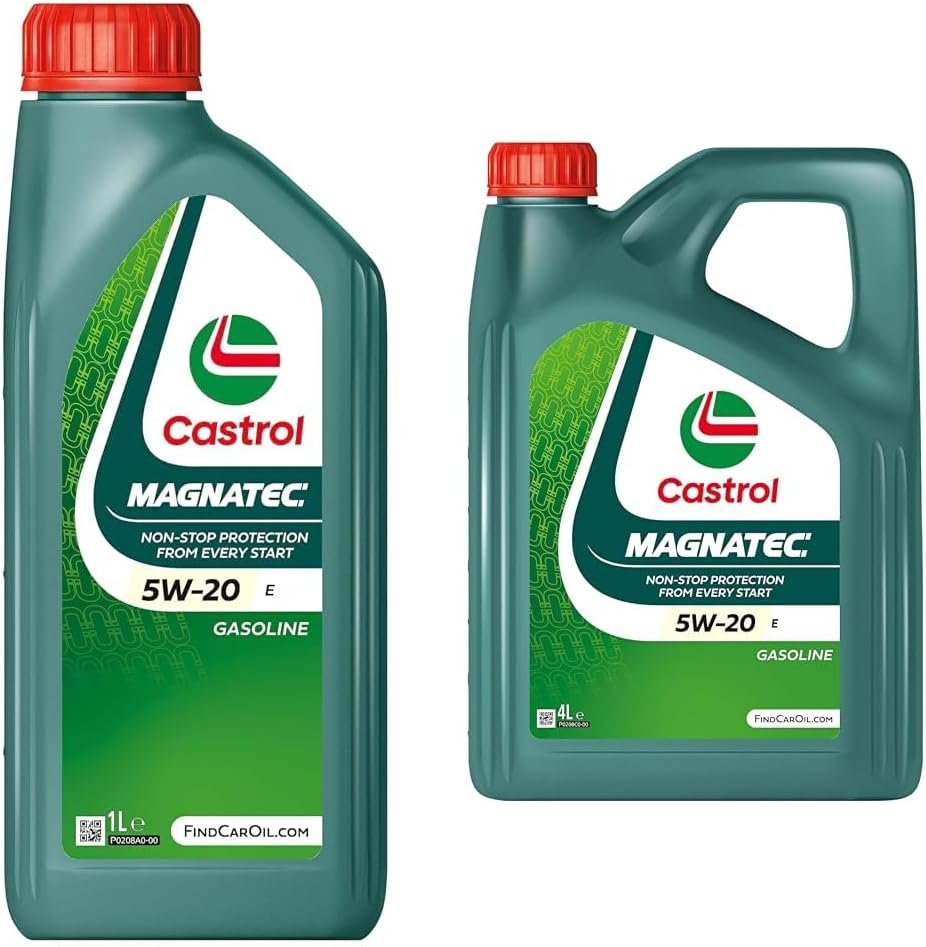
As an Amazon Associate, we may earn from qualifying purchases. This doesn't affect our recommendations — we only suggest oils that hold the exact OEM approval for your engine.
Best Engine Oil for Ford Puma 1.0 EcoBoost mHEV (125/155 HP)
The Ford Puma returned in 2019 as a compact crossover built on the Fiesta platform, powered by the latest evolution of Ford’s 1.0 EcoBoost three-cylinder turbo. The Puma’s version is not simply carried over from the Fiesta — it gains a 48-volt mild hybrid (mHEV) system with a belt-integrated starter-generator, and crucially, it uses a timing chain rather than the wet timing belt that plagued earlier 1.0 EcoBoost applications. This makes the Puma’s engine more reliable at its core, but correct oil selection remains essential. The turbocharger, the 48V electrical integration, and the petrol particulate filter (GPF) all depend on the right lubricant to function properly over the long term.
Quick Answer: Recommended Oil
For Ford Puma 1.0 EcoBoost mHEV (125/155 HP), engine codes B7JA / B7JB:
- Primary specification: Ford WSS-M2C948-B with SAE 5W-20
- ACEA norm: C2
- Oil capacity: 4.5 litres with filter (4.2 L without)
Key point: The Ford WSS-M2C948-B specification is mandatory. The Puma’s ACEA C2 low-ash requirement protects the GPF from premature clogging. Generic 5W-20 without this specific approval is not acceptable.
The B7JA/B7JB Engine: Chain-Driven EcoBoost
The Puma’s 1.0 EcoBoost represents the third generation of Ford’s award-winning three-cylinder. Displacing 999cc, it uses direct fuel injection, a twin-scroll turbocharger with an integrated exhaust manifold, and split cooling that allows the block and head to reach optimal temperatures independently.
The B7JA (125 HP) and B7JB (155 HP) differ primarily in turbo boost pressure and ECU calibration. Both produce 170 Nm and 200 Nm of torque respectively, available from 1,750 RPM. The higher-output B7JB adds an overboost function that briefly lifts torque to 240 Nm during hard acceleration.
The most significant mechanical change from earlier 1.0 EcoBoost engines is the timing chain. Ford eliminated the controversial wet timing belt that caused catastrophic failures in older Fiesta and Focus applications. The chain runs in oil like any conventional chain-driven engine and does not suffer from the rubber degradation that destroyed earlier wet belt units. This single change removes the most dangerous failure mode from the engine entirely.
The oil pump, however, is still driven by a wet belt — an upgraded version with improved material composition. While this belt is far less critical than the timing belt (an oil pump belt failure causes oil pressure loss rather than valve-to-piston contact), it still benefits from correct oil chemistry to maintain the rubber compound’s integrity.
The 48V Mild Hybrid System
The mHEV system pairs a 48-volt lithium-ion battery with a belt-integrated starter-generator (BISG) that replaces the conventional alternator. It recovers braking energy, enables extended stop-start functionality, and provides a modest torque fill during low-RPM acceleration to smooth out the turbo lag inherent in a 1.0-litre engine.
The BISG is belt-driven from the crankshaft accessory drive — the same belt system that drives the oil pump. This means the accessory belt is under greater load than in non-hybrid variants, making correct oil viscosity important for minimising parasitic drag on the entire front-end accessory drive.
One ownership consideration: the 48V battery can drain if the Puma sits unused for extended periods, typically beyond two to three weeks. A flat 48V battery disables the stop-start system and torque-fill functions, and may trigger dashboard warnings. Driving the car for 30 minutes at motorway speed will recharge it, but owners who leave their Puma parked for weeks should consider a trickle charger on the 12V battery, which in turn keeps the 48V system alive.
Understanding Ford WSS-M2C948-B
Ford’s WSS-M2C948-B specification governs the oil formulation for all modern 1.0 EcoBoost engines. It mandates a low-HTHS (High Temperature High Shear) viscosity profile at SAE 5W-20, specific additive chemistry, and ACEA C2 low-ash properties.
The C2 classification is particularly important for the Puma because it limits the sulphated ash, phosphorus, and sulphur (SAPS) content that can poison the GPF catalyst coating and accelerate filter blockage. Using a high-SAPS oil — even an otherwise excellent fully synthetic 5W-30 or 5W-40 — will shorten the GPF’s service life and may trigger regeneration problems that manifest as rough running, reduced power, and warning lights.
Do not substitute 5W-30 or 5W-40 oils. Ford engineered the Puma’s bearing clearances, oil pump delivery, and turbo bearing tolerances around 5W-20 viscosity. Thicker oil reduces flow rate through the turbo centre bearing and increases oil pressure at cold start beyond the design parameters.
Technical Specifications: 1.0 EcoBoost mHEV (B7JA / B7JB)
| Specification | Value |
|---|---|
| Displacement | 999cc (1.0 litre) |
| Layout | Inline-3, transverse, aluminium block and head |
| Valvetrain | DOHC, 12 valves |
| Timing System | Timing chain |
| Turbocharger | Twin-scroll, integrated exhaust manifold |
| Hybrid System | 48V mHEV, belt-integrated starter-generator |
| Power | 125 HP (B7JA) / 155 HP (B7JB) @ 6,000 RPM |
| Torque | 170 Nm (B7JA) / 200 Nm (B7JB), overboost 240 Nm (B7JB) |
| Fuel Type | Petrol, 95 RON minimum |
| Recommended Viscosity | SAE 5W-20 |
| Oil Capacity (without filter) | 4.2 litres |
| Oil Capacity (with filter) | 4.5 litres |
| ACEA Norm | C2 |
| Ford Norm | WSS-M2C948-B |
Oil Change Intervals
Ford Official Recommendation:
- Standard service: 12,500 miles or 1 year
Recommended Practice: 8,000-10,000 miles or annually, whichever comes first.
Consider 6,000-8,000 mile intervals if:
- Predominantly short urban journeys under 10 miles
- Frequent cold starts without the engine reaching full operating temperature
- GPF regeneration warnings appear (indicating incomplete burn cycles)
- Oil level rises on the dipstick (fuel dilution from direct injection)
Short-trip driving is the Puma’s worst enemy. The direct injection system washes unburned fuel past the piston rings during cold starts, diluting the oil. Simultaneously, the GPF cannot complete its regeneration cycle if the engine never reaches sustained high temperatures. Both problems compound each other: diluted oil degrades faster and produces more combustion deposits that load the GPF further.
GPF Issues and Short-Trip Driving
The petrol particulate filter fitted to all Puma 1.0 EcoBoost engines requires periodic regeneration — a process where the ECU raises exhaust temperatures to burn off accumulated soot. Regeneration happens automatically during sustained motorway driving but cannot complete during short urban trips.
Drivers who rarely exceed 30 mph or drive less than 10 miles per journey will experience GPF blockage symptoms: a pulsating engine note, reduced power, increased fuel consumption, and eventually a dashboard warning. The solution is preventive — at least one sustained motorway drive of 20-30 minutes per week at speeds above 50 mph. If the warning light has already illuminated, a forced regeneration at a Ford dealer is required before the filter reaches the point of requiring physical replacement.
Low-ash ACEA C2 oil is critical here. Higher-ash formulations accelerate the accumulation of non-combustible residue in the GPF that cannot be burned off during regeneration, permanently reducing the filter’s capacity.
Manual vs DCT: A Maintenance Note
The Puma is available with either a six-speed manual or a seven-speed Powershift DCT automatic. While the gearbox does not directly affect oil specification, it is worth noting that the manual transmission is generally considered more reliable. The DCT unit can exhibit shudder during low-speed manoeuvres, particularly in stop-start traffic, and some owners report hesitant engagement from standstill. These are gearbox issues rather than engine oil issues, but they are worth considering at purchase.
Conclusion
The Ford Puma 1.0 EcoBoost mHEV is a significantly more mature version of the 1.0 EcoBoost than what came before. The timing chain eliminates the wet belt failure risk, the 48V system adds a layer of efficiency, and the overall package is one of the better small crossover powertrains on the British market. It still demands Ford WSS-M2C948-B approved SAE 5W-20 oil with ACEA C2 classification — the turbo, the GPF, and the wet-belt-driven oil pump all rely on it.
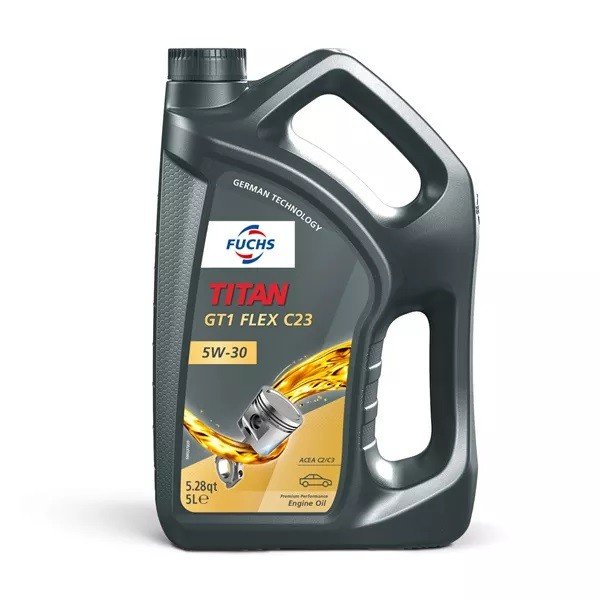
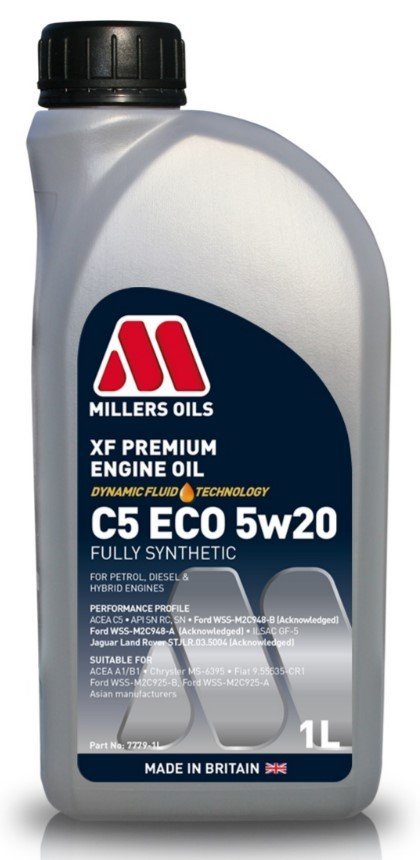
Use 4.5 litres with the filter, change at 8,000-10,000 mile intervals, and drive the car hard enough to keep the GPF clean. Ford Castrol Magnatec Professional E 5W-20 is the safest default, with Mobil 1 ESP x2, Fuchs Titan GT1 Pro V, and Millers Oils XF Premium as fully approved alternatives. For short-trip drivers, shorten intervals to 6,000-8,000 miles and make a weekly motorway run part of your routine.
Our Top Picks
As an Amazon Associate, we may earn from qualifying purchases. This doesn't affect our recommendations — we only suggest oils that hold the exact OEM approval for your engine.