 Oil-
Oil-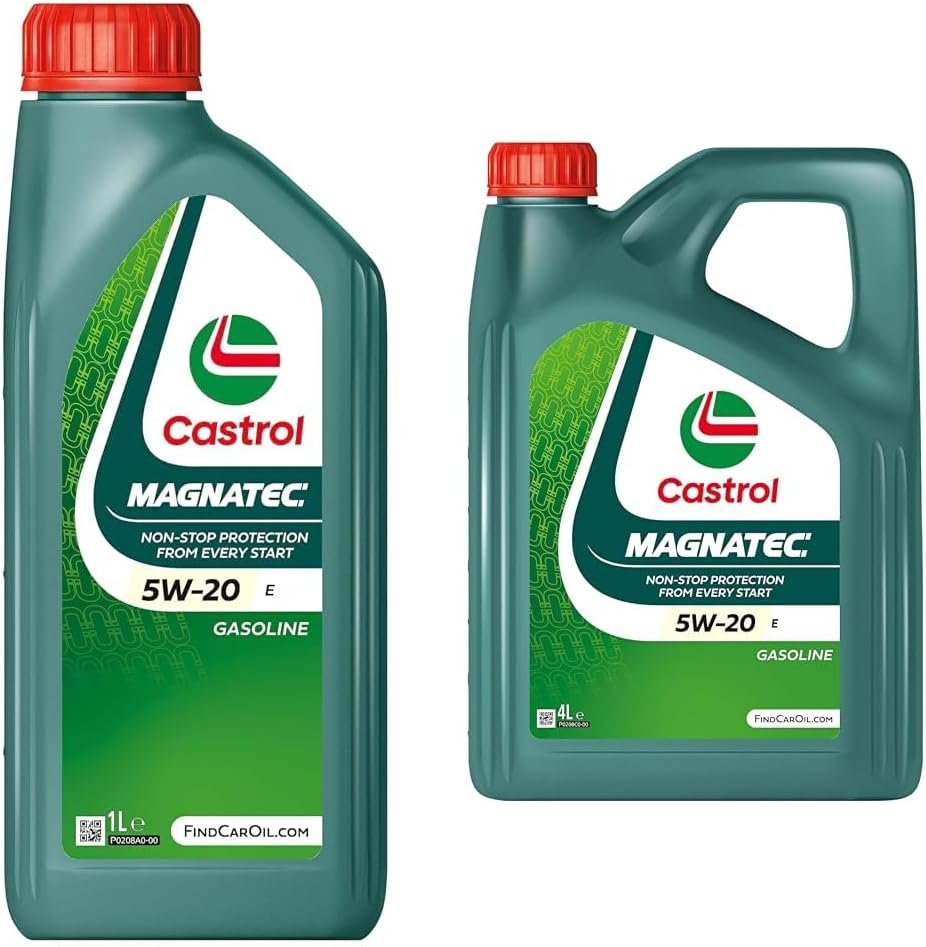
As an Amazon Associate, we may earn from qualifying purchases. This doesn't affect our recommendations — we only suggest oils that hold the exact OEM approval for your engine.
Best Engine Oil for Ford Fiesta Mk8 1.0 EcoBoost (100/125/140 HP)
The Ford Fiesta Mk8 (2017-2023) carried Ford’s acclaimed 1.0 EcoBoost three-cylinder into its final generation, refining it with up to 140 hp in the ST-Line variant and introducing a critical mid-life engineering change. Depending on your car’s build date, the Mk8 uses either a wet timing belt or a conventional timing chain, and this distinction fundamentally affects your oil choice and maintenance strategy. What does not change is the oil specification: Ford WSS-M2C948-B remains mandatory across all Mk8 1.0 EcoBoost variants. This guide covers the correct oil, capacity, and the key differences between early and late-production Mk8 engines.
Quick Answer: Recommended Oil
For Fiesta Mk8 1.0 EcoBoost (all variants):
- Specification: Ford WSS-M2C948-B, ACEA C2, SAE 5W-20
- Oil capacity: 4.3 litres with filter (4.1 L without)
WSS-M2C948-B is not optional. This specification controls additive chemistry and viscosity behaviour that the 1.0 EcoBoost requires regardless of whether your engine has the wet belt or timing chain. Generic 5W-20 without this approval is not a safe substitute.
The B7JA/B7JB Engine: Evolution of the EcoBoost
The Mk8 Fiesta’s 1.0 EcoBoost (engine codes B7JA for lower outputs, B7JB for 125/140 hp) builds on the award-winning architecture introduced in 2012 but with meaningful revisions. Displacement remains 999cc from three cylinders with direct injection, a turbocharger, and the integrated exhaust manifold that defined the original design. Ford added cylinder deactivation on higher-output versions, allowing the engine to run on two cylinders under light load for improved fuel economy. The 140 hp variant received a larger turbo and revised boost mapping.
The most significant change, however, is structural. Pre-December 2019 Mk8 engines retain the original wet timing belt design. Post-December 2019 production switched to a conventional timing chain. This is not a model year distinction but a build date one, so checking your vehicle’s exact production date is essential.
Wet Belt vs Timing Chain: Check Your Build Date
Pre-December 2019: Wet Timing Belt
Early Mk8 1.0 EcoBoost engines use the same belt-in-oil system as the Mk7. A toothed rubber belt runs fully submerged in engine oil, eliminating scheduled replacement intervals but creating total dependence on oil quality. The belt material must remain chemically stable in hot oil for the engine’s lifetime. If the oil degrades or contains incompatible additives, the belt swells, sheds rubber particles, and these fragments clog the oil pump pickup strainer. The result is sudden oil starvation and catastrophic engine failure, typically between 60,000 and 100,000 miles on neglected engines.
This failure mode is well-documented and was the primary motivation for Ford’s mid-production switch to a chain. If your Mk8 was built before December 2019, treat oil specification and change intervals with the same seriousness as the Mk7 EcoBoost.
Post-December 2019: Timing Chain
Later Mk8 production replaced the wet belt with a conventional metal timing chain. This eliminates the specific risk of belt rubber degradation and oil pump clogging. The chain runs in oil like any chain-driven engine and does not require the same chemical compatibility considerations for the timing drive material.
However, Ford retained the WSS-M2C948-B oil specification for chain-equipped engines. The additive package and 5W-20 viscosity remain engineered around the EcoBoost’s tight bearing clearances, turbo lubrication requirements, and direct injection fuel dilution characteristics. The chain revision removed one failure mode but did not change the fundamental oil requirements.
How to check: Your vehicle’s build date is on the plate inside the driver’s door frame. If built from December 2019 onward, you have the chain. If in doubt, a Ford dealer can confirm from the VIN.
Understanding Ford WSS-M2C948-B
Ford developed WSS-M2C948-B specifically for the EcoBoost family. It mandates a low-HTHS (High Temperature High Shear) viscosity profile at SAE 5W-20 combined with an additive formulation tested for compatibility with both the wet belt rubber compound and the engine’s internal coatings. The ACEA C2 classification ensures low ash content to protect the catalytic converter while maintaining adequate wear protection for the turbo bearings.
This specification is narrower than a generic ACEA C2 or A5/B5 approval. Many 5W-20 oils meet ACEA requirements without holding WSS-M2C948-B certification, because Ford’s testing goes beyond the ACEA test suite. Always verify the Ford approval on the bottle, not just the viscosity grade and ACEA class.
Technical Specifications: 1.0 EcoBoost (B7JA / B7JB)
| Specification | Value |
|---|---|
| Displacement | 999cc (1.0 litre) |
| Layout | Inline-3, transverse, aluminium block |
| Valvetrain | DOHC, 12 valves |
| Timing Drive | Wet belt (pre-Dec 2019) / Chain (post-Dec 2019) |
| Turbocharger | Single-scroll (100/125 hp) / Larger unit (140 hp) |
| Power | 100 / 125 / 140 HP |
| Torque | 170 / 200 / 240 Nm |
| Fuel Type | Petrol, 95 RON minimum |
| Recommended Viscosity | SAE 5W-20 |
| Oil Capacity (without filter) | 4.1 litres |
| Oil Capacity (with filter) | 4.3 litres |
| ACEA Norm | C2 |
| Ford Norm | WSS-M2C948-B |
Oil Change Intervals
Ford Official Recommendation:
- Standard service: 12,500 miles or 1 year
- Flexible service: up to 18,000 miles or 2 years
Recommended Practice: 8,000-10,000 miles or annually, whichever comes first.
The 1.0 EcoBoost’s direct injection system causes fuel wash past the piston rings during cold starts, diluting the oil in the sump. This is especially common during short urban journeys where the engine never reaches full operating temperature. Oil dilution thins the lubricant beyond its design viscosity, reducing bearing protection and, on wet belt engines, compromising the chemical stability the belt requires.
Shorten to 6,000 miles if: predominantly short urban trips, oil level rising on the dipstick (fuel dilution), the engine has over 60,000 miles on the wet belt, or any history of non-approved oil under previous owners.
Common 1.0 EcoBoost Problems Related to Oil
Oil Pump Clogging (Wet Belt Engines Only)
The primary failure mode on pre-December 2019 engines. Degraded belt rubber sheds particles into the oil system, blocking the pickup strainer and starving the engine. By the time the oil pressure warning illuminates, bearing damage is typically already terminal. Prevention is entirely about correct oil specification and disciplined change intervals. Inspect drained oil for dark particles or gritty texture at every change.
Fuel Dilution
Common across all Mk8 1.0 EcoBoost variants. Monitor the dipstick monthly. If the oil level consistently rises above the maximum mark, fuel is accumulating in the sump. Reduce your change interval immediately and ensure the engine reaches full operating temperature on most journeys.
Cylinder Deactivation Oil Demand (125/140 HP)
The cylinder deactivation system on higher-output variants places additional demands on oil pressure consistency. Low-quality or degraded oil can cause hesitation or roughness when the system transitions between two and three-cylinder operation. WSS-M2C948-B approved oil at the correct viscosity ensures the hydraulic actuation operates cleanly.
Conclusion
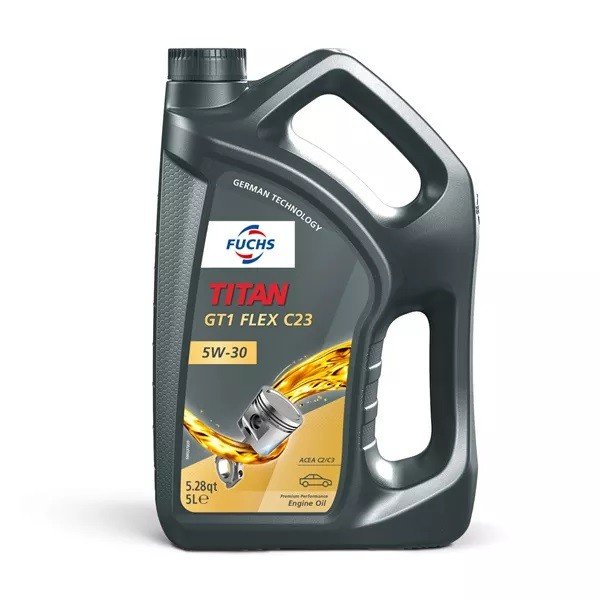
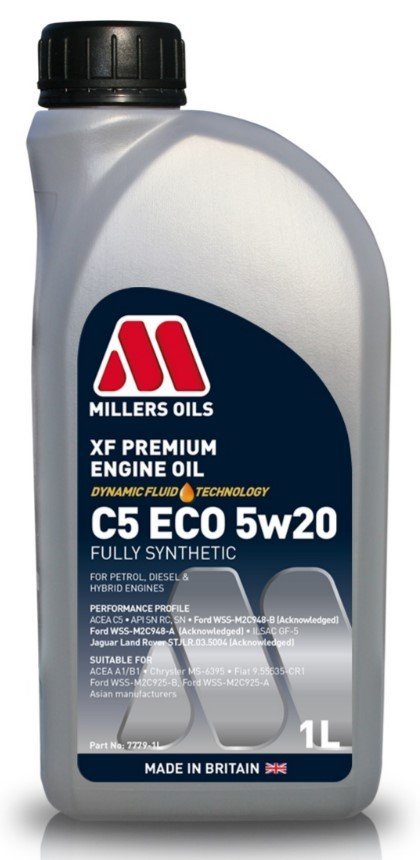
The Ford Fiesta Mk8 1.0 EcoBoost demands Ford WSS-M2C948-B approved SAE 5W-20 oil regardless of whether your engine has the wet timing belt or the later timing chain. Check your build date on the door frame plate: pre-December 2019 cars have the belt and require extra vigilance on oil quality and change intervals to prevent pump clogging. Post-December 2019 cars with the chain eliminate that specific risk but still need the same specification. Use 4.3 litres with filter, change at 8,000-10,000 miles (shorter for city driving), and verify the WSS-M2C948-B approval on every bottle. Ford Castrol Magnatec Professional E 5W-20 remains the safest default, with Mobil 1, Fuchs, and Millers providing excellent approved alternatives.
Our Top Picks
As an Amazon Associate, we may earn from qualifying purchases. This doesn't affect our recommendations — we only suggest oils that hold the exact OEM approval for your engine.