 Oil-
Oil-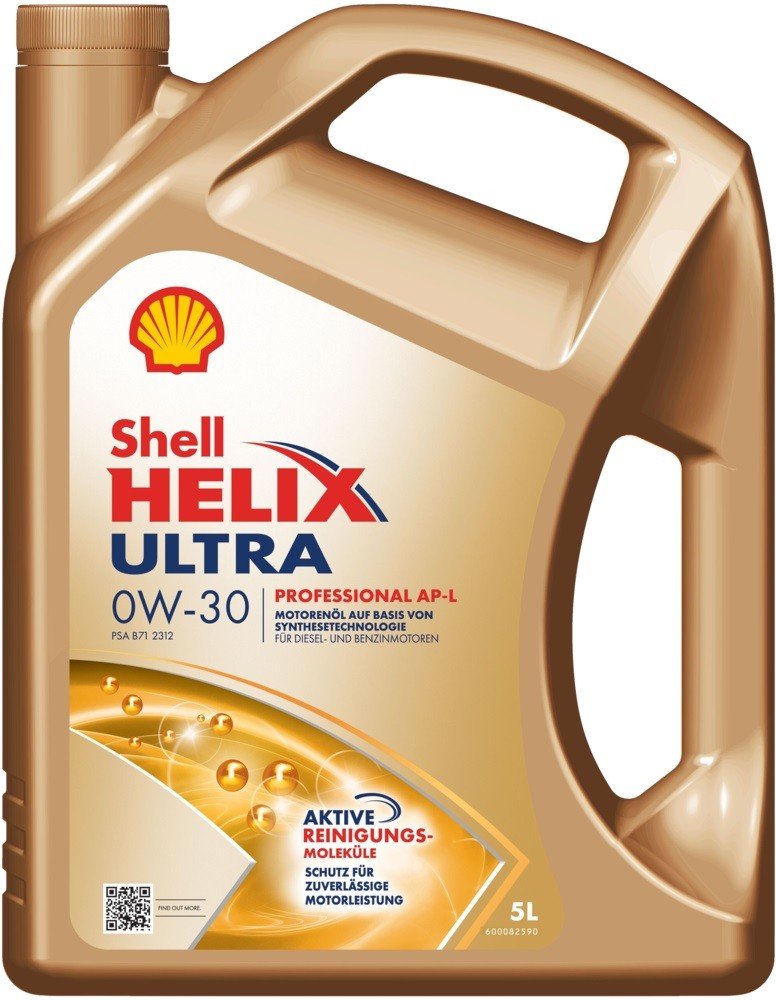
As an Amazon Associate, we may earn from qualifying purchases. This doesn't affect our recommendations — we only suggest oils that hold the exact OEM approval for your engine.
Best Engine Oil for Vauxhall Corsa F 1.2 PureTech Turbo (100/130 HP)
The Vauxhall Corsa F, built on Stellantis’s CMP platform since 2019, uses the PSA 1.2 PureTech turbocharged three-cylinder as its primary petrol engine. It is a lively, efficient little motor that has won awards and earned genuine affection from owners. It also contains a design feature that can destroy the engine without warning if the oil is wrong: a wet timing belt submerged in engine oil. This belt-in-oil system is the single most important factor in choosing lubricant for this car, and it is the reason PSA B71 2312 approval on the bottle is not a suggestion but an absolute requirement. This guide explains the correct oil specification, why low-SAPS chemistry protects the belt, and how to avoid the premature failures that have generated class-action-level complaints across Europe.
Quick Answer: Recommended Oil
For Vauxhall Corsa F 1.2 PureTech Turbo (100/130 HP):
- Recommended viscosity: SAE 0W-30
- Oil capacity: 3.3 litres with filter (3.0 L without)
- Required norms: ACEA C2, PSA B71 2312
Key warning: Only use oil carrying PSA B71 2312 approval. This low-SAPS specification was developed specifically for PureTech engines with wet timing belts. Using a generic 0W-30 or any oil meeting only ACEA C3 risks accelerated belt degradation and catastrophic engine failure. The specification printed on the bottle is not interchangeable.
The 1.2 PureTech Turbo: Brilliant Engineering With a Critical Weakness
The EB2ADTS (100 HP) and EB2ADTD (130 HP) are three-cylinder, 1,199cc turbocharged petrol engines from the PSA PureTech family. Direct fuel injection, a twin-scroll turbocharger, and variable valve timing deliver strong low-end torque and genuinely competitive fuel economy from a compact, lightweight package. The PureTech 1.2 has appeared across the Stellantis empire in Peugeot 208 and 308 models, Citroen C3 and C4, DS 3 Crossback, and since 2019, the Vauxhall Corsa F. International Engine of the Year awards followed, and for good reason: on paper and in daily driving, the PureTech punches well above its displacement.
But the engineering decision that defines this engine’s ownership experience is invisible from the outside. Like the Ford 1.0 EcoBoost, the PureTech uses a toothed rubber timing belt running inside the engine block, permanently bathed in engine oil. PSA chose this belt-in-oil design to reduce noise, eliminate the need for a separate belt cover and tensioner service schedule, and save space in the cramped engine bay. In theory the oil lubricates and cools the belt, extending its service life beyond a conventional dry belt. In practice, the wet belt has become the PureTech’s Achilles heel.
The Wet Timing Belt Problem: What Goes Wrong
Reports of premature wet belt failure on PureTech engines have been accumulating since the mid-2010s. The pattern is consistent and well-documented across owner forums, independent garages, and consumer protection bodies across Europe. Belts that should last 180,000 km are degrading at as early as 40,000 km on some examples, particularly those built between 2014 and 2018. Although the Corsa F uses the later-production PureTech with some improvements, the fundamental belt-in-oil architecture remains identical, and no version of the engine is fully immune.
The failure mechanism works as follows. The timing belt rubber is designed to remain chemically stable while submerged in hot engine oil. However, the 1.2 PureTech’s direct injection system causes significant fuel dilution of the sump oil during short journeys and cold starts. Unburned petrol washes past the piston rings and accumulates in the oil, thinning it and altering its chemical composition. This fuel-contaminated oil attacks the belt material, causing the rubber to swell, soften, and eventually shed particles. These rubber fragments circulate through the lubrication system and clog the oil pickup strainer and oil pump mesh. The engine is starved of oil, and bearing failure follows within seconds. Owners typically see the oil pressure warning light and hear terminal knocking simultaneously. By that point the engine is scrap.
Excessive oil consumption compounds the problem. Some PureTech engines, particularly early-build units from 2014 to 2018, consume oil at rates of up to 1 litre per 1,500 km. If the oil level drops below minimum, the belt is partially exposed to air, losing the cooling and lubrication that the design depends on. Combined with fuel dilution reducing the quality of whatever oil remains, the belt faces a double assault: degraded chemistry and inadequate volume.
Stellantis has acknowledged the severity of the issue. In May 2025, Stellantis announced a compensation programme for owners affected by PureTech wet belt failures, covering engines across the Peugeot, Citroen, DS, Vauxhall, and Opel ranges. This followed sustained pressure from consumer groups in the UK, France, and the Netherlands. The programme acknowledges that the problem is systemic, not limited to neglected vehicles, though the terms and coverage vary by market and model year.
Why PSA B71 2312 Is Non-Negotiable
PSA B71 2312 is a low-SAPS (Sulphated Ash, Phosphorus, Sulphur) specification developed specifically for PureTech engines. Understanding why this particular norm matters requires understanding what low-SAPS chemistry does for the wet belt.
Standard engine oils with higher SAPS levels contain metallic detergent and anti-wear additives (calcium, zinc, phosphorus compounds) that form protective films on metal surfaces. These additives are excellent for bearing and piston ring protection, but their chemical byproducts interact aggressively with the rubber compound used in the PureTech’s wet timing belt. Higher ash content promotes deposit formation on the belt surface, accelerating cracking and material degradation. The phosphorus and sulphur compounds alter the rubber’s elasticity over time, causing it to become brittle and prone to tooth shearing.
PSA B71 2312 mandates a carefully balanced additive package: enough metallic content to protect the turbo bearings and cylinder walls, but low enough SAPS to remain chemically neutral against the belt material. It also specifies ACEA C2 performance, which requires a low-HTHS (High Temperature High Shear) viscosity profile that reduces parasitic friction losses and improves fuel economy without compromising film strength at critical contact points.
ACEA C3 oils are not a substitute. Many owners and garages assume that a higher-rated C3 oil provides “better protection” than C2. In fact, ACEA C3 permits higher SAPS content and a higher HTHS viscosity that falls outside the PSA B71 2312 specification. Using a C3 oil in the PureTech may accelerate belt degradation while simultaneously reducing fuel economy. The difference is not academic; it is the difference between a belt that lasts 120,000 km and one that fails at 60,000 km.
Technical Specifications: 1.2 PureTech Turbo (EB2ADTS / EB2ADTD)
| Specification | Value |
|---|---|
| Displacement | 1,199cc (1.2 litres) |
| Layout | Inline-3, transverse, aluminium block and head |
| Valvetrain | DOHC, 12 valves, wet timing belt |
| Turbocharger | Twin-scroll |
| Power | 100 HP (EB2ADTS) / 130 HP (EB2ADTD) @ 5,500 RPM |
| Torque | 205 Nm (100 HP) / 230 Nm (130 HP) @ 1,750 RPM |
| Fuel Type | Petrol, 95 RON minimum |
| Recommended Viscosity | SAE 0W-30 |
| Oil Capacity (without filter) | 3.0 litres |
| Oil Capacity (with filter) | 3.3 litres |
| ACEA Norm | C2 |
| OEM Norm | PSA B71 2312 |
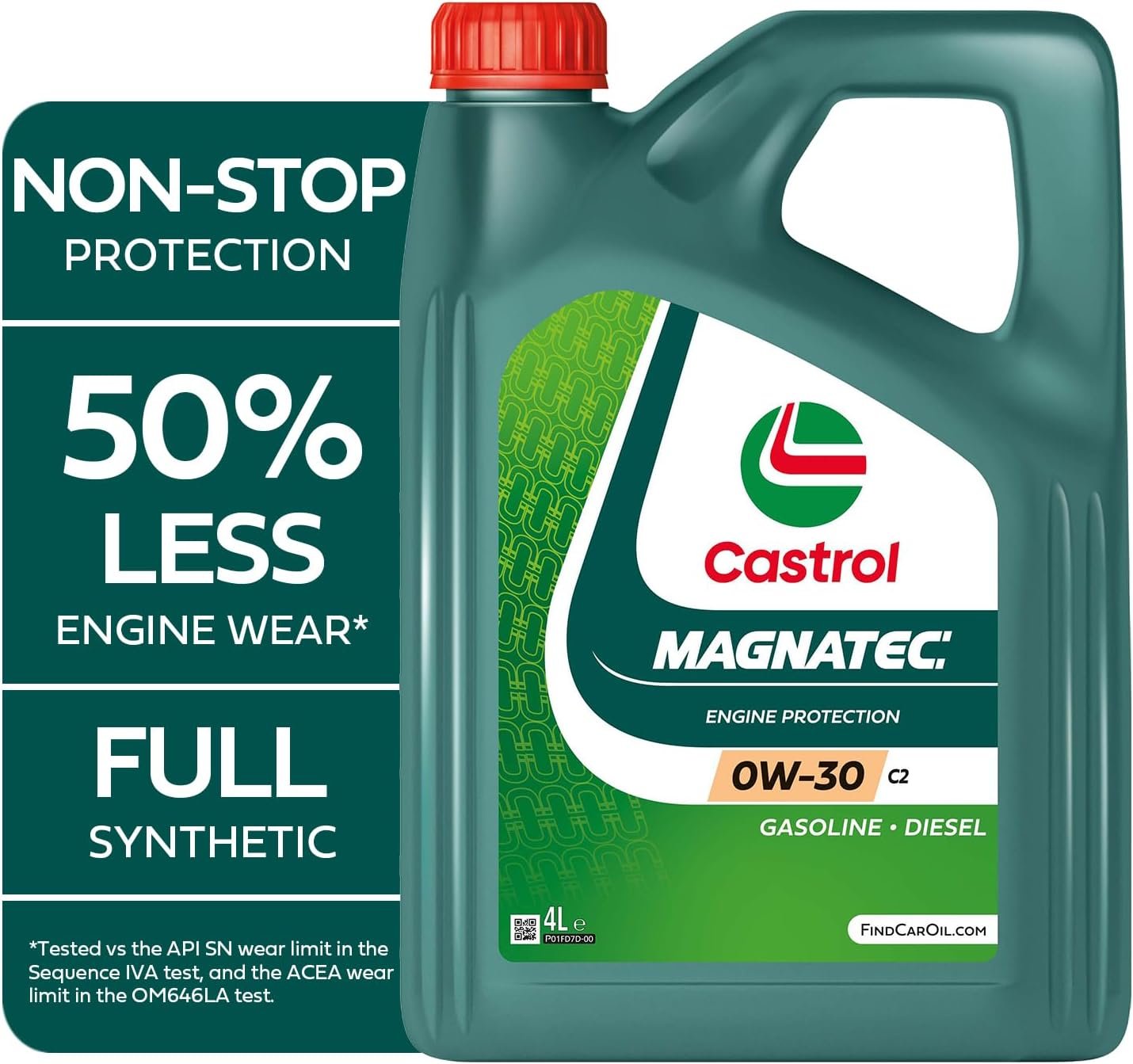
Best Value: Castrol EDGE 0W-30 Castrol’s Fluid Titanium technology provides strong film strength under high shear, protecting the turbo bearings during aggressive driving while maintaining the low HTHS viscosity that PSA B71 2312 demands. ACEA C2 compliant and widely available across UK motor factors and supermarket forecourts, the EDGE 0W-30 offers strong protection at a competitive price of £36-42 for 5 litres. A reliable choice for owners who want brand-name reassurance without the premium of Mobil 1 or Shell.
Oil Change Intervals
Vauxhall Official Recommendation:
- Standard service: 20,000 miles or 12 months (variable service indicator)
Recommended Practice: 10,000 miles or 12 months, whichever comes first.
The official 20,000-mile interval is dangerously optimistic for a PureTech engine with a wet timing belt. Fuel dilution from direct injection degrades the oil progressively, and by 20,000 miles in typical British driving conditions the lubricant has lost a significant percentage of its protective properties. The belt has been soaking in increasingly compromised oil for an entire year or longer.
Consider 6,000-8,000 mile intervals if:
- Predominantly short journeys under 10 miles (maximum fuel dilution risk)
- Frequent cold starts without reaching full operating temperature
- Oil level rises above the maximum mark on the dipstick (fuel accumulation)
- Vehicle has covered more than 40,000 miles (belt risk increases)
- Any history of unknown or incorrect oil used by previous owners
- Oil consumption exceeds 0.5 litres per 1,000 miles
Check the dipstick fortnightly. The PureTech’s small 3.3-litre sump means even modest oil consumption or fuel dilution has a proportionally large effect on oil quality and level. A rising oil level signals fuel contamination; a falling level signals consumption. Both conditions accelerate belt wear. Do not rely solely on the dashboard warning; by the time the light illuminates, the level is already critically low.
Protecting the Wet Belt: A Practical Summary
The wet timing belt is not a problem you can ignore and hope to avoid. It is the defining maintenance challenge of PureTech ownership. Beyond correct oil selection, the following measures significantly reduce your risk:
Never skip or delay an oil change. The belt soaks in whatever is in the sump. Stale, fuel-diluted, or degraded oil attacks the belt material every second the engine runs. Strict adherence to 10,000-mile intervals, shortened to 6,000-8,000 miles for urban drivers, is the single most effective preventive measure.
Use exclusively PSA B71 2312 approved oil. Verify the approval on the bottle label before every purchase. Do not accept a garage substituting a “similar” or “equivalent” oil. ACEA C2 alone is insufficient; the PSA norm adds belt-specific chemistry requirements beyond the ACEA standard.
Monitor oil level and condition. Check every two weeks. If the oil smells strongly of petrol or the level is rising, change it immediately regardless of mileage. If consumption exceeds 1 litre per 1,500 miles, have the engine inspected.
Drive the car properly. Regular motorway runs of 30 minutes or more at operating temperature help evaporate accumulated fuel from the sump oil. Engines used exclusively for short urban trips suffer the worst fuel dilution and the earliest belt failures.
Budget for belt inspection or replacement. Regardless of oil discipline, many specialists recommend a precautionary timing belt replacement at 60,000-80,000 miles. The cost of a planned belt change is roughly £400-600 at an independent garage. The cost of a belt failure is a new engine.
Conclusion
The Vauxhall Corsa F 1.2 PureTech Turbo requires SAE 0W-30 engine oil meeting ACEA C2 and PSA B71 2312, with a capacity of 3.3 litres including the filter. The wet timing belt makes this one of the most oil-sensitive engines currently on sale in the UK. Wrong oil, extended intervals, or neglected levels do not merely shorten engine life; they can cause sudden, catastrophic failure at mileages that would be considered barely run-in on any other modern engine.
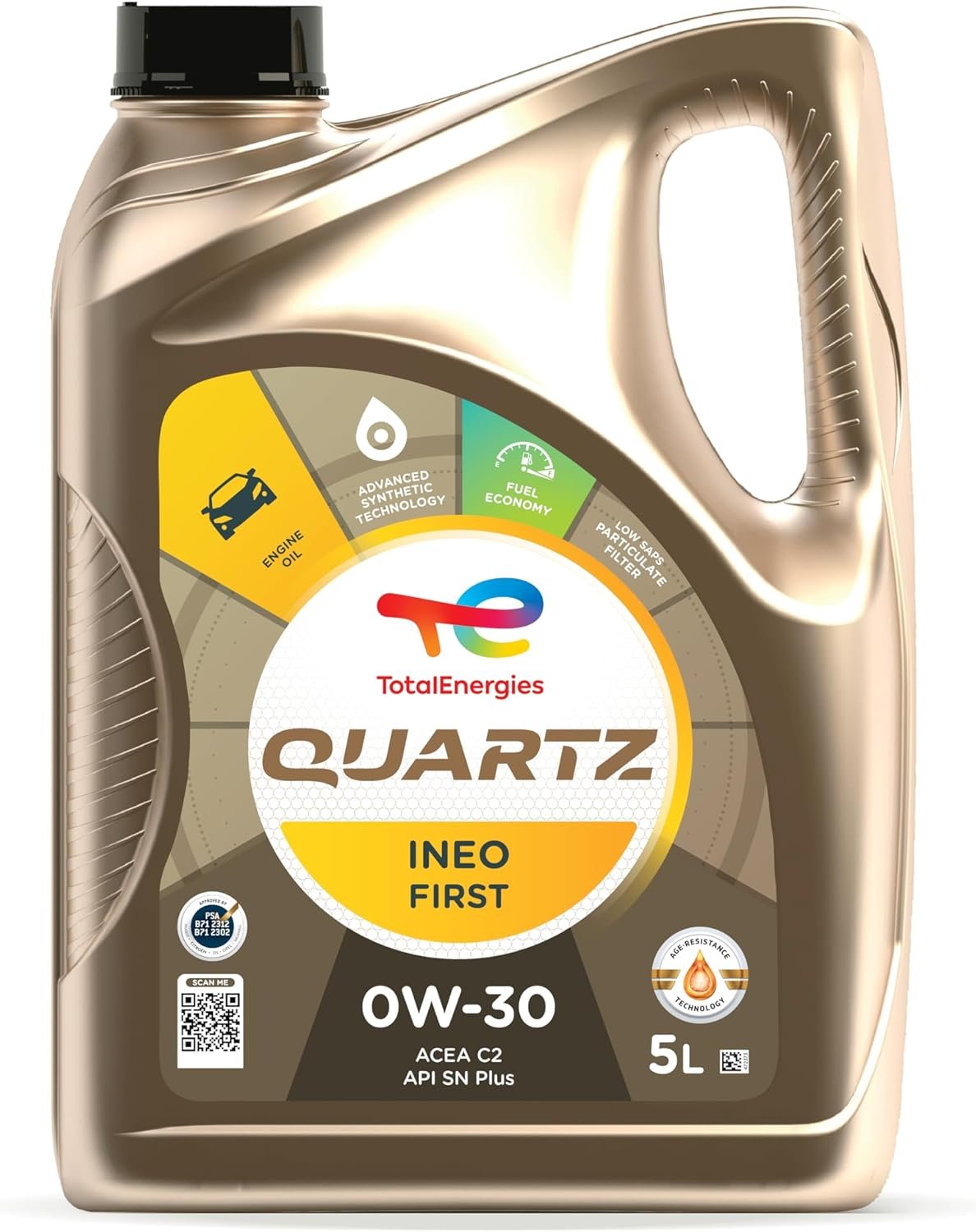
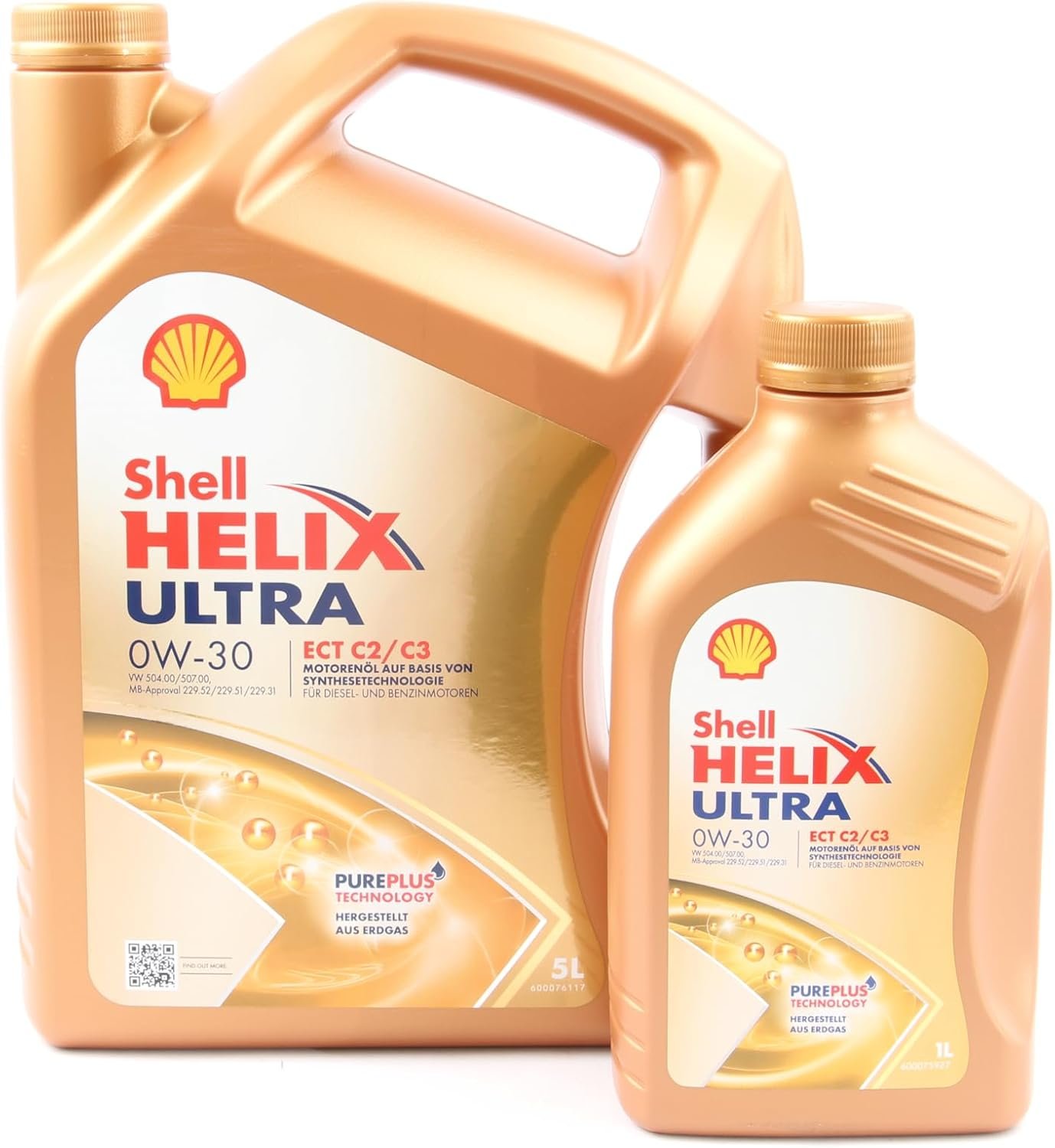
Total Quartz INEO First 0W-30 is the natural first choice at £34-39 for 5 litres, backed by Stellantis’s own factory-fill pedigree. Mobil 1 ESP 0W-30, Shell Helix Ultra Professional AP 0W-30, and Castrol EDGE 0W-30 all provide excellent PSA B71 2312 approved alternatives at varying price points. Whichever you choose, verify the approval, change the oil at sensible intervals, and monitor the dipstick religiously. The PureTech’s wet belt demands nothing less, and the engine rewards disciplined maintenance with the lively, efficient performance that earned it international recognition in the first place.
Our Top Picks
As an Amazon Associate, we may earn from qualifying purchases. This doesn't affect our recommendations — we only suggest oils that hold the exact OEM approval for your engine.