 Oil-
Oil-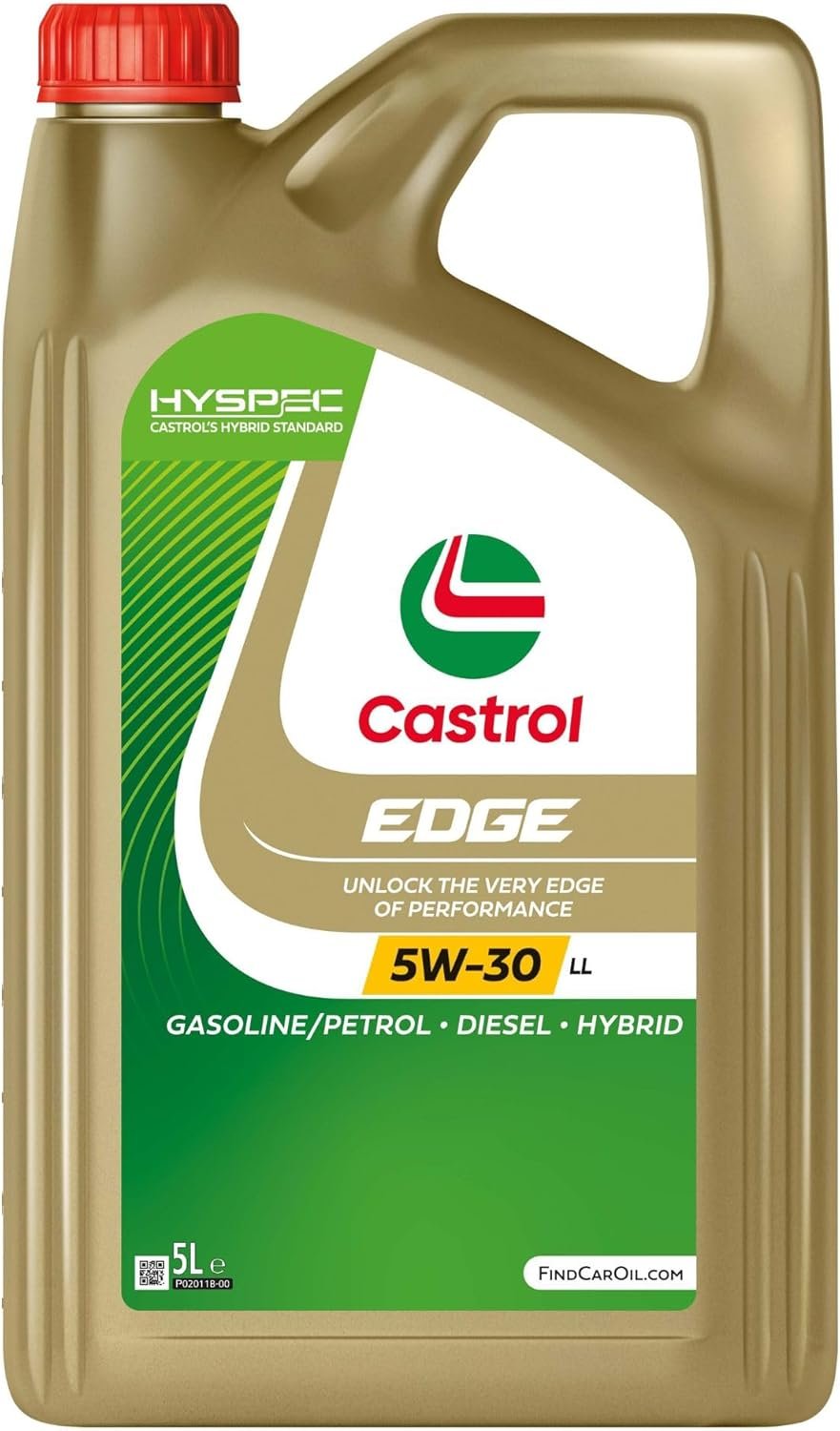
As an Amazon Associate, we may earn from qualifying purchases. This doesn't affect our recommendations — we only suggest oils that hold the exact OEM approval for your engine.
Best Engine Oil for Skoda Octavia 4th Gen (NX) 2.0 TDI 150 HP
The fourth-generation Skoda Octavia (NX), produced from 2020 onwards, is one of the most practical and well-regarded family cars in the UK. Its 2.0 TDI diesel engine with 150 HP is the workhorse of the range, delivering 360 Nm of torque for effortless motorway cruising and strong towing ability. Under the bonnet sits an EA288 evo diesel — an evolution of Volkswagen’s proven EA288 platform — that is fundamentally reliable but ferociously complicated. Two separate EGR circuits, multiple cooling loops, an AdBlue-based SCR system, a belt-driven two-stage oil pump, and a diesel particulate filter all depend on the engine oil being exactly right. Choosing the wrong oil, or stretching service intervals, will accelerate DPF clogging, degrade the AdBlue system’s efficiency, and shorten engine life. This guide covers the mandatory VW 507 00 specification, explains the engineering that makes this engine both impressive and demanding, and recommends four proven oils.
Quick Answer: Recommended Oil
For Skoda Octavia 4th Gen (NX) 2.0 TDI 150 HP (DTUA/DTTA):
- Specification: VW 507 00 with ACEA C3
- Viscosity: SAE 5W-30 (alternative: 0W-30)
- Oil capacity: 4.8 litres with filter (4.5 L without)
Critical: Only use oil carrying the VW 507 00 approval number. The Octavia NX shares its oil specification with every VW Group diesel fitted with a DPF. VW 507 00 mandates low-SAPS (Sulphated Ash, Phosphorus, Sulphur) chemistry to protect the DPF from ash accumulation. A generic ACEA C3 oil without VW 507 00 approval has not been tested against Volkswagen’s soot dispersancy and oxidation stability requirements. DPF replacement on the Octavia costs £1,200-2,000 — using the correct oil is the cheapest insurance available.
The DTUA/DTTA Engine: EA288 Evo
The engine codes DTUA and DTTA identify the 150 HP variant of Volkswagen’s EA288 evo diesel platform — the latest evolution of the 2.0 TDI architecture. This inline-4 displaces 1,968cc with an 81.0mm bore and 95.5mm stroke, producing 150 HP at 3,500-4,000 RPM and 360 Nm of torque from 1,600 RPM. The “evo” designation signifies meaningful revisions over the earlier EA288 engines found in the previous Octavia generation: revised combustion chamber geometry, higher common-rail injection pressures up to 2,200 bar, and a twin-dosing SCR system with two AdBlue injection points for improved NOx reduction.
This engine is better than the EA189 that powered the Golf 6-era diesels in almost every measurable way — more efficient, more refined, and cleaner. But it is also considerably more complex. The EA288 evo uses two separate exhaust gas recirculation circuits: a high-pressure EGR loop that recirculates gas from the exhaust manifold directly back to the intake, and a low-pressure EGR loop that draws cooled exhaust gas from downstream of the DPF. Managing two EGR circuits requires multiple electronically controlled valves, each one a potential failure point.
The cooling system is similarly elaborate. Multiple cooling circuits — for the engine block, cylinder head, EGR coolers, turbocharger, and oil — are managed by a combination of mechanical and electric water pumps. This complexity serves efficiency, allowing the engine to reach operating temperature quickly while keeping critical components cool under load. But it also means more sensors, more hoses, more potential leak points, and more expensive diagnostics when something goes wrong.
The oil pump is belt-driven and uses a two-stage design to vary output depending on engine speed and load. This is more efficient than a fixed-displacement pump, reducing parasitic losses and improving fuel economy. However, belt-driven pumps introduce a dependency on belt condition — a worn or incorrectly tensioned belt can reduce oil delivery before any dashboard warning appears.
VW 507 00: Why Low-SAPS Oil Is Mandatory
VW 507 00 is the required specification for every VW Group diesel engine fitted with a DPF, including the Octavia NX 2.0 TDI. This specification exists because of a fundamental problem with diesel engines and oil: every drop of oil that enters the combustion chamber — through normal consumption, turbo seal seepage, or crankcase ventilation — leaves behind metallic ash in the DPF. This ash cannot be burned off during regeneration. It accumulates permanently.
VW 507 00 oils are formulated with strict chemical limits to minimise this ash production:
- Sulphated ash: Limited to 0.8% maximum, roughly 40% less than a conventional fully-formulated 5W-30.
- Phosphorus and sulphur: Reduced to levels that protect catalytic converter and SCR system surfaces from chemical poisoning.
- Soot dispersancy: Advanced dispersant additives keep diesel soot particles suspended individually in the oil, preventing them from clumping into abrasive clusters that accelerate bearing and cylinder wear.
- Oxidation stability: Validated for extended drain intervals under the high thermal stress that diesel engines impose on oil.
An oil labelled “ACEA C3” meets a generic European standard for catalyst-compatible lubricants. VW 507 00 adds Volkswagen’s own diesel-specific tests for soot handling, turbo coking resistance, and ash content that ACEA C3 alone does not require. Always check for the VW 507 00 approval number printed on the container — if it is not there, the oil has not been formally validated for this engine.
Technical Specifications: 2.0 TDI (DTUA / DTTA)
| Specification | Value |
|---|---|
| Displacement | 1,968cc (2.0 litres) |
| Layout | Inline-4, transverse, cast-iron block, aluminium head |
| Valvetrain | DOHC, 16 valves, timing belt |
| Bore x Stroke | 81.0mm x 95.5mm (long-stroke) |
| Compression Ratio | 15.5:1 |
| Power | 150 HP @ 3,500-4,000 RPM |
| Torque | 360 Nm @ 1,600-2,750 RPM |
| Fuel Type | Diesel |
| Injection | Common-rail direct injection, up to 2,200 bar |
| Emissions | Euro 6d with twin-dosing SCR (AdBlue) |
| Recommended Viscosity | SAE 5W-30 (alternative 0W-30) |
| Oil Capacity (without filter) | 4.5 litres |
| Oil Capacity (with filter) | 4.8 litres |
| ACEA Norm | C3 |
| VW Norm | VW 507 00 |
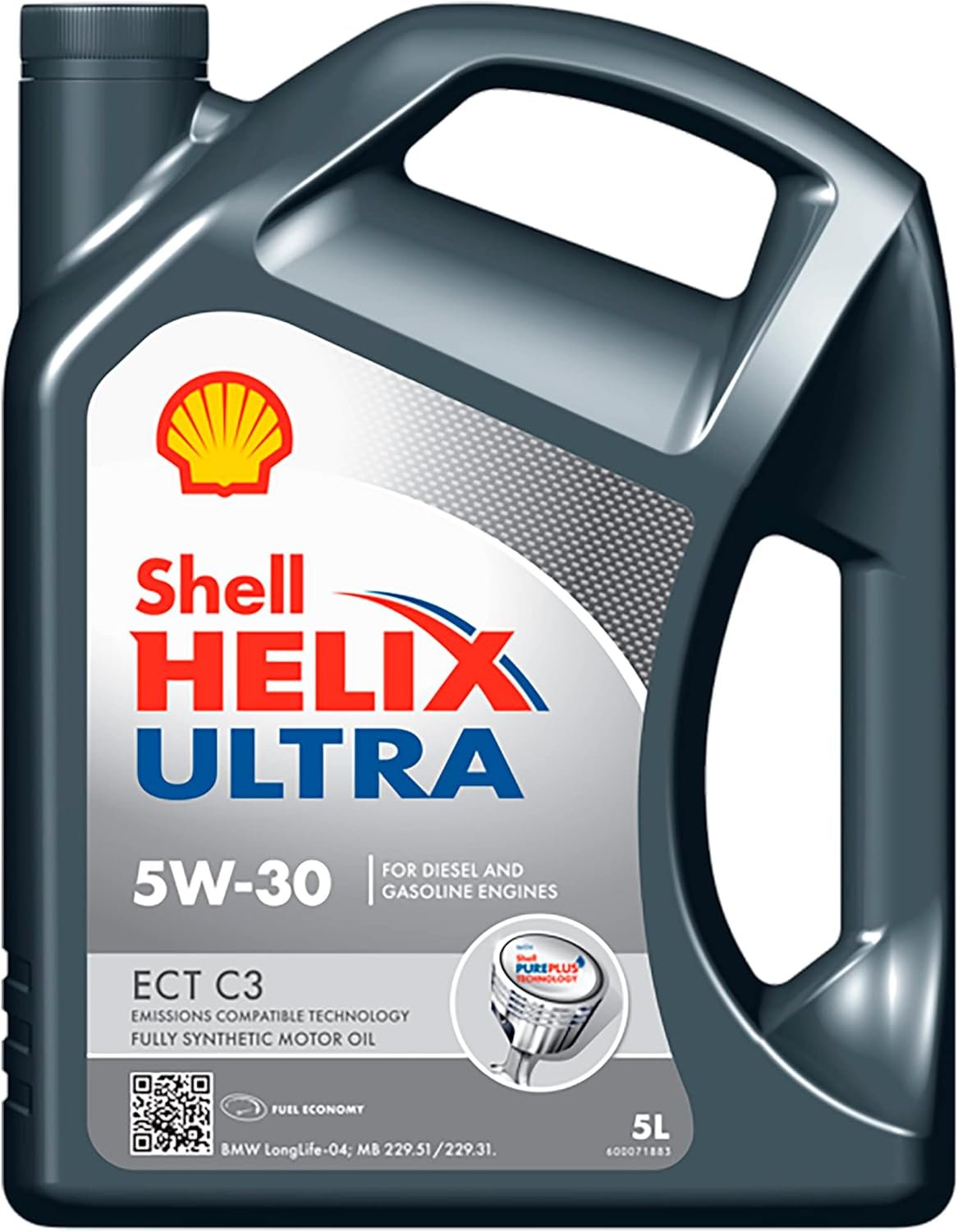
Alternative: Shell Helix Ultra ECT C3 5W-30 Shell’s PurePlus gas-to-liquid base oil technology starts with an exceptionally pure base stock, produced by converting natural gas into crystal-clear base oil with virtually no impurities. This purity translates directly into strong oxidation resistance — critical for diesel oil, which degrades faster than petrol oil due to soot contamination and higher combustion temperatures. Full VW 507 00 approval and excellent availability across UK retailers. Priced at £38-50 for 5 litres.
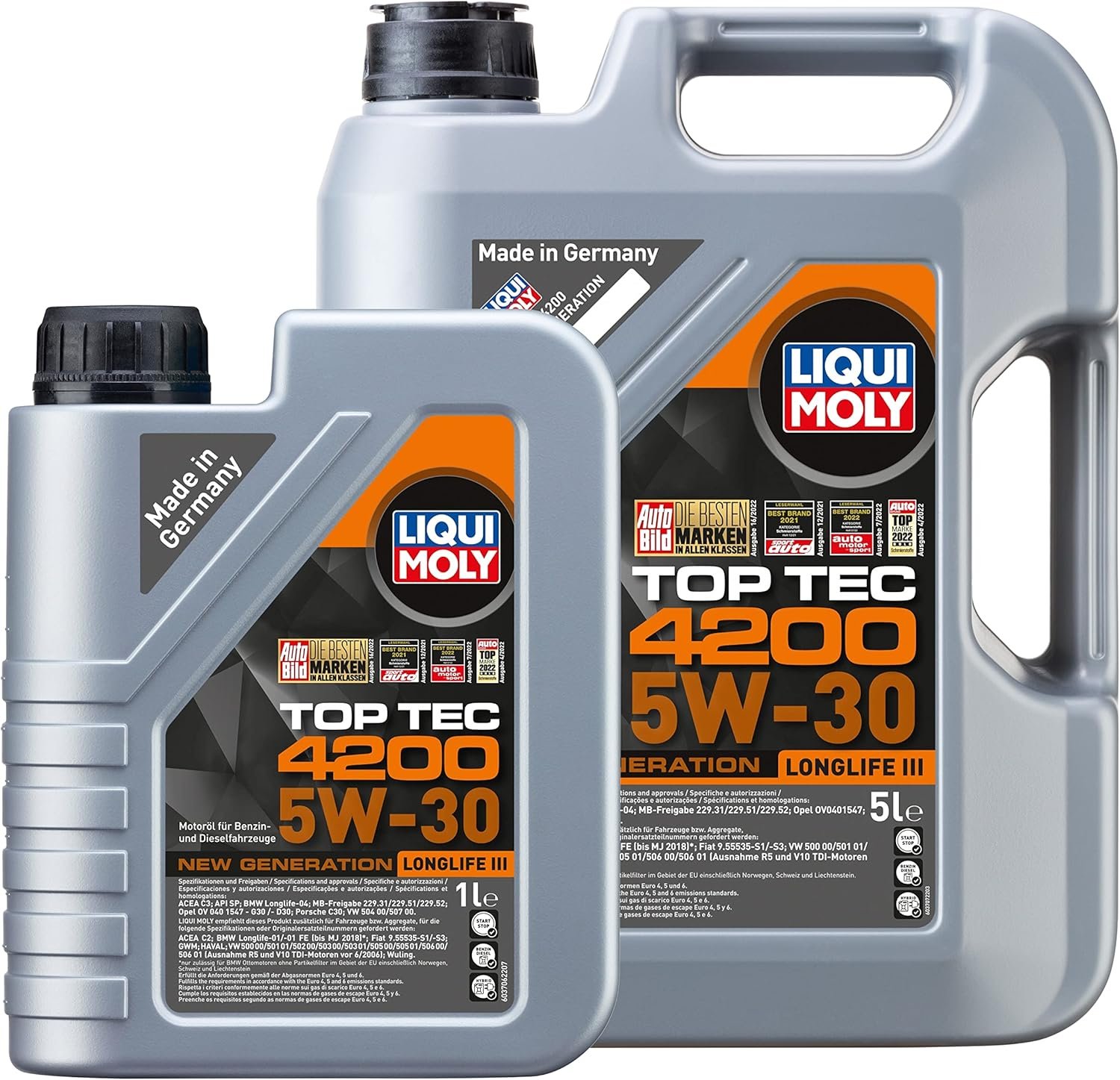
Best Value: Liqui Moly Top Tec 4200 5W-30 German-engineered with full VW 507 00 approval at the most competitive price point. Strong soot-handling capability keeps the oil effective even at extended intervals, and a robust detergent package helps combat the intake manifold and EGR deposits that diesel engines generate. Reliable cold-start protection down to -30 degrees C ensures proper oil flow on winter mornings — important given the two-stage oil pump’s belt-driven design, which benefits from oil that flows freely at low temperatures. Best value option at £35-45 for 5 litres.
Oil Change Intervals
Skoda Official Recommendation:
- LongLife service: up to 30,000 km or 24 months
- Fixed service: 15,000 km or 12 months
Recommended Practice: 10,000-12,000 km (6,000-7,500 miles) or annually, whichever comes first.
Skoda’s LongLife interval of 30,000 km is calculated for ideal conditions that rarely exist in UK driving. The Octavia’s 2.0 TDI generates substantial soot under load, and this soot accumulates in the oil continuously. By 20,000 km, soot levels can exceed the dispersant package’s capacity, allowing particles to agglomerate into abrasive clusters that accelerate cam lobe, bearing, and cylinder bore wear. This wear is invisible until it becomes expensive.
Consider 7,500 km (5,000 mile) intervals if:
- Primarily short trips under 15 km (DPF cannot complete regeneration, oil dilution accelerates)
- Heavy urban stop-and-go driving
- Frequent towing or heavy loads (estate models carrying full boot loads regularly)
- Vehicle exceeds 100,000 km
- Any sign of rising oil level on the dipstick (fuel dilution from incomplete DPF regeneration)
Common Problems Related to Oil and Maintenance
DPF Clogging from Short Trips: This is the single most common issue reported by Octavia 2.0 TDI owners who drive predominantly in town. The DPF requires sustained driving at motorway speeds — typically 20-30 minutes above 60 mph — to reach the 600 degrees C needed for passive regeneration. Short urban trips prevent this, forcing the ECU to trigger active regeneration by injecting additional diesel fuel into the cylinders. This extra fuel washes past the piston rings and dilutes the engine oil. If active regeneration is repeatedly interrupted — by switching off the engine during a regen cycle, for example — soot builds up until the DPF becomes blocked. Symptoms include a DPF warning light, reduced power, limp mode, and in severe cases black smoke from the exhaust. A blocked DPF costs £1,200-2,000 to replace. If you drive predominantly short trips, check your dipstick monthly. A rising oil level above the maximum mark indicates fuel dilution, and an immediate oil change is warranted.
AdBlue System Failures: The twin-dosing SCR system on the EA288 evo is more effective at reducing NOx emissions than earlier single-injector systems, but it introduces multiple potential failure points. NOx sensors — there are two, one upstream and one downstream of the SCR catalyst — can degrade and give false readings, triggering warning lights and eventually a countdown timer that prevents the engine from starting. The AdBlue injector is prone to crystallisation, where urea deposits form around the nozzle and restrict or block it entirely. The AdBlue pump and heating elements can also fail, particularly in cold weather when the fluid (which freezes at -11 degrees C) must be thawed before injection. Individual component replacement costs £200-600, and diagnosis often involves replacing sensors sequentially to isolate the fault. These failures are not oil-related, but they are worth understanding because the repair bills can be significant.
Oil Consumption as a Wear Indicator: The EA288 evo is not known for excessive oil consumption when healthy. Normal consumption should be well under 0.5 litres per 10,000 km. If you find yourself adding oil between services — particularly more than 0.5 litres per 5,000 km — this can indicate internal wear at the piston rings, valve stem seals, or turbocharger seals. Do not ignore rising oil consumption: investigate the source before minor wear becomes major mechanical failure. Blue smoke on startup typically points to valve stem seals, while blue smoke under hard acceleration suggests turbo seal leakage.
Two-Stage Oil Pump Belt Wear: The belt-driven two-stage oil pump is an efficient design, but it depends on belt integrity. The pump drive belt should be inspected at every major service. A stretched or worn belt reduces oil pump output before any dashboard warning appears, because the reduction is gradual rather than sudden. Reduced oil delivery means lower pressure at the furthest points of the lubrication circuit — the camshaft journals and turbocharger bearing — exactly where you need it most. Belt replacement is inexpensive if caught during routine maintenance; the consequences of ignoring it are not.
EA288 Evo vs EA189: Progress with Complexity
Owners upgrading from an older Octavia or Golf with the EA189 2.0 TDI will find the EA288 evo is a better engine in every performance metric. It produces more power and torque, uses less fuel, runs more quietly, and meets emissions standards without the software manipulation that defined the EA189’s legacy. The twin-dosing SCR system genuinely reduces NOx output rather than merely claiming to.
However, the EA288 evo is substantially more complex. Two EGR circuits instead of one. An AdBlue system with multiple sensors, injectors, and a pump. Multiple cooling circuits with electric and mechanical water pumps. A belt-driven two-stage oil pump. Each of these systems serves a valid engineering purpose, but each one also introduces potential failure modes that did not exist on the simpler EA189. The Octavia NX 2.0 TDI is reliable with disciplined maintenance, but when something does go wrong, the diagnostic process is more involved and the repair bills tend to be higher. A garage familiar with VW Group diesels is essential — generic mechanics without VAG diagnostic equipment will struggle with the interrelated systems.
Conclusion
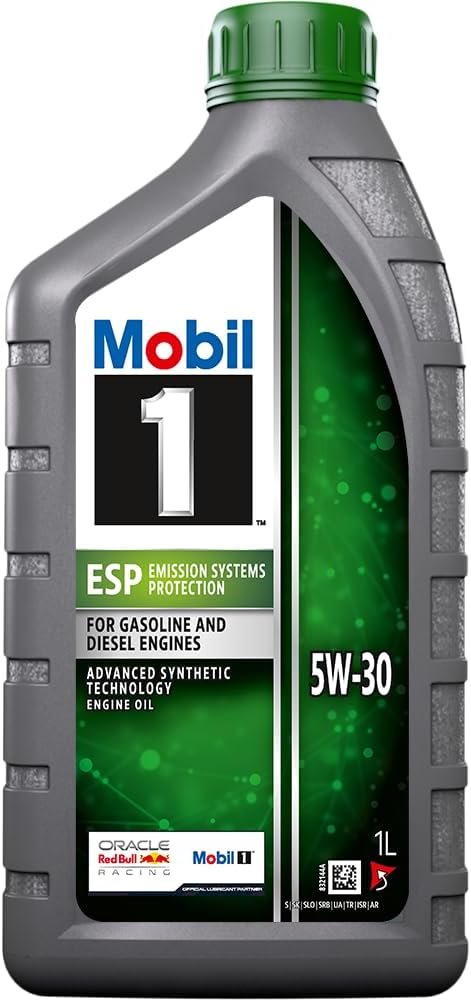
The Skoda Octavia 4th Gen (NX) 2.0 TDI 150 HP requires VW 507 00 approved SAE 5W-30 engine oil with a capacity of 4.8 litres including the filter. Low-SAPS oil is mandatory, not optional — the DPF, the SCR catalyst, and the EGR system all depend on it. Choose from proven brands: Castrol EDGE Professional LL 03, Mobil 1 ESP, Shell Helix Ultra ECT C3, or Liqui Moly Top Tec 4200. Verify the VW 507 00 approval number on every bottle you buy.
Maintain 10,000-12,000 km oil change intervals regardless of what the LongLife service indicator suggests. If your driving is predominantly urban with short trips, consider 7,500 km intervals and check your dipstick monthly for fuel dilution. The EA288 evo is a more capable and cleaner engine than the EA189 it replaced, but its complexity demands respect. Feed it the correct oil, change it on time, and address any warning lights promptly. Do that, and the Octavia NX 2.0 TDI will deliver the dependable, economical service that has made the Octavia one of the best-selling cars in Europe.
Our Top Picks
As an Amazon Associate, we may earn from qualifying purchases. This doesn't affect our recommendations — we only suggest oils that hold the exact OEM approval for your engine.