 Oil-
Oil-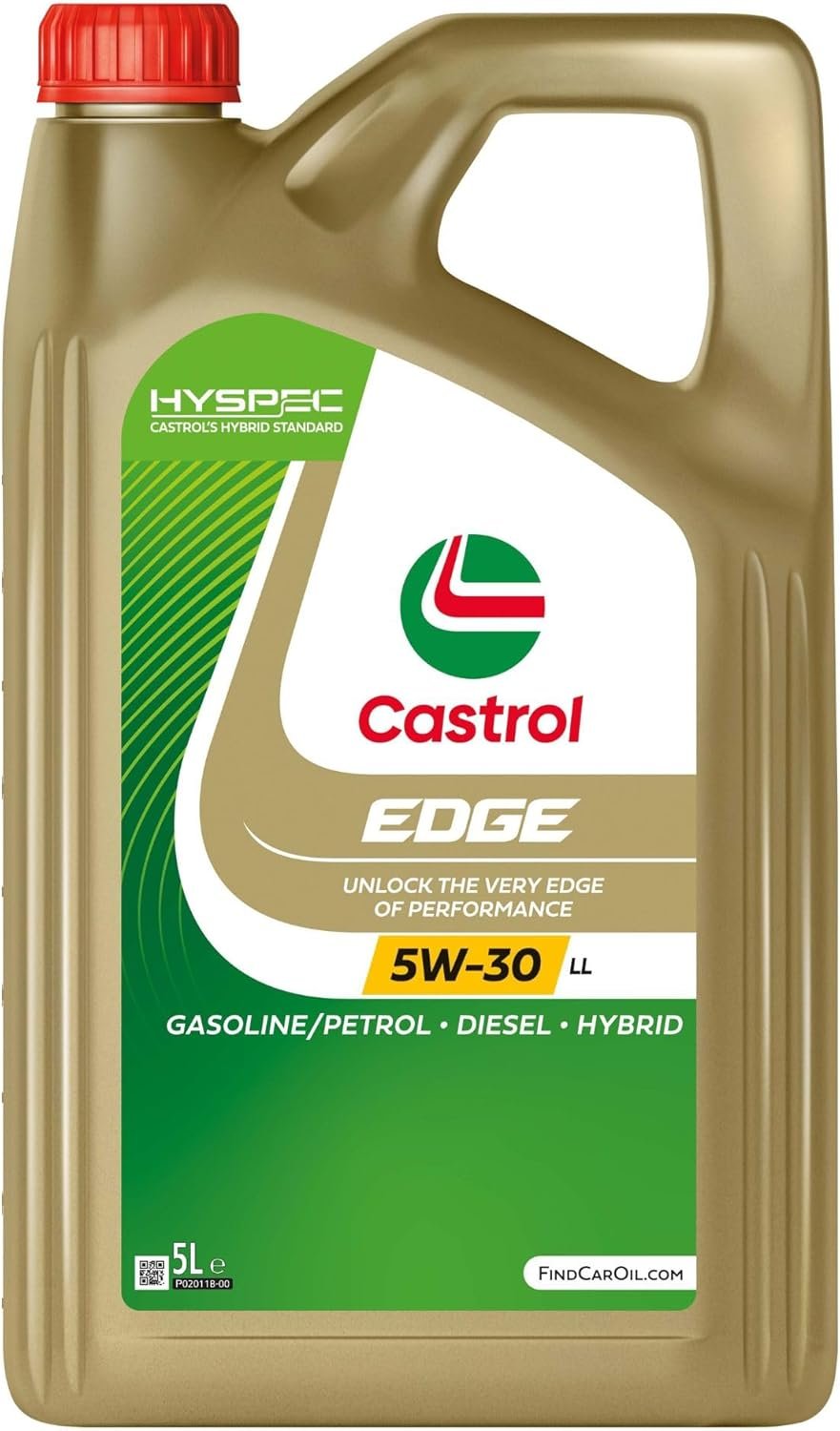
As an Amazon Associate, we may earn from qualifying purchases. This doesn't affect our recommendations — we only suggest oils that hold the exact OEM approval for your engine.
Best Engine Oil for Nissan Qashqai J12 1.3 DIG-T (140/158 HP)
The third-generation Nissan Qashqai J12, launched in 2021, uses the Renault-Nissan Alliance’s HR13DDT turbocharged 1.3-litre petrol engine. Co-developed with Mercedes-Benz and sharing its architecture with the M282, this compact four-cylinder with a mild hybrid system delivers strong torque and respectable economy for a family crossover. It also has specific oil requirements and a handful of known weak points that owners should understand. This guide covers the correct specification, why RN17 matters, and what to watch for as the miles accumulate.
Quick Answer: Recommended Oil
For Nissan Qashqai J12 1.3 DIG-T (140/158 HP):
- Recommended viscosity: SAE 5W-30
- Oil capacity: 5.4 litres with filter (5.1 L without)
- Required norms: ACEA C3, RN17
Key point: The HR13DDT requires oil meeting the Renault-Nissan RN17 specification, which aligns with ACEA C3. Using a lower-grade oil or one that only meets ACEA C2 does not provide adequate protection for the turbocharger and direct injection system. Always verify RN17 approval on the bottle.
The HR13DDT: A Multinational Engine
The HR13DDT is not entirely a Nissan product. Developed through the Renault-Nissan-Mitsubishi Alliance in partnership with Mercedes-Benz, this 1,332cc four-cylinder shares its core architecture with the Mercedes M282 engine found in the A-Class and GLA. The Alliance brought turbocharging and direct injection expertise; Mercedes contributed manufacturing precision and refinement. The result feels more polished than previous Nissan small-capacity turbos.
In the Qashqai J12, the HR13DDT comes in two tunes. The 140 HP version produces 240 Nm from 1,600 RPM, paired with a six-speed manual or Xtronic CVT. The 158 HP version raises torque to 260 Nm and comes exclusively with the CVT. Both variants feature a 12-volt mild hybrid system with a belt-integrated starter-generator for smoother stop-start operation. The engine uses a timing chain, and the cylinder head features an integrated exhaust manifold to reduce turbo spool time.
Technical Specifications: HR13DDT
| Specification | Value |
|---|---|
| Displacement | 1,332cc (1.3 litres) |
| Layout | Inline-4, transverse, aluminium block and head |
| Valvetrain | DOHC, 16 valves, timing chain |
| Turbocharger | Single-scroll, water-cooled |
| Power | 140 HP or 158 HP @ 5,500 RPM |
| Torque | 240 Nm (140 HP) / 260 Nm (158 HP) @ 1,600 RPM |
| Fuel System | Direct injection (DIG-T) |
| Mild Hybrid | 12V belt-integrated starter-generator (J12) |
| Fuel Type | Petrol, 95 RON minimum |
| Recommended Viscosity | SAE 5W-30 |
| Oil Capacity (without filter) | 5.1 litres |
| Oil Capacity (with filter) | 5.4 litres |
| ACEA Norm | C3 |
| OEM Norm | RN17 |
Why RN17 and ACEA C3 Matter
RN17 is the Renault-Nissan Alliance oil specification for its current turbocharged petrol engines. Because the HR13DDT was designed within the Alliance framework, it follows Renault oil standards rather than a Nissan-specific norm. RN17 mandates a mid-SAPS (Sulphated Ash, Phosphorus, Sulphur) additive package that balances turbocharger bearing protection at sustained high temperatures, catalytic converter longevity, and resistance to the fuel dilution that direct injection inevitably causes.
ACEA C3 is the European baseline that RN17 builds upon. C3 requires a High Temperature High Shear (HTHS) viscosity of at least 3.5 mPa.s, ensuring the oil film protects the turbo bearings under maximum load even when oil temperature exceeds 150 degrees Celsius. This is a critical distinction from ACEA C2, which permits a lower HTHS viscosity for improved fuel economy at the cost of reduced protection under severe conditions. The HR13DDT’s compact turbocharger runs hot and needs the additional film strength that C3 chemistry provides.
RN17 also specifies oxidation resistance and shear stability beyond the ACEA C3 baseline. Direct injection engines suffer fuel dilution as high-pressure fuel sprays wash past the piston rings during cold starts. This unburned fuel thins the oil and accelerates oxidation. An RN17-approved oil is formulated to maintain its protective properties despite this contamination, holding its viscosity grade over the full service interval.
Known Issues: What to Watch For
The HR13DDT is a fundamentally sound engine, and with proper maintenance it is expected to deliver around 220,000 km of reliable service. That said, several issues have emerged that owners should understand.
Timing chain stretch. The chain stretches gradually as links wear against sprockets and guides. Owners report measurable stretch around 120,000 miles, manifesting as a cold-start rattle, rough idle, and fault codes for camshaft timing deviation. Preventive replacement at around 100,000 miles is increasingly recommended by independent garages, before stretch progresses to the point where a jumped tooth bends valves and destroys the engine.
Turbo intercooler pipe clamps. The clamps securing the turbo pipes can work loose over time, particularly with frequent thermal cycling. A loose clamp allows pressurised air to escape, resulting in loss of power, a whistling sound under acceleration, and boost-related fault codes. The fix is cheap, but some owners report the issue recurring, suggesting the clamp design is marginal.
Spark plug and ignition coil failures. Direct injection and turbocharging place higher thermal demands on ignition components than a naturally aspirated engine. Plugs and coils fail more often than expected, sometimes as early as 30,000 miles. Symptoms include misfires, rough running, and a flashing engine management light. Replacing all four plugs and inspecting coils at every other oil change is sensible preventive maintenance.
Carbon buildup on intake valves. Because fuel is sprayed directly into the combustion chamber rather than across the intake valves, there is no fuel wash to clean carbon deposits. Over time these deposits restrict airflow and reduce power. Walnut-blasting the intake valves may be necessary at 60,000-80,000 miles depending on driving conditions.
CVT transmission reliability. Although separate from engine oil, the Xtronic CVT paired with the HR13DDT has attracted criticism for long-term durability. Reports of juddering, slipping, and outright failure cluster around the 100,000-mile mark. Owners planning to keep a CVT-equipped Qashqai beyond this mileage should budget for transmission fluid changes at shorter intervals than Nissan recommends.
Best Value: Total Quartz INEO MC3 5W-30 The most affordable RN17-approved option on this list at £32-37 for 5 litres. As TotalEnergies is the official lubricant partner for the Renault-Nissan Alliance, this oil is formulated with direct input from the engineers who designed the HR13DDT. ACEA C3 compliant with mid-SAPS chemistry and strong oxidation resistance. It lacks the premium brand cachet of Mobil 1 or Shell, but the Alliance partnership means it is engineered precisely for this application. The pragmatic choice for owners who change oil on schedule.
Oil Change Intervals
Nissan Official Recommendation:
- Standard service: 18,000 miles or 12 months (variable service indicator)
Recommended Practice: 10,000 miles or 12 months, whichever comes first.
The official interval assumes ideal conditions that rarely exist in British driving. The HR13DDT’s direct injection causes measurable fuel dilution during cold starts and short trips. A 10,000-mile interval keeps the oil within its effective operating window and provides a safety margin against cumulative fuel contamination.
Consider 6,000-8,000 mile intervals if:
- Predominantly short urban journeys under 10 miles
- Frequent cold starts without reaching full operating temperature
- Regular towing or sustained high-load motorway driving
- The vehicle has covered more than 80,000 miles
- Previous service history is unknown
Monitor the oil level monthly. A falling level needs topping up; a rising level signals fuel dilution and warrants an early oil change. Either condition left unchecked stresses the turbocharger bearings and timing chain tensioner.
Conclusion
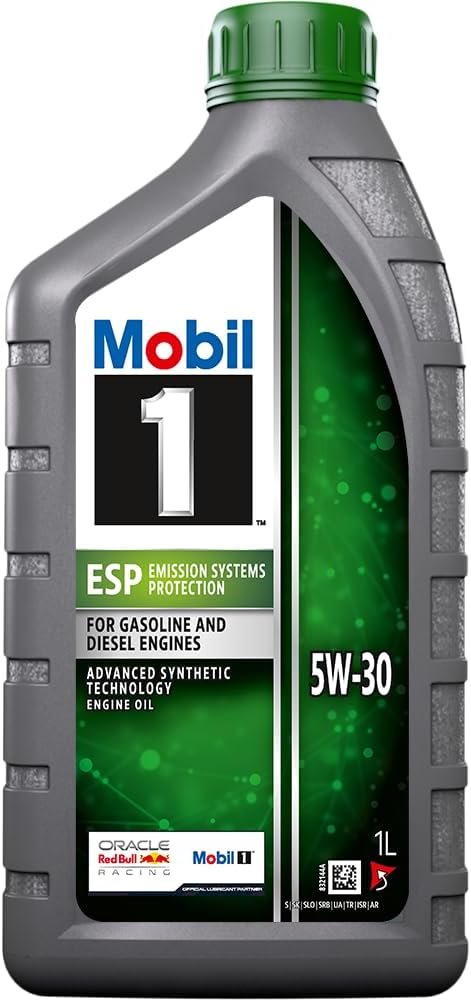
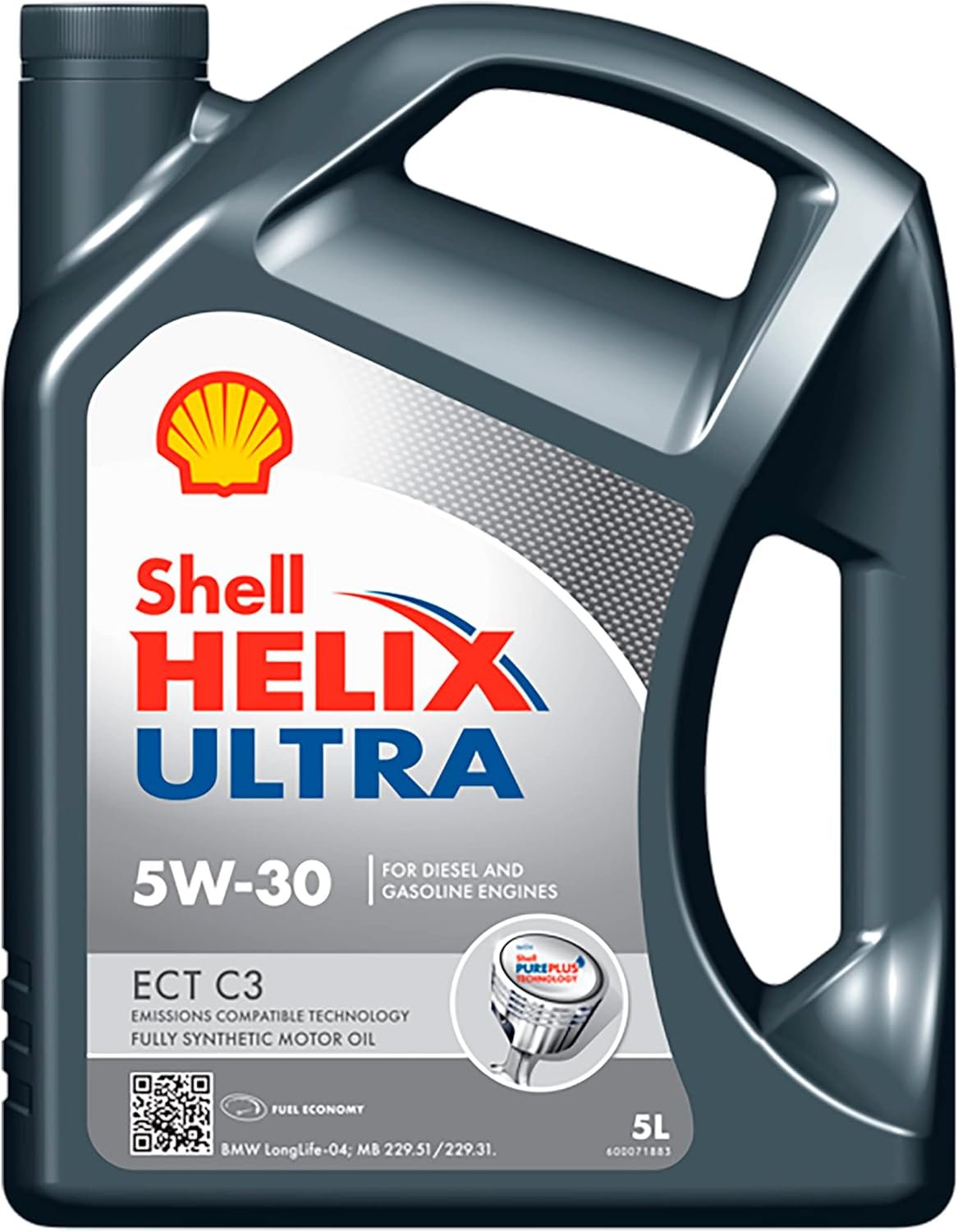
The Nissan Qashqai J12 1.3 DIG-T requires SAE 5W-30 engine oil meeting ACEA C3 and RN17, with a capacity of 5.4 litres including the filter. Castrol EDGE 5W-30 LL provides broad availability and Alliance approval at £36-42 for 5 litres. Mobil 1 ESP 5W-30 and Shell Helix Ultra ECT C3 5W-30 offer premium synthetic alternatives for maximum thermal stability and deposit control. Total Quartz INEO MC3 5W-30 delivers Alliance-developed chemistry at the lowest price point. Whichever you choose, verify RN17 approval on the bottle, respect sensible change intervals, and monitor the dipstick. The HR13DDT rewards disciplined maintenance with the smooth, torquey performance that makes the Qashqai J12 one of the most capable crossovers in its class.
Our Top Picks
As an Amazon Associate, we may earn from qualifying purchases. This doesn't affect our recommendations — we only suggest oils that hold the exact OEM approval for your engine.