 Oil-
Oil-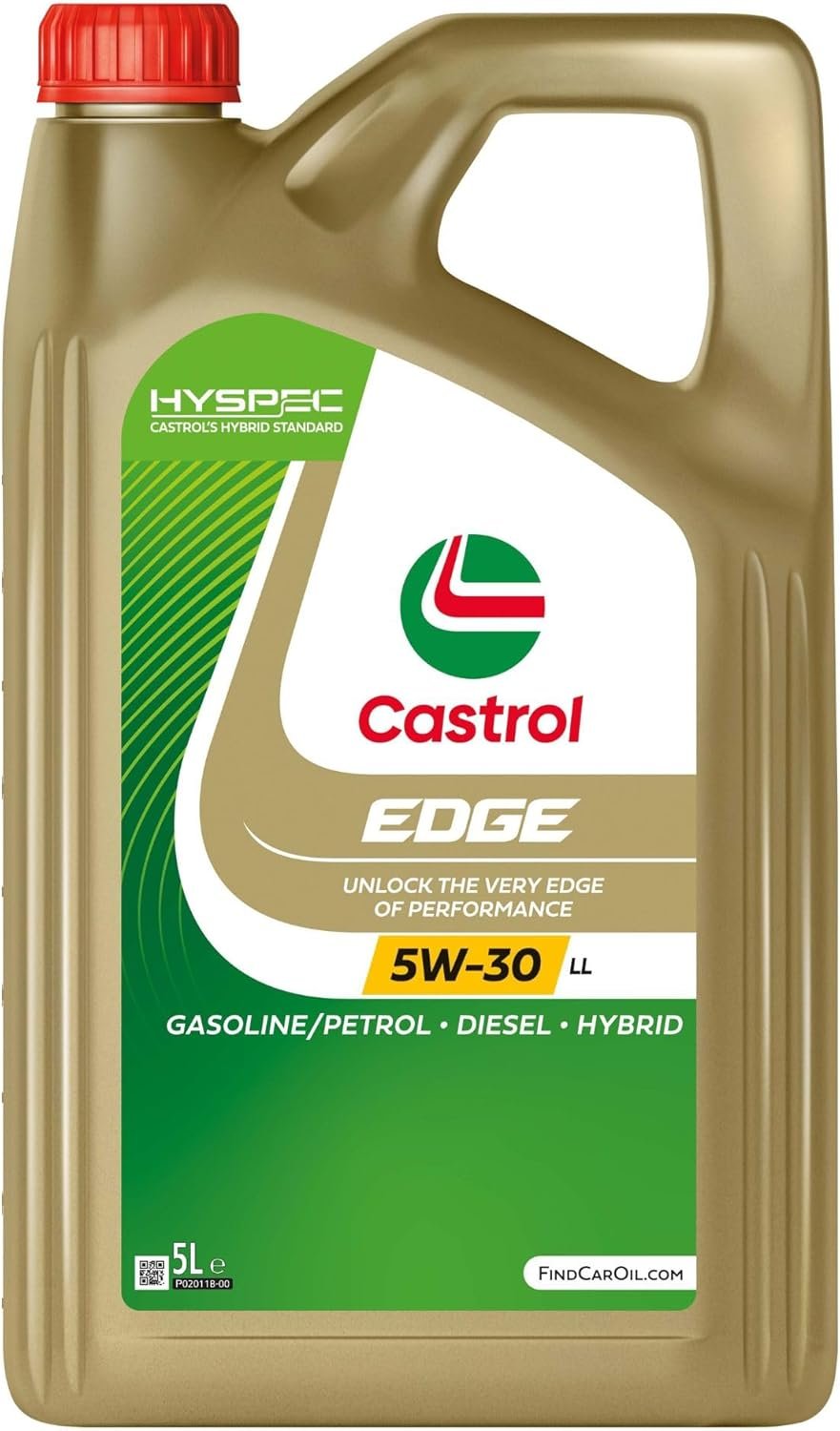
As an Amazon Associate, we may earn from qualifying purchases. This doesn't affect our recommendations — we only suggest oils that hold the exact OEM approval for your engine.
Best Engine Oil for Hyundai Tucson 4th Gen (NX4) 1.6 CRDi Diesel (136 HP)
The fourth-generation Hyundai Tucson (NX4), launched in 2021, brought a striking new design language and a thoroughly modern powertrain lineup to one of the UK’s best-selling mid-size SUVs. The 1.6 CRDi diesel variant, carrying the engine code D16UF, remains the pragmatic choice for British buyers who want strong real-world fuel economy and comfortable motorway cruising from a family SUV. This Smartstream 1.6-litre four-cylinder turbodiesel produces 136 HP and 280 Nm of torque, integrated with a 48V mild-hybrid system that sharpens efficiency and smooths out the stop-start experience. It is a refined and capable engine, but one that places strict demands on oil selection. The D16UF’s diesel particulate filter, exhaust aftertreatment hardware, and precision-machined internals all require ACEA C3 low-SAPS oil to function correctly over the long term. Using the wrong oil will accelerate DPF ash loading, increase the frequency of problematic regeneration cycles, and void Hyundai’s warranty coverage for emissions-related components. This guide covers the correct specifications, oil capacity, common owner problems, and the best oils for protecting your Tucson NX4 diesel.
Quick Answer: Recommended Oil
For Hyundai Tucson 4th Gen (NX4) 1.6 CRDi Diesel (136 HP, D16UF):
- Recommended viscosity: SAE 5W-30
- Oil capacity: 6.0 litres with filter (5.5 L without)
- Required norm: ACEA C3 (low-SAPS)
Key point: ACEA C3 is the mandatory oil classification for this engine. C3 denotes a mid-SAPS (Sulphated Ash, Phosphorus, Sulphur) formulation that limits the metallic ash residue produced during oil combustion. This ash accumulates permanently in the diesel particulate filter and cannot be burned off during regeneration. Using a conventional 5W-30 without ACEA C3 compliance will dramatically accelerate DPF ash saturation, triggering repeated failed regeneration attempts, rising oil levels from fuel dilution, and eventual DPF replacement costing 1,000 to 1,800 pounds. Always verify the ACEA C3 marking on the bottle before pouring.
The D16UF Smartstream Engine: Hyundai’s 48V Mild-Hybrid Diesel
The D16UF belongs to Hyundai’s Smartstream engine family, a clean-sheet architecture that replaced the older “U-II” generation diesel engines. This 1,598cc inline-four combines a cast-iron block for structural rigidity under high diesel compression loads with an aluminium alloy cylinder head for effective heat dissipation. The engine produces 136 HP at 4,000 RPM and 280 Nm of torque from 1,500 to 2,750 RPM, providing the accessible low-end pulling power that makes diesel SUVs so effective for towing caravans and handling fully loaded family motoring on British motorways.
48V mild-hybrid system. Every NX4 Tucson 1.6 CRDi sold in the UK integrates a belt-driven starter-generator (BSG) connected to a 48-volt lithium-ion battery pack. During deceleration and braking, the BSG harvests kinetic energy and stores it in the 48V battery. This energy is then deployed to assist the engine under acceleration, reducing the diesel engine’s workload at precisely the moments when combustion efficiency is poorest. The system delivers a genuine 5-8 percent improvement in real-world fuel economy and produces noticeably smoother stop-start operation than conventional starter motors. The BSG operates through the accessory belt system, which means the engine’s internal condition, including oil quality and viscosity, influences the broader hybrid system’s operation.
Common-rail direct injection operates at pressures up to 2,000 bar through solenoid injectors, delivering precise fuel metering from idle to the rev limit. The extremely high injection pressure produces fine fuel atomisation for efficient combustion, but the injectors operate with tolerances measured in microns. Contamination from degraded oil or excessive crankcase vapour can affect spray patterns and combustion quality over time.
Variable geometry turbocharger. The D16UF uses a VGT that continuously adjusts vane angle to optimise boost delivery across the engine’s entire operating range. The turbo’s journal bearings are pressure-fed with engine oil and depend entirely on oil quality for both lubrication and cooling. Peak exhaust gas temperatures exceed 800 degrees C at the turbine inlet, and the oil must maintain its protective film under these extreme thermal conditions without coking or breaking down on the bearing surfaces.
Exhaust aftertreatment. The Euro 6d-ISC emissions package includes a diesel oxidation catalyst, a diesel particulate filter, and a selective catalytic reduction system using AdBlue. This triple-layer system is effective at controlling NOx and particulate emissions but makes the engine profoundly sensitive to oil quality. The DPF is the component most directly affected by your oil choice, and it is also the most expensive to replace.
Why DPF Health Depends on Oil Selection
The diesel particulate filter is the single most important component linking your oil choice to your repair bills. Tucson NX4 owners who understand how the DPF works, and how it fails, can avoid the most common and expensive problems.
How the DPF works. The filter traps soot particles from exhaust gas in a honeycomb structure of porous ceramic channels. As soot accumulates, backpressure rises, and the ECU monitors this using differential pressure sensors. During passive regeneration, exhaust temperatures generated by normal motorway driving (above 600 degrees C) burn off accumulated soot without any driver intervention. When passive regeneration cannot occur because exhaust temperatures are too low, typically during urban and short-trip driving, the ECU initiates active regeneration by injecting additional diesel late in the combustion cycle to raise exhaust temperatures artificially.
The fuel dilution problem. Active regeneration is where DPF trouble begins for Tucson owners. The post-injection of diesel during active regen inevitably washes some unburned fuel past the piston rings and into the sump. This dilutes the engine oil, raising the level on the dipstick and reducing the oil’s viscosity and protective properties. In a healthy driving pattern that includes regular motorway runs, this fuel dilution is modest and manageable. But for owners who drive predominantly short urban trips, the engine never sustains the temperatures needed for passive regeneration. The ECU triggers active regeneration repeatedly, and each cycle adds more diesel to the sump. If these active regen attempts are interrupted by the driver switching off the engine before completion, the DPF remains partially blocked, and the next regen cycle adds yet more fuel to the oil. Owner forums report that city-only Tucson drivers can see the DPF warning light as frequently as once a month.
Rising oil level is a red flag. If you check your dipstick and find the oil level has risen above the maximum mark within 1,000 km of an oil change, this is a clear warning that the DPF is failing to regenerate properly. The excess volume is unburned diesel that has drained back from the combustion chambers into the sump. Do not ignore this. Overfilled oil from fuel dilution can foam when the crankshaft counterweights contact the oil surface, causing catastrophic lubrication failure. It also means the oil’s viscosity and additive chemistry have been severely compromised. An immediate oil change and diagnostic investigation of the DPF system is warranted.
Faulty exhaust sensors accelerate the problem. The D16UF relies on exhaust temperature sensors and differential pressure sensors to determine when the DPF needs regeneration and whether the process has completed successfully. When these sensors fail or drift out of calibration, which is a known issue on early NX4 models, the ECU receives inaccurate data about the DPF’s state. A faulty pressure sensor may tell the ECU the filter is clean when it is not, delaying regeneration until soot loads become dangerously high. A malfunctioning temperature sensor may prevent the ECU from recognising that exhaust temperatures are sufficient for passive regen, forcing unnecessary active cycles. Either failure pattern leads to rapid soot buildup and increased fuel dilution. If your DPF warning light appears frequently despite regular motorway driving, have the exhaust sensors tested before assuming the filter itself is blocked.
Low-SAPS oil is mandatory. Beyond fuel dilution, the oil itself produces metallic ash when small quantities enter the combustion chamber through normal consumption and crankcase ventilation. This ash accumulates permanently in the DPF and cannot be burned away. ACEA C3 oils are formulated with reduced sulphated ash, phosphorus, and sulphur to minimise this accumulation. Over a typical 150,000-mile engine life, the difference between C3 oil and a conventional diesel oil can mean the difference between a DPF that functions normally and one that demands premature replacement.
Technical Specifications: D16UF
| Specification | Value |
|---|---|
| Displacement | 1,598cc (1.6 litres) |
| Layout | Inline-4, transverse, cast-iron block, aluminium head |
| Valvetrain | DOHC, 16 valves, timing chain |
| Compression Ratio | 15.9:1 |
| Power | 136 HP @ 4,000 RPM |
| Torque | 280 Nm @ 1,500-2,750 RPM |
| Fuel System | Common-rail direct injection, up to 2,000 bar |
| Turbocharger | Variable geometry (VGT) |
| Hybrid System | 48V mild hybrid with belt-driven starter-generator |
| Emissions | Euro 6d-ISC with DPF, DOC, SCR (AdBlue) |
| Recommended Viscosity | SAE 5W-30 |
| Oil Capacity (without filter) | 5.5 litres |
| Oil Capacity (with filter) | 6.0 litres |
| ACEA Norm | C3 |
Best Value: Total Quartz INEO MC3 5W-30 TotalEnergies’ INEO MC3 delivers reliable ACEA C3 low-SAPS performance at the most competitive price point in this group. The ART (Age Resistance Technology) additive package maintains oil performance over extended intervals, resisting the soot contamination and fuel dilution that every modern diesel engine imposes on its lubricant. Strong detergent properties help manage EGR-related carbon deposits, and the low-SAPS formulation protects the DPF without compromising the film strength the turbo bearings need. At 33-38 pounds for 5 litres, it is comfortably the most affordable option here without cutting corners on the fundamental chemistry the D16UF requires. For Tucson owners who maintain strict service intervals and want to minimise running costs, this is the smart choice.
Oil Change Intervals and the 6.0-Litre Sump
Hyundai Official Recommendation:
- 15,000 miles or 12 months (whichever comes first)
Recommended Practice: 10,000 miles or 12 months, whichever comes first.
The D16UF’s 6.0-litre oil capacity (with filter) is notably generous for a 1.6-litre four-cylinder engine. This large sump volume is a deliberate engineering decision: more oil means each litre absorbs proportionally less soot, fuel dilution, and thermal stress, extending the oil’s effective working life. It also provides a larger thermal mass that resists rapid temperature fluctuations during cold starts and warm-up cycles. However, the generous capacity should not encourage complacency about service intervals. The DPF’s regeneration-related fuel dilution affects even a 6.0-litre sump, and soot loading from diesel combustion is relentless regardless of sump size.
Consider 7,500-mile intervals if:
- Predominantly short trips under 15 miles (DPF cannot complete passive regeneration)
- Heavy urban stop-start driving (increased fuel dilution and soot loading)
- Vehicle exceeds 60,000 miles
- Oil level rises on the dipstick between services (fuel dilution from incomplete regen)
- Any history of DPF warning lights
- Frequent cold starts in winter months without a subsequent motorway run
Always replace the oil filter at every oil change. The D16UF’s larger sump capacity does not reduce the filter’s workload; diesel soot contamination demands fresh filtration at every service regardless of sump volume.
Hyundai’s 5-Year Warranty and DPF Coverage
Hyundai offers a 5-year, unlimited-mileage warranty on the Tucson NX4, providing solid coverage for drivetrain components during the ownership period. However, owners should understand that DPF and exhaust aftertreatment claims are subject to maintenance verification, and Hyundai can decline warranty claims when evidence of poor maintenance is found.
The DPF is covered under warranty provided that Hyundai’s prescribed maintenance schedule has been followed precisely. If a DPF failure is traced to neglected oil changes, incorrect oil specification, or a driving pattern that has caused sustained fuel contamination of the sump, Hyundai’s warranty department can refuse the claim. In practice, this means keeping every service receipt, ensuring that only ACEA C3 oil is used at every change, and addressing DPF warning lights promptly rather than ignoring them until the engine enters limp mode. A dealer investigating a DPF warranty claim will check the service history for evidence of compliant oil and regular intervals. Claims have been declined where owners cannot demonstrate that correct oil was used or where service gaps suggest neglect. The 5-year warranty is genuinely valuable, but it is conditional on doing the basics correctly. Treat it as a safety net, not a licence to skip maintenance.
Common D16UF Problems and Prevention
DPF regeneration failure from short-trip driving. This is the most frequently reported issue among Tucson NX4 diesel owners in the UK, and it is overwhelmingly a consequence of driving patterns rather than an engine defect. The DPF requires sustained driving at motorway speeds, typically 20-30 minutes above 2,000 RPM, to reach the temperatures needed for passive soot regeneration. Owners who drive exclusively in town force the ECU into repeated active regeneration attempts that may fail to complete. Each failed attempt adds diesel to the sump and leaves the DPF more blocked than before. Prevention is straightforward: drive the car on a motorway or fast A-road for at least 20-30 minutes once a week. If your daily routine is entirely urban and under 10 miles each way, a diesel SUV is likely the wrong powertrain choice for your circumstances. DPF cleaning costs 300-500 pounds, while replacement runs to 1,000-1,800 pounds.
Oil level rising between services. If you check your dipstick and find the level has climbed noticeably, particularly within the first 1,000 km after a service, the engine has not miraculously produced extra oil. It is diesel fuel draining back from incomplete DPF regeneration cycles into the sump. The oil’s viscosity drops as diesel dilutes it, reducing film strength and accelerating wear on the turbo bearings, crankshaft journals, and camshaft lobes. An immediate oil change is necessary, followed by a diagnostic check of the DPF system, including the exhaust temperature and pressure sensors. Do not continue driving with fuel-diluted oil.
Faulty exhaust temperature and pressure sensors. The D16UF uses sensors mounted in the exhaust system to monitor DPF condition and control regeneration timing. These sensors are exposed to extreme temperatures and corrosive exhaust gases, and they can fail or drift out of specification, particularly on vehicles regularly driven on salted winter roads. A faulty differential pressure sensor may misread the DPF’s soot loading, causing either premature or delayed regeneration. A failed exhaust temperature sensor may prevent the ECU from initiating passive regeneration even when conditions are ideal, forcing unnecessary active cycles with their associated fuel dilution. Sensor replacement is relatively inexpensive at 80-200 pounds per sensor, but the consequential DPF damage from prolonged sensor malfunction can cost many times more. Any persistent DPF warning light warrants a sensor check as the first diagnostic step.
Turbo issues from oil degradation. The variable-geometry turbocharger is generally reliable when serviced correctly, but degraded or incorrect oil causes two specific failures. First, oil coking inside the turbo bearing housing, where residual oil bakes onto hot surfaces after engine shutdown, forming hard carbon deposits that restrict oil flow and score the shaft. Second, carbon buildup on the variable vanes from oil mist carried through the exhaust, causing them to stick and produce intermittent boost loss or surging. Quality ACEA C3 oil resists coking, and regular motorway driving keeps the vanes moving freely. Turbo replacement on the Tucson NX4 costs 900-1,500 pounds.
Why 5W-30 and ACEA C3 Specifically
Hyundai specifies 5W-30 for the D16UF Smartstream diesel. The 5W cold-start grade provides rapid oil flow to the turbo bearings, camshaft, and hydraulic tappets within seconds of ignition, critical protection during the cold starts that UK drivers face through the winter months. The 30 hot rating maintains adequate film thickness at operating temperature under the sustained loads a turbocharged diesel SUV produces, including towing and fully loaded motorway driving.
ACEA C3 is a mid-SAPS specification that balances emissions system protection with the robust additive package a diesel engine needs for durability. The C3 classification allows slightly higher additive levels than the stricter C2 specification, providing stronger wear protection for the heavily loaded bearings and timing chain in the D16UF while still keeping DPF ash accumulation within safe limits. Do not substitute a conventional 5W-30 without ACEA C3 certification, as the higher ash content will shorten DPF life significantly. Equally, do not use an ACEA C2 oil unless Hyundai’s documentation specifically approves it for this engine, as the reduced additive content may compromise wear protection under the loads a mid-size SUV generates.
Conclusion
The Hyundai Tucson NX4 1.6 CRDi diesel with the D16UF Smartstream engine requires SAE 5W-30 engine oil meeting ACEA C3 specifications, with a capacity of 6.0 litres including the filter. Low-SAPS chemistry is mandatory for DPF protection, and the ACEA C3 marking on the bottle is your verification that the oil meets the required standard.
Castrol EDGE 5W-30 LL is the natural OEM-grade choice at 40-48 pounds for 5 litres, while Total Quartz INEO MC3 5W-30 offers the strongest value at 33-38 pounds without compromising on C3 compliance. Change the oil at 10,000-mile intervals or annually, shortening to 7,500 miles for predominantly urban driving. Monitor your dipstick regularly for rising oil levels, the clearest early warning of DPF regeneration problems, and have the exhaust sensors tested if the DPF warning light appears despite regular motorway driving. The D16UF is a capable and refined engine backed by Hyundai’s 5-year warranty, but that warranty depends on correct maintenance. The 35-50 pounds spent on proper ACEA C3 oil is the cheapest insurance against a DPF replacement at 1,000-1,800 pounds and turbo failure at 900-1,500 pounds. Give the Tucson regular motorway miles, correct oil, and disciplined service intervals, and this 48V mild-hybrid diesel will deliver years of economical, dependable family motoring.
Our Top Picks
As an Amazon Associate, we may earn from qualifying purchases. This doesn't affect our recommendations — we only suggest oils that hold the exact OEM approval for your engine.