 Oil-
Oil-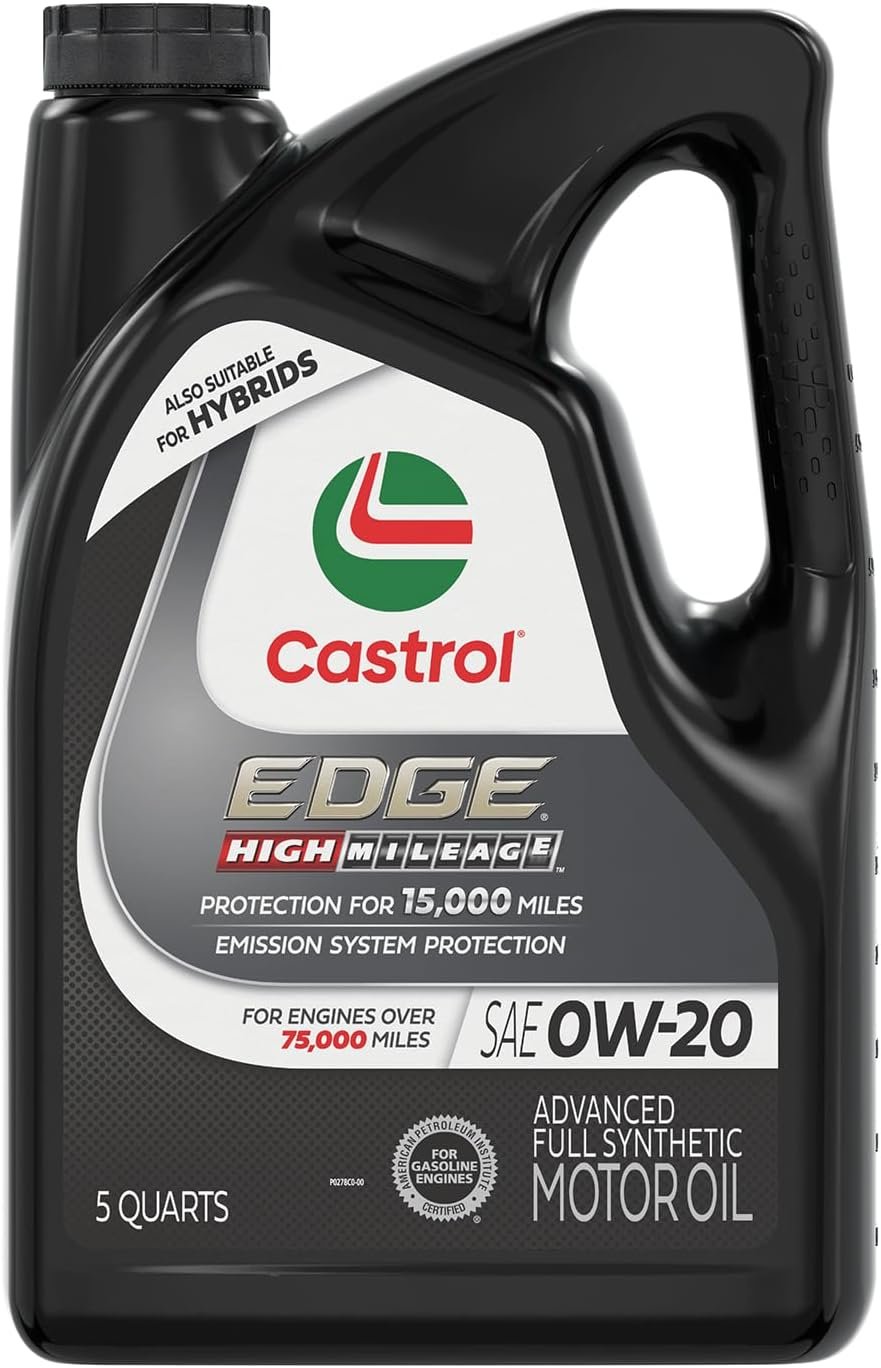
As an Amazon Associate, we may earn from qualifying purchases. This doesn't affect our recommendations — we only suggest oils that hold the exact OEM approval for your engine.
Best Engine Oil for Honda CR-V 6th Gen 1.5L Turbo (190 HP)
The sixth-generation Honda CR-V arrived for the 2023 model year with a familiar heart: the L15BE 1.5-liter turbocharged four-cylinder producing 190 horsepower and 179 lb-ft of torque. Honda refined the engine for this generation with updated calibration, improved thermal management, and a revised intake design, but the fundamental architecture remains shared with the fifth-generation CR-V’s L15B family. That shared architecture means the oil dilution and consumption concerns that defined the 5th gen have not disappeared. They have been reduced in severity, but not eliminated. Choosing the correct oil, changing it at appropriate intervals, and monitoring oil level between services are not optional habits for this engine. They are the difference between a CR-V that runs reliably past 200,000 miles and one that develops expensive internal problems well before that. This guide covers the correct oil specification, the engineering reasons behind it, and the specific monitoring practices every 6th gen CR-V owner should adopt.
Quick Answer: Recommended Oil
For Honda CR-V 6th Gen 1.5L Turbo (190 HP, L15BE):
- Specification: API SP / ILSAC GF-6A, Honda HTO-06
- Viscosity: SAE 0W-20
- Oil capacity: 3.7 quarts with filter (3.4 quarts without)
Key warning: Use only 0W-20 oil meeting API SP and ILSAC GF-6A standards. Honda’s own HTO-06 specification defines the additive chemistry and viscosity profile this engine requires. The L15BE’s tight bearing clearances, direct injection system, and turbocharger are designed around this specific oil weight. Running 5W-20 or 5W-30 as a substitute alters oil flow characteristics and is not recommended by Honda.
The L15BE Engine: Same Family, New Calibration
The L15BE in the 6th gen CR-V is an evolution of the L15B turbocharged engine that Honda has used across its lineup since 2016. The 1.5-liter displacement, 73.0 mm bore, and 89.5 mm stroke are unchanged from the 5th gen. The engine retains its direct-injection fueling, single-scroll turbocharger, dual VTC (Variable Timing Control) on both intake and exhaust camshafts, and Atkinson cycle capability under light load conditions.
What changed for the 6th gen is calibration and supporting hardware. Honda revised the ECU mapping to reduce the frequency and duration of fuel enrichment events that contributed to fuel dilution in the 5th gen. The PCV (Positive Crankcase Ventilation) system received updates to improve oil vapor separation. The turbocharger calibration was adjusted for improved transient response. These are meaningful improvements, but they do not change the engine’s fundamental vulnerability to fuel dilution under certain operating conditions.
Direct injection remains the defining characteristic that governs oil requirements. Fuel is sprayed at high pressure directly into the combustion chamber, improving thermal efficiency and power density but creating two consequences for oil health. First, fuel can wash past the piston rings during cold starts and enrichment events, diluting the oil in the sump. Second, without fuel passing over the intake valves to clean them, carbon deposits accumulate on valve surfaces over time, restricting airflow and eventually affecting performance.
The turbocharger adds thermal stress. The exhaust-side turbine wheel operates in gas temperatures exceeding 1,000 degrees F, and the center bearing relies entirely on engine oil for lubrication and cooling. When oil quality degrades from fuel contamination or thermal breakdown, the turbo bearing is among the first components to suffer.
Oil Dilution: Improved but Not Resolved
Honda faced significant warranty claims and a class-action lawsuit over oil dilution in the 5th gen CR-V. Gasoline fuel accumulated in the crankcase during cold-weather operation and short-trip driving, raising the oil level on the dipstick and thinning the oil beyond its designed viscosity. Honda issued a software update for the 5th gen to adjust fuel injection timing and reduce the problem, and those lessons carried forward into the 6th gen calibration.
The 6th gen shows measurably less oil dilution than the 5th gen under identical driving conditions. The revised PCV system and updated injector timing have reduced fuel wash past the piston rings. However, owner reports and oil analysis data from the 2023 and 2024 model years confirm that dilution still occurs, particularly in cold climates and among owners who drive predominantly short trips where the engine does not fully reach operating temperature.
The mechanism is straightforward. During cold starts, the ECU commands extra fuel for stable combustion. Some of that fuel does not combust completely and slips past the piston rings into the crankcase. At full operating temperature, this fuel evaporates from the oil and exits through the PCV system. But if the engine never reaches full temperature because the trip is too short, the fuel stays in the oil. Over weeks and months of short-trip driving, fuel accumulates.
Warning signs of oil dilution:
- Oil level rises above the full mark on the dipstick without oil being added
- Gasoline odor detectable when smelling the dipstick
- Oil appears thinner and less viscous than fresh oil
- Reduced fuel economy beyond normal variation
Cylinder Scoring and Oil Consumption
Beyond oil dilution, two additional issues have been documented in the L15BE across both generations. Cylinder bore scoring has been reported by some owners before 50,000 miles, with metal debris visible in oil filter media and accelerated oil consumption as the primary symptoms. The scoring appears related to carbon particles from direct injection combustion embedding in the piston rings and acting as an abrasive against the cylinder walls. This is not a widespread failure, but it is documented across enough vehicles to represent a known vulnerability.
Oil consumption between 15,000 and 40,000 miles has also been reported at rates exceeding Honda’s threshold of one quart per 3,000 miles. On an engine with only 3.7 quarts total capacity, losing even half a quart between checks represents a meaningful reduction in the oil available to protect internal components. This small sump volume means the engine is less tolerant of oil loss or contamination than larger-displacement engines with 5 or 6 quarts of capacity.
Both issues reinforce the same message: monitor your oil level frequently and change it on a shorter schedule than Honda’s official interval suggests.
Technical Specifications: 1.5L Turbo (L15BE)
| Specification | Value |
|---|---|
| Displacement | 1,498cc (1.5 liters) |
| Layout | Inline-4, transverse, aluminum block |
| Valvetrain | DOHC, 16 valves, dual VTC |
| Turbocharger | Single-scroll, wastegate |
| Power | 190 HP @ 6,000 RPM |
| Torque | 179 lb-ft @ 1,700-5,000 RPM |
| Fuel Type | Regular unleaded (87 octane minimum) |
| Recommended Viscosity | SAE 0W-20 |
| Oil Capacity (without filter) | 3.4 quarts (3.2 liters) |
| Oil Capacity (with filter) | 3.7 quarts (3.5 liters) |
| Oil Specification | API SP / ILSAC GF-6A / Honda HTO-06 |
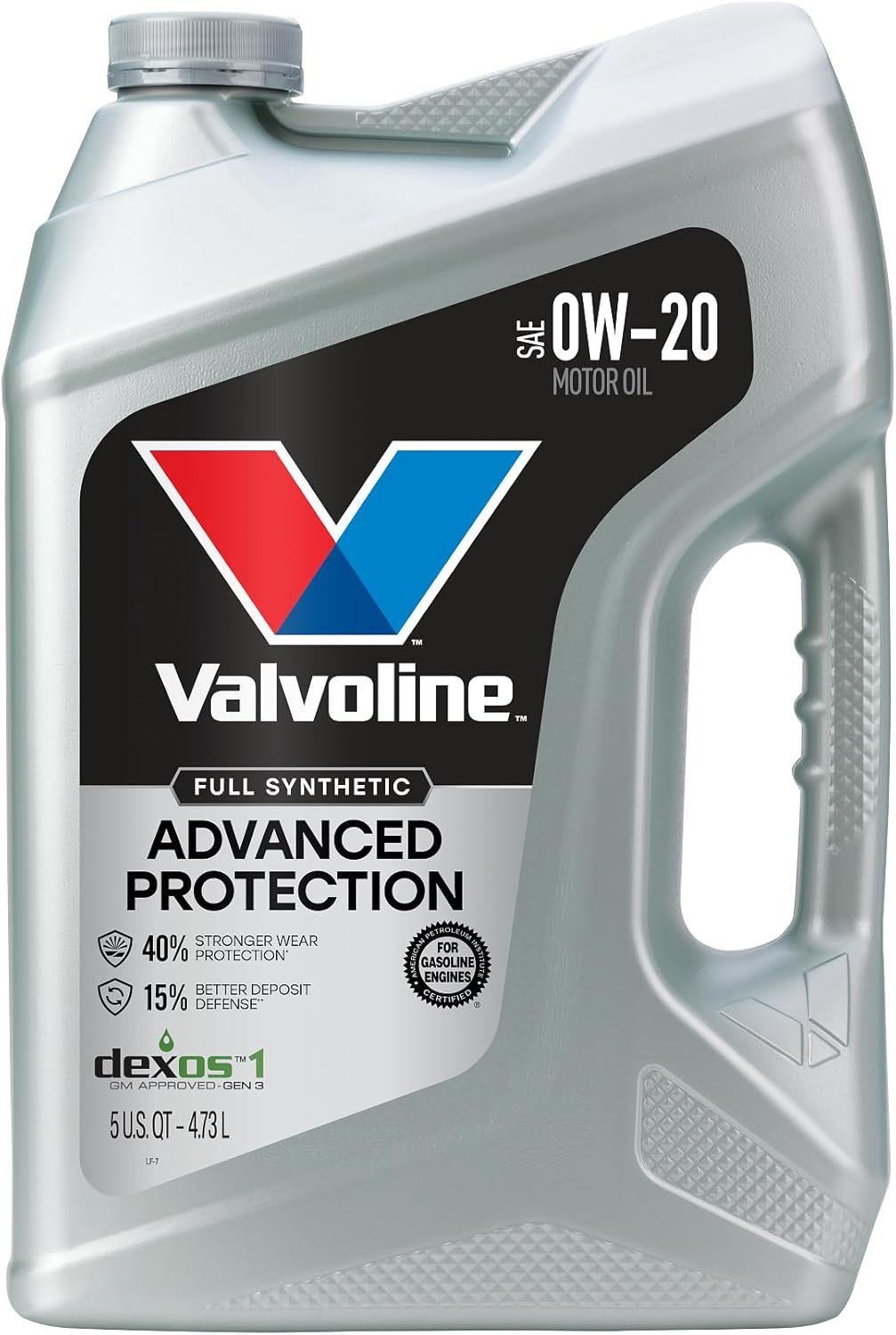
Best Value: Valvoline Advanced Full Synthetic 0W-20 Valvoline’s full synthetic 0W-20 meets API SP and ILSAC GF-6A standards with a well-balanced additive package that delivers solid anti-wear, detergent, and oxidation resistance at the lowest price point in this group. The formulation includes extra anti-wear additives that Valvoline markets as exceeding minimum industry standards, a relevant claim for an engine with documented cylinder scoring concerns. At $23-27 for 5 quarts, this is the most cost-effective option for owners who plan to change oil at shorter intervals, where the reduced cost per change makes the more aggressive schedule financially sustainable.
Oil Change Intervals and Monitoring
Honda Official Recommendation:
- Maintenance Minder system: typically triggers at 7,500-10,000 miles depending on driving conditions
Recommended Practice: 5,000-7,000 miles or every 6 months, whichever comes first.
Honda’s Maintenance Minder system calculates oil life based on engine speed, temperature, and operating time. Under ideal conditions of sustained highway driving in moderate climates, it may not trigger an oil change until 10,000 miles. This interval assumes minimal fuel dilution, no abnormal oil consumption, and consistent full-temperature operation. For many real-world driving patterns, these assumptions do not hold.
Use 5,000-mile intervals if:
- You live in a cold climate where winter temperatures regularly drop below 30 degrees F
- Your typical trips are under 10 miles or 15 minutes
- The vehicle sits for extended periods between drives
- You have observed any oil level rise or gasoline smell on the dipstick
- The vehicle has accumulated over 50,000 miles
- You tow any load or frequently carry heavy cargo
Critical monitoring between services: Check your oil level and smell the dipstick every 1,000-2,000 miles. This is the single most important habit for L15BE owners. You are checking for two things: that the level has not dropped below the midpoint between low and full marks (indicating consumption), and that the level has not risen above the full mark or developed a gasoline odor (indicating dilution). On an engine with only 3.7 quarts total capacity, the margin between normal and dangerously low is slim. A monthly dipstick check takes two minutes and can prevent thousands of dollars in engine damage.
If you detect fuel dilution, change the oil immediately. Do not wait for the Maintenance Minder to trigger. Fuel-contaminated oil loses its viscosity and anti-wear protection, and the turbo bearing is particularly vulnerable to the thinned film that results.
Why API SP / ILSAC GF-6A Matters
The API SP and ILSAC GF-6A specifications introduced in 2020 represent a meaningful upgrade over previous standards for turbocharged GDI engines like the L15BE. The GF-6A standard specifically added testing for timing chain wear protection, Low-Speed Pre-Ignition (LSPI) prevention, and improved deposit control under direct injection conditions.
LSPI is a destructive pre-ignition event that occurs at low RPM under high load in turbocharged engines, causing extreme cylinder pressure spikes that can crack piston ring lands and damage bearings. The L15BE is susceptible to LSPI by virtue of its turbo-DI architecture. API SP certified oils contain additive chemistry specifically formulated to suppress LSPI events, including reduced calcium content and optimized molybdenum levels. Using an older API SN or SN Plus oil eliminates this protection.
Honda’s HTO-06 specification layers additional requirements on top of the API SP baseline, particularly around oxidation stability and volatility. Any API SP / ILSAC GF-6A oil is acceptable, but Honda Genuine oil remains the only product carrying the full HTO-06 certification.
Conclusion
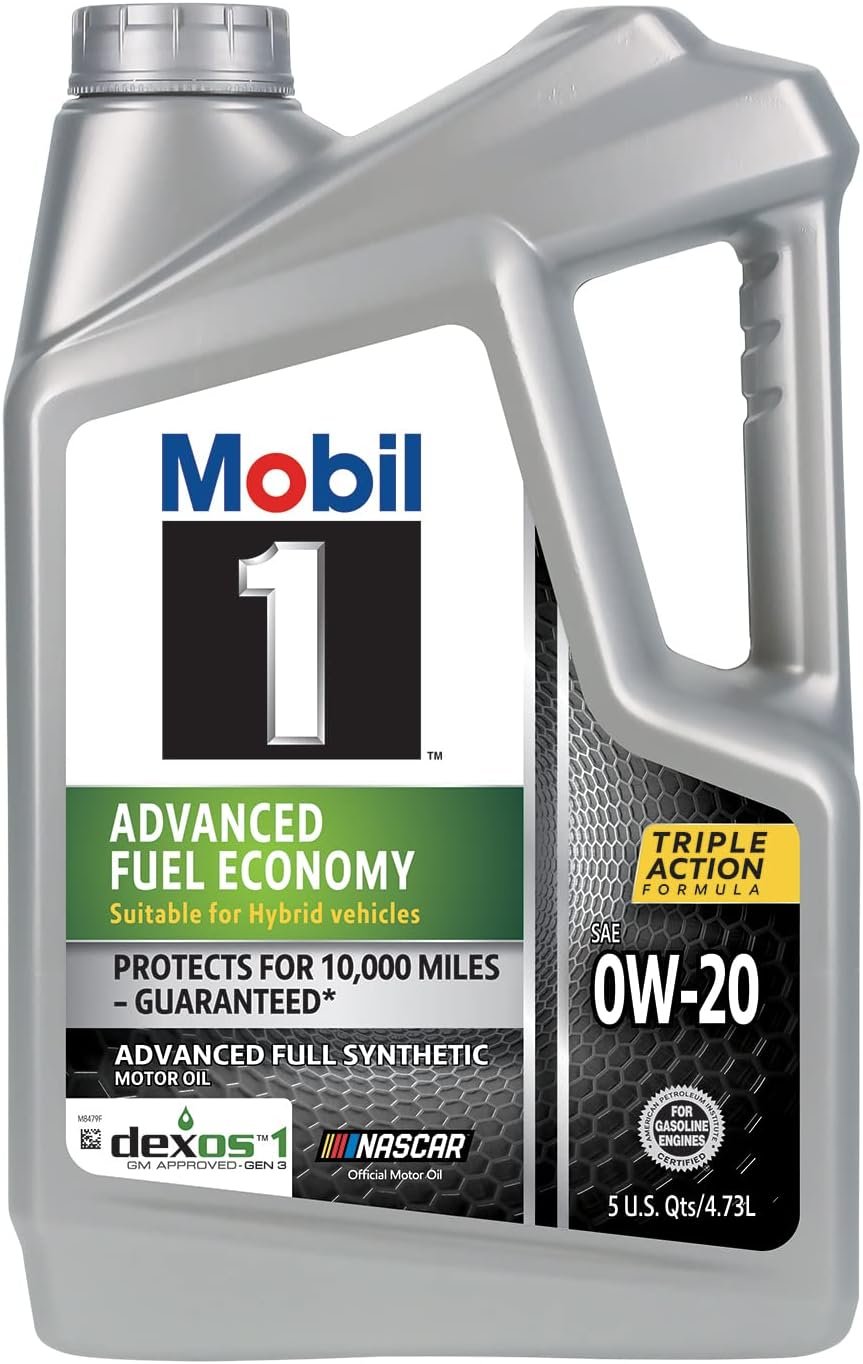
The Honda CR-V 6th gen 1.5L turbo (L15BE) requires 3.7 quarts of SAE 0W-20 engine oil meeting API SP / ILSAC GF-6A standards at every service. Honda’s HTO-06 specification defines the benchmark, and Honda Genuine 0W-20 at $32-38 provides the OEM-certified baseline. Mobil 1 Advanced Fuel Economy, Castrol EDGE Advanced, and Valvoline Advanced Full Synthetic offer excellent API SP alternatives between $23 and $32 for 5-quart jugs.
The 6th gen represents a genuine improvement over the 5th gen in oil dilution resistance, but the same fundamental L15B architecture means the same fundamental vulnerabilities persist. Change oil at 5,000-7,000 miles rather than waiting for the Maintenance Minder to reach 10,000. Check the dipstick every 1,000-2,000 miles for both level and smell. Do not ignore a gasoline odor or a rising oil level. The 3.7-quart sump leaves no margin for neglect, and the turbocharger punishes degraded oil faster than a naturally aspirated engine would. With disciplined monitoring and correct oil, the L15BE will deliver the dependable, efficient service Honda engines are known for. Without it, cylinder scoring, oil consumption, and turbo bearing wear become expensive realities well before the odometer reaches six figures.
Our Top Picks
As an Amazon Associate, we may earn from qualifying purchases. This doesn't affect our recommendations — we only suggest oils that hold the exact OEM approval for your engine.