 Oil-
Oil-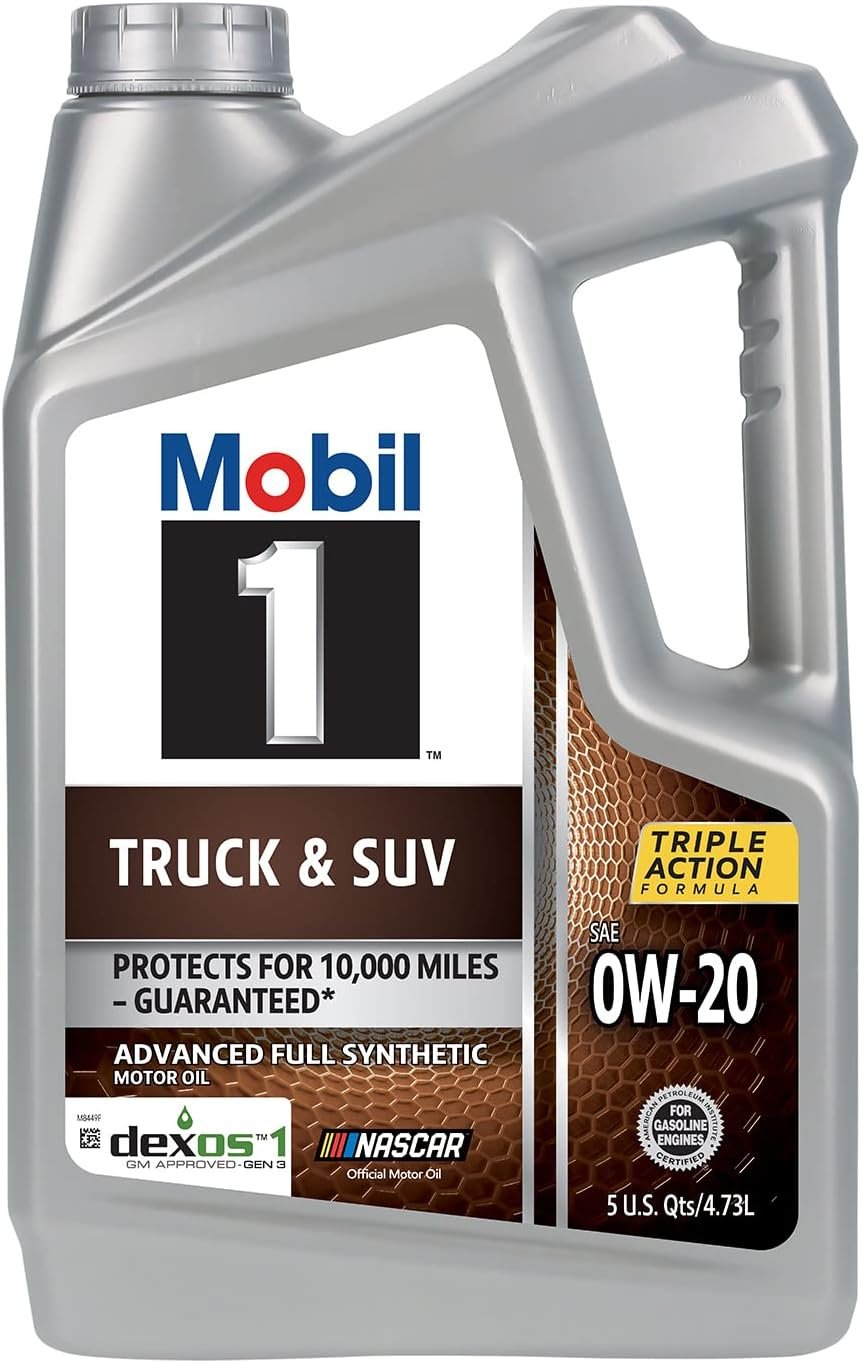

As an Amazon Associate, we may earn from qualifying purchases. This doesn't affect our recommendations — we only suggest oils that hold the exact OEM approval for your engine.
Best Engine Oil for Honda Civic 1.0 VTEC Turbo (129 HP)
The Honda Civic 10th generation (FK), sold in the UK from 2017, offered something unusual in the Civic range: a turbocharged three-cylinder engine. The P10A2 is a 988cc unit producing 129 HP, exclusive to European and Asian markets and never sold in the United States. It is a smaller, less discussed sibling to the 1.5 VTEC Turbo that attracted most of the press attention, but it shares much of the same architecture and, crucially, many of the same oil-related vulnerabilities. With a small 3.8-litre sump, mandatory 0W-20 viscosity, and a direct injection system prone to fuel dilution, the P10A2 rewards careful oil selection and punishes neglect. This guide explains the correct specification, why ACEA C2 matters for this engine, and how to manage the known issues that accumulate with mileage.
Quick Answer: Recommended Oil
For Honda Civic 1.0 VTEC Turbo (129 HP):
- Recommended viscosity: SAE 0W-20
- Oil capacity: 3.8 litres with filter (3.5 L without)
- Required norm: ACEA C2
Key point: Honda specifies 0W-20 as the only approved viscosity for the P10A2. This is not a fuel economy suggestion but a mandatory requirement built into the engine’s bearing clearances and oil circuit design. Using thicker oil does not provide better protection; it restricts flow through the narrow galleries of this small three-cylinder and increases the risk of oil starvation at the turbocharger.
The P10A2: Honda’s European Three-Cylinder
The P10A2 is a 988cc inline three-cylinder with an aluminium block, a single turbocharger, direct fuel injection, and Honda’s VTEC variable valve timing on the exhaust camshaft. That last detail is important: unlike the intake-side VTEC systems Honda is famous for, exhaust-cam VTEC on the P10A2 is used primarily for emissions management and turbo spool efficiency rather than top-end power. At low engine speeds, the exhaust valve timing is adjusted to increase exhaust gas energy reaching the turbocharger, reducing lag from the small displacement. At higher speeds, timing shifts to optimise scavenging and reduce pumping losses.
The engine produces 129 HP at 5,500 RPM and 200 Nm of torque from 2,250 RPM, paired with either a six-speed manual or a CVT automatic. In the Civic FK body, it delivers adequate rather than exciting performance, but fuel economy is genuinely impressive, and the engine is notably smooth for a three-cylinder at motorway speeds. Honda’s engineering refinement is evident in the low vibration and minimal boom that plague some rival three-cylinder designs.
However, the P10A2 is a less documented engine than the 1.5-litre L15B7 that dominates Civic forums. It was sold in smaller numbers, attracts less aftermarket attention, and has generated fewer long-term reliability reports. What data does exist suggests it shares the same fundamental weaknesses as the 1.5T family, scaled down to a smaller package with a correspondingly smaller margin for error.
Known Issues and Why Oil Quality Is Critical
Oil Dilution from Cold Starts and Short Journeys
This is the defining maintenance challenge of the P10A2, inherited directly from the 1.5 VTEC Turbo architecture. The direct injection system sprays fuel at high pressure into the combustion chamber. During cold starts and short journeys where the engine never reaches full operating temperature, unburned fuel washes past the piston rings and accumulates in the sump. The oil level rises above the maximum mark on the dipstick, and the oil thins well beyond its designed viscosity.
The problem is proportionally worse on the P10A2 than on the 1.5T because the sump is smaller. The 3.8-litre capacity means a given volume of fuel contamination represents a larger percentage of the total oil volume. Where the 1.5T might tolerate moderate fuel dilution across its larger sump before oil properties degrade critically, the 1.0T reaches the same dilution percentage sooner.
Honda acknowledged the fuel dilution issue across the VTEC Turbo family and released software updates to raise the engine’s cold-start idle speed and adjust fuelling maps. These updates help but do not eliminate the problem. If you predominantly drive short urban trips under 10 miles, check the dipstick weekly. A rising oil level accompanied by a petrol smell is the signature of fuel dilution, and the oil should be changed immediately regardless of mileage.
Timing Belt Concerns
The P10A2 uses a timing belt rather than a chain. Belt failure has been documented as a known issue on P10A2 engines, and while Honda’s replacement interval provides a reasonable service window, the belt’s longevity depends on the engine running within normal thermal parameters with clean oil. Overheating or running degraded oil accelerates belt material fatigue. Some owners have reported premature belt wear on engines with a history of extended oil change intervals or incorrect viscosity. Adhering to Honda’s belt replacement schedule and maintaining strict oil discipline are the two most effective preventive measures.
Low Compression on Individual Cylinders
Reports have surfaced of individual cylinders losing compression on higher-mileage P10A2 engines, leading to rough idle, misfires, and reduced power. The root cause in most documented cases traces to carbon deposit buildup on the piston rings, preventing them from sealing properly against the cylinder wall. This is a direct consequence of the direct injection system’s tendency to create carbon deposits that accumulate without the cleaning effect of port-injected fuel washing over the intake valves and piston crowns.
An oil with strong detergent and dispersant properties helps manage carbon deposits in the ring lands and on the piston crown. ACEA C2 oils are formulated with a low-SAPS additive package that balances cleaning capability with emissions system compatibility. Regular oil changes at shortened intervals flush suspended carbon particles from the system before they can bake into hard deposits.
Carbon Buildup on Intake Valves
As with every direct-injection petrol engine, the P10A2 suffers from carbon accumulation on the back of the intake valves. Because fuel is injected directly into the cylinder rather than over the valve, there is no fuel wash to keep the valve surfaces clean. Oil vapour from the crankcase ventilation system bakes onto the hot valve backs, gradually building a layer of hard carbon that restricts airflow and disrupts the valve seal. Symptoms develop gradually: rough idle, slight hesitation on acceleration, and marginal power loss.
No oil eliminates this problem entirely, but oil quality influences the rate of accumulation. A fully synthetic 0W-20 with low volatility produces fewer crankcase vapours, reducing the raw material available for valve deposits. Regular oil changes limit the concentration of blow-by contaminants that feed the deposit cycle. Some owners supplement with periodic intake valve cleaning, typically walnut blasting, at 50,000-60,000 mile intervals.
Technical Specifications: 1.0 VTEC Turbo (P10A2)
| Specification | Value |
|---|---|
| Displacement | 988cc (1.0 litre) |
| Layout | Inline-3, transverse, aluminium block and head |
| Valvetrain | DOHC, 12 valves, VTEC on exhaust cam, timing belt |
| Turbocharger | Single scroll |
| Power | 129 HP @ 5,500 RPM |
| Torque | 200 Nm @ 2,250 RPM |
| Fuel Type | Petrol, 95 RON minimum |
| Recommended Viscosity | SAE 0W-20 |
| Oil Capacity (without filter) | 3.5 litres |
| Oil Capacity (with filter) | 3.8 litres |
| ACEA Norm | C2 |
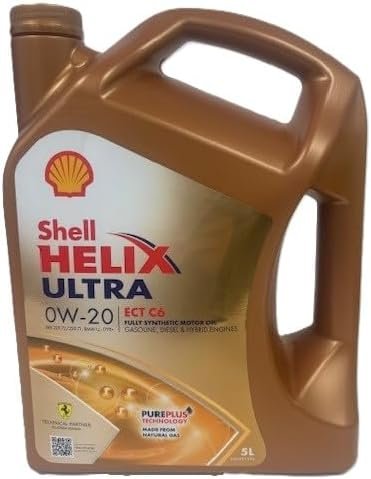
Best Value: Shell Helix Ultra Professional AS-L 0W-20 Shell’s PurePlus base oil, produced through gas-to-liquid technology, provides an exceptionally clean starting base with near-zero impurities. This translates to fewer deposits in the oil galleries, turbo feed lines, and piston ring lands, all areas where the P10A2 is vulnerable to carbon accumulation. The AS-L formulation meets ACEA C2 and is specifically designed for low-SAPS applications in small-displacement turbocharged engines. At £36-41 for 5 litres, it offers the lowest cost per litre on this list while delivering Shell’s premium synthetic technology. An excellent choice for owners committed to shorter change intervals where frequent renewal and clean base chemistry are more valuable than ultimate peak performance.
Oil Change Intervals
Honda Official Recommendation:
- Standard service: 12,500 miles or 12 months
Recommended Practice: 8,000-10,000 miles or 12 months, whichever comes first.
Honda’s official interval is calibrated for a mix of driving conditions and assumes the engine regularly reaches full operating temperature. British driving patterns frequently involve shorter trips, urban stop-start, and cooler ambient temperatures that maximise fuel dilution and minimise the engine’s ability to evaporate accumulated fuel from the sump. The small 3.8-litre oil volume compounds this: the oil degrades proportionally faster than in engines with larger sumps running identical intervals.
Consider 5,000-6,000 mile intervals if:
- Predominantly short urban journeys under 10 miles
- Frequent cold starts without reaching full operating temperature
- Oil level rises above the maximum mark (fuel dilution)
- Oil smells noticeably of petrol on the dipstick
- Vehicle has covered more than 60,000 miles
- Any history of unknown or incorrect oil used by previous owners
Check the dipstick fortnightly. The P10A2’s small sump volume means even modest fuel dilution or oil consumption has a disproportionate effect on oil quality. A rising level signals fuel contamination; a falling level signals consumption. Either condition demands attention before the next scheduled service.
Why 0W-20 Is Mandatory
Some owners and independent garages question using such a thin oil in a turbocharged engine, instinctively reaching for 5W-30 or 5W-40 on the assumption that thicker oil provides better protection under boost. This reasoning does not apply to the P10A2.
Honda engineered the bearing clearances, oil pump capacity, and oil gallery dimensions around the flow characteristics of 0W-20. The low HTHS viscosity is not a compromise for fuel economy; it is a design parameter that ensures adequate oil delivery to every critical surface, including the turbo bearing and the exhaust-side VTEC mechanism. Thicker oil reduces flow rate through the narrow passages of this small engine, potentially starving the turbocharger at high RPM and preventing the VTEC system from actuating properly. The ACEA C2 low-SAPS requirement further specifies the additive chemistry: enough metallic detergent to manage direct-injection carbon deposits, but low enough sulphated ash to protect the catalytic converter and particulate management systems.
Using a thicker viscosity does not add a safety margin. It changes the fundamental operating conditions the engine was designed around, creating risks that did not previously exist.
Conclusion
The Honda Civic 1.0 VTEC Turbo requires SAE 0W-20 engine oil meeting ACEA C2, with a capacity of 3.8 litres including the filter. The P10A2 is a compact, refined three-cylinder that delivers solid performance and impressive economy from under one litre of displacement, but its small sump, direct injection fuel dilution tendency, and turbocharger heat demand strict oil discipline. Less documented than its 1.5T sibling, the P10A2 shares the same architectural vulnerabilities and arguably tolerates neglect less well due to its smaller oil volume.
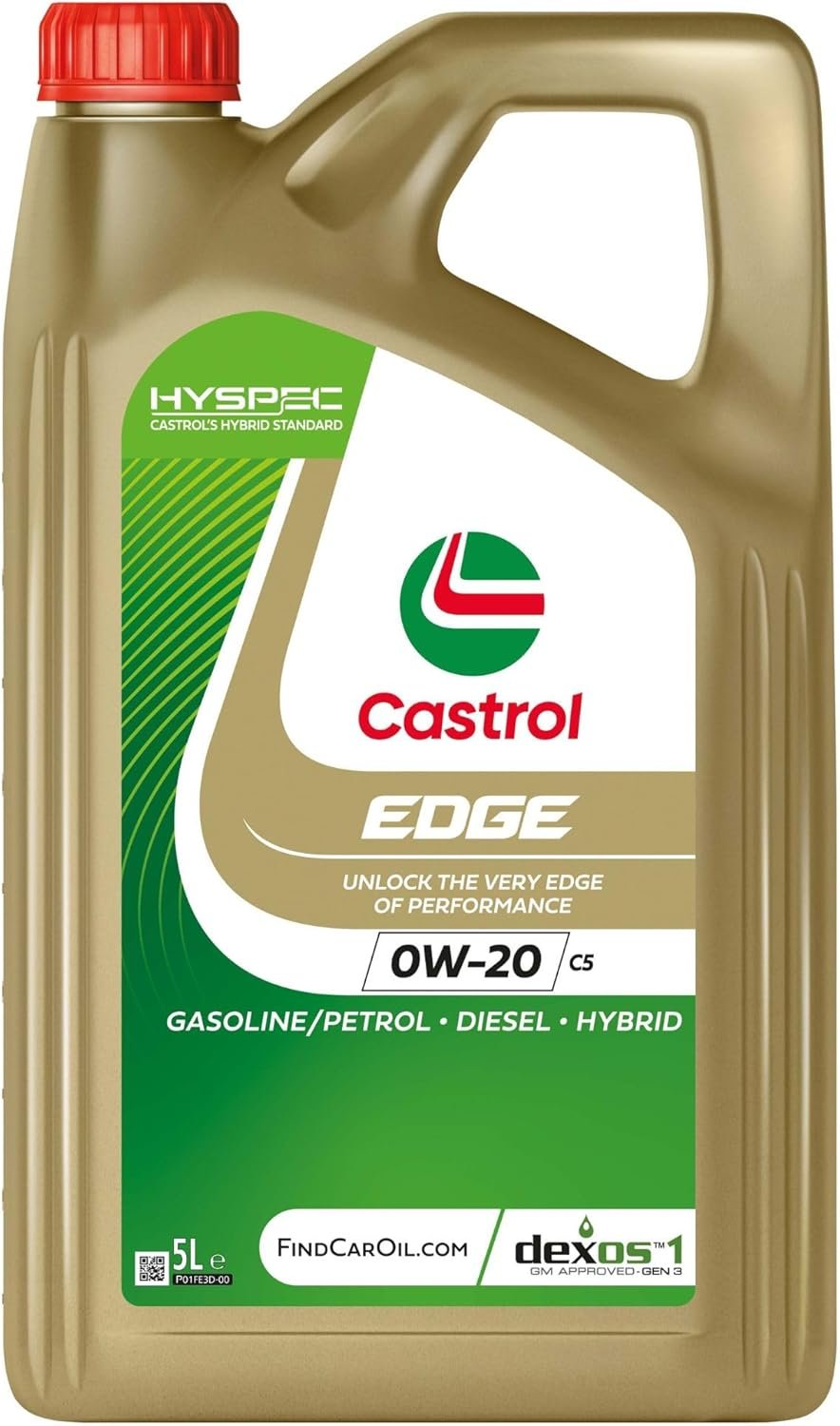
Honda Genuine 0W-20 at £37-42 for 4 litres is the safest default, carrying Honda’s own factory-fill pedigree. Mobil 1 ESP x2 0W-20 offers premium thermal stability for mixed-use driving, Castrol EDGE 0W-20 combines strong film strength with unmatched UK availability, and Shell Helix Ultra Professional AS-L 0W-20 delivers Shell’s gas-to-liquid synthetic technology at the best price per litre. Whichever you choose, verify ACEA C2 compliance on the bottle, change the oil at sensible intervals well inside Honda’s official recommendation, and monitor the dipstick religiously for fuel dilution. The P10A2 rewards attentive ownership with the smooth, efficient performance that Honda’s engineering reputation promises.
Our Top Picks
As an Amazon Associate, we may earn from qualifying purchases. This doesn't affect our recommendations — we only suggest oils that hold the exact OEM approval for your engine.