 Oil-
Oil-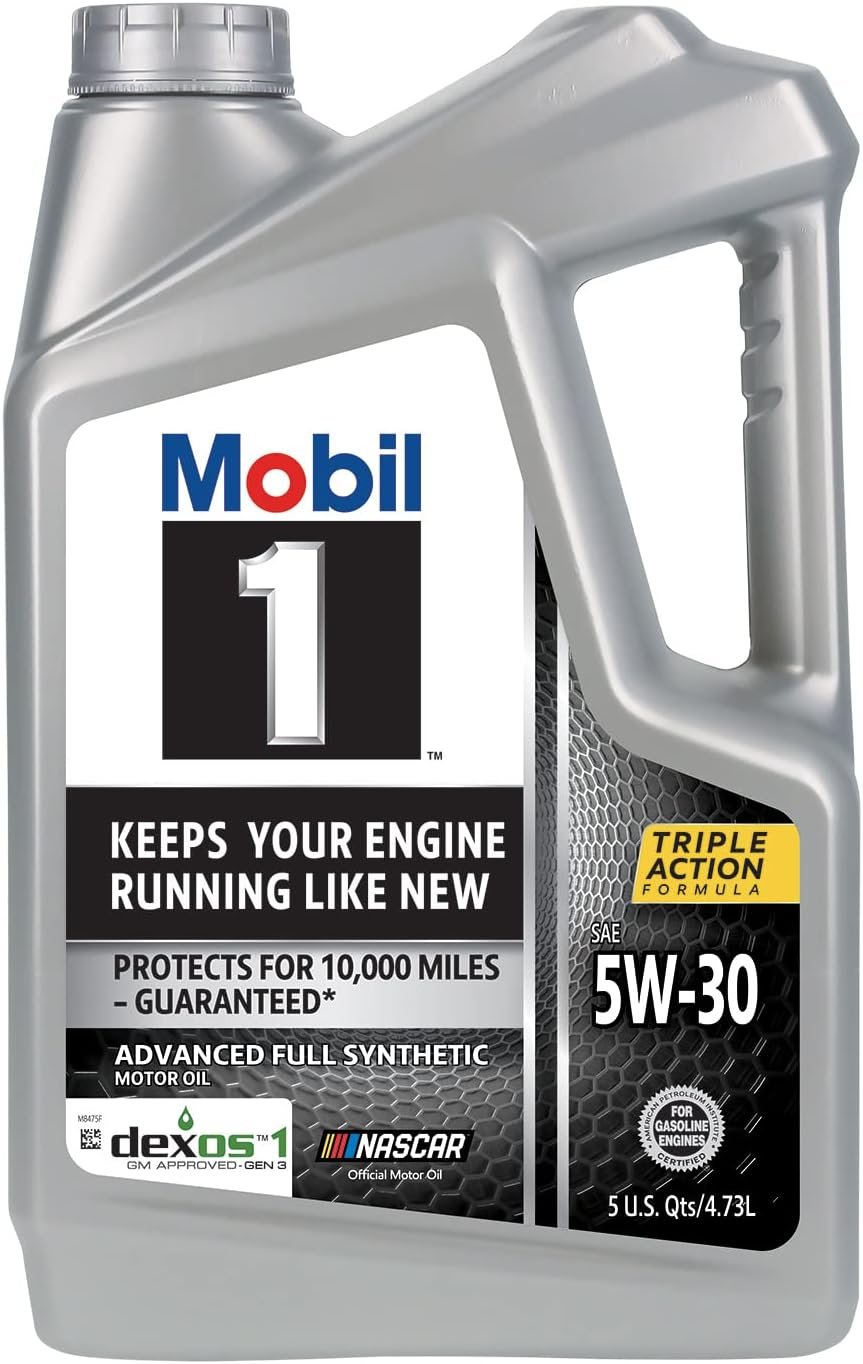
As an Amazon Associate, we may earn from qualifying purchases. This doesn't affect our recommendations — we only suggest oils that hold the exact OEM approval for your engine.
Best Engine Oil for Ford Explorer 2.3L EcoBoost (300 HP)
The sixth-generation Ford Explorer launched in 2020 on a new rear-wheel-drive platform, a fundamental departure from the front-wheel-drive architecture of the fifth generation. Its base powertrain is the 2.3-liter EcoBoost inline four-cylinder producing 300 horsepower and 310 lb-ft of torque, paired with a 10-speed automatic transmission. This engine is a workhorse across Ford’s lineup, powering everything from the Mustang to the Ranger, but the Explorer application subjects it to unique stresses: sustained loads from towing up to 5,300 pounds, the thermal demands of a large three-row SUV in stop-and-go traffic, and the weight penalty of all-wheel-drive models exceeding 4,300 pounds. Correct oil selection is not optional. Ford specifies 5W-30 meeting API SP, and the 2.3 EcoBoost has enough documented issues with head gaskets, oil consumption, turbo oil supply lines, and transmission behavior that disciplined maintenance is the difference between a reliable family hauler and a costly repair bill.
Quick Answer: Recommended Oil
For Ford Explorer 2.3L EcoBoost (300 HP):
- Specification: API SP / ILSAC GF-6A
- Ford specification: WSS-M2C961-A1
- Viscosity: SAE 5W-30
- Oil capacity: 5.2 quarts with filter (5.0 quarts without)
Key point: Ford mandates SAE 5W-30 meeting API SP for all 2020+ Explorer 2.3 EcoBoost engines. The WSS-M2C961-A1 specification governs the additive chemistry, LSPI protection, and thermal stability the turbocharged direct-injection architecture requires. Do not substitute 5W-20 or any oil lacking API SP certification.
The 2.3L EcoBoost Engine
The 2.3-liter EcoBoost is a turbocharged, direct-injected inline four-cylinder with a cast iron block and aluminum head. Ford introduced this engine family in 2015 as a replacement for the 2.0 EcoBoost, increasing displacement through a longer stroke while retaining the same bore spacing. In the Explorer, it produces 300 horsepower at 5,500 RPM and 310 lb-ft of torque at 3,500 RPM, delivered through a twin-scroll turbocharger with an electronically controlled wastegate.
The direct injection system operates at pressures exceeding 2,500 PSI, spraying fuel directly into the combustion chamber for precise mixture control and improved thermal efficiency. This high-pressure system is central to the engine’s output, but it introduces the carbon buildup challenge common to all GDI engines: intake valves receive no fuel wash and gradually accumulate carbon deposits from crankcase ventilation vapors. The twin-scroll turbocharger maintains responsiveness despite the engine’s obligation to move a 4,300-pound vehicle, but it generates extreme heat at the bearing housing that demands thermally stable oil capable of resisting coking during hot shutdowns.
Ford pairs the 2.3 EcoBoost with the 10R80 ten-speed automatic transmission in the Explorer, a joint development with General Motors. This transmission enables the engine to operate in its most efficient RPM band under most conditions, but its own issues with shift quality affect the ownership experience and are covered below.
Understanding Ford Oil Specifications
Ford specifies WSS-M2C961-A1 for the 2020+ Explorer 2.3 EcoBoost. This specification requires SAE 5W-30 viscosity, API SP or ILSAC GF-6A certification, and specific performance in Ford’s proprietary turbocharger deposit testing. The API SP standard, introduced in 2020, includes mandatory protection against low-speed pre-ignition (LSPI), a phenomenon where fuel-air mixture ignites before the spark plug fires under high load at low RPM. LSPI can destroy pistons and connecting rods in a single event and is a particular risk in turbocharged direct-injection engines like the 2.3 EcoBoost.
The 5W-30 viscosity is non-negotiable. Ford engineered the 2.3 EcoBoost’s bearing clearances, oil pump delivery, and turbocharger oil feed around this specific viscosity grade. Using 5W-20 reduces film strength at operating temperature and increases wear at the turbo bearings and camshaft lobes. Using 0W-20 thins the oil further and risks inadequate protection under the sustained high loads the Explorer encounters during towing or mountain driving. The 5W-30 grade provides adequate cold-start flow across the temperature range experienced in the continental United States while maintaining sufficient film strength at the 220-250 degree F oil temperatures the turbocharger generates.
Technical Specifications
| Specification | Value |
|---|---|
| Displacement | 2,300cc (2.3 liters) |
| Layout | Inline-4, longitudinal, cast iron block, aluminum head |
| Valvetrain | DOHC, 16 valves, twin independent VCT |
| Turbocharger | Twin-scroll, electronically controlled wastegate |
| Power | 300 HP @ 5,500 RPM |
| Torque | 310 lb-ft @ 3,500 RPM |
| Compression Ratio | 10.0:1 |
| Fuel Type | Regular unleaded (87 octane minimum, 91 recommended) |
| Recommended Viscosity | SAE 5W-30 |
| Oil Capacity (without filter) | 5.0 quarts (4.7 liters) |
| Oil Capacity (with filter) | 5.2 quarts (5.0 liters) |
| Oil Specification | API SP / ILSAC GF-6A, Ford WSS-M2C961-A1 |
| Towing Capacity | Up to 5,300 lbs |
Best Value: Valvoline Advanced Full Synthetic 5W-30 Valvoline’s full synthetic 5W-30 meets API SP and ILSAC GF-6A with a well-balanced additive package at a consistently lower price point than premium competitors. Its anti-wear, detergent, and oxidation resistance properties are fully adequate for the 2.3 EcoBoost’s requirements, and its wide availability at Walmart, AutoZone, O’Reilly, and Amazon makes it the most convenient option for DIY oil changes. Priced at $23-27 for 5 quarts, this is the most affordable way to meet Ford’s specification without compromise.
Oil Change Intervals
Ford Official Recommendation:
- Standard: 10,000 miles or 1 year
- Severe conditions: 5,000 miles or 6 months
Recommended Practice: 7,000 to 8,000 miles or every 6 months, whichever comes first.
Ford’s 10,000-mile interval assumes a mix of highway and suburban driving in moderate climates. The Explorer’s reality is often different. Towing, stop-and-go traffic in summer heat, short trips in cold weather, and the sustained high loads of carrying a full three-row cabin all qualify as severe service conditions under Ford’s own definition. Most Explorer owners fall into the severe category more often than they realize.
Use 5,000-mile intervals if:
- Regular towing or heavy cargo loads
- Predominantly short trips under 10 miles
- Frequent idling in stop-and-go traffic
- Driving in extreme heat (sustained ambient temperatures above 95 degrees F)
- Oil consumption exceeds 1 quart per 3,000 miles
- Vehicle has exceeded 80,000 miles
Common 2.3 EcoBoost Problems Related to Oil
Head Gasket Failures from Coolant Intrusion. The 2.3 EcoBoost has a documented history of head gasket failures caused by coolant leaking into the combustion chamber or oil passages. Symptoms include white exhaust smoke, coolant loss without visible external leaks, milky residue on the oil fill cap, and a sweet smell from the exhaust. Coolant contamination destroys oil lubricity rapidly, and even a small internal leak that goes undetected for weeks can accelerate bearing wear and turbocharger damage. Check the oil fill cap regularly for any milky discoloration, and investigate unexplained coolant loss immediately rather than simply topping off the reservoir.
Excessive Oil Consumption. Some 2.3 EcoBoost engines develop oil consumption beyond the normal rate, typically traced to worn piston rings or degraded valve stem seals. Owners report needing to add 1 quart or more between oil changes, particularly on engines with 60,000 miles or more. While Ford considers consumption of up to 1 quart per 3,000 miles acceptable, consumption beyond this rate warrants investigation. Worn piston rings allow combustion gases to contaminate the oil (blowby) and oil to enter the combustion chamber, creating a cycle of accelerated wear. If your Explorer is consuming oil at an elevated rate, shorten oil change intervals to 5,000 miles and monitor consumption carefully between services.
2023 Recall: Cracked Turbo Oil Supply Tube. Ford issued a recall affecting certain 2020-2022 Explorer models for a cracked turbocharger oil supply tube that could leak oil onto hot engine components, creating a fire risk. The tube connects the engine’s oil gallery to the turbocharger bearing housing and operates under full system oil pressure. A crack in this tube dumps pressurized oil directly onto the exhaust manifold. If you own or are purchasing a 2020-2022 Explorer 2.3 EcoBoost, verify recall completion through your Ford dealer using the vehicle’s VIN. This is a safety-critical repair, not an optional service bulletin.
10-Speed Transmission Issues. While not an oil-related problem, the 10R80 ten-speed automatic transmission paired with the 2.3 EcoBoost suffers from documented issues including harsh or delayed shifting, jerking during low-speed maneuvers, and hesitation under acceleration. The root cause involves wear on the aluminum clutch case components under repeated thermal cycling. Ford has issued multiple software updates to improve shift calibration, and some owners report improvement after a transmission fluid change. Ensure your dealer has applied the latest transmission control module software.
Ignition Coil and Spark Plug Failures. At higher mileages (60,000-80,000 miles), the 2.3 EcoBoost is prone to ignition coil failures and spark plug degradation. Failed coils cause misfires that dump unburned fuel into the catalytic converter and can wash cylinder walls with raw fuel, accelerating oil contamination and ring wear. Replace spark plugs at Ford’s recommended interval and address any misfire codes immediately to protect both the catalytic converter and the engine oil.
Why Correct Oil Matters for the 2.3 EcoBoost
The 2.3 EcoBoost’s combination of turbocharging, direct injection, high compression, and the duty cycle of a three-row SUV creates an operating environment where oil does far more than lubricate. It cools the turbocharger bearings, manages carbon-laden blowby from direct injection, protects against LSPI under high-load acceleration, and maintains film strength at temperatures that push conventional oils past their limits.
Running oil that lacks API SP certification removes the LSPI protection chemistry that prevents catastrophic pre-ignition events. Using the wrong viscosity alters flow rates through the turbo bearing housing, the variable cam timing solenoids, and the main bearings. Extending drain intervals beyond what the oil’s additive package can sustain allows acid buildup that attacks bearing surfaces and seal materials. In an engine already predisposed to head gasket issues, oil consumption, and turbo oil line failures, marginal oil maintenance eliminates the safety margin between normal operation and expensive failure.
Conclusion
The Ford Explorer 2.3L EcoBoost requires 5.2 quarts of SAE 5W-30 engine oil meeting API SP and Ford WSS-M2C961-A1 at every service. Use Motorcraft Full Synthetic 5W-30 as the default, with Mobil 1, Castrol EDGE, or Valvoline Advanced Full Synthetic as proven alternatives ranging from $23 to $33 for 5 quarts.
Change oil at 7,000 to 8,000 miles under normal conditions and 5,000 miles under severe service. Check the dipstick between changes for both level and condition. Verify the turbo oil supply tube recall on 2020-2022 models. Monitor for coolant loss that could indicate a head gasket issue. Address any oil consumption exceeding 1 quart per 3,000 miles. Replace spark plugs on schedule to prevent misfires that contaminate the oil. With disciplined maintenance and correct oil, the 2.3 EcoBoost will deliver reliable service as a family hauler well beyond 150,000 miles.
Our Top Picks
As an Amazon Associate, we may earn from qualifying purchases. This doesn't affect our recommendations — we only suggest oils that hold the exact OEM approval for your engine.