 Oil-
Oil-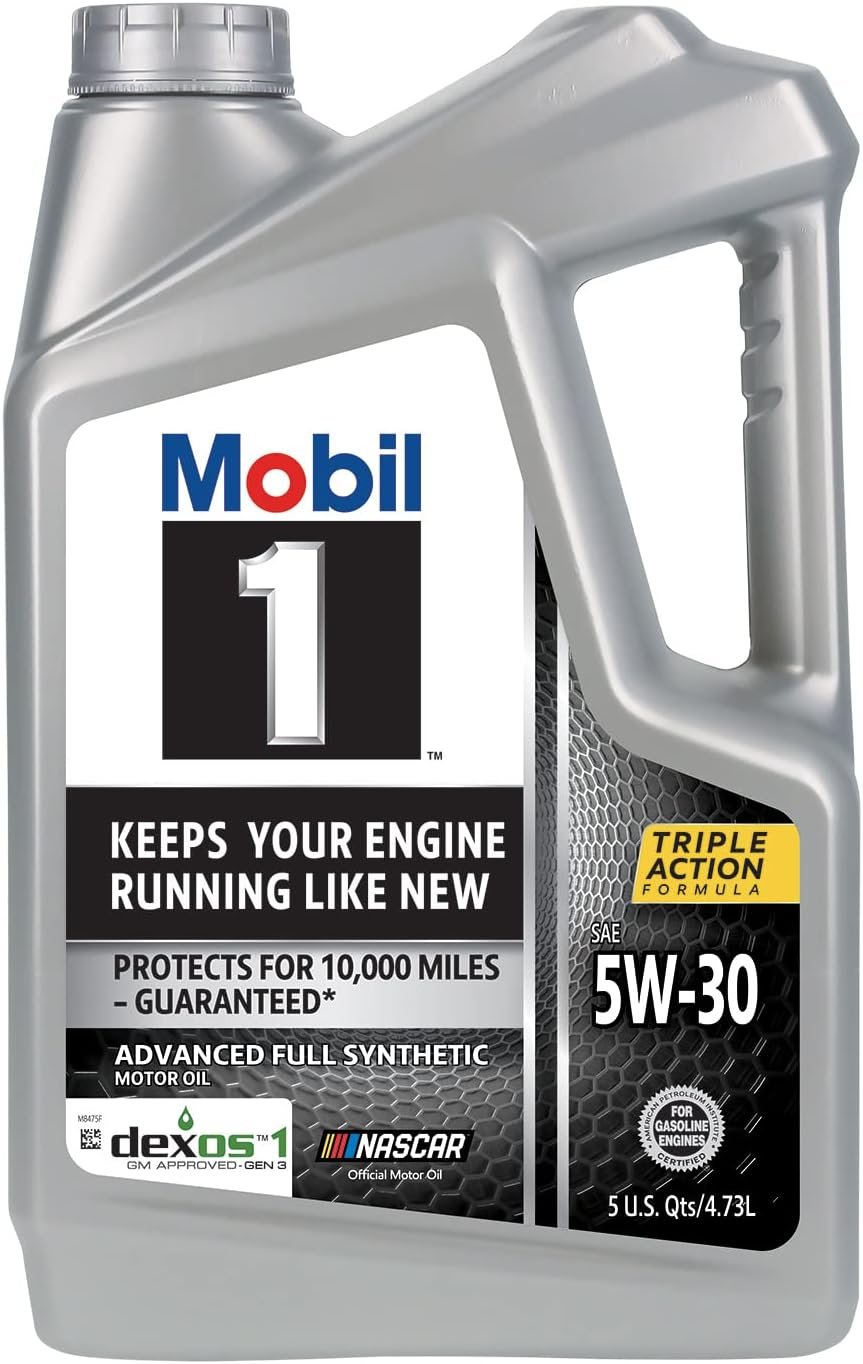
As an Amazon Associate, we may earn from qualifying purchases. This doesn't affect our recommendations — we only suggest oils that hold the exact OEM approval for your engine.
Best Engine Oil for Ford F-150 5.0L Coyote V8 (400 HP) — 14th Gen (2021+)
The fourteenth-generation Ford F-150 (2021+) equipped with the 5.0-liter Coyote V8 is the naturally aspirated heart of America’s best-selling truck. Producing 400 horsepower and 410 lb-ft of torque, the Gen 3 Coyote is a sophisticated engine with direct and port injection, variable valve timing on all four camshafts, and a deep history of cam phaser problems that every owner needs to understand. The 2021 model year brought a critical change that many dealers still get wrong: oil capacity dropped from 8.8 quarts to 7.7 quarts with a filter change. Overfilling by a full quart because someone referenced the old spec causes real problems. This guide covers the correct oil specification, the exact capacity for 2021+ trucks, and why cam phaser health depends on the oil you choose and how often you change it.
Quick Answer: Recommended Oil
For Ford F-150 5.0L Coyote V8 (400 HP, 2021+):
- Specification: API SP / ILSAC GF-6A
- Viscosity: SAE 5W-30
- Oil capacity: 7.7 quarts (7.3 liters) with filter
Critical: The 2021+ F-150 5.0L takes 7.7 quarts with a filter change. The 2018-2020 Coyote took 8.8 quarts. These are different oil pans and different capacities. If your shop or dealer references the old 8.8-quart figure, you will overfill by more than a full quart. Overfilling causes foaming, increased crankcase pressure, oil blown past seals, and elevated emissions. Verify the capacity matches your model year before every service.
The Gen 3 Coyote Engine
The 5.0-liter Coyote V8 in the 2021+ F-150 is the third generation of Ford’s modular DOHC V8, designated the “Gen 3” Coyote. It is a 5,038cc naturally aspirated V8 with four overhead camshafts, 32 valves, and Ford’s dual fuel injection system combining both direct injection (DI) and port fuel injection (PFI). The engine produces 400 horsepower at 6,000 RPM and 410 lb-ft of torque at 4,250 RPM, paired with a 10-speed automatic transmission.
The Gen 3 Coyote uses variable camshaft timing (Ti-VCT) on all four cams, meaning both intake and exhaust timing are continuously adjusted on both cylinder banks. This system relies entirely on oil pressure to actuate the cam phasers, which are hydraulic devices mounted at the end of each camshaft. The phasers rotate the camshaft relative to the sprocket driven by the timing chain, advancing or retarding valve events in real time based on ECU commands. When oil pressure is strong and oil quality is high, the system is responsive and precise. When oil degrades, thins, or runs low, the phasers cannot hold position reliably, and the engine develops the characteristic cam phaser rattle that has become the Coyote’s most notorious problem.
The dual injection system serves two purposes. Direct injection provides precise fuel metering and improved power under load, while port injection washes the intake valves to prevent the carbon buildup that plagues pure DI engines. This dual approach is one of the Coyote’s genuine advantages over competitors that rely solely on direct injection.
Understanding Ford Oil Specifications
Ford specifies engine oil meeting API SP (or the older SN Plus) with ILSAC GF-6A certification for the 2021+ Coyote V8. The viscosity grade is SAE 5W-30, and Ford strongly recommends Motorcraft-branded oil, though any oil meeting API SP in the correct viscosity is acceptable.
API SP is the current top-tier gasoline engine oil service category, introduced in 2020. For the Coyote V8, the most critical aspect of the SP specification is LSPI (low-speed pre-ignition) protection. Although the Coyote is naturally aspirated and therefore less susceptible to LSPI than turbocharged engines, the direct injection component of its fuel system means LSPI events remain possible under specific low-RPM, high-load conditions such as towing up a grade in a high gear. API SP oils contain additive chemistry that significantly reduces LSPI risk.
The SP specification also provides improved high-temperature deposit protection. The Coyote runs hot under sustained load, particularly when towing in summer conditions, and the oil must resist forming deposits on pistons, rings, and in the narrow oil passages that feed the cam phasers. Deposits in these passages restrict oil flow and directly contribute to phaser malfunction.
Technical Specifications: 5.0L Coyote V8 (2021+)
| Specification | Value |
|---|---|
| Displacement | 5,038cc (5.0 liters) |
| Layout | 90-degree V8, aluminum block and heads |
| Valvetrain | DOHC, 32 valves, Ti-VCT (quad-cam variable timing) |
| Fuel System | Dual injection (DI + PFI) |
| Power | 400 HP @ 6,000 RPM |
| Torque | 410 lb-ft @ 4,250 RPM |
| Compression Ratio | 12.0:1 |
| Fuel Type | Regular unleaded (87 octane, 93 recommended for max power) |
| Recommended Viscosity | SAE 5W-30 |
| Oil Capacity (without filter) | 7.4 quarts (7.0 liters) |
| Oil Capacity (with filter) | 7.7 quarts (7.3 liters) |
| Oil Specification | API SP / ILSAC GF-6A |
| Timing | Chain with hydraulic cam phasers (Ti-VCT) |
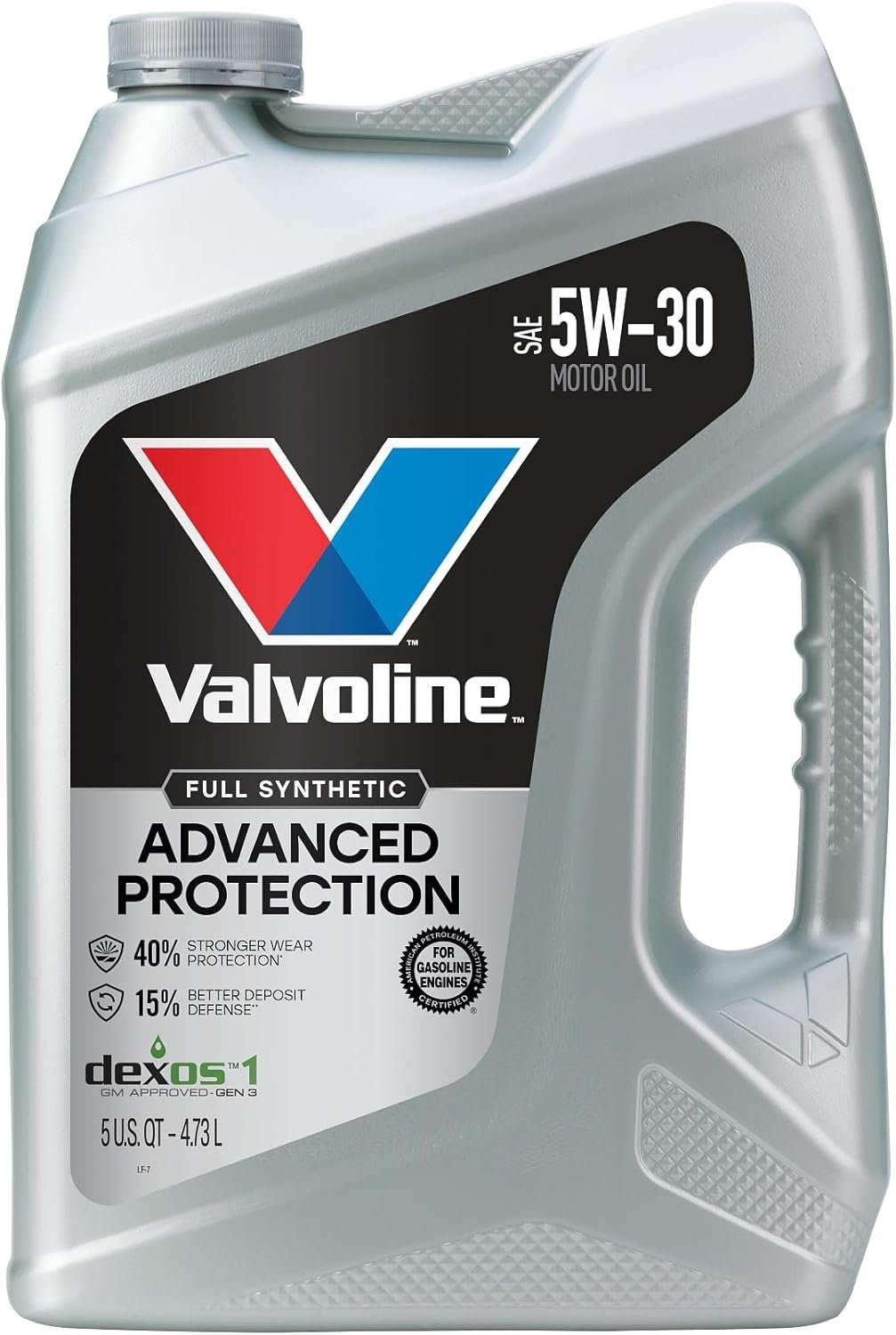
Best Value: Valvoline Advanced Full Synthetic 5W-30 Valvoline’s full synthetic 5W-30 meets API SP and ILSAC GF-6A with a balanced additive package delivering solid anti-wear, detergent, and oxidation resistance at the lowest price among these recommendations. Widely available at Walmart, AutoZone, O’Reilly, and Amazon for $24-28 for 5 quarts. For owners who change oil at shorter intervals to protect the cam phasers, the lower per-change cost makes Valvoline the practical choice without sacrificing any specification requirement.
Oil Change Intervals
Ford Official Recommendation:
- 10,000 miles or 12 months under normal conditions (oil life monitor)
- 5,000 miles or 6 months under severe conditions
What counts as severe conditions for the F-150:
- Towing or hauling regularly
- Extensive idling (job sites, drive-throughs, work trucks)
- Driving in dusty or sandy environments
- Repeated short trips under 10 miles
- Operating in sustained temperatures above 95 degrees F
- Off-road driving
Most F-150s live under severe conditions. A truck that tows a trailer on weekends, sits idling at a job site, hauls equipment in the bed, or commutes through stop-and-go traffic in Texas heat is not operating under “normal” conditions regardless of what the oil life monitor displays.
Recommended practice: 5,000 miles or 6 months for any F-150 5.0 that tows, hauls, idles frequently, or operates in extreme temperatures. Trucks driven exclusively on highways in moderate climates can extend to 7,500 miles. Given the cam phaser vulnerability, shorter intervals are cheap insurance. The cost difference between one and two extra oil changes per year is $60-70. A cam phaser replacement costs $2,500-4,000 at a shop.
Why Correct Oil Matters for the Coyote V8
The Ti-VCT cam phaser system is the single most oil-dependent component in the Coyote engine. Each of the four cam phasers contains an internal vane assembly that rotates under hydraulic pressure provided by engine oil routed through narrow passages in the cylinder heads and camshaft journals. These passages are small, typically 2-3mm in diameter. Any restriction from sludge, varnish, or particulate contamination reduces oil flow to the phaser, causing it to lose position control.
When a phaser cannot hold its commanded position, the camshaft timing drifts from the ECU’s target. The engine management system detects this deviation and may set diagnostic codes, but the first symptom most owners notice is a rattle or knock from the front of the engine during cold start that lasts 5-30 seconds before oil pressure builds sufficiently to stabilize the phasers. Over time, the rattle persists longer, extends into warm operation, and is accompanied by rough idle and reduced throttle response.
Running the correct 5W-30 API SP oil at proper fill level and changing it before the additive package degrades is the most effective way to prevent phaser wear. The 5W-30 viscosity is specifically chosen to balance cold-start flow (reaching the phasers quickly) with hot-running film strength (maintaining hydraulic pressure under load).
Common Coyote V8 Problems Related to Oil
Cam Phaser Rattle and Failure The most widespread issue. A distinctive rattle or knock on cold start, sometimes described as sounding like a diesel engine for the first 10-30 seconds. Caused by worn phaser vane assemblies that cannot maintain camshaft position under low oil pressure conditions. Degraded or contaminated oil accelerates phaser wear. Replacement requires removing the valve covers, timing chains, and all four phasers, with parts and labor typically running $2,500-4,000. Preventable with strict 5,000-mile oil changes using quality 5W-30.
Timing Chain Tensioner Wear The timing chain tensioners are hydraulically actuated by oil pressure, similar to the cam phasers. As oil degrades and loses viscosity, the tensioners cannot maintain proper chain tension, leading to chain slap, timing drift, and eventually chain skip if left unaddressed. Owners who extend oil changes beyond recommended intervals or use incorrect viscosity accelerate tensioner wear. This typically appears at higher mileage (100,000+ miles) but can manifest earlier with poor maintenance.
Oil Consumption from Piston Rings (2018-2020) The Gen 3 Coyote in 2018-2020 trucks exhibited elevated oil consumption in some units, attributed to piston ring design. Ford revised the piston rings for the 2021+ model year, and consumption complaints have decreased significantly. However, monitoring your oil level between changes remains good practice. Consumption of 0.5 quart per 5,000 miles is within Ford’s acceptable range. If consumption exceeds 1 quart per 3,000 miles, have the engine inspected.
Long-Term Durability
The 5.0L Coyote V8 is a 200,000-mile engine and beyond when maintained correctly. Owners who follow strict oil change schedules have documented trucks reaching 320,000 kilometers (200,000 miles) and beyond on the original engine with no major internal work. The aluminum block construction is robust, the dual injection system prevents the worst of the carbon buildup issues, and the timing chain is a lifetime component when the tensioners are kept healthy through proper lubrication.
The owners who reach high mileage share the same habits: 5W-30 API SP oil, 5,000-mile changes, regular level checks, and prompt attention to any cold-start rattle before it becomes a full phaser failure.
Conclusion
The 2021+ Ford F-150 5.0L Coyote V8 requires 7.7 quarts of API SP / ILSAC GF-6A compliant SAE 5W-30 full synthetic engine oil at every service. Not 8.8 quarts. Verify this capacity with your dealer or owner’s manual before every oil change, because the pre-2021 capacity is still widely cited in databases, parts stores, and even by some dealership technicians.
Use Motorcraft Full Synthetic, Mobil 1 Advanced, Castrol EDGE Advanced, or Valvoline Advanced Full Synthetic, all in 5W-30 and all meeting API SP. Change the oil at 5,000 miles if your truck tows, hauls, idles at job sites, or operates in extreme heat. Check your oil level every 1,000-2,000 miles. Listen for cold-start rattle and address it immediately rather than waiting for it to worsen.
The Coyote V8 is a powerful, refined, and durable engine that rewards correct maintenance with exceptional longevity. The $50-70 spent on quality 5W-30 oil every 5,000 miles protects a $4,000 cam phaser repair and keeps the most popular truck in America running the way Ford intended.
Our Top Picks
As an Amazon Associate, we may earn from qualifying purchases. This doesn't affect our recommendations — we only suggest oils that hold the exact OEM approval for your engine.