 Oil-
Oil-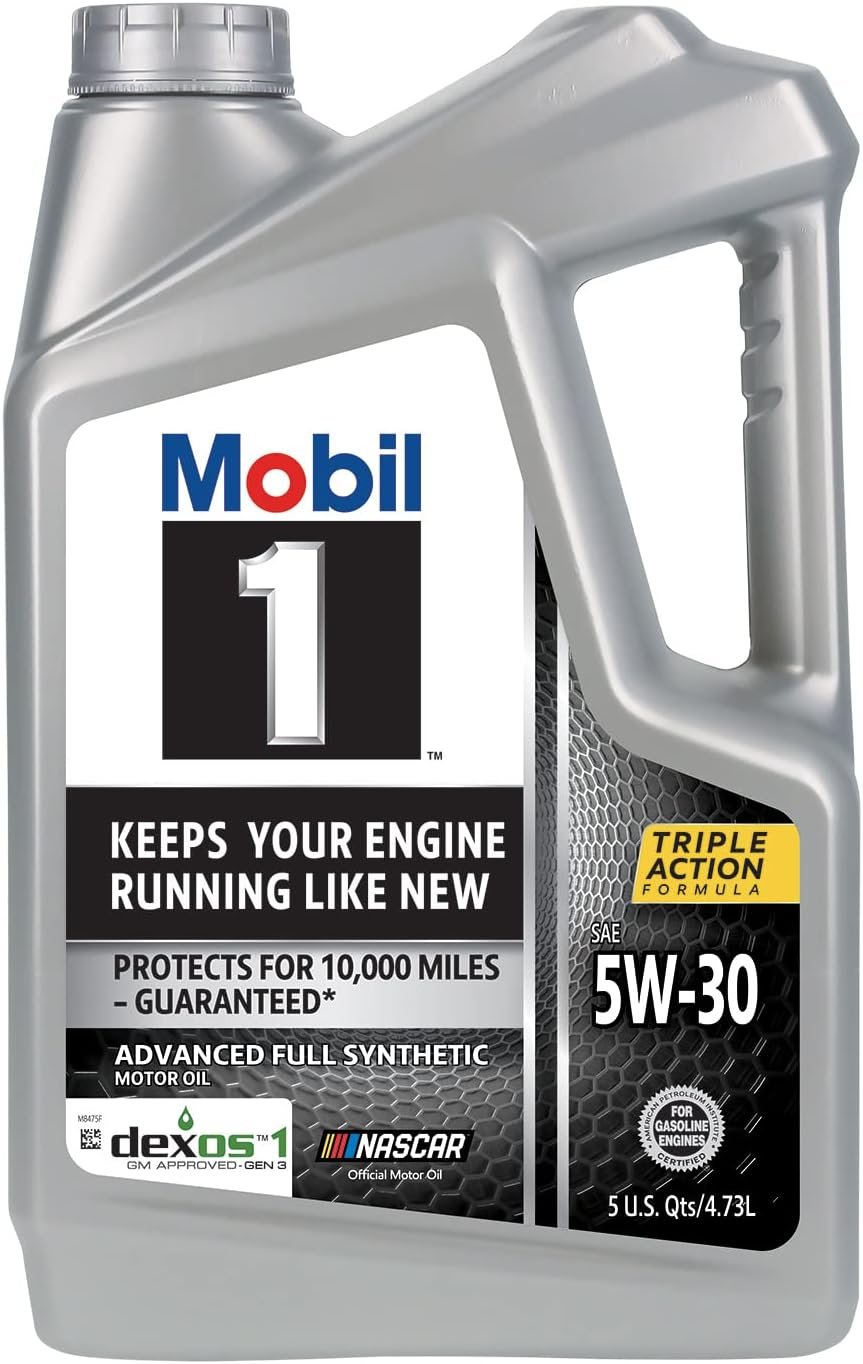
As an Amazon Associate, we may earn from qualifying purchases. This doesn't affect our recommendations — we only suggest oils that hold the exact OEM approval for your engine.
Best Engine Oil for Ford F-150 14th Gen 3.5L EcoBoost V6 (400 HP)
The fourteenth-generation Ford F-150 (2021 and newer) with the 3.5-liter EcoBoost V6 is the most powerful and most popular powertrain in America’s best-selling vehicle. Producing 400 horsepower and 500 lb-ft of torque, this twin-turbocharged, direct-injected V6 replaced V8 engines as the towing and performance benchmark for full-size trucks. It is the same engine family that powers the Ford GT supercar and the F-150 Raptor, adapted for workhorse duty. But that level of output from a V6 comes with engineering demands that make oil selection critical. Twin turbochargers create extreme oil temperatures, direct injection promotes carbon deposits on intake valves, and the high specific output means bearing surfaces and timing components operate under sustained loads that a naturally aspirated V8 never experienced. If you tow with your F-150, and most owners do, the oil is working even harder. This guide covers the exact specification, capacity, and best oil choices for the 14th Gen F-150 3.5L EcoBoost.
Quick Answer: Recommended Oil
For Ford F-150 14th Gen 3.5L EcoBoost V6 (400 HP):
- Specification: Ford WSS-M2C946-A1 / API SP
- Viscosity: SAE 5W-30
- Oil capacity: 6.0 quarts with filter (5.7 quarts without)
Important: Only use 5W-30 full synthetic oil meeting Ford WSS-M2C946-A1 or API SP. The 3.5L EcoBoost’s twin turbochargers, direct injection system, and variable cam timing solenoids are all calibrated around this viscosity. Do not use 5W-20 thinking it will improve fuel economy. The turbocharger bearings and timing chain tensioners require the film strength that 5W-30 provides under the extreme heat generated by forced induction. Using thinner oil risks turbo bearing wear, accelerated timing chain stretch, and reduced engine longevity.
The 3.5L EcoBoost Engine
The 3.5-liter EcoBoost in the 14th Gen F-150 is a 60-degree twin-turbocharged V6 with an aluminum block and heads, dual overhead camshafts, four valves per cylinder, and gasoline direct injection. In this generation, Ford upgraded the turbochargers to larger units with revised compressor and turbine wheels, added a new port-fuel injection system alongside direct injection (making it a dual-fuel system similar in concept to Toyota’s D-4S), and introduced a redesigned valvetrain for improved efficiency. The result is 400 horsepower at 5,950 RPM and 500 lb-ft of torque at 3,100 RPM, mated to the 10R80 ten-speed automatic transmission.
The dual-injection system is a significant upgrade over previous EcoBoost generations that relied solely on direct injection. Port fuel injectors spray fuel across the intake valves, providing a cleaning effect that slows carbon deposit buildup. Earlier 3.5 EcoBoost engines were notorious for heavy carbon accumulation that restricted airflow and caused misfires after 60,000 to 80,000 miles. The 2021+ dual-injection setup reduces this problem substantially, though it does not eliminate it entirely at very high mileage.
The twin-scroll turbochargers operate with exhaust gas temperatures exceeding 1,600 degrees Fahrenheit under full load. The center bearings in each turbocharger are lubricated and cooled by engine oil. When you shut the engine off after sustained towing or high-speed highway driving, residual heat soaks into the turbo bearings while oil pressure drops to zero. This thermal soak is the single most destructive event for turbocharger longevity and is the primary reason full synthetic oil is non-negotiable in any EcoBoost engine.
Understanding Ford WSS-M2C946-A1
Ford’s WSS-M2C946-A1 is the specific oil specification for the 3.5L EcoBoost in the 14th Gen F-150. This specification mandates a full synthetic 5W-30 oil with additive chemistry tailored to the demands of turbocharged, direct-injected engines. It encompasses several critical performance areas.
First, turbocharger deposit resistance. The specification requires the oil to resist coking, the process by which oil breaks down into hard carbon deposits inside turbocharger bearing housings when exposed to extreme heat. An oil that cokes leaves behind deposits that restrict oil flow to the turbo bearings, causing progressive damage that accelerates over time.
Second, LSPI protection. Low-speed pre-ignition is particularly dangerous in turbocharged direct-injection engines. At low RPM under high boost, the air-fuel mixture can spontaneously ignite before the spark plug fires, producing pressure spikes that can crack pistons and damage rod bearings in a single event. Ford WSS-M2C946-A1 oils contain additive chemistry specifically formulated to minimize LSPI risk, including controlled calcium detergent levels.
Third, timing chain and VCT wear protection. The 3.5 EcoBoost uses variable camshaft timing (VCT) actuators that are hydraulically controlled by oil pressure. The timing chain tensioners also rely on consistent oil pressure and viscosity to maintain proper chain tension. Oils meeting the Ford specification provide the anti-wear protection and viscosity stability these components require across the full drain interval.
Any oil meeting API SP in the 5W-30 viscosity grade will provide adequate protection, but Motorcraft branded oils are specifically tested against the Ford WSS specification and represent the guaranteed baseline.
Technical Specifications: 3.5L EcoBoost V6
| Specification | Value |
|---|---|
| Displacement | 3,497cc (3.5 liters) |
| Layout | 60-degree V6, aluminum block and heads |
| Valvetrain | DOHC, 24 valves, Ti-VCT, timing chain |
| Forced Induction | Twin-scroll turbochargers |
| Fuel System | Dual injection (DI + PFI) |
| Power | 400 HP @ 5,950 RPM |
| Torque | 500 lb-ft @ 3,100 RPM |
| Compression Ratio | 10.0:1 |
| Fuel Type | Regular unleaded (87 octane, 91+ recommended for max power) |
| Recommended Viscosity | SAE 5W-30 |
| Oil Capacity (without filter) | 5.7 quarts (5.4 liters) |
| Oil Capacity (with filter) | 6.0 quarts (5.7 liters) |
| Oil Specification | Ford WSS-M2C946-A1 / API SP |
| Timing | Chain (lifetime, no scheduled replacement) |
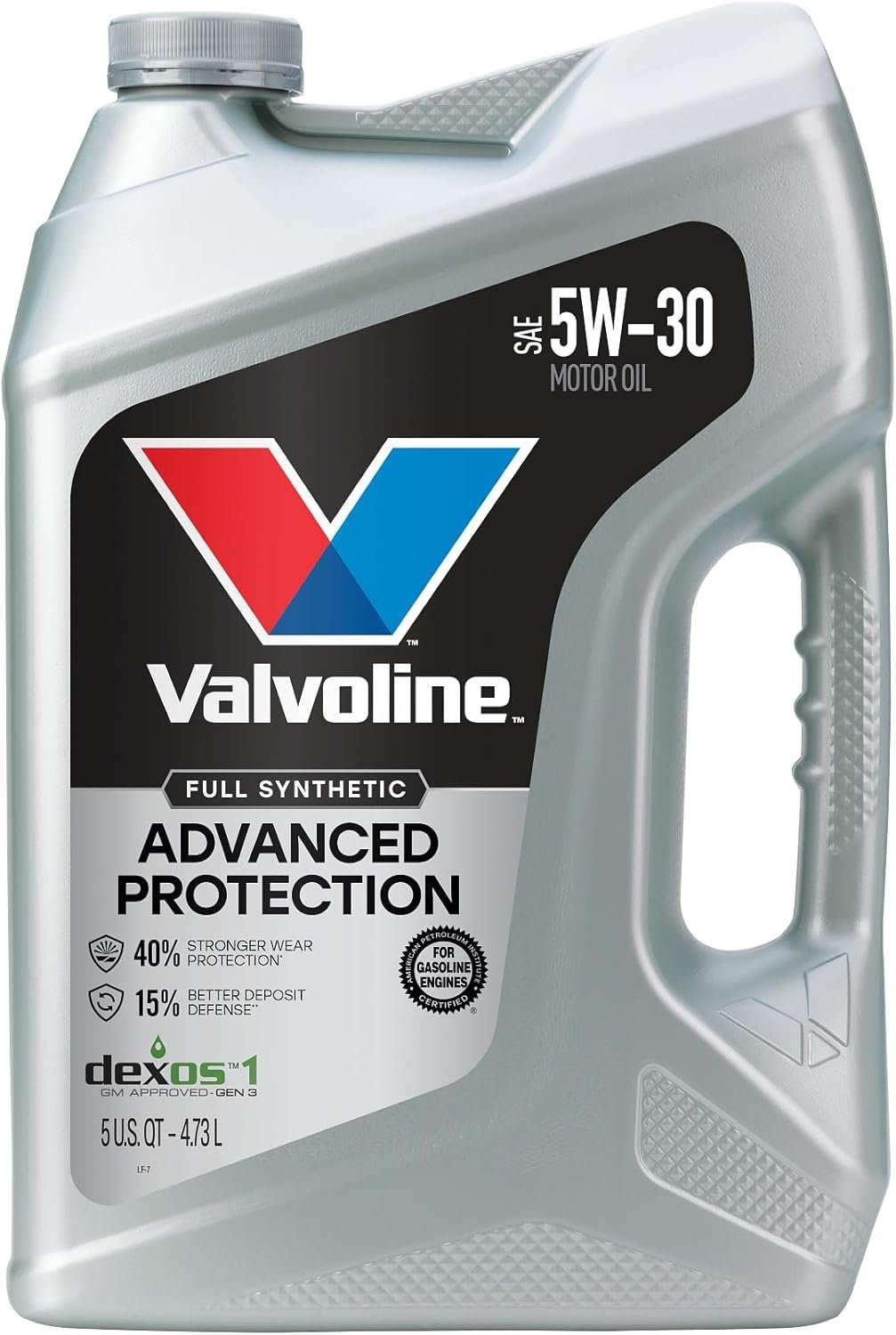
Best Value: Valvoline Advanced Full Synthetic 5W-30 Valvoline’s full synthetic 5W-30 meets API SP with a well-balanced additive package providing solid anti-wear, detergent, and oxidation resistance at the most competitive price. Widely available at Walmart, AutoZone, O’Reilly, and Amazon, consistently priced at $22-27 for 5 quarts. For F-150 owners who tow regularly and change oil at shorter intervals to account for severe conditions, the lower cost per change makes Valvoline the practical choice without sacrificing any specification requirement.
Oil Change Intervals
Ford Official Recommendation:
- 10,000 miles or 12 months under normal conditions (Oil Life Monitor)
- Severe conditions shorten the interval automatically via the Oil Life Monitor
What counts as severe conditions for the F-150 3.5 EcoBoost:
- Towing trailers, hauling heavy payloads
- Extensive idling (job sites, drive-throughs, construction zones)
- Driving in dusty or sandy environments
- Repeated short trips under 10 miles, especially in cold weather
- Sustained high-speed highway driving in extreme heat
- Off-road driving
For most F-150 owners, the reality is that towing alone qualifies as severe service. Pulling a travel trailer to the campground, hauling a boat on weekends, moving landscaping equipment for work, or running loaded to and from job sites all subject the oil to temperatures and loads that demand shorter intervals.
Recommended practice: 5,000 to 7,500 miles for any F-150 that tows regularly, hauls heavy loads, or operates in hot climates. Trucks used exclusively for light-duty commuting on highways can follow the Oil Life Monitor up to 10,000 miles. The cost difference between two and three oil changes per year is negligible compared to a turbocharger replacement that runs $2,000 to $3,500 per side.
Common 3.5 EcoBoost Problems Related to Oil
Timing Chain Cover Leaks
The 3.5 EcoBoost shares a problem common to many modern aluminum engines: the front timing chain cover seal degrades over time, causing oil to seep and eventually drip from the front of the engine. This issue has been documented across multiple EcoBoost generations and typically appears between 60,000 and 120,000 miles. The leak starts as a minor weep and worsens progressively. The repair requires removing the front cover to reseal it, which is a labor-intensive job costing $1,200 to $2,000 at a shop. Full synthetic oil with strong oxidation resistance produces fewer acidic byproducts that attack seal materials, and maintaining proper oil change intervals helps slow seal degradation.
Carbon Buildup
While the 2021+ dual-injection system substantially reduces carbon deposits compared to earlier DI-only EcoBoost engines, carbon still accumulates at very high mileage. Trucks driven predominantly at low RPM in city traffic, where the port injectors may activate less frequently, are more susceptible. Symptoms include rough idle, hesitation, and gradual power loss. Walnut shell blasting remains the accepted cleaning method if needed, typically past 100,000 miles on the dual-injection setup.
Oil Consumption at High Mileage
The 3.5 EcoBoost can develop measurable oil consumption beyond 100,000 miles. The high-output turbo application places significant thermal stress on piston rings, and the boost pressure differential across the rings contributes to gradual oil passage into the combustion chamber. Consumption of half a quart per 5,000 miles is not uncommon at higher mileage. Check your oil level at every fuel stop, especially if you tow. Running even one quart low in a twin-turbo engine concentrates heat and contaminants in the remaining oil, accelerating wear on the components that need protection most.
Conclusion
The Ford F-150 14th Gen 3.5L EcoBoost V6 requires 6.0 quarts of Ford WSS-M2C946-A1 or API SP compliant SAE 5W-30 full synthetic engine oil at every service. The twin turbochargers, dual-injection system, and variable cam timing all depend on oil that meets this specification precisely.
Use Motorcraft Full Synthetic, Mobil 1 Extended Performance, Castrol EDGE Advanced, or Valvoline Advanced Full Synthetic, all in 5W-30 and all meeting API SP. Change the oil at 5,000 to 7,500 miles if you tow, haul, or operate in extreme conditions. Check your oil level at every fuel stop and address timing cover leaks early. The 3.5 EcoBoost is a remarkably capable engine that produces supercar power from a truck V6. It repays correct maintenance with reliable, high-performance service well past 200,000 miles. The $25-35 spent on quality 5W-30 oil is the cheapest insurance you can buy for the most expensive components under the hood.
Our Top Picks
As an Amazon Associate, we may earn from qualifying purchases. This doesn't affect our recommendations — we only suggest oils that hold the exact OEM approval for your engine.