 Oil-
Oil-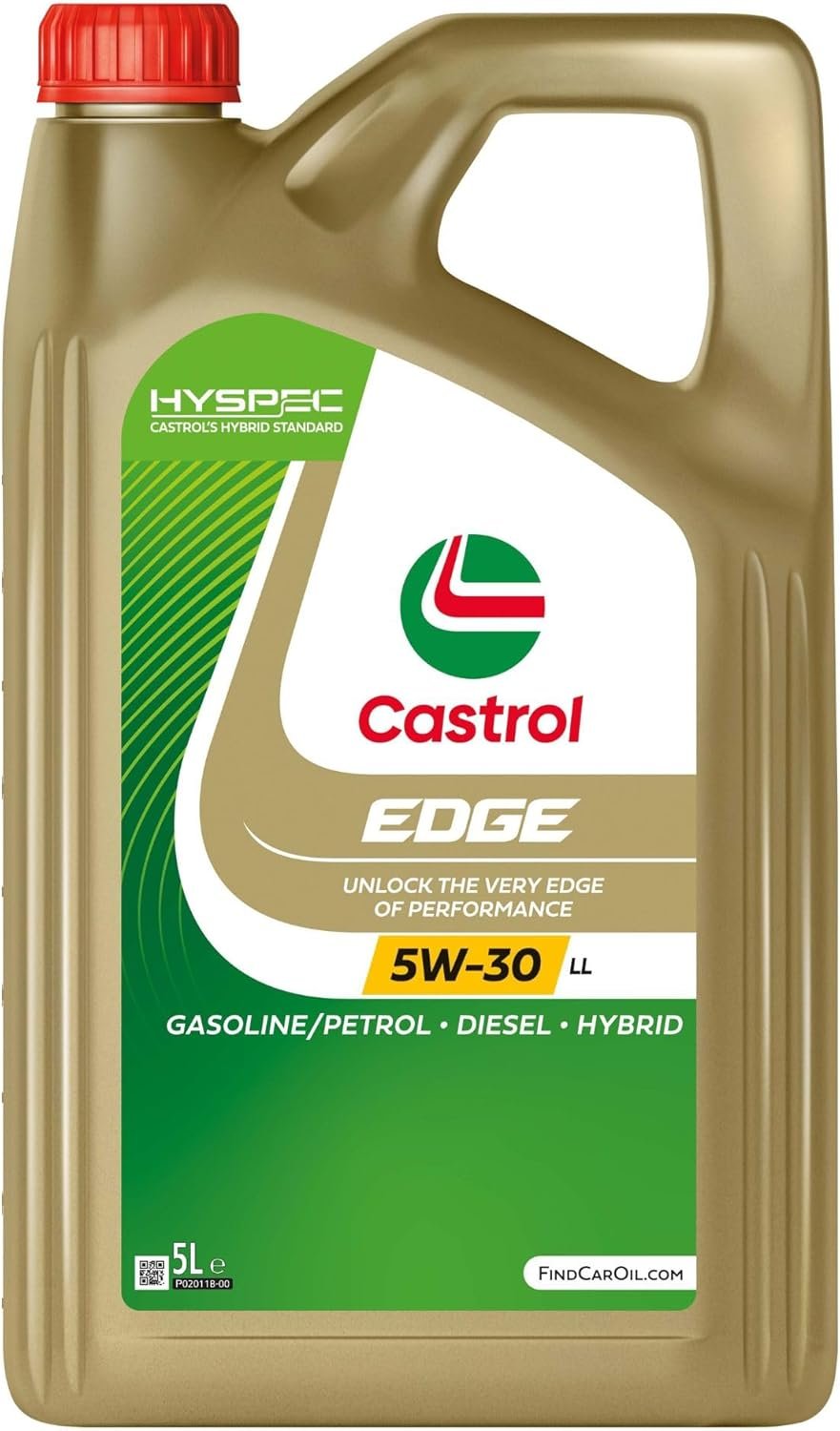
As an Amazon Associate, we may earn from qualifying purchases. This doesn't affect our recommendations — we only suggest oils that hold the exact OEM approval for your engine.
Best Engine Oil for BMW 1 Series F40 116d 1.5 Diesel (116 HP)
The third-generation BMW 1 Series (F40, 2019 onwards) broke with tradition by switching to a front-wheel-drive platform, but the entry-level 116d diesel retained something far more important to long-term owners: a well-engineered powertrain that rewards correct maintenance. The B37D15 engine code identifies a 1,499cc three-cylinder turbodiesel producing 116 HP and 270 Nm of torque, enough to make the 1 Series a genuinely capable commuter and motorway cruiser. BMW developed the B37 as the diesel counterpart to its B38 three-cylinder petrol engine, sharing the modular architecture that underpins everything from the MINI to the X1. It is a fundamentally different engine from the problematic N47 diesel it eventually replaced across the range, addressing several of that engine’s most notorious weak points. However, the B37’s diesel particulate filter, EGR system, and tight tolerances make it entirely dependent on correct oil specification. BMW mandates LL-04 (Longlife-04) approval for this engine, a low-SAPS standard designed specifically for BMW diesels with particulate filters. This guide covers the correct specifications, capacity, common issues, and the best oils to protect the 116d for the long term.
Quick Answer: Recommended Oil
For BMW 1 Series F40 116d (116 HP):
- Recommended viscosity: SAE 5W-30 (alternative: 0W-30)
- Oil capacity: 4.4 litres with filter (4.1 L without)
- Required norms: ACEA C3, BMW Longlife-04 (LL-04)
Key point: BMW LL-04 is the mandatory oil specification for the B37D15 diesel. It requires low-SAPS (Sulphated Ash, Phosphorus, Sulphur) chemistry to protect the diesel particulate filter from non-combustible ash accumulation. Using a standard 5W-30 or even an ACEA C3 oil without the specific LL-04 approval will accelerate DPF ash loading and void your BMW warranty. Always verify the BMW LL-04 approval on the bottle before pouring.
The B37D15 Engine: BMW’s Three-Cylinder Diesel
The B37 is part of BMW’s modular engine family, sharing its 500cc-per-cylinder architecture with the B38 petrol three-cylinder and the B47 four-cylinder diesel. This modular approach means each cylinder benefits from the same optimised bore-to-stroke ratio, combustion chamber geometry, and thermal management as its larger siblings. The result is an unusually refined three-cylinder that avoids much of the vibration and harshness typically associated with odd-firing-order engines.
Aluminium block and timing chain. The B37 uses a lightweight aluminium crankcase with cast-iron cylinder liners, keeping weight down and improving thermal efficiency. Crucially, the timing chain is mounted at the front of the engine, driven from the crank nose. This is a significant improvement over the N47 diesel engine that preceded BMW’s modular family, which located its timing chain at the rear of the engine between the block and the gearbox. The N47’s rear-mounted chain became notorious for premature wear and catastrophic failure, with replacement requiring engine removal at a cost of several thousand pounds. The B37’s front-mounted chain is accessible without pulling the engine, making eventual chain service far more practical and affordable.
Common-rail direct injection operates at pressures up to 2,000 bar through solenoid injectors, delivering precise fuel metering for both performance and emissions compliance. The injection system manages multiple injection events per combustion cycle, including pilot injections for noise reduction, which is why the 116d is remarkably quiet for a three-cylinder diesel, and post-injections for DPF regeneration.
Variable geometry turbocharger. A single VGT provides responsive boost from low RPM, delivering the full 270 Nm of torque from just 1,750 RPM. The variable vanes adjust continuously to maintain optimal boost across the rev range, giving the 116d surprisingly punchy mid-range acceleration that belies its modest displacement. The turbo operates in exhaust gas temperatures exceeding 800 degrees C and relies entirely on engine oil for bearing lubrication and heat dissipation.
Exhaust aftertreatment. The Euro 6d emissions package includes a diesel particulate filter, diesel oxidation catalyst, and an EGR (exhaust gas recirculation) system. The DPF captures soot particles and periodically burns them off during regeneration, while the EGR reduces NOx by recirculating a portion of exhaust gas back into the intake. Both systems interact directly with the engine oil, making correct specification essential.
Why BMW LL-04 Oil Is Mandatory
DPF protection is the primary reason. The diesel particulate filter traps soot from exhaust gas and burns it off during regeneration cycles at temperatures above 600 degrees C. Soot burns away, but metallic ash from engine oil additives does not. This ash accumulates permanently inside the DPF, gradually reducing its capacity and efficiency. Low-SAPS oil meeting BMW LL-04 produces substantially less metallic ash than conventional diesel oil, extending the DPF’s effective life by years. A blocked DPF replacement on the F40 costs between £1,200 and £1,800 including labour, making correct oil selection one of the cheapest forms of insurance available.
Fuel dilution from DPF regeneration. During active regeneration, the ECU injects additional fuel late in the combustion cycle to raise exhaust temperatures high enough to burn trapped soot. Some of this fuel inevitably washes past the piston rings and enters the sump, diluting the engine oil. This is particularly problematic for urban drivers whose journeys are too short for passive regeneration to occur naturally, forcing the engine into repeated active regeneration cycles. Rising oil level on the dipstick is a clear indicator of fuel dilution and demands an immediate oil change regardless of the service schedule.
Turbo bearing protection. After sustained driving, the VGT turbocharger remains extremely hot when the engine is switched off. Residual oil in the turbo bearing housing must maintain its lubricating film as temperatures spike through heat soak. Degraded oil cokes inside the bearing housing, forming hard carbon deposits that restrict oil flow and score the shaft. Quality synthetic oil with strong thermal stability resists this coking process, extending turbo life well past 100,000 miles.
Technical Specifications: B37D15
| Specification | Value |
|---|---|
| Displacement | 1,499cc (1.5 litres) |
| Layout | Inline-3, transverse, aluminium block |
| Valvetrain | DOHC, 12 valves, front-mounted timing chain |
| Compression Ratio | 16.5:1 |
| Power | 116 HP @ 4,000 RPM |
| Torque | 270 Nm @ 1,750-2,250 RPM |
| Fuel System | Common-rail direct injection, up to 2,000 bar |
| Turbocharger | Variable geometry (VGT) |
| Recommended Viscosity | SAE 5W-30 (alternative: 0W-30) |
| Oil Capacity (without filter) | 4.1 litres |
| Oil Capacity (with filter) | 4.4 litres |
| ACEA Norm | C3 |
| OEM Norm | BMW Longlife-04 (LL-04) |
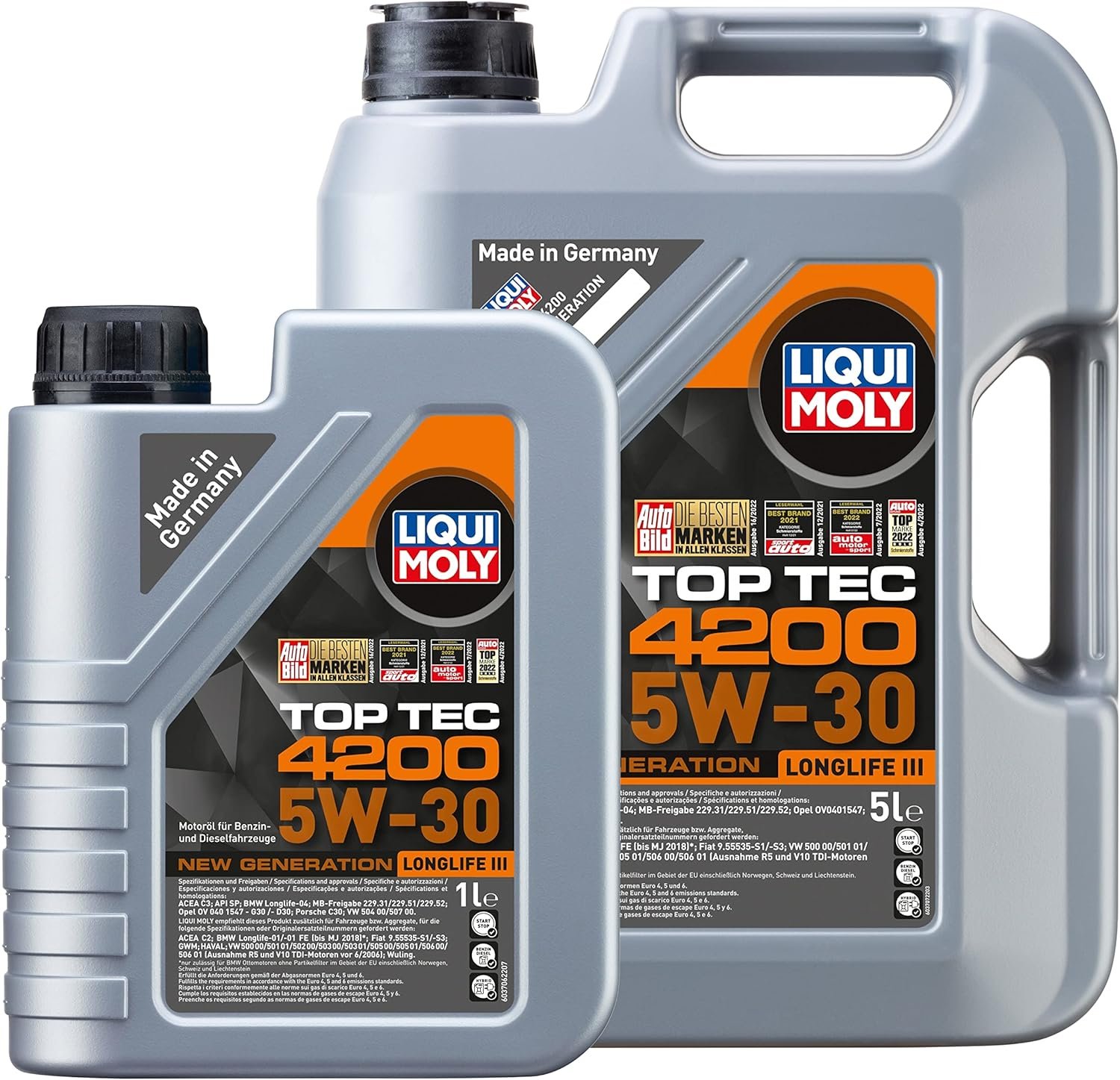
Best Value: Liqui Moly Top Tec 4200 5W-30 The German oil specialist’s Top Tec 4200 is a fully synthetic, low-SAPS formulation carrying BMW LL-04 approval. Liqui Moly has a strong following among BMW enthusiasts in Europe, and the Top Tec 4200 delivers reliable protection for the DPF and turbo system at a price that undercuts the larger brands. Strong soot dispersancy keeps the oil clean between services, and the synthetic base stock provides excellent cold-start flow even on freezing winter mornings. At roughly £32-38 for 5 litres, it is the most affordable LL-04 approved option from a reputable manufacturer, making it an excellent choice for owners who prefer shorter oil change intervals.
Oil Change Intervals
BMW Official Recommendation:
- Condition Based Service (CBS): up to 18,000 miles or 24 months
Recommended Practice: 10,000 miles or 12 months, whichever comes first.
BMW’s Condition Based Service system uses sensors and algorithms to calculate oil life based on driving patterns, fuel consumption, and engine temperature data. Under ideal conditions of sustained motorway driving, the CBS system may not trigger a service alert for up to 18,000 miles or two years. However, this extended interval assumes optimal conditions that many UK owners never consistently experience. The combination of cold starts, short trips, urban traffic, and the soot loading inherent to diesel combustion means that oil degrades faster than the CBS computer often estimates.
Independent BMW specialists and experienced owners overwhelmingly agree that 10,000 miles or annual changes, whichever comes first, represent sensible practice for the B37 diesel. The 4.4-litre oil capacity is modest for an engine that produces significant soot and generates considerable heat through a single turbocharger, meaning each litre of oil works harder than in larger-capacity engines.
Consider 7,500-mile intervals if:
- Predominantly short trips under 15 miles (DPF cannot complete passive regeneration)
- Heavy urban stop-start driving (increased soot loading and fuel dilution)
- Vehicle exceeds 80,000 miles
- Oil level rises on the dipstick between services (fuel dilution from failed DPF regeneration)
- Any history of DPF warning lights
Common B37D15 Issues and Oil-Related Prevention
EGR valve clogging. The exhaust gas recirculation system on the B37 is well-engineered and typically provides trouble-free service for around 150,000 km (approximately 93,000 miles). Beyond this point, carbon deposits progressively restrict the EGR valve’s operation, causing rough idling, reduced performance, increased emissions, and eventually check engine lights. The EGR recirculates a portion of hot exhaust gas back into the intake manifold, and the oil vapour drawn through the crankcase ventilation system combines with these exhaust gases to form stubborn carbon deposits. Quality oil with strong detergent properties slows this accumulation, and regular sustained driving at operating temperature helps burn off deposits before they harden. EGR valve cleaning costs £150-300, while full replacement runs to £400-600 including labour.
Timing chain wear. While the B37’s front-mounted chain is a vast improvement over the N47’s rear-mounted design, it remains a wear item. Expect the timing chain, tensioner, and guides to require replacement at approximately 180,000-200,000 km (112,000-125,000 miles), though some owners report earlier wear depending on driving patterns and maintenance history. Symptoms of chain stretch include a rattling noise on cold start, rough running, and timing-related fault codes. Because the chain is front-mounted, replacement is a substantially less invasive job than on the old N47, typically costing £600-1,000 rather than the £2,000-3,000 the N47 demanded. Regular oil changes with quality LL-04 oil containing strong anti-wear additives are the most effective way to slow chain and guide wear.
Electric water pump failure. The B37 uses an electric water pump, which BMW fits across its modular engine range. These pumps are electronically controlled for optimal cooling efficiency but are known to fail at around 60,000-80,000 miles. Symptoms include overheating warnings, coolant loss, or intermittent temperature fluctuations on the dashboard. While not directly an oil-related issue, an overheating engine rapidly degrades oil quality, so prompt water pump replacement at the first sign of cooling system trouble is essential. Replacement costs £300-500 at an independent specialist. Keep an eye on the coolant temperature gauge, and if it spikes or fluctuates, investigate immediately rather than hoping the problem resolves itself.
Three-cylinder vibration (early models). Early B37 engines produced before approximately 2017 were reported to suffer from noticeable vibration at idle, a characteristic of three-cylinder engines that BMW’s balancer shaft system is designed to minimise. BMW addressed this through revised engine mounts and calibration updates on later production units, and the F40 (2019 onwards) benefits from these improvements. If you experience excessive vibration on an F40 116d, it is more likely to indicate degraded engine mounts or a misfire than an inherent engine design issue.
DPF blockage from urban driving. As with every modern diesel, the DPF requires sustained driving at higher speeds to reach the temperatures needed for passive soot regeneration. Drivers who use the 116d exclusively for short urban trips force the ECU into repeated active regeneration attempts that may fail to complete, leaving the filter progressively blocked. A 20-30 minute motorway run at least once a week is the simplest and most effective preventative measure. If your driving is entirely urban, the 116d may struggle to keep its DPF clean, and the petrol 118i may be a more suitable choice.
Why 5W-30 and ACEA C3 for the B37
BMW specifies 5W-30 as the primary viscosity for the B37 diesel, with 0W-30 as a permitted alternative in colder climates. The 5W cold-start rating provides rapid oil flow to the turbo bearings, timing chain, and valve train on cold mornings, while the 30 hot rating maintains adequate film strength at operating temperature. UK owners may benefit from 0W-30 during the coldest winter months, as the thinner cold-start viscosity reaches critical components fractionally faster on sub-zero mornings, though 5W-30 is perfectly adequate for the vast majority of UK conditions.
ACEA C3 is a mid-SAPS specification that balances DPF protection with strong high-temperature/high-shear performance, making it well-suited to turbocharged diesel engines that generate significant mechanical and thermal stress. BMW’s LL-04 standard builds on ACEA C3 with additional manufacturer-specific tests for oxidation stability, soot handling, and turbocharger deposit resistance. An oil carrying only ACEA C3 without the LL-04 approval has not been validated against BMW’s specific requirements and should not be used.
Conclusion
The BMW 1 Series F40 116d requires SAE 5W-30 engine oil meeting ACEA C3 and BMW Longlife-04 specifications, with a capacity of 4.4 litres including the filter. Low-SAPS chemistry is mandatory for DPF protection, and the LL-04 approval on the bottle is your guarantee that the oil meets BMW’s diesel-specific standards.
Castrol EDGE Professional LL 04 5W-30 is the natural OEM choice at £42-48 for 5 litres, while Liqui Moly Top Tec 4200 5W-30 offers genuine LL-04 protection at the most competitive price point of £32-38. Change the oil at 10,000-mile intervals or annually regardless of what the CBS system suggests, shortening to 7,500 miles for predominantly urban driving. The B37 three-cylinder diesel is a fundamentally well-designed engine that corrects the worst failings of BMW’s earlier N47 diesel, particularly the rear-mounted timing chain that caused so many expensive failures. With correct LL-04 oil, sensible service intervals, and regular motorway driving to keep the DPF regenerating, the 116d will deliver years of refined, economical motoring. The £32-48 spent on correct oil annually is trivial compared to a DPF replacement (£1,200-1,800), timing chain service (£600-1,000), or turbo failure that primarily afflict engines running on incorrect or degraded oil.
Our Top Picks
As an Amazon Associate, we may earn from qualifying purchases. This doesn't affect our recommendations — we only suggest oils that hold the exact OEM approval for your engine.