 Oil-
Oil-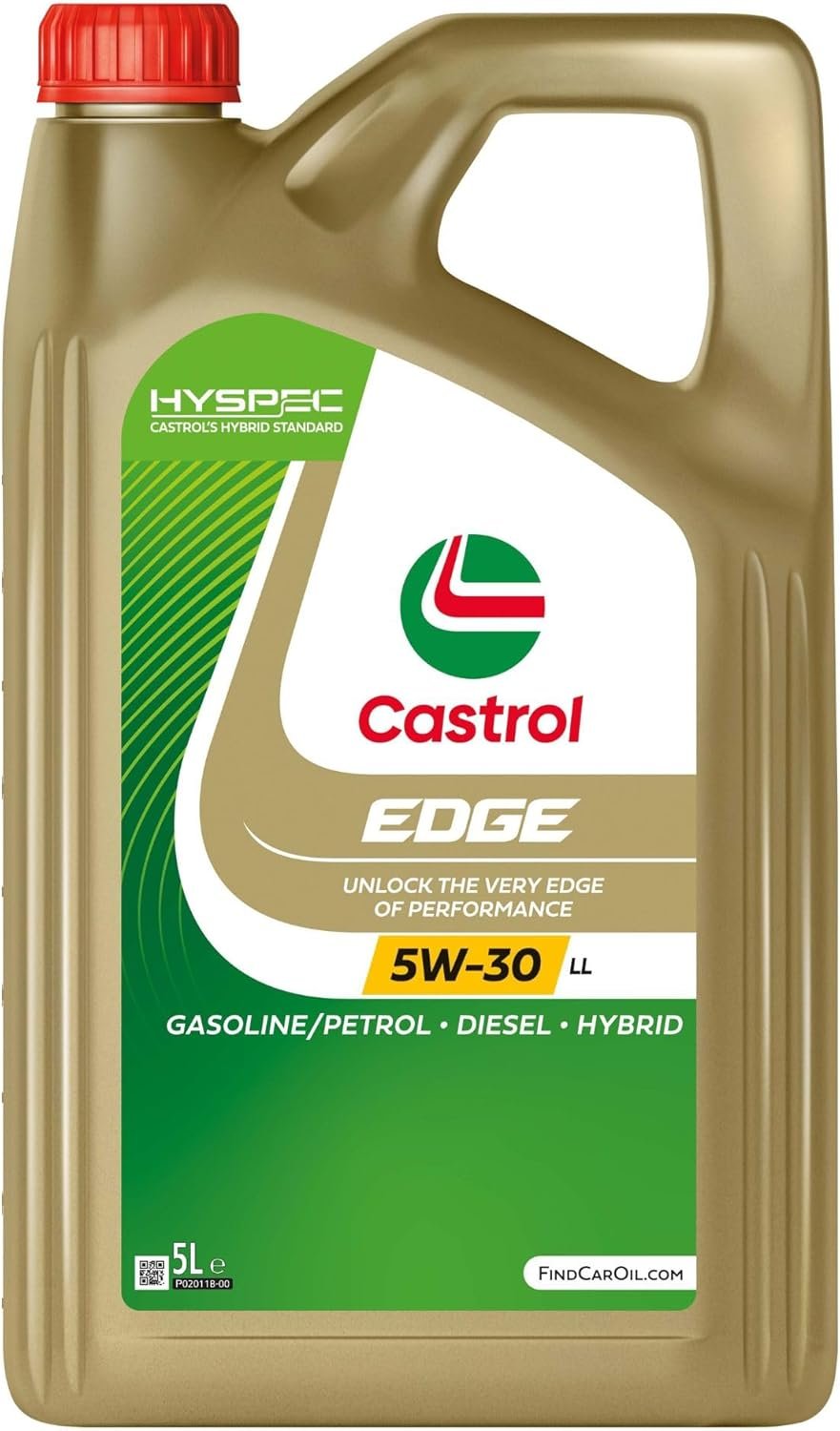
As an Amazon Associate, we may earn from qualifying purchases. This doesn't affect our recommendations — we only suggest oils that hold the exact OEM approval for your engine.
Best Engine Oil for Volkswagen Polo 6 (AW) 1.0 TSI (95/110 HP)
The Volkswagen Polo 6 (AW), produced from 2017 onwards, represents a significant step forward from its predecessor. At the heart of the range sits the 1.0 TSI engine from VW’s EA211 evo family — a 999cc three-cylinder turbocharged unit producing either 95 HP (DKLA) or 110 HP (DKRF). This is not simply a downsized version of a larger engine but a purpose-built modern powerplant featuring direct injection, turbocharging, and a timing belt that runs in an oil bath. Choosing the correct oil is critical for this engine: its compact 4.0-liter sump, high-speed turbocharger, and sophisticated valvetrain all depend on lubricant quality to deliver the longevity Volkswagen intended. This guide covers the exact specification, capacity, recommended products, and the practical maintenance knowledge that keeps the 1.0 TSI running reliably for hundreds of thousands of kilometres.
Quick Answer: Recommended Oil
For Polo 6 (AW) 1.0 TSI (95/110 HP):
- Primary specification: VW 504 00/507 00 with SAE 5W-30
- Alternative specification: VW 508 00/509 00 with SAE 0W-20 (accepted on certain variants)
- ACEA norm: C3 (for VW 504 00) or C5 (for VW 508 00)
- Oil capacity: 4.0 liters with filter (3.7 L without)
Key point: VW 504 00 (5W-30) is the primary and most widely recommended specification. VW 508 00 (0W-20) is also accepted on some production variants for improved fuel economy — check your owner’s manual or oil filler cap sticker to confirm which applies to your vehicle. When in doubt, VW 504 00 is always the safe choice.
The 1.0 TSI EA211 Evo Engine
The 1.0 TSI in the Polo 6 belongs to Volkswagen’s EA211 evo engine family, a thorough evolution of the original EA211 platform found in the previous Polo. Displacing 999cc across three cylinders with a bore of 74.5mm and stroke of 76.4mm, it uses an aluminium block and head to keep weight below 90 kg. The three-cylinder layout fires at 240-degree intervals, and a balance shaft manages the inherent primary vibration to maintain acceptable refinement for a supermini.
The “evo” designation is significant and distinguishes this engine from earlier EA211 units. The most notable change is the timing belt running in an oil bath — a design VW calls the toothed belt-in-oil concept. Submerging the belt in engine oil dramatically reduces friction, noise, and wear, extending belt life to the point where VW considers it a lifetime component under normal service conditions. However, this also means the belt is in constant contact with your engine oil. Contaminated, degraded, or incorrect oil can attack the belt’s rubber compound, causing swelling, cracking, or premature tooth wear. A timing belt failure on this interference engine destroys valves and pistons — a catastrophic outcome costing upwards of £2,000.
Direct fuel injection operates at pressures up to 350 bar, delivering fuel precisely into the combustion chamber for efficient combustion. However, because no fuel washes across the intake valves, carbon deposits accumulate on valve stems and ports over time. The evo version partially addresses this with a supplementary port injection system on certain variants, which sprays a small amount of fuel over the intake valves during specific operating conditions. This supplementary injection significantly reduces carbon buildup compared to pure direct-injection predecessors like the Polo 5’s 1.2 TSI — but it does not eliminate the issue entirely, and not all DKLA/DKRF production runs include port injection.
The turbocharger is a compact single-scroll unit with an electronic wastegate, generating up to 200 Nm of torque from just 2,000 RPM in the 110 HP variant. Turbo shaft speeds exceed 200,000 RPM, and the bearings rely entirely on engine oil for both lubrication and cooling. In the context of a 4.0-liter oil system, the turbo sees a higher proportion of the total oil volume per circulation cycle than in larger engines, making oil quality and condition directly relevant to turbo longevity.
Understanding VW Oil Specifications
VW 504 00/507 00 (Primary — 5W-30)
VW 504 00 is the primary oil specification for the Polo 6 1.0 TSI. This long-established standard has protected millions of VAG petrol engines since its introduction and remains VW’s default recommendation for good reason.
- SAE 5W-30: Proven viscosity providing strong film strength at operating temperature while flowing well during cold UK mornings
- ACEA C3: Low SAPS (Sulphated Ash, Phosphorus, Sulphur) formulation protecting the catalytic converter and GPF (where fitted)
- Turbocharger coking resistance: VW 504 00 oils pass specific high-temperature coking tests that generic C3 oils do not
- Timing belt compatibility: Approved oils are tested for compatibility with the evo’s oil-immersed timing belt rubber compound
- Extended drain capability: Designed for VW’s LongLife service regime, up to 15,000 km
For the Polo 6’s 1.0 TSI, VW 504 00 at 5W-30 provides an excellent balance of protection and efficiency. The slightly thicker film compared to 0W-20 offers a greater safety margin for the turbo and bearings, particularly in warmer months or during sustained motorway driving.
VW 508 00/509 00 (Alternative — 0W-20)
Certain production variants of the DKLA and DKRF accept VW 508 00 as an alternative specification. This ultra-low-viscosity oil reduces internal friction for a measurable improvement in fuel economy — typically 0.2–0.3 L/100 km in real-world driving.
- SAE 0W-20: Significantly thinner than 5W-30 at operating temperature
- ACEA C5: Ultra-low SAPS for maximum emissions system protection
- Cold-start benefit: Excellent flow characteristics in sub-zero temperatures
If your oil filler cap or service book specifically indicates VW 508 00 compatibility, this is a valid option. However, if your vehicle was factory-filled with 5W-30 or if you are uncertain, stick with VW 504 00. The two specifications use different base stocks and additive chemistries and should never be mixed.
Technical Specifications: 1.0 TSI (DKLA / DKRF)
| Specification | Value |
|---|---|
| Displacement | 999cc (1.0 liter) |
| Layout | Inline-3, transverse, aluminium block |
| Valvetrain | DOHC, 12 valves, timing belt in oil bath |
| Bore x Stroke | 74.5mm x 76.4mm |
| Compression Ratio | 11.5:1 |
| Power | 95 HP (DKLA) / 110 HP (DKRF) @ 5,000–5,500 RPM |
| Torque | 175 Nm (DKLA) / 200 Nm (DKRF) @ 2,000–3,500 RPM |
| Fuel Type | Petrol, 95 RON minimum |
| Recommended Viscosity | SAE 5W-30 (VW 504 00) or 0W-20 (VW 508 00) |
| Oil Capacity (without filter) | 3.7 liters |
| Oil Capacity (with filter) | 4.0 liters |
| ACEA Norm | C3 (504 00) or C5 (508 00) |
| VW Norm | VW 504 00 / 507 00 OR VW 508 00 / 509 00 |
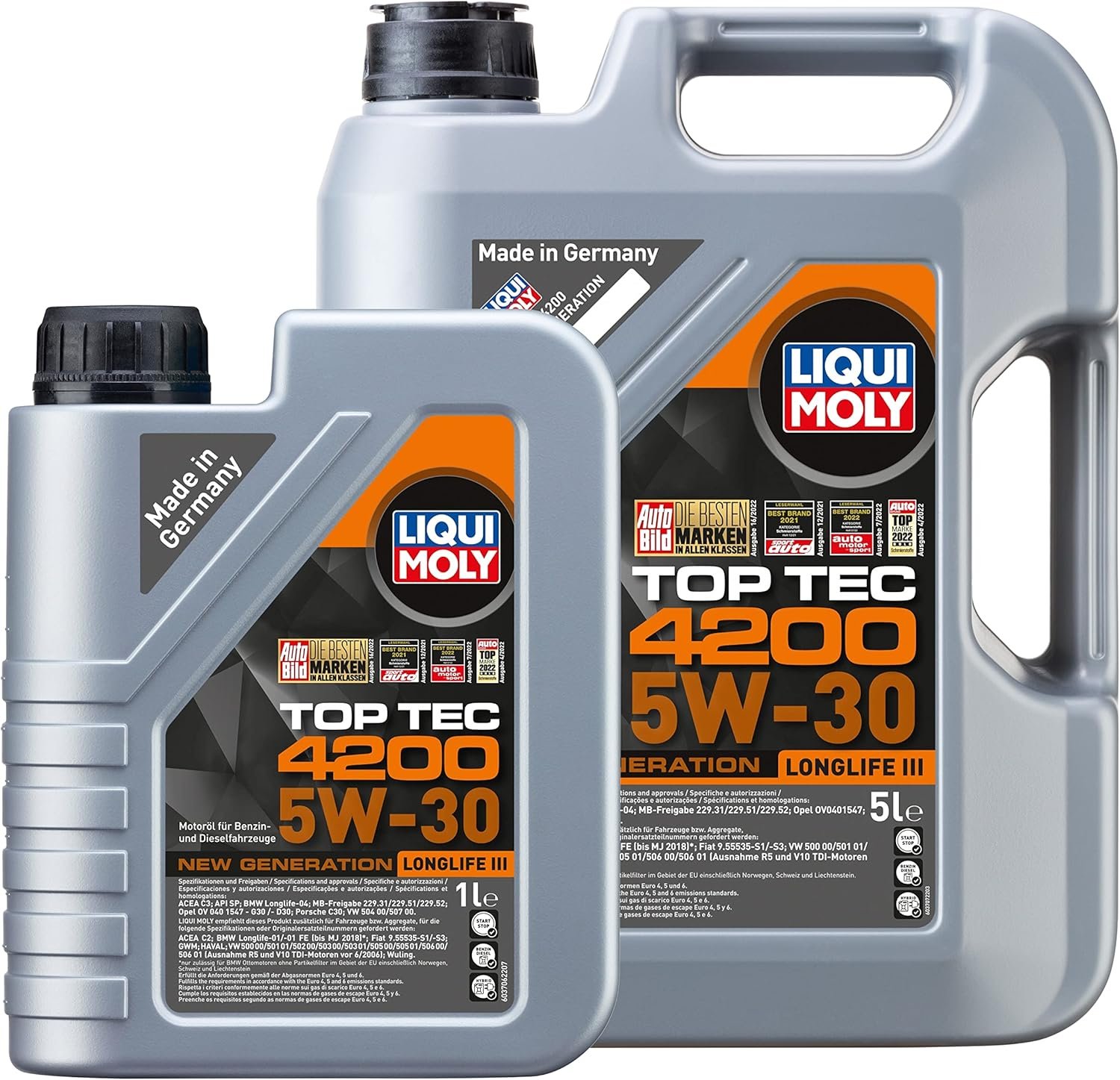
Best Value: Liqui Moly Top Tec 4200 5W-30 German-engineered with full VW 504 00 approval at the most competitive price point. Liqui Moly’s strong detergent additive package actively combats carbon and sludge deposits — particularly valuable in a direct-injection engine prone to intake valve coking. The low-volatility formulation helps minimise oil consumption, stretching the gap between top-ups in a system that only holds 4.0 liters to begin with. Outstanding value at £34–44 for 5 liters, making it the ideal choice for owners who maintain sensible 7,500–10,000 km intervals.
Oil Change Intervals
VW Official Recommendation:
- LongLife service with VW 504 00: up to 15,000 km or 2 years
- LongLife service with VW 508 00 (where approved): up to 30,000 km or 2 years
- Fixed service: 10,000 km or 1 year
Recommended Practice: 10,000 km or annually for mixed driving. 7,000–8,000 km for predominantly city use.
VW’s 15,000 km LongLife interval assumes consistent motorway driving at moderate speeds and temperatures — conditions that bear little resemblance to how most Polos are actually driven in the UK. A Polo is typically a city car: short trips, school runs, cold starts, and stop-and-go traffic. Each cold start introduces fuel dilution into the oil, and short journeys mean the engine rarely reaches full operating temperature long enough to boil off that contamination. In a 4.0-liter sump, these contaminants concentrate faster than in larger engines.
Shortening your interval to 7,000–8,000 km if you drive primarily in town is not overcautious — it is a practical response to the conditions the oil actually endures. The difference in annual cost is roughly one extra oil service every two years (£50–70), an amount that becomes trivial when measured against a turbo replacement at £900–1,300 or timing belt damage at £1,500–2,500.
Why Correct Oil Matters for the Polo 6 1.0 TSI
Timing Belt in Oil Bath: This is the single most important reason to use only VW-approved oil in the Polo 6. The evo’s belt runs submerged in engine oil throughout its life. Non-approved oils can contain additives or base stock compounds that attack the belt’s elastomer material, causing it to swell, lose flexibility, or shed teeth. A belt failure on this interference engine bends valves and can crack pistons — a repair that frequently exceeds the value of an older Polo. VW 504 00 and 508 00 oils are specifically tested for belt material compatibility.
Turbocharger Protection: The turbo’s journal bearings spin at over 200,000 RPM and depend entirely on oil for lubrication and cooling. When you switch off the engine after driving, residual exhaust heat soaks into the turbo housing and can “cook” stagnant oil in the bearing channels, forming hard carbon deposits (coking). Over time, coking restricts oil flow and causes bearing failure. VW 504 00 oils pass turbo coking resistance tests that generic ACEA C3 oils do not. Turbo replacement on the Polo 6 costs £900–1,300 including labour.
Direct Injection Carbon Management: While the evo’s supplementary port injection system (where fitted) meaningfully reduces intake valve carbon buildup compared to pure DI engines, crankcase vapours recycled through the PCV system still contribute to deposits. High-quality VW-approved oils with strong detergent packages produce fewer volatile compounds, slowing this buildup. Engines without port injection supplement are more susceptible and benefit particularly from regular oil changes with quality lubricant.
Common Problems and Oil-Related Considerations
Plastic Water Pump Housing Warpage: The Polo 6 1.0 TSI uses a water pump with a plastic housing that can warp or crack under thermal cycling, leading to coolant leaks. While not directly caused by oil quality, overheating from a coolant leak rapidly degrades oil — if you notice any coolant loss, address it immediately and consider an early oil change to flush any thermally damaged lubricant. Replacement water pump costs £200–400 including labour.
Turbo Wear in City Driving: Owners who drive predominantly in urban traffic report turbocharger wear symptoms — increased oil consumption, slight whistling, or reduced boost — appearing around 80,000 km. City driving subjects the turbo to frequent heat cycles (accelerating, braking, idling) without the sustained airflow of motorway speeds to cool it effectively. Shortened oil change intervals of 7,000–8,000 km and allowing the engine to idle for 30 seconds after hard driving before switching off are the best preventive measures.
Oil Consumption Monitoring: Some 1.0 TSI units develop measurable oil consumption beyond 60,000 km. The three-cylinder layout means each piston fires more frequently per crankshaft revolution than in a four-cylinder of the same output, increasing thermal stress on piston rings. VW considers up to 0.5L per 1,000 km acceptable, though most healthy engines use less than 0.25L per 10,000 km. Check your dipstick every 2,000–3,000 km and top up with the same specification oil currently in the engine. Never mix VW 504 00 and VW 508 00 oils.
Not to Be Confused with the Polo 5 1.2 TSI: The earlier Polo 5 used the EA111 1.2 TSI with a conventional timing chain — an engine with well-documented chain tensioner failures. The Polo 6’s EA211 evo is a fundamentally different and more refined design. The timing belt-in-oil system eliminates chain stretch and tensioner issues entirely, provided you use VW-approved oil. If you are coming from a Polo 5, the maintenance philosophy is similar (VW 504 00, regular changes), but the specific failure modes differ.
Conclusion
The Volkswagen Polo 6 (AW) 1.0 TSI requires VW 504 00 approved SAE 5W-30 engine oil as its primary specification, with a total capacity of 4.0 liters including the filter. VW 508 00 approved SAE 0W-20 is accepted on confirmed-compatible variants — check your service documentation before switching. For most UK owners, VW 504 00 at 5W-30 provides the strongest all-round protection.
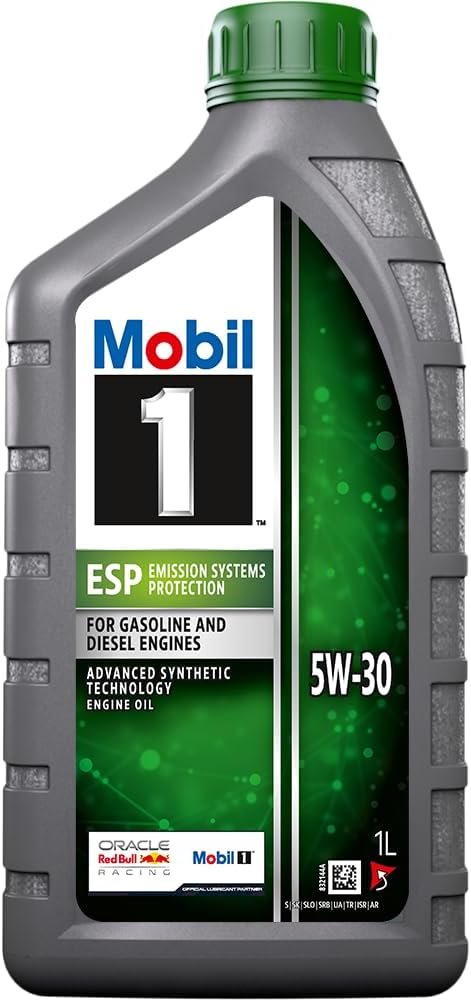
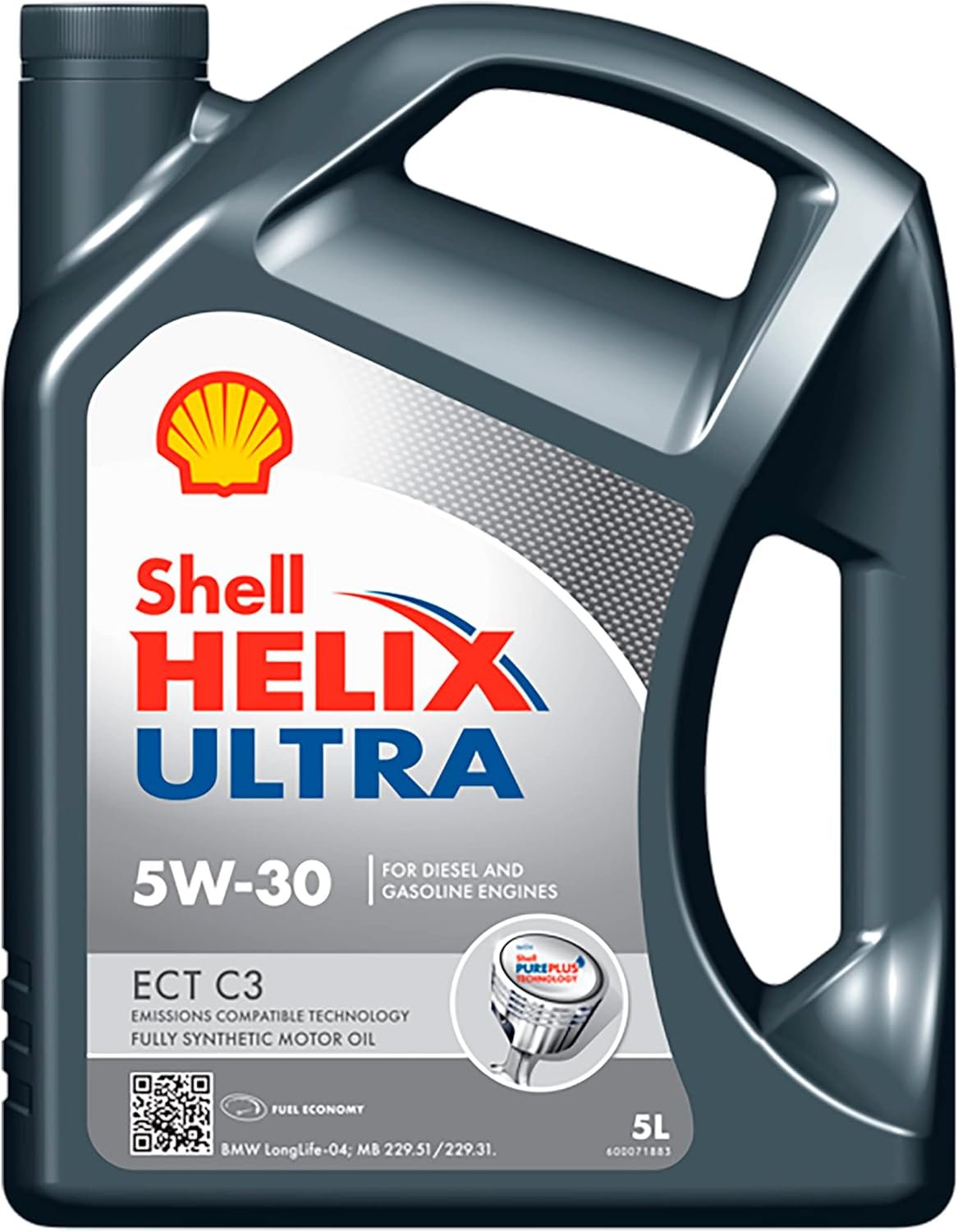
Choose from proven products: Castrol EDGE Professional LL 03, Mobil 1 ESP, Shell Helix Ultra ECT C3, or Liqui Moly Top Tec 4200. Always verify the VW 504 00 approval number printed on the bottle. Shorten your oil change interval to 7,000–8,000 km if you drive primarily in town rather than stretching to VW’s 15,000 km LongLife maximum — the £35–50 annual cost of quality oil is the cheapest insurance against turbo failure, timing belt degradation, and premature engine wear. With correct maintenance, the EA211 evo 1.0 TSI is a genuinely reliable engine capable of 200,000–300,000 km of efficient, trouble-free service.
Our Top Picks
As an Amazon Associate, we may earn from qualifying purchases. This doesn't affect our recommendations — we only suggest oils that hold the exact OEM approval for your engine.