 Oil-
Oil-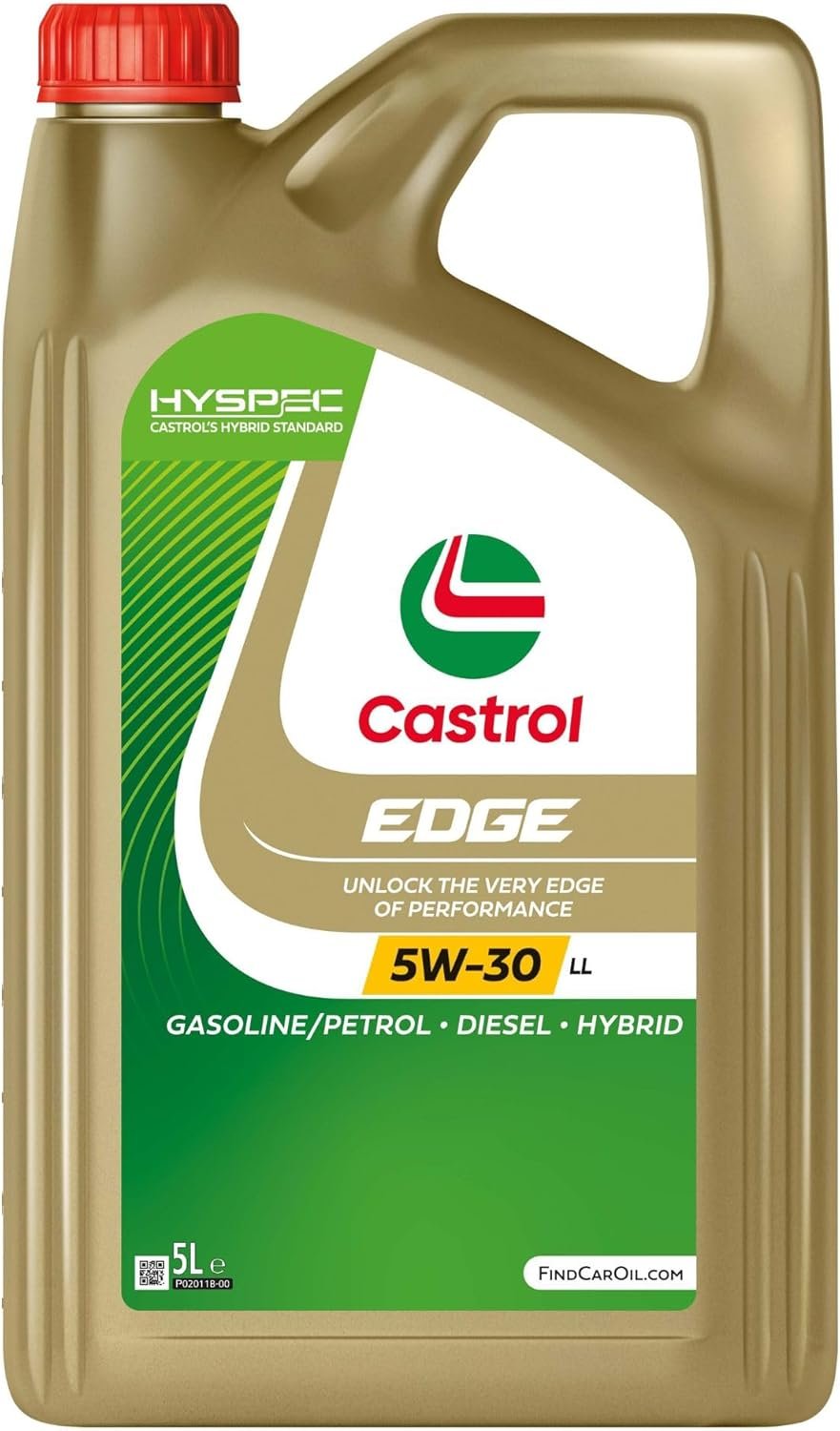
As an Amazon Associate, we may earn from qualifying purchases. This doesn't affect our recommendations — we only suggest oils that hold the exact OEM approval for your engine.
Best Engine Oil for Volkswagen Golf 8 1.0 TSI (90/110 HP)
The Volkswagen Golf 8 (CD) equipped with the 1.0 TSI engine proves that three cylinders can deliver a thoroughly convincing driving experience. Part of the EA211 evo family, this 999cc turbocharged unit produces either 90 HP (DLAA) or 110 HP (DLAC), offering a compelling blend of efficiency and adequate performance for daily driving. Despite its modest displacement, the engine features sophisticated direct injection and turbocharging technology that places specific demands on lubricant quality. Choosing the correct oil—VW 504 00 approved SAE 5W-30 or, on newer variants, VW 508 00 approved SAE 0W-20—is essential for protecting the lightweight aluminium internals, turbocharger, and timing belt-driven valvetrain. This guide explains exactly what your 1.0 TSI needs, why it matters, and which products deliver the best results.
Quick Answer: Recommended Oil
For Golf 8 1.0 TSI (90/110 HP):
- Primary specification: VW 504 00/507 00 with SAE 5W-30
- Alternative specification: VW 508 00/509 00 with SAE 0W-20 (newer variants)
- ACEA norm: C3 (for VW 504 00) or C5 (for VW 508 00)
- Oil capacity: 4.0 liters with filter (3.6 L without)
Key takeaway: VW 504 00 (5W-30) remains the primary and safest specification for most 1.0 TSI Golf 8 models. The 0W-20 alternative under VW 508 00 is accepted on certain newer production variants—check your owner’s manual or service book to confirm which spec applies to your vehicle.
The 1.0 TSI EA211 Evo Engine
The 1.0 TSI belongs to Volkswagen’s EA211 evo engine family, a ground-up evolution of the original EA211 platform. Displacing just 999cc through three cylinders, it uses an inline layout mounted transversely in the Golf 8’s engine bay. The lightweight aluminium block keeps overall mass low—critical for a front-driven hatchback—while the three-cylinder configuration inherently reduces friction losses compared to a four-cylinder of similar output.
Unlike its larger sibling, the 1.5 TSI, the 1.0 TSI does not feature Active Cylinder Technology (ACT). With only three cylinders, deactivation would create unacceptable vibration. Instead, the engine relies on its naturally compact design and efficient combustion to achieve strong fuel economy figures. A balance shaft manages the primary vibration inherent to three-cylinder layouts, keeping refinement acceptable for a Golf-class vehicle.
The valvetrain is driven by a timing belt, not a chain—an important distinction for maintenance planning. Volkswagen specifies belt replacement at 120,000 km, and the belt’s rubber compound interacts with oil mist in the engine environment. Degraded or incorrect oil accelerates belt deterioration, potentially leading to catastrophic valve contact if the belt fails prematurely.
Direct fuel injection delivers petrol at high pressure directly into the combustion chamber, improving efficiency and power density. However, this means no fuel washes across the intake valves, leaving them vulnerable to carbon buildup over time—a well-documented characteristic of all direct-injection engines. The turbocharger, a compact single-scroll unit, pressurises intake air to generate the engine’s impressive 200 Nm of torque from just 2,000 RPM in the 110 HP variant. Turbo bearings spin at speeds exceeding 200,000 RPM and depend entirely on oil for cooling and lubrication.
Understanding VW Oil Specifications
VW 504 00/507 00 (Primary — 5W-30)
VW 504 00 is the primary oil specification for the 1.0 TSI in the Golf 8. This is a long-established standard that has protected millions of VAG petrol engines since its introduction.
- SAE 5W-30: A well-balanced viscosity providing strong film strength at operating temperature while flowing adequately during cold starts
- ACEA C3: Low SAPS (Sulphated Ash, Phosphorus, Sulphur) formulation protecting the catalytic converter and particulate filter
- Proven track record: Over 15 years of field data across the entire TSI engine range
- Drain interval: Up to 15,000 km under VW LongLife service, or fixed intervals of 10,000 km
For the 1.0 TSI specifically, 5W-30 provides a comfortable safety margin. The engine’s smaller oil capacity of just 4.0 liters means each liter works harder than in a larger engine—the robust additive package in VW 504 00 oils handles this additional stress effectively.
Best for: Most Golf 8 1.0 TSI owners, especially those with vehicles registered before 2022, drivers in warm climates, and anyone maintaining fixed 10,000 km service intervals.
VW 508 00/509 00 (Alternative — 0W-20)
On newer production variants of the 1.0 TSI, Volkswagen has approved VW 508 00 as an alternative specification. This ultra-low-viscosity oil maximises fuel economy by reducing internal friction.
- SAE 0W-20: Extremely thin oil, roughly 30% less viscous at operating temperature than 5W-30
- ACEA C5: Ultra-low SAPS for maximum emissions system protection
- Fuel economy benefit: Approximately 0.2–0.3 L/100 km improvement in real-world driving
- Extended drain potential: Up to 30,000 km under ideal conditions
However, not all 1.0 TSI variants accept VW 508 00. The engine’s service documentation and oil filler cap sticker indicate which specification applies. If your vehicle was originally filled with 5W-30 at the factory, stick with VW 504 00 unless Volkswagen explicitly confirms 508 00 compatibility for your engine code and production date.
Best for: Confirmed-compatible vehicles, primarily city driving, cold climates where 0W pour point benefits cold starts.
Critical Rule: Never Mix Specifications
VW 504 00 and VW 508 00 oils use fundamentally different base stocks and additive chemistries. Mixing them creates unpredictable interactions that can damage seals, reduce protection, and void warranty coverage. When switching specifications, always perform a complete drain including filter replacement.
Technical Specifications: 1.0 TSI (DLAA / DLAC)
| Specification | Value |
|---|---|
| Displacement | 999cc (1.0 liter) |
| Layout | Inline-3, transverse, aluminium block |
| Valvetrain | DOHC, 12 valves, timing belt |
| Bore x Stroke | 74.5mm x 76.4mm |
| Compression Ratio | 11.5:1 |
| Power | 90 HP (DLAA) / 110 HP (DLAC) @ 5,000–5,500 RPM |
| Torque | 175 Nm (DLAA) / 200 Nm (DLAC) @ 2,000–3,500 RPM |
| Fuel Type | Petrol, 95 RON minimum |
| Recommended Viscosity | SAE 5W-30 (VW 504 00) or 0W-20 (VW 508 00) |
| Oil Capacity (without filter) | 3.6 liters |
| Oil Capacity (with filter) | 4.0 liters |
| ACEA Norm | C3 (504 00) or C5 (508 00) |
| VW Norm | VW 504 00 / 507 00 OR VW 508 00 / 509 00 |
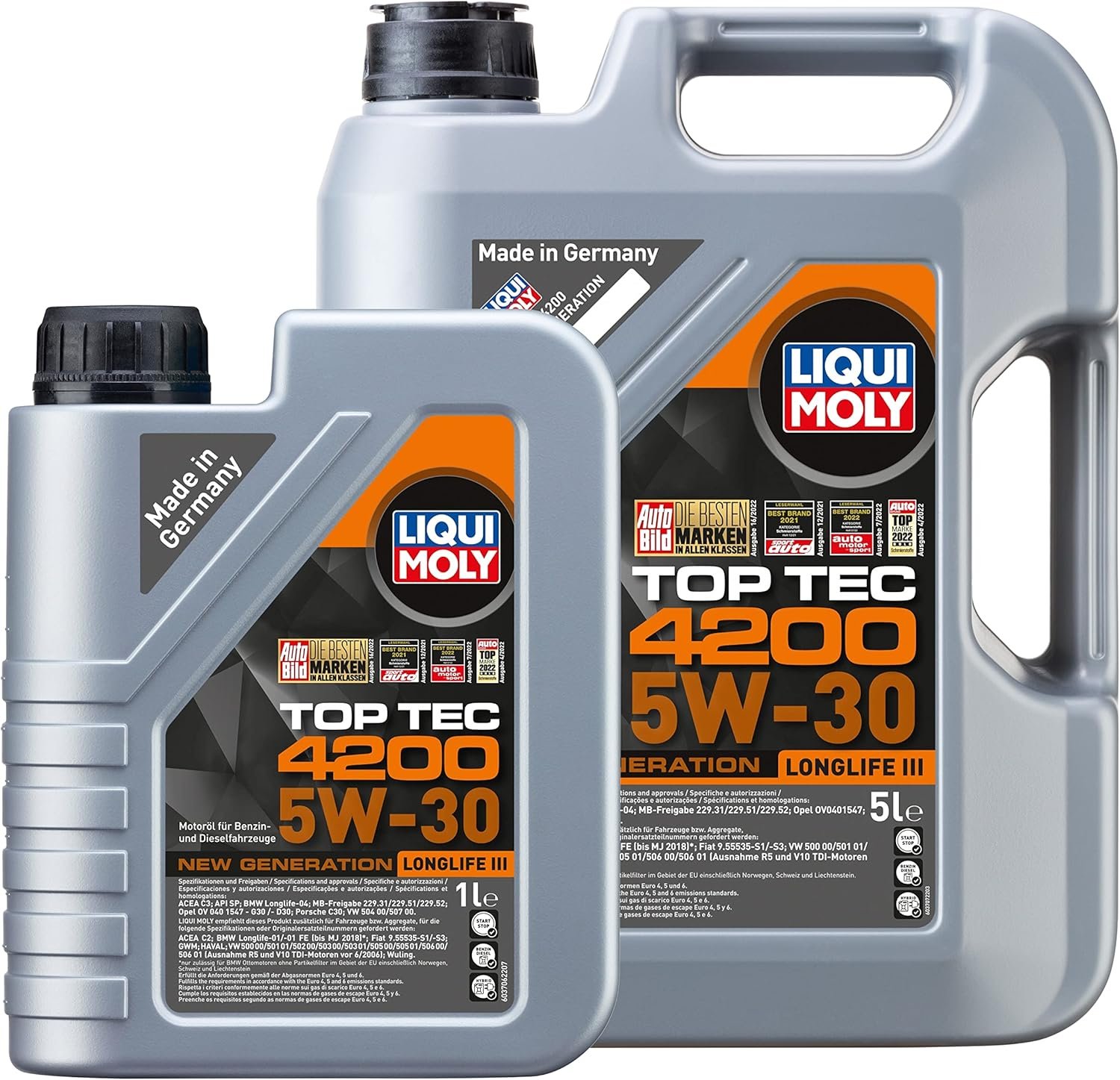
Best Value: Liqui Moly Top Tec 4200 5W-30 German-engineered and fully approved to VW 504 00, Liqui Moly offers exceptional quality at a competitive price point. The Top Tec 4200 formula features strong detergent additives that actively combat the carbon buildup common to direct-injection engines like the 1.0 TSI. Its low-volatility formulation also helps minimise oil consumption—a genuine benefit in an engine with only 4.0 liters of total capacity. Priced at £32–42 for 5 liters, this is the best balance of quality and affordability.
Oil Change Intervals
VW Official Recommendation:
- LongLife service with VW 504 00: up to 15,000 km or 2 years
- LongLife service with VW 508 00 (where approved): up to 30,000 km or 2 years
- Fixed service: 10,000 km or 1 year
Recommended Practice: 10,000 km or annually, whichever comes first.
The 1.0 TSI’s relatively small oil capacity of 4.0 liters is an important consideration. Less oil means each liter absorbs more combustion byproducts, fuel dilution, and thermal stress than in a larger engine. Where a 2.0 TSI with 5.7 liters of oil might comfortably tolerate 15,000 km intervals, the 1.0 TSI’s oil is working proportionally harder. This makes conservative intervals genuinely worthwhile rather than merely cautious.
Consider 7,500 km intervals if:
- Primarily short trips under 10 km (cold-start fuel dilution concentrates faster in a small sump)
- Heavy urban stop-and-go traffic with frequent turbo heat cycles
- Vehicle exceeds 80,000 km and oil consumption has increased
- Operating in dusty or extreme temperature conditions
- Oil appears dark and thin well before the scheduled service
Why Correct Oil Matters
Turbocharger Survival: The 1.0 TSI’s turbocharger operates under extreme conditions—exhaust gas temperatures exceeding 800 degrees C spin the turbine at up to 230,000 RPM. The turbo’s journal bearings are cooled and lubricated exclusively by engine oil. In a 4.0-liter system, oil circulates through the turbo more frequently than in larger engines, meaning any degradation in oil quality is felt immediately. Using non-approved oil or exceeding drain intervals is the single most common cause of premature turbo failure, which costs £900–1,400 to replace.
Direct Injection Carbon Management: Without fuel washing over the intake valves, carbon deposits accumulate gradually and restrict airflow. While oil cannot prevent this entirely, high-quality VW-approved oils with strong detergent packages minimise the contribution of crankcase vapours (recycled through the PCV system) to valve deposits. Poor-quality oil produces more volatile compounds that accelerate buildup, eventually causing rough idle, misfires, and power loss.
Aluminium Block Protection: The 1.0 TSI’s lightweight aluminium block requires oil with appropriate anti-corrosion additives. VW 504 00 and 508 00 specifications include carefully balanced corrosion inhibitors designed for aluminium-silicon alloy surfaces. Generic oils, even if they claim the correct viscosity, may lack these specific additives.
Fuel Economy Preservation: In a small, efficiency-focused engine, oil viscosity has a measurable impact on fuel consumption. Using the correct grade—whether 5W-30 or 0W-20—ensures the engine operates within its designed friction parameters. An incorrect viscosity of just one grade heavier can increase fuel consumption by 1–2%, which adds up significantly over thousands of kilometres.
Common 1.0 TSI Problems Related to Oil
Oil Consumption: Some 1.0 TSI units develop measurable oil consumption as they accumulate mileage, particularly beyond 60,000 km. The three-cylinder layout means each piston fires more frequently per crankshaft revolution than in a four-cylinder, increasing thermal and mechanical stress on piston rings. VW considers up to 0.5L per 1,000 km “acceptable,” but consumption beyond 0.25L per 1,000 km warrants investigation. Monitor your dipstick every 2,000 km and top up only with the same specification oil currently in the engine. Switching to a high-quality VW 504 00 oil with low volatility (NOACK value) can reduce consumption in borderline cases.
Intake Valve Carbon Buildup: This is the most common long-term issue with the 1.0 TSI’s direct-injection system. Symptoms appear gradually—slight roughness at idle, minor hesitation during acceleration, and marginally increased fuel consumption. By 80,000–100,000 km, deposits can become significant enough to cause misfires. While walnut blasting is the definitive remedy (£250–400), maintaining clean oil reduces the volume of oil vapour contaminants passing through the intake. An oil with strong detergent properties, such as Liqui Moly Top Tec 4200, helps limit the oil’s contribution to this process.
Timing Belt Contamination: Unlike chain-driven engines where oil quality directly affects chain stretch, the 1.0 TSI’s timing belt sits in a nominally dry environment. However, oil leaks from the crankshaft front seal or camshaft seals can contaminate the belt, causing it to swell and lose tooth engagement. Maintaining correct oil levels—neither overfilled nor underfilled—and using VW-approved oil that is compatible with the engine’s seal materials prevents the seal degradation that leads to these leaks. Overfilling is particularly risky in a 4.0-liter system where the margin for error is small.
Turbo Oil Coking: When the engine is shut off after hard driving, residual heat in the turbo housing can “cook” stagnant oil in the bearing channels, forming hard carbon deposits (coking). Over time, this restricts oil flow to the turbo bearings and causes premature failure. The 1.0 TSI lacks an auxiliary electric oil pump (found on some larger VAG engines), making it more susceptible. Using thermally stable VW-approved oil and allowing the engine to idle briefly after spirited driving before switching off reduces this risk significantly.
Conclusion
The Volkswagen Golf 8 1.0 TSI requires VW 504 00 approved SAE 5W-30 engine oil as its primary specification, with a total capacity of 4.0 liters including the filter. On confirmed-compatible newer variants, VW 508 00 approved SAE 0W-20 is an accepted alternative. For most owners, sticking with 5W-30 at 10,000 km intervals provides the strongest protection for this compact, hard-working three-cylinder engine.
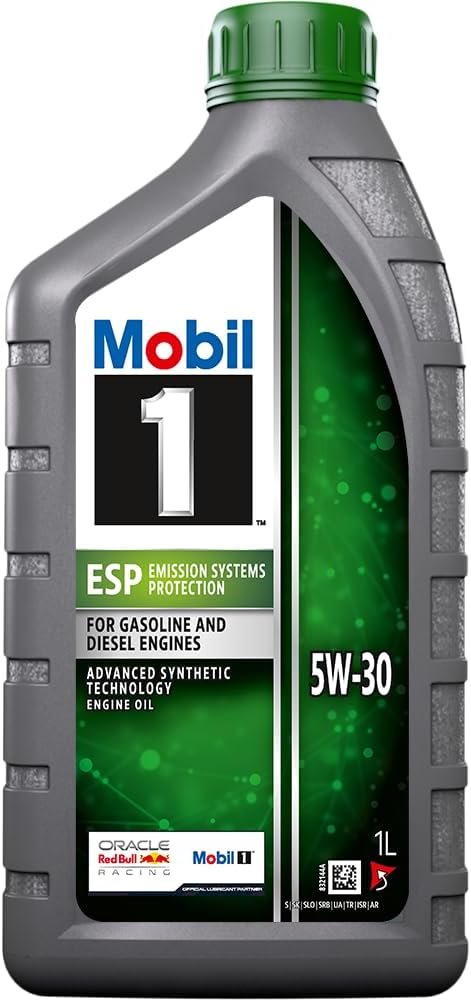
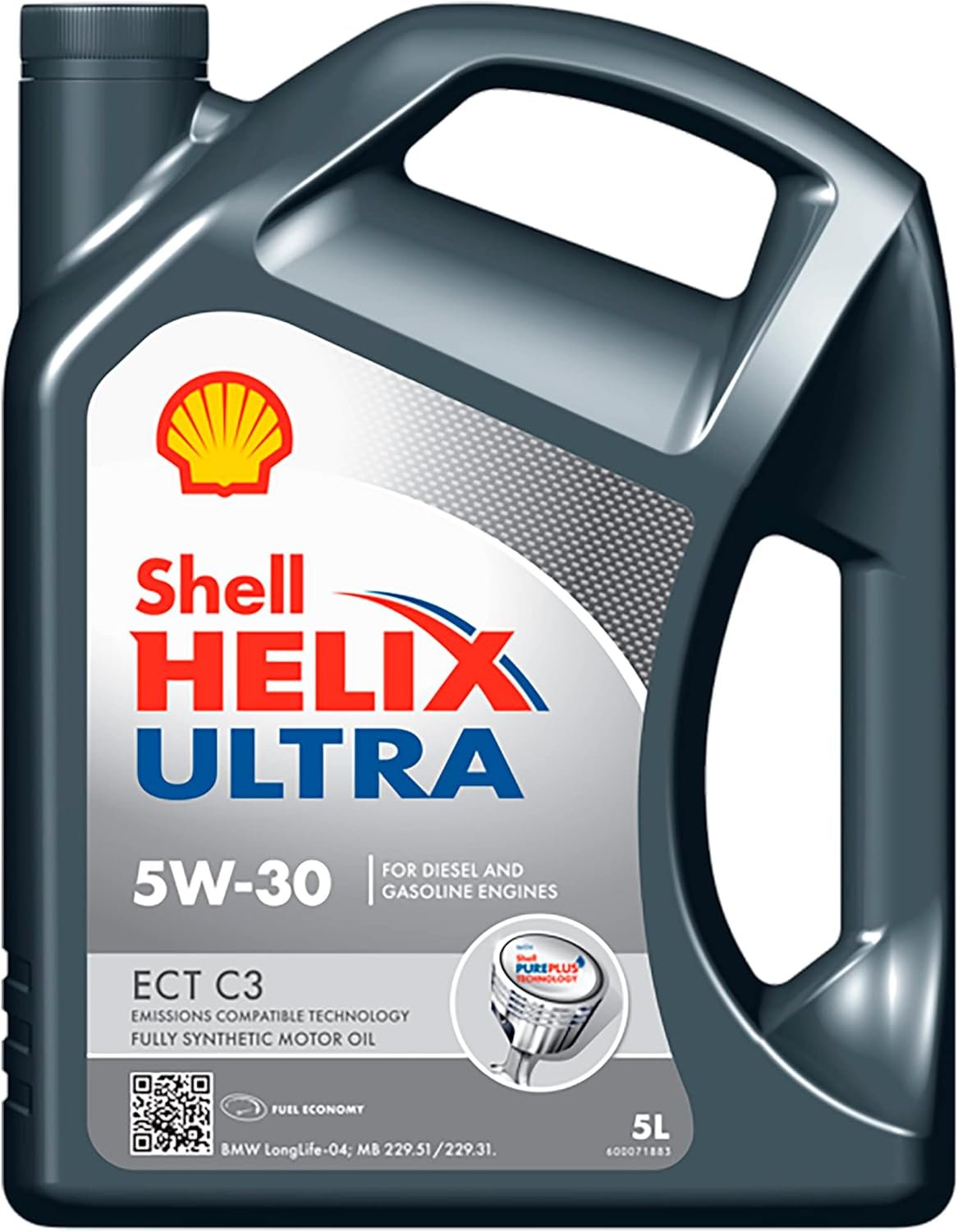
The 1.0 TSI’s small oil volume makes quality and regularity of changes more important than in larger engines—there is simply less lubricant to absorb contamination and thermal stress. Choose from proven brands such as Castrol EDGE Professional LL 03, Mobil 1 ESP, Liqui Moly Top Tec 4200, or Shell Helix Ultra ECT C3, and always verify the VW 504 00 or VW 508 00 approval number printed on the bottle. The £35–50 annual investment in correct oil protects against turbo failure (£900–1,400), manages carbon buildup, and ensures this efficient little engine delivers reliable, economical service well beyond 200,000 km.
Our Top Picks
As an Amazon Associate, we may earn from qualifying purchases. This doesn't affect our recommendations — we only suggest oils that hold the exact OEM approval for your engine.