 Oil-
Oil-
As an Amazon Associate, we may earn from qualifying purchases. This doesn't affect our recommendations — we only suggest oils that hold the exact OEM approval for your engine.
Best Engine Oil for Subaru Outback 6th Gen 2.5 Boxer (182 HP) — FB25
The sixth-generation Subaru Outback (BT, 2020+) with the 2.5-liter FB25 horizontally opposed engine is the backbone of Subaru’s US lineup. Producing 182 horsepower and 176 lb-ft of torque through a Lineartronic CVT and standard symmetrical all-wheel drive, it is a vehicle built for longevity. The FB25 has matured into one of Subaru’s most reliable powerplants, having shed the head gasket failures that plagued its EJ-series predecessor and resolved the oil consumption issues that affected early 2011-2012 production units. With proper oil selection and reasonable maintenance intervals, 200,000 miles and beyond is a realistic expectation. This guide covers the correct oil specification, capacity, recommended products, and the engineering details every Outback owner should understand.
Quick Answer: Recommended Oil
For Subaru Outback 6th Gen 2.5 Boxer (182 HP, FB25D):
- Specification: API SP / ILSAC GF-6A
- Viscosity: SAE 0W-20
- Oil capacity: 5.5 quarts with filter (5.1 quarts without)
Key point: Subaru specifies SAE 0W-20 meeting API SP or ILSAC GF-6A as the only approved viscosity for the FB25 in the sixth-generation Outback. The engine’s bearing clearances, oil pump output, and hydraulic valve lash adjusters are calibrated for this viscosity. Do not use 5W-20 or 5W-30 — the FB25’s horizontally opposed layout already faces unique oil distribution challenges, and thicker oil increases cold-start wear while reducing fuel economy without meaningful benefit.
The FB25 Engine
The FB25 is a 2,498cc naturally aspirated horizontally opposed (boxer) four-cylinder with an aluminum block and heads. In its current D-suffix iteration found in the sixth-generation Outback, it produces 182 horsepower at 5,800 RPM and 176 lb-ft of torque at 4,400 RPM. The boxer layout positions cylinders flat on opposing sides of the crankshaft, creating a low center of gravity that benefits handling and stability — a core element of the Subaru driving experience.
The FB25 replaced the long-running EJ25 series and addressed its most notorious weakness. The EJ25 suffered chronic external head gasket failures caused by a combination of composite gasket material, open-deck block design, and the thermal cycling unique to boxer engines where heads sit at the lowest points of the cooling system. The FB25 uses multi-layer steel (MLS) head gaskets, a semi-closed deck block for improved rigidity, and critically, no coolant passages through the head gasket itself. This design change eliminated the external head gasket leak that defined EJ25 ownership. The FB25 is not the EJ25, and owners should not carry over the anxiety associated with the older engine.
The valvetrain uses dual overhead camshafts with Subaru’s Active Valve Control System (AVCS) on both intake and exhaust sides, driven by a timing chain. Direct injection was not adopted for this engine — the FB25D uses conventional multi-point port injection, which keeps intake valves clean and eliminates the carbon buildup concerns found in direct-injection competitors.
Understanding the Oil Specification
Subaru requires API SP or ILSAC GF-6A certification for the FB25. API SP, introduced in 2020, includes enhanced protection against low-speed pre-ignition (LSPI), improved deposit control, and stronger oxidation resistance compared to its predecessor API SN Plus. While LSPI is primarily a concern for turbocharged engines, the improved additive chemistry in API SP oils benefits the FB25 through better piston cleanliness and ring groove deposit prevention.
ILSAC GF-6A accompanies API SP and adds fuel economy requirements that align with the FB25’s design intent. When purchasing oil, verify both the API SP donut mark and the ILSAC GF-6A starburst symbol on the container. Oils carrying the older API SN or SN Plus ratings lack the reformulated additive packages found in SP-rated products and should be avoided.
Subaru does not maintain proprietary OEM oil specifications like Volkswagen (VW 504 00) or BMW (LL-01). Instead, Subaru relies entirely on the API/ILSAC certification system. This simplifies oil selection considerably — any full synthetic 0W-20 displaying the API SP donut is compliant, regardless of brand.
Technical Specifications: FB25D
| Specification | Value |
|---|---|
| Displacement | 2,498cc (2.5 liters) |
| Layout | Horizontally opposed 4-cylinder (boxer), aluminum block and heads |
| Valvetrain | DOHC, 16 valves, timing chain, dual AVCS (intake and exhaust) |
| Injection | Multi-point port fuel injection |
| Bore x Stroke | 94.0mm x 90.0mm |
| Compression Ratio | 12.0:1 |
| Power | 182 HP @ 5,800 RPM |
| Torque | 176 lb-ft @ 4,400 RPM |
| Fuel Type | Regular unleaded (87 octane minimum) |
| Recommended Viscosity | SAE 0W-20 |
| Oil Capacity (without filter) | 5.1 quarts (4.8 liters) |
| Oil Capacity (with filter) | 5.5 quarts (5.2 liters) |
| Oil Specification | API SP / ILSAC GF-6A |
| Transmission | Lineartronic CVT |
| Timing | Chain (lifetime, no scheduled replacement) |
Best Value: Valvoline Advanced Full Synthetic 0W-20 Valvoline’s full synthetic 0W-20 meets API SP and ILSAC GF-6A with a well-balanced additive package at a lower price point. Widely available at Walmart, AutoZone, O’Reilly, and Amazon for $23-27 for 5 quarts. A practical choice that sacrifices nothing in specification compliance.
Oil Change Intervals
Subaru Official Recommendation:
- Standard service: 6,000 miles or 6 months
- Severe conditions: 3,000 miles or 3 months
Recommended Practice: 5,000 to 6,000 miles or every 6 months, whichever comes first.
Subaru’s 6,000-mile standard interval is already more conservative than many competitors, reflecting the unique demands of the boxer layout. The horizontally opposed cylinders mean oil must lubricate surfaces where gravity pulls it away from the upper cylinder walls during every power stroke. This places greater demands on oil film retention and additive longevity compared to inline or V-configuration engines.
Severe conditions include frequent short trips under 10 miles, sustained highway driving in temperatures above 95 degrees F, towing, dusty roads, and extended idling. Many US owners encounter at least one of these conditions routinely. When in doubt, follow the 5,000-mile interval — the cost difference between a 5,000-mile and 6,000-mile change cycle over the life of the vehicle is negligible, but the additional protection is real.
Why Correct Oil Matters
The FB25’s boxer configuration creates oil distribution challenges that inline engines do not face. With cylinders lying flat, oil pools at the bottom of each cylinder bore when the engine is off. During cold starts, the oil pump must overcome gravity to establish film on the upper cylinder walls and in the overhead camshaft journals before metal-to-metal contact causes wear. A 0W-20 viscosity reaches these critical surfaces faster than heavier grades because it flows more readily at cold temperatures.
The dual AVCS system on both intake and exhaust camshafts relies on oil pressure to actuate variable valve timing. Degraded or incorrect-viscosity oil produces sluggish AVCS response, causing rough idle, reduced fuel economy, and potential diagnostic trouble codes. The hydraulic valve lash adjusters similarly depend on clean oil at the correct viscosity — contaminated or thickened oil causes the characteristic cold-start ticking noise that some Subaru owners mistake for a mechanical problem.
Common FB25 Problems Related to Oil
Early Production Oil Consumption (2011-2012)
The original FB25 engines produced for the 2011-2012 Forester, Outback, and Legacy used low-tension piston rings that allowed excessive oil consumption in some units. Affected engines could consume a quart every 1,000 to 1,500 miles. Subaru acknowledged the issue and revised the piston ring design by the 2013 model year, installing higher-tension rings that dramatically reduced consumption. The sixth-generation Outback (2020+) uses the latest FB25D revision and does not exhibit this problem under normal conditions. Consumption of half a quart over 5,000 miles is within acceptable parameters.
Valve Spring Recall (TSB)
Certain FB25 production runs were subject to a valve spring recall where springs with incorrect heat treatment could fracture, causing misfires, rough running, and potential engine damage. This was addressed through a dealer recall campaign. Verify through your VIN that any applicable recalls have been completed.
AVCS Solenoid Issues
The oil control valve solenoids that actuate the AVCS system can develop sticking or electrical issues over time, typically presenting as a check engine light with VVT-related codes. In many cases, the root cause is oil sludge or varnish buildup restricting the solenoid’s internal passages. Maintaining proper oil change intervals with quality 0W-20 prevents the contamination that leads to solenoid sticking.
CVT Reliability
While not directly oil-related, the Lineartronic CVT paired with the FB25 in the Outback deserves mention because it is one of the more reliable continuously variable transmissions on the market. Subaru’s chain-driven CVT has proven significantly more durable than belt-type competitors, with many units exceeding 200,000 miles on original hardware when serviced with Subaru CVT fluid at 60,000-mile intervals. The CVT’s smooth torque delivery also reduces shock loading on the engine’s crankshaft bearings compared to traditional automatic transmissions.
Conclusion
The Subaru Outback 6th Gen 2.5 Boxer (FB25D) requires 5.5 quarts of API SP / ILSAC GF-6A compliant SAE 0W-20 full synthetic engine oil at every service. The FB25 has evolved into a mature and dependable engine that has resolved the head gasket failures of the EJ25 era and the oil consumption issues of early production.
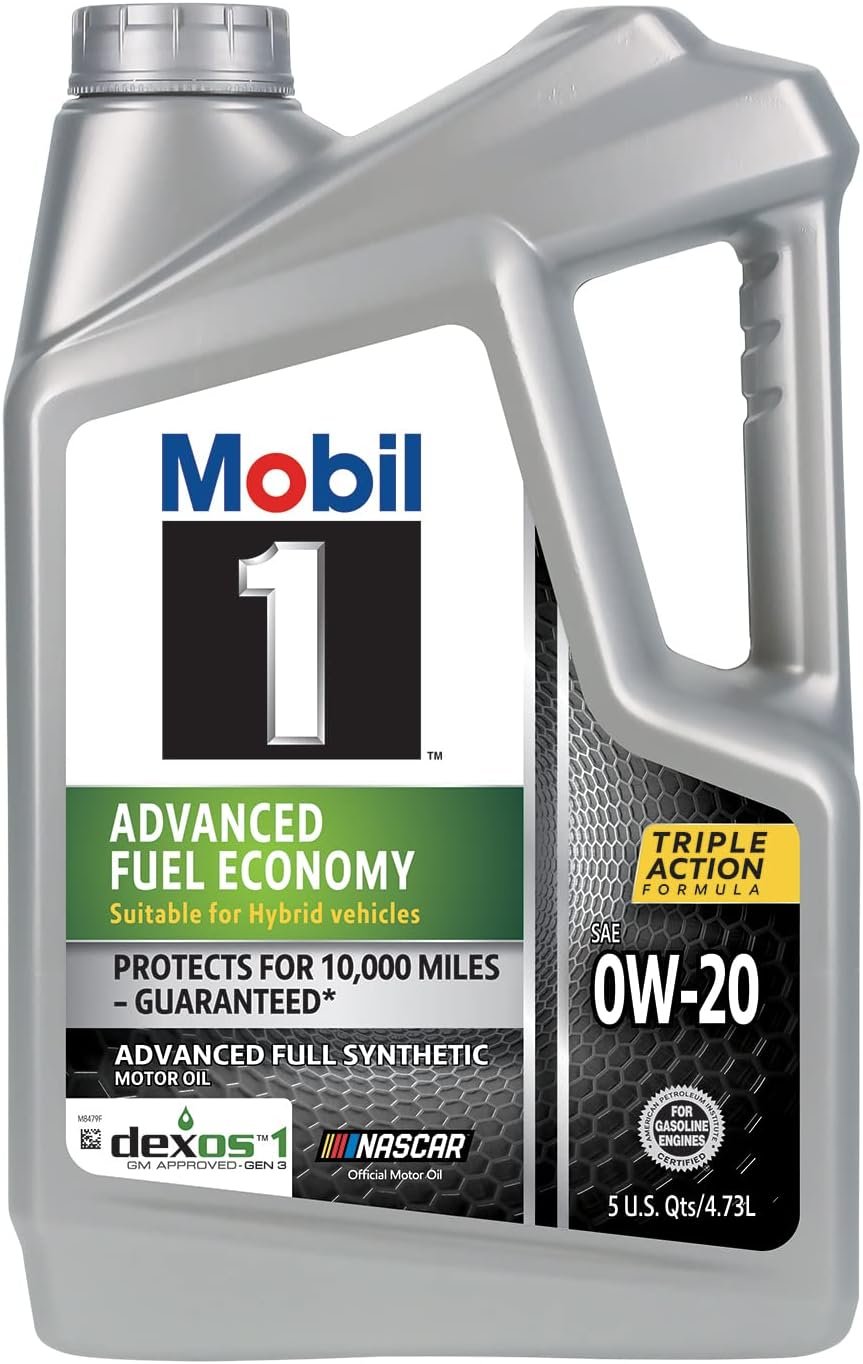
Choose from Subaru Genuine 0W-20, Mobil 1 Advanced Fuel Economy, Pennzoil Platinum, or Valvoline Advanced Full Synthetic — all in 0W-20 and all meeting API SP. Change the oil every 5,000 to 6,000 miles, check your dipstick between services, and verify that any outstanding recalls have been addressed. The FB25 paired with Subaru’s symmetrical AWD and Lineartronic CVT is a drivetrain built for the long haul. Respect the specification, maintain sensible intervals, and this engine will deliver reliable service well past 200,000 miles.
Our Top Picks
As an Amazon Associate, we may earn from qualifying purchases. This doesn't affect our recommendations — we only suggest oils that hold the exact OEM approval for your engine.