 Oil-
Oil-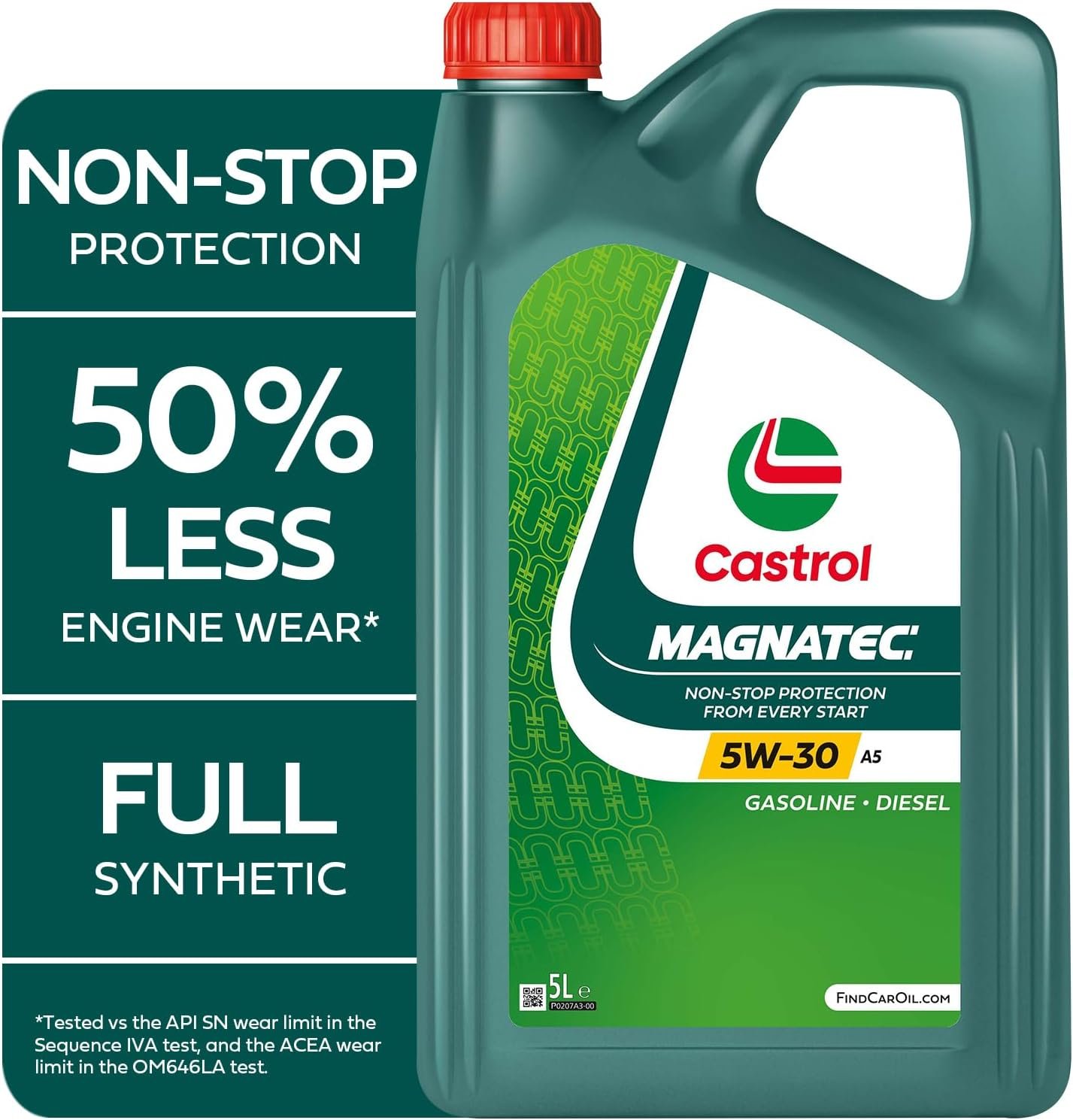
As an Amazon Associate, we may earn from qualifying purchases. This doesn't affect our recommendations — we only suggest oils that hold the exact OEM approval for your engine.
Best Engine Oil for Peugeot 107 1.0 (68 HP)
The Peugeot 107 carved out a loyal following among British drivers looking for honest, affordable urban transport. Produced between 2005 and 2014, this tiny hatchback offered Peugeot’s characteristic styling flair on a platform developed jointly with Toyota and Citroen. Under the bonnet sits the Toyota-designed 1KR-FE three-cylinder engine, a unit praised for its reliability but one that places specific demands on lubricant quality. With an oil capacity of just 3.1 litres including the filter, every millilitre matters — degraded or incorrect oil has an outsized effect on engine health compared to larger-displacement power units. This guide walks through the correct oil specification, viscosity choices, and practical ownership considerations specific to the Peugeot 107.
Quick Answer: Recommended Oil
For Peugeot 107 1.0 (68 HP):
- Primary viscosity: SAE 5W-30 (PSA B71 2296)
- Alternative viscosity: SAE 0W-20 (Toyota/Aygo spec, also accepted)
- ACEA norm: A5/B5
- Oil capacity: 3.1 litres with filter (2.8 L without)
Key decision: 5W-30 meeting PSA B71 2296 (ACEA A5/B5) is the Peugeot-side specification for this engine in the UK and European market. 0W-20 is the Toyota specification for the same 1KR-FE unit in the Aygo — it is technically accepted but not the PSA primary recommendation.
The 1KR-FE Three-Cylinder Engine
The 1KR-FE is a 998cc aluminium three-cylinder unit producing 68 horsepower at 6,000 RPM and 93 Nm of torque at 3,600 RPM. Toyota engineered this powerplant for maximum efficiency and minimal weight, and all Peugeot 107s rolled off the production line at Toyota’s Kolin plant in the Czech Republic alongside their Citroen C1 and Toyota Aygo siblings. Despite the shared mechanicals, the Peugeot ownership experience differs in several meaningful ways — from dealer network and parts pricing to the specific maintenance culture that develops around a French-branded vehicle.
The engine features a timing chain with a hydraulic tensioner rather than a cambelt. This eliminates a major scheduled maintenance cost, though the chain tensioner relies on consistent oil pressure to function correctly. Low oil level or heavily degraded oil can allow chain slack, producing a characteristic rattle on cold starts that many 107 owners report. The cure is straightforward: maintain the correct oil level and change it regularly.
A known weak point across all vehicles using this engine is the plastic water pump housing, which becomes brittle over time and can crack without warning. While not an oil-related failure, a sudden coolant loss event that causes overheating will rapidly destroy oil film integrity in such a small-capacity engine. Keeping an eye on coolant condition is a sensible companion habit to regular oil maintenance.
Understanding the Viscosity Choice: 5W-30 vs 0W-20
The 1KR-FE is a shared Toyota/PSA engine, and both manufacturers specify it slightly differently. Peugeot’s specification for the UK and European market is 5W-30 meeting PSA B71 2296 (ACEA A5/B5). Toyota’s specification for the identical engine in the Aygo is 0W-20 API SN. Both viscosities are compatible with the engine, but they reflect different manufacturer priorities.
For the vast majority of Peugeot 107 owners in the UK, 5W-30 ACEA A5/B5 is the correct choice. It is what the PSA/Peugeot handbook specifies, what independent garages stock, and what delivers appropriate film strength across the British temperature range. ACEA A5/B5 oils are fuel-efficient formulations with low HTHS viscosity — they provide the economy benefits of a thin oil while maintaining adequate film thickness under load.
The 1KR-FE does have a documented tendency toward oil consumption as mileage accumulates beyond 60,000 miles. With only 3.1 litres of total capacity, losing even 500ml between services represents a significant proportion of the engine’s oil volume. A quality 5W-30 A5/B5 oil is the correct response to this — it is not a compromise, it is the manufacturer’s specification.
If you choose to use 0W-20 (following Toyota’s Aygo specification), ensure it meets at minimum ACEA A1/B1 or A5/B5. The 107 does not have a diesel particulate filter, so a C-spec (C2, C3) oil is not required.
Technical Specifications: 1KR-FE
| Specification | Value |
|---|---|
| Displacement | 998cc (1.0 litre) |
| Layout | Inline-3, aluminium block and head |
| Valvetrain | DOHC, 12 valves, timing chain |
| Bore x Stroke | 71.0mm x 84.0mm |
| Compression Ratio | 10.5:1 |
| Power | 68 HP @ 6,000 RPM |
| Torque | 93 Nm @ 3,600 RPM |
| Fuel Type | Petrol, 95 RON |
| Recommended Viscosity | SAE 5W-30 (PSA B71 2296) primary / SAE 0W-20 (Toyota spec) alternative |
| Oil Capacity (without filter) | 2.8 litres |
| Oil Capacity (with filter) | 3.1 litres |
| ACEA Norm | A5/B5 |
| Production Period | 2005–2014 |
Top Pick: Castrol EDGE 5W-30 LL Meets PSA B71 2296 and ACEA A5/B5. Castrol’s Fluid Titanium technology provides robust film strength for the 1KR-FE’s small sump. Widely available in the UK at £28–36 for 4 litres — one of the easiest services you’ll do.
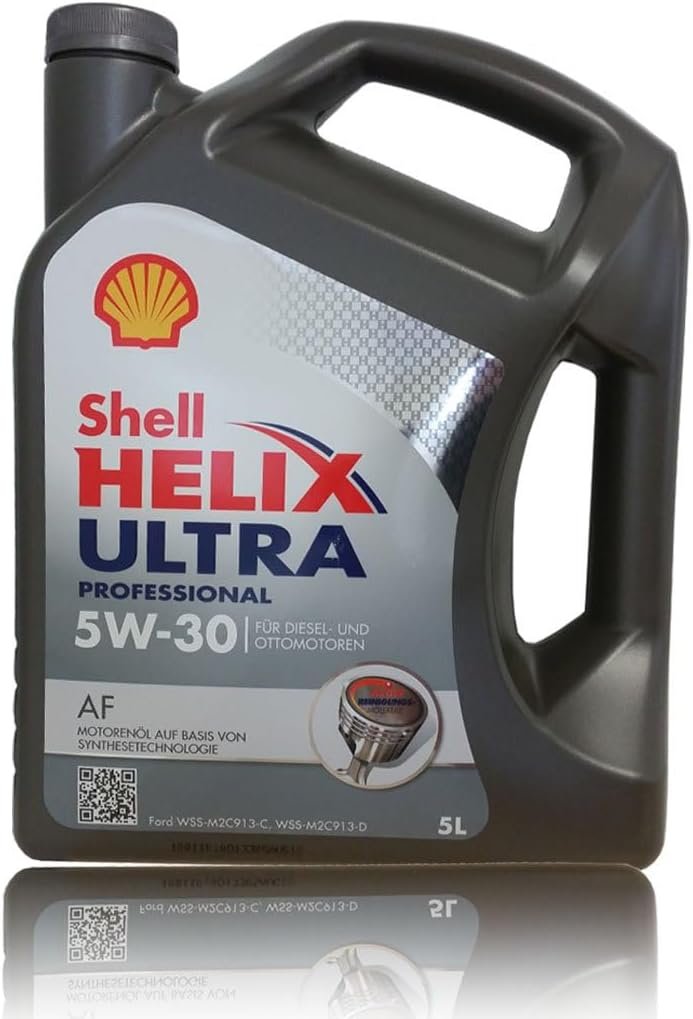
Strong Contender: Shell Helix Ultra Professional AF 5W-30 Shell’s PurePlus technology with ACEA A5/B5 approval. Outstanding thermal stability, which matters when working with just 3.1 litres of total oil capacity. Priced at £32–42 for 5 litres from most UK retailers.
Budget Pick: Total Quartz 9000 Future 5W-30 Total is a common OEM partner for PSA engines — this oil meets A5/B5 and provides reliable protection at a competitive price point. Good choice for owners doing frequent DIY changes.
Oil Change Intervals
Peugeot Official Recommendation: 12,500 miles or 12 months, whichever comes first.
Recommended Practice: 6,000–8,000 miles or annually.
The official interval is generous for an engine with such limited oil capacity. Over 12,500 miles, those 3.1 litres absorb a significant concentration of combustion byproducts, fuel dilution from cold starts, and moisture from condensation — particularly if the car is used for short urban trips, which is exactly the driving pattern most 107s endure.
Halving the official interval is inexpensive insurance. A quality ACEA A5/B5 5W-30 oil and filter for the 107 costs under £30 total, making this one of the cheapest engines to service in the entire UK market. The oil change itself is straightforward: the sump plug and filter are easily accessible, and the small capacity means the job takes fifteen minutes with basic tools.
Reduce intervals further if:
- The car covers mostly short trips under five miles
- It sits idle for weeks at a time between uses
- Oil consumption is noticeable between services
- The engine has covered more than 80,000 miles
Why Correct Oil Matters in a Low-Capacity Engine
The Peugeot 107’s 3.1-litre oil capacity is roughly 40% less than a typical family car engine. This simple fact has practical consequences that are easy to underestimate.
Contamination concentration: Every engine produces combustion byproducts that end up in the oil. In a larger sump, these contaminants are diluted across a greater volume. In the 107, the same quantity of soot, fuel, and acids is concentrated in significantly less oil, accelerating additive depletion and viscosity breakdown.
Thermal cycling: Less oil means less thermal mass to absorb heat. The oil in a 107 reaches operating temperature faster, which is beneficial, but also suffers greater temperature swings under varying loads. Quality synthetic oils with stable base stocks handle this cycling far better than budget mineral alternatives.
Chain tensioner health: The hydraulic timing chain tensioner depends on consistent oil pressure to keep the chain taut. Low oil level or heavily degraded oil with reduced pressure characteristics can allow tensioner bleed-down overnight, producing the chain rattle that many 107 owners hear on morning start-up. Persistent rattling accelerates chain and sprocket wear — a repair that dwarfs the cost of regular oil changes.
Dipstick discipline: With margins this tight, checking the oil level fortnightly is not excessive. It takes thirty seconds, costs nothing, and provides the earliest warning of developing consumption or leaks. The dipstick on the 1KR-FE is clearly marked and easily accessible — there is no excuse for neglecting this basic check.
The Peugeot 107 Ownership Perspective
The 107 occupies a particular place in the UK car market. It was bought by a broad mix of drivers — newly qualified teenagers, city commuters, retirees wanting economical local transport, and budget-conscious families running it as a second car. What unites these owners is the desire for minimal running costs, and the 107 delivers spectacularly well on that promise.
Parts are abundant and cheap. Insurance groups are rock-bottom. Road tax is negligible. And oil changes, even with premium synthetic lubricant, cost less than a modest restaurant meal. The 1KR-FE engine, maintained with the right oil at sensible intervals, will reliably cover well over 150,000 miles. Neglected examples suffer chain rattle, increased consumption, and eventually terminal bearing wear — failures that are entirely preventable with basic care.
For owners performing their own maintenance, the 107 is among the most accessible cars to work on. The engine bay is uncluttered, the drain plug and filter require no special tools, and the small oil volume means even the most expensive synthetic on the market costs under £25 per change. Spending a few extra pounds on ACEA A5/B5-compliant 5W-30 from a reputable brand is the single most cost-effective thing any 107 owner can do.
Conclusion
The Peugeot 107 1.0 requires SAE 5W-30 meeting PSA B71 2296 (ACEA A5/B5), with a total capacity of 3.1 litres including the filter. Castrol EDGE 5W-30 LL or Shell Helix Ultra Professional AF 5W-30 are ideal choices — both meet PSA B71 2296 and are readily available across the UK. If you follow Toyota’s spec for the same engine, 0W-20 meeting ACEA A1/B1 or A5/B5 is also acceptable.
Change the oil every 6,000–8,000 miles, check the dipstick fortnightly, and use a reputable ACEA A5/B5 product. At under £30 per service, this modest investment protects the timing chain tensioner, minimises consumption, and keeps the little three-cylinder running cleanly for years to come.
Our Top Picks
As an Amazon Associate, we may earn from qualifying purchases. This doesn't affect our recommendations — we only suggest oils that hold the exact OEM approval for your engine.