 Oil-
Oil-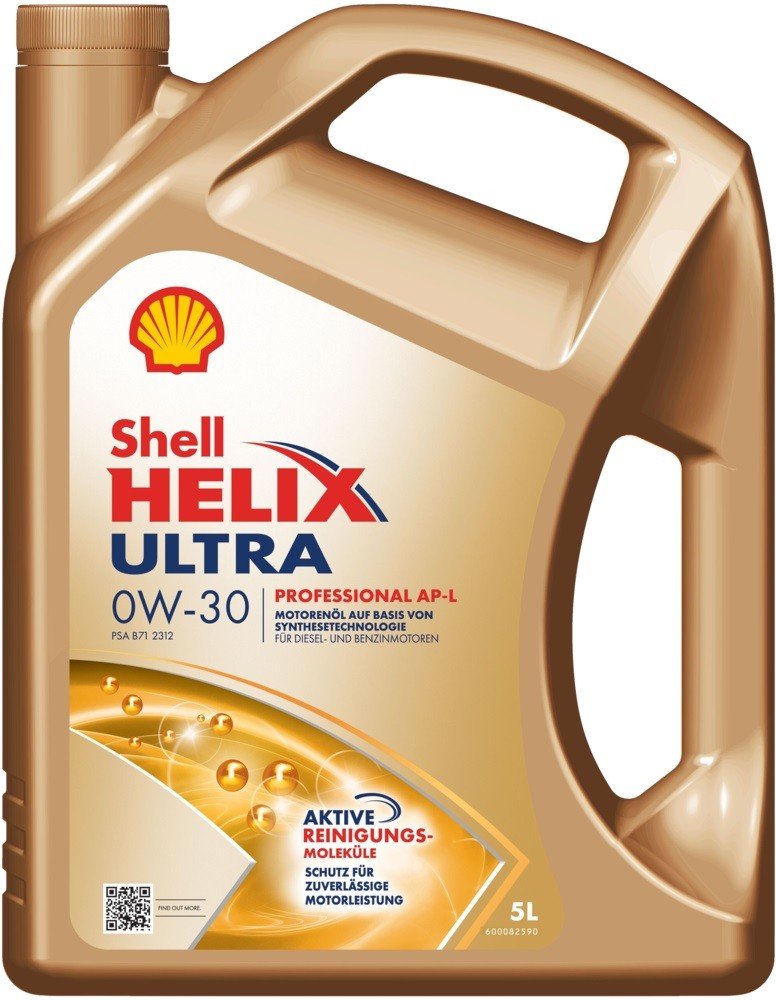
As an Amazon Associate, we may earn from qualifying purchases. This doesn't affect our recommendations — we only suggest oils that hold the exact OEM approval for your engine.
Best Engine Oil for Citroen C3 1.2 PureTech (83/110 HP)
The third-generation Citroen C3, on sale since 2016, brought the PSA 1.2 PureTech three-cylinder to one of France’s best-selling superminis. Available in naturally aspirated 83 HP (EB2) and turbocharged 110 HP (EB2ADTM) forms, the PureTech earned International Engine of the Year recognition and delivers a pleasant blend of refinement and economy. Underneath the quirky Citroen styling, however, sits an engineering decision that makes oil selection genuinely critical: a rubber timing belt running inside the engine, permanently immersed in lubricant. This wet belt arrangement has caused widespread engine failures across the PureTech range, and Citroen C3 owners need to understand exactly why the oil printed on the service book matters more here than on virtually any other modern petrol engine. This guide covers the correct specification, the science behind the belt problem, and the oils that meet Citroen’s own requirements.
Quick Answer: Recommended Oil
For Citroen C3 1.2 PureTech (83/110 HP):
- Recommended viscosity: SAE 0W-30
- Oil capacity: 3.3 litres with filter (3.0 L without)
- Required norms: ACEA C2, PSA B71 2312
Critical note: PSA B71 2312 is the sole acceptable oil specification for this engine. Citroen originally recommended 5W-30 for early PureTech units but revised the guidance to 0W-30 specifically because of the wet timing belt’s sensitivity to oil chemistry. A generic 0W-30 without this approval, or any ACEA C3 product, risks accelerating belt deterioration and engine destruction.
Understanding the 1.2 PureTech in the C3
The EB2 and EB2ADTM engines share a 1,199cc inline three-cylinder architecture with an aluminium block and head, dual overhead cams, and 12 valves. The naturally aspirated EB2 produces 83 HP at 5,750 RPM, while the turbocharged EB2ADTM adds a single-scroll turbo and direct injection to deliver 110 HP at 5,500 RPM with 205 Nm of torque from just 1,500 RPM. Both variants use variable valve timing and are mated to either a five-speed manual or an EAT6 automatic gearbox, depending on trim.
For Citroen C3 owners, the PureTech provides a relaxed, willing character that suits the car’s comfort-oriented personality. Fuel economy sits comfortably around 50-55 mpg on a combined cycle, and the three-cylinder thrum fades into the background at motorway speeds. It is a thoroughly modern engine that asks little of its driver. What it does ask, firmly and without compromise, is the correct oil.
The Wet Timing Belt: Why Your C3’s Oil Specification Is Life or Death
PSA chose to run the PureTech’s toothed rubber timing belt inside the engine block, submerged in the same oil that lubricates the crankshaft and pistons. The rationale was sound on paper: oil cools the belt, dampens vibration, and eliminates the maintenance window associated with conventional dry belt changes. The design promised a fit-and-forget component lasting the life of the engine.
Reality has been starkly different. The failure pattern, observed on hundreds of thousands of PureTech units globally, follows a specific and repeatable sequence. Certain chemical compounds in engine oil, particularly the metallic detergent and anti-wear additives found in higher-SAPS formulations, attack the rubber polymer of the timing belt over time. The rubber absorbs these compounds, swells, and loses its structural integrity. As the belt material softens, surface layers begin to peel away. These shed rubber particles are microscopic at first but accumulate rapidly. They circulate through the lubrication system and collect on the oil pump pickup strainer, the fine mesh screen that sits at the bottom of the sump. As the strainer clogs, oil flow to the pump diminishes. The pump starves, oil pressure collapses, and the engine’s bearings run dry. The result is catastrophic and usually instantaneous: a seized crankshaft or a destroyed connecting rod bearing.
The “low oil pressure” dashboard warning is not an early alert. By the time this light appears, the strainer is already severely restricted and the engine may have sustained irreversible damage. Owners who see this warning should stop the engine immediately and have the vehicle recovered, not driven, to a workshop.
The Recall, the Spec Change, and What It Means for C3 Owners
Stellantis eventually acknowledged the scale of the problem. Approximately 500,000 vehicles across the Peugeot, Citroen, DS, Vauxhall, and Opel ranges were subject to recall or extended warranty programmes related to wet belt failures. Citroen C3 models built between 2014 and 2018 fall squarely within the worst-affected production window, though no PureTech generation is entirely exempt from risk.
One of the most telling actions Citroen took was revising the oil specification itself. Early PureTech service schedules called for 5W-30 oil. Citroen subsequently changed this to 0W-30 with mandatory PSA B71 2312 approval, a direct response to the belt degradation findings. The thinner 0W-30 grade flows more readily at cold start, reducing the initial chemical stress on the belt during the critical warm-up phase when fuel dilution is at its peak. More importantly, PSA B71 2312 tightly controls the additive chemistry, mandating a low-SAPS formulation that minimises the specific compounds responsible for rubber attack. This was not a routine specification update; it was an engineering countermeasure.
Oil Consumption: The Second PureTech Weakness
Beyond the belt itself, many PureTech engines suffer from elevated oil consumption, particularly units manufactured in the earlier production years. The root cause lies in the piston ring design. The oil scraper ring, the lowest of the three rings on each piston, features very small drainage holes that are prone to carbon buildup from direct injection combustion byproducts. As these holes clog, the scraper ring loses its ability to return excess oil from the cylinder wall to the sump. Oil passes the rings, enters the combustion chamber, and burns off.
Consumption rates of 0.5 to 1.0 litres per 1,000 miles are not uncommon on affected engines. On a sump that holds only 3.3 litres in total, losing half a litre means a significant drop in oil level between services. If the level falls far enough, the wet belt is partially exposed to air rather than being fully submerged. Without oil cooling and lubrication, belt degradation accelerates sharply. The combination of carbon-clogged scraper rings reducing oil volume and degraded oil chemistry attacking the belt creates a compounding failure loop that has caught many C3 owners off guard.
Check the dipstick every fortnight. This is not optional maintenance on a PureTech. A small sump amplifies every fraction of oil lost or contaminated, and the consequences of neglect are disproportionately severe.
Why PSA B71 2312 and Nothing Else
PSA B71 2312 is a manufacturer-specific approval that goes beyond the ACEA C2 classification it sits within. While ACEA C2 defines a low-SAPS, low-HTHS performance category suited to fuel-efficient petrol engines, PSA B71 2312 adds proprietary belt compatibility testing that no generic ACEA classification covers. Oil carrying this approval has been validated against the specific rubber compound used in the PureTech belt, under the specific temperature and chemical exposure conditions the belt experiences inside the engine.
ACEA C3 is actively harmful here. The C3 classification allows higher sulphated ash content and a higher HTHS (High Temperature High Shear) viscosity floor. Both characteristics increase the chemical aggression against the belt rubber and raise internal friction, working directly against what the PureTech needs. Garages that substitute a “better” C3 oil because it has a higher specification number are unwittingly shortening the belt’s life. The numbering does not indicate a hierarchy of quality; C2 and C3 describe different additive balance philosophies for different engine requirements.
Technical Specifications: 1.2 PureTech (EB2 / EB2ADTM)
| Specification | Value |
|---|---|
| Displacement | 1,199cc (1.2 litres) |
| Layout | Inline-3, transverse, aluminium block and head |
| Valvetrain | DOHC, 12 valves, wet timing belt |
| Power | 83 HP (EB2 NA) / 110 HP (EB2ADTM Turbo) @ 5,500-5,750 RPM |
| Torque | 118 Nm (83 HP) / 205 Nm (110 HP) @ 1,500 RPM |
| Fuel Type | Petrol, 95 RON minimum |
| Recommended Viscosity | SAE 0W-30 |
| Oil Capacity (without filter) | 3.0 litres |
| Oil Capacity (with filter) | 3.3 litres |
| ACEA Norm | C2 |
| OEM Norm | PSA B71 2312 |
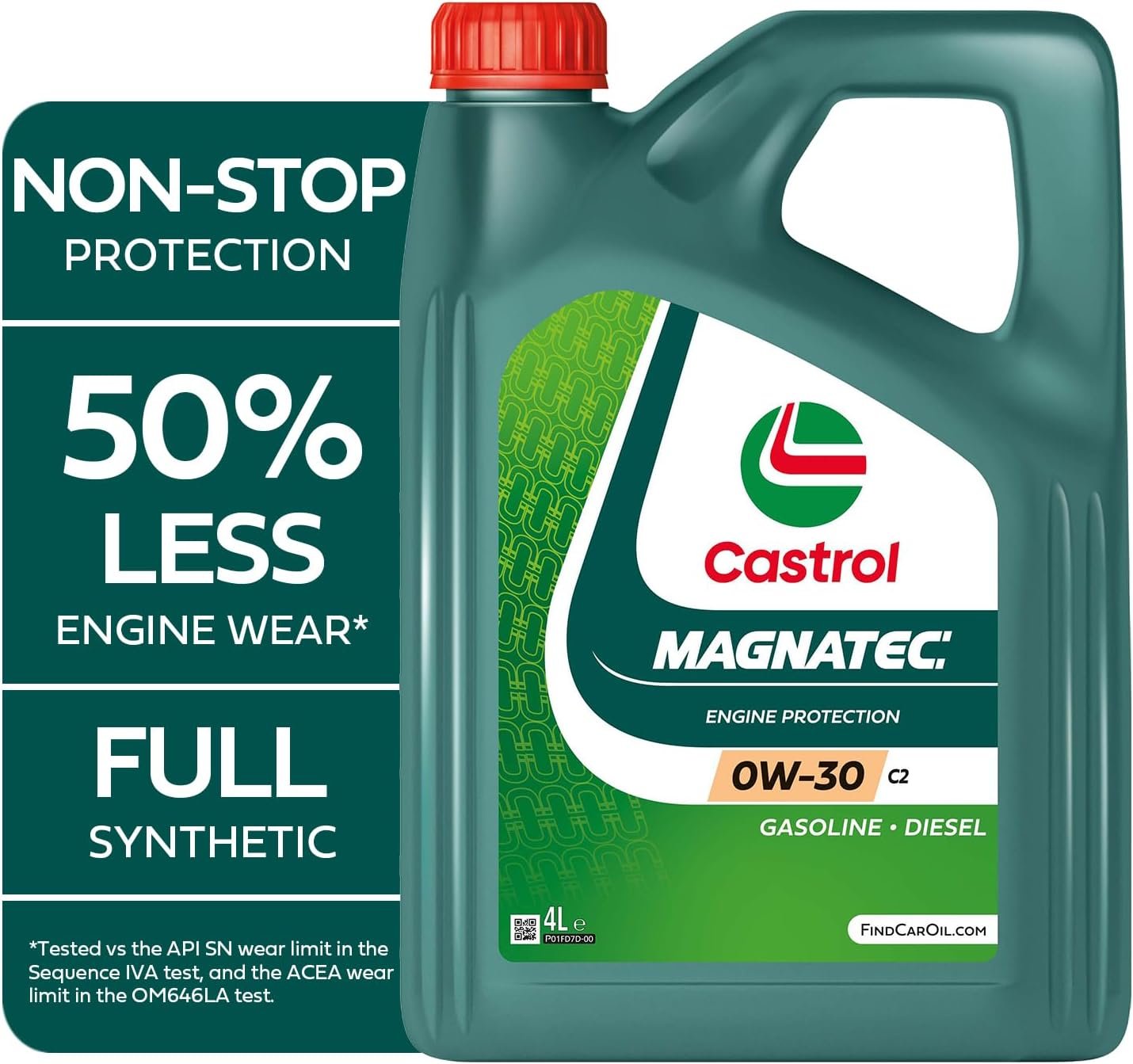
Best Value: Castrol EDGE 0W-30 Castrol’s Fluid Titanium film technology provides robust protection under high-shear conditions at the turbo bearings while maintaining the low HTHS viscosity that PSA B71 2312 mandates. ACEA C2 compliant and stocked by virtually every UK motor factor, Halfords branch, and online retailer, the EDGE 0W-30 is the easiest approved oil to find at short notice. Priced at £36-42 for 5 litres, it delivers brand-name assurance without a premium price tag.
Oil Change Intervals
Citroen Official Recommendation:
- Variable service indicator, up to 20,000 miles or 24 months
Recommended Practice: 10,000 miles or 12 months, whichever comes first.
Citroen’s official interval is far too generous for an engine with a wet timing belt and known fuel dilution characteristics. Every additional mile on ageing oil means the belt is soaking in increasingly degraded lubricant whose protective chemistry has diminished. British driving conditions, with their prevalence of short trips, cold starts, and stop-start urban commuting, accelerate oil degradation well beyond what laboratory testing assumes.
Shorten to 6,000-8,000 miles if:
- Most journeys are under 10 miles without reaching full operating temperature
- The dipstick shows oil level rising above maximum (fuel is accumulating in the sump)
- Oil consumption is noticeable between services (0.5 litres per 1,000 miles or more)
- The vehicle has passed 40,000 miles (belt condition becomes increasingly uncertain)
- Previous service history is unknown or shows non-approved oil was used
- The car lives primarily in urban traffic with minimal motorway running
Living With the PureTech: Practical Ownership Advice
Correct oil is the foundation, but C3 PureTech ownership demands a slightly more engaged approach to maintenance than most modern petrol engines require.
Drive it warm regularly. A sustained 30-minute motorway run at operating temperature allows accumulated fuel to evaporate from the sump oil, restoring viscosity and reducing the chemical load on the belt. Engines used exclusively for school runs and supermarket trips suffer the fastest belt degradation because the oil never reaches the temperature needed to purge fuel contamination.
Take the oil pressure warning seriously. If the warning light illuminates or the message centre displays a low oil pressure alert, pull over and switch off the engine immediately. Do not attempt to drive to a garage. In a PureTech, this warning may indicate that belt debris has already begun clogging the oil pump strainer, and continued running will destroy the engine within minutes. Have the vehicle recovered and the sump dropped for inspection before restarting.
Budget for a precautionary belt replacement. Many independent specialists now recommend replacing the wet timing belt between 60,000 and 80,000 miles regardless of condition, particularly on 2014-2018 build vehicles. The job costs approximately £400-600 at a specialist, compared with £3,000-5,000 for a replacement engine. Consider this planned maintenance rather than an emergency repair.
Insist on PSA B71 2312 at every service. Whether your C3 visits a Citroen dealer or an independent workshop, confirm before the work begins that the oil being used carries PSA B71 2312 approval on the bottle. Do not accept assurances that a “compatible” or “equivalent” product will suffice. The specification exists because generic alternatives contributed to the problem in the first place.
Conclusion
The Citroen C3 1.2 PureTech requires SAE 0W-30 engine oil meeting ACEA C2 and PSA B71 2312, with a total capacity of 3.3 litres including the filter. The wet timing belt running inside this engine transforms oil selection from routine maintenance into a genuine reliability decision. Wrong oil, stretched intervals, or a neglected dipstick do not simply reduce engine life; they create the conditions for sudden, total engine failure at mileages where most owners would not expect serious trouble.
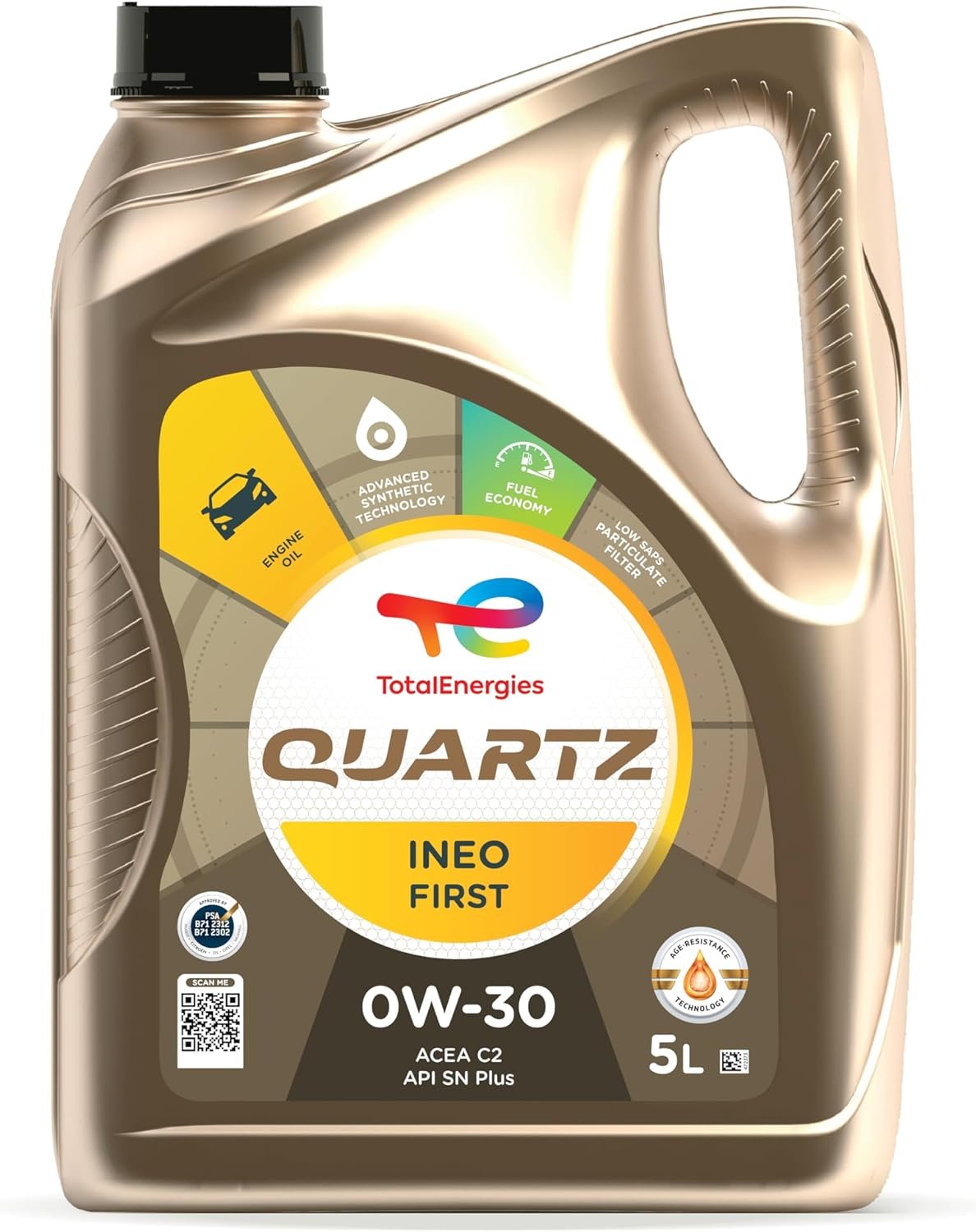
Total Quartz INEO First 0W-30 remains the natural first choice at £35-39 for 5 litres, carrying the factory-fill pedigree that comes with TotalEnergies’ official Stellantis partnership. Mobil 1 ESP 0W-30, Shell Helix Ultra Professional AP 0W-30, and Castrol EDGE 0W-30 each provide fully approved alternatives across different price points and availability. Whichever oil you choose, verify PSA B71 2312 on the label, change it at sensible intervals, and keep the dipstick clean and checked. The PureTech three-cylinder is a characterful, efficient engine that suits the C3’s personality well. It simply requires an owner who pays attention to what goes into the sump.
Our Top Picks
As an Amazon Associate, we may earn from qualifying purchases. This doesn't affect our recommendations — we only suggest oils that hold the exact OEM approval for your engine.