 Oil-
Oil-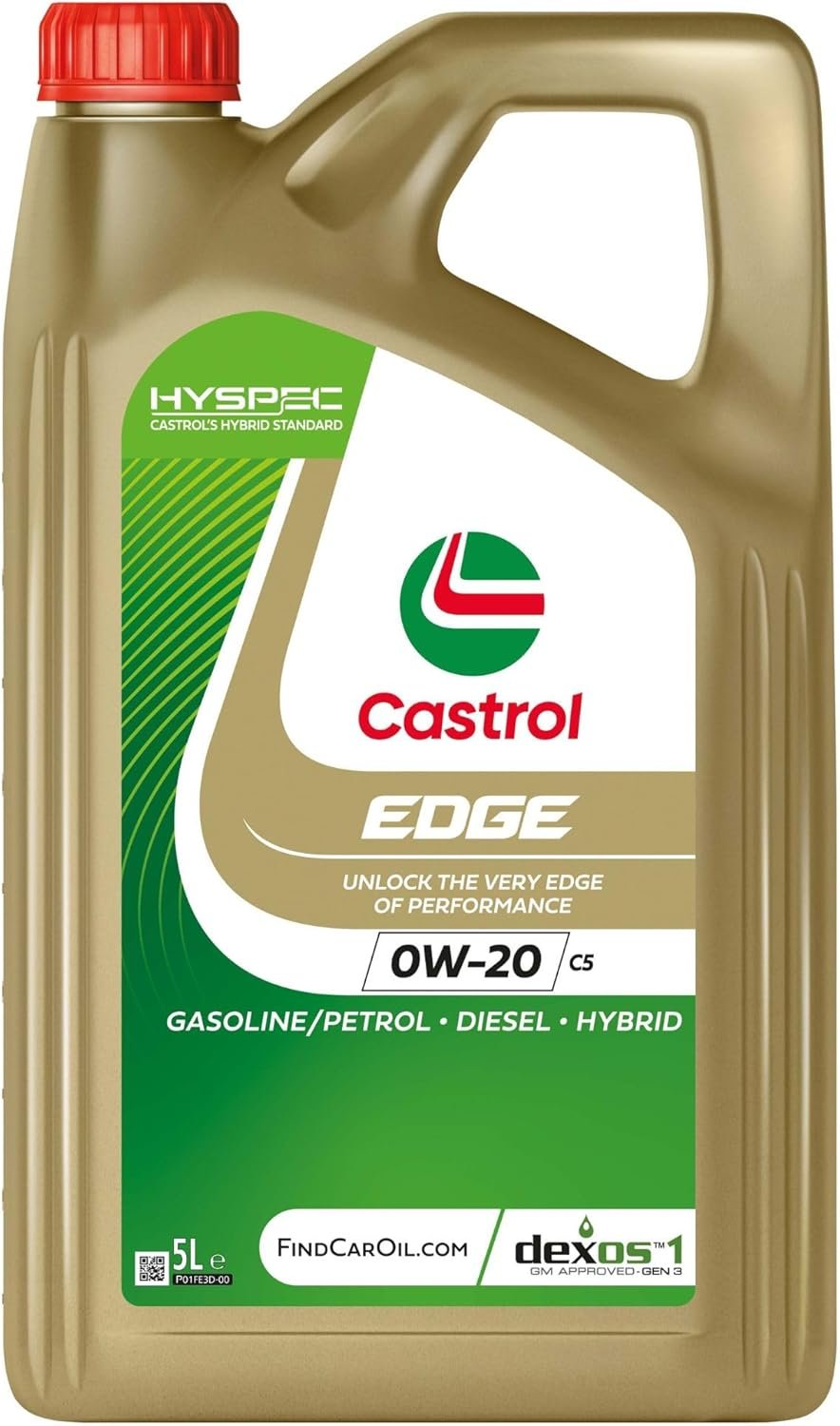

As an Amazon Associate, we may earn from qualifying purchases. This doesn't affect our recommendations — we only suggest oils that hold the exact OEM approval for your engine.
Best Engine Oil for Toyota Yaris 1.5 Hybrid (116 HP)
The fourth-generation Toyota Yaris (XP210) with the 1.5 Hybrid powertrain represents a genuine engineering achievement in small-car efficiency. Powered by the M15A-FXE three-cylinder Atkinson-cycle engine working alongside an electric motor, this Yaris consistently delivers real-world fuel economy figures that embarrass its rivals — 60-70 mpg in mixed driving is routine, with careful urban drivers regularly reporting 80 mpg and above. Toyota’s hybrid system is proven beyond all reasonable doubt, with millions of units in service worldwide. However, the M15A-FXE has specific lubrication requirements that differ from conventional engines. Its ultra-low-friction design demands ACEA C5 oil — the lowest SAPS category available — and with only 3.6 litres in the sump, every drop must meet the correct specification. This guide covers the right oil, the right quantity, and the best products for your Yaris Hybrid.
Quick Answer: Recommended Oil
For Toyota Yaris 1.5 Hybrid (116 HP):
- Specification: ACEA C5 with SAE 0W-20
- Alternative viscosity: SAE 0W-16 (Toyota’s preferred ultra-thin grade)
- Oil capacity: 3.6 litres with filter (3.3 L without)
Key point: Toyota actually prefers 0W-16 for the M15A-FXE as the ultimate fuel-economy grade, but 0W-20 meeting ACEA C5 is the widely available and perfectly acceptable choice. The critical requirement is the ACEA C5 norm — ultra-low SAPS chemistry that protects the hybrid system’s catalytic converter and allows the engine to achieve its designed friction targets.
The M15A-FXE Engine
The M15A-FXE is a 1,490cc inline three-cylinder engine producing 91 hp on its own, rising to a combined system output of 116 hp when working with the electric motor. This is the heart of Toyota’s fourth-generation hybrid system, and it is purpose-built for efficiency rather than outright power.
The engine operates on the Atkinson cycle, where the intake valves remain open slightly longer during the compression stroke, effectively reducing the compression ratio while maintaining a higher expansion ratio. In practical terms, this means the engine extracts more usable energy from each combustion event, though at the cost of reduced low-speed torque — a deficit seamlessly compensated by the electric motor. The result is an engine that converts fuel to motion with remarkable thermodynamic efficiency, achieving a thermal efficiency exceeding 40 percent in optimal conditions.
The three-cylinder layout is a deliberate choice for the hybrid application. Three cylinders mean less internal friction than four, fewer reciprocating parts, and a shorter, lighter engine block that accommodates the hybrid transaxle within the Yaris’s compact engine bay. The 80.5mm bore and 97.6mm stroke create a significantly undersquare (long-stroke) design that favours low-speed torque and combustion efficiency over high-RPM power. In hybrid operation, the engine rarely exceeds 4,500 RPM — the electric motor handles acceleration demands while the M15A-FXE operates in its most efficient range.
Toyota’s engineers specified extremely tight tolerances for this engine. The bearing clearances, piston ring tension, and oil gallery dimensions are all optimised for ultra-low viscosity oil. Running a thicker oil — even a conventional 5W-30 — increases parasitic friction measurably, degrading the fuel economy that is the entire point of this powertrain. The M15A-FXE was designed around 0W-16 and 0W-20; using anything heavier works against its fundamental engineering.
Technical Specifications: M15A-FXE
| Specification | Value |
|---|---|
| Displacement | 1,490cc (1.5 litres) |
| Layout | Inline-3, transverse, aluminium block and head |
| Cycle | Atkinson (extended intake valve timing) |
| Valvetrain | DOHC, 12 valves, VVT-iE (intake), VVT-i (exhaust) |
| Bore x Stroke | 80.5mm x 97.6mm |
| Compression Ratio | 14.0:1 |
| Engine Power | 91 hp @ 5,500 RPM |
| System Power | 116 hp (combined with electric motor) |
| Engine Torque | 120 Nm @ 3,800 RPM |
| Fuel Type | Petrol, 95 RON |
| Recommended Viscosity | SAE 0W-20 |
| Alternative Viscosity | SAE 0W-16 |
| Oil Capacity (without filter) | 3.3 litres |
| Oil Capacity (with filter) | 3.6 litres |
| ACEA Norm | C5 |
| Hybrid System | Toyota Hybrid System II (THS II) |
Understanding ACEA C5
Why C5 Specifically
ACEA C5 is the most demanding low-SAPS classification in the European oil standards, and it is the specification Toyota mandates for the M15A-FXE. Understanding what this means — and why alternatives are not suitable — is important.
Ultra-low SAPS stands for Sulphated Ash, Phosphorus, and Sulphur. These elements are present in oil additive packages (particularly anti-wear and detergent additives) and, when burned, leave deposits on catalytic converter surfaces. Over time, excessive SAPS content poisons the catalyst, reducing its ability to convert harmful exhaust gases. The Yaris Hybrid’s emissions system is calibrated to extremely tight tolerances to meet Euro 6d regulations, and C5 oil keeps it functioning correctly throughout the vehicle’s lifetime.
Minimum HTHS viscosity for C5 is 2.6 mPa.s — the lowest of any ACEA category. This ultra-thin oil film at operating temperature is what enables the M15A-FXE’s friction-reduction strategy. For comparison, ACEA C3 oils require 3.5 mPa.s minimum — nearly 35 percent thicker. Using C3 oil in the M15A-FXE would be like fitting slightly undersized tyres — technically functional but constantly working against the vehicle’s design.
Do not substitute ACEA C2 or C3 oils. While both are “low SAPS” to varying degrees, their higher viscosity requirements and different additive chemistries are not compatible with the M15A-FXE’s ultra-tight clearances and hybrid-specific emissions calibration.
SAE 0W-16 vs 0W-20
Toyota’s preferred grade for the M15A-FXE is actually 0W-16 — an ultra-thin viscosity that maximises fuel economy in the hybrid system. This grade flows almost like water when cold and maintains an extremely thin but effective oil film at operating temperature.
However, 0W-16 oils remain relatively uncommon in the UK aftermarket. Availability is improving, but finding ACEA C5 compliant 0W-16 from major brands can be difficult outside Toyota dealers. For this reason, 0W-20 meeting ACEA C5 is the practical choice for most UK owners — widely available, competitively priced, and fully approved by Toyota for this engine. The fuel economy difference between 0W-16 and 0W-20 is marginal, typically less than 1 percent in real-world driving.
Alternative: Shell Helix Ultra Professional AS-L 0W-20 Shell’s PurePlus gas-to-liquid base oil starts from natural gas rather than crude petroleum, producing an exceptionally pure base stock with virtually no sulphur or aromatic impurities. This purity translates directly to superior oxidation resistance and cleaner running — particularly beneficial in the M15A-FXE’s tight oil galleries where deposit formation must be minimised. Widely available across the UK at approximately £35-45 for 5 litres.
Oil Change Intervals
Toyota Official Recommendation:
- Standard service: 10,000 miles or 12 months (whichever comes first)
- Intermediate service: 5,000 miles or 6 months
Recommended Practice: 10,000 miles or annually for most UK driving.
The hybrid powertrain actually places less sustained stress on the engine oil than a conventional engine in certain driving patterns. In urban conditions — where the Yaris Hybrid spends significant time running on electric power alone — the M15A-FXE accumulates fewer running hours per mile driven than a non-hybrid equivalent. The engine shuts down at traffic lights, in slow-moving queues, and during low-speed manoeuvring, meaning the oil is not being heated and sheared during these periods.
However, this intermittent operation introduces its own challenge. Repeated warm-up and cool-down cycles promote moisture condensation inside the engine. The oil never reaches sustained high temperature in purely urban driving, so this moisture is not always boiled off effectively. For predominantly short-trip urban driving, sticking to 10,000-mile or annual intervals is sensible rather than attempting to extend them.
Consider shorter intervals if:
- Average journey length is under 5 miles
- The vehicle rarely reaches or sustains motorway speeds
- The engine oil appears milky or excessively dark on the dipstick
- Mileage exceeds 100,000 miles
With only 3.6 litres in the sump, an oil change on the Yaris Hybrid costs roughly £20-28 in materials. There is no rational reason to extend intervals beyond the recommended maximum on an engine this inexpensive to service.
Why Correct Oil Matters for the M15A-FXE
EGR System Protection: The M15A-FXE features an exhaust gas recirculation (EGR) system with a cooler unit. The EGR cooler is a known weak point — thermal cycling from the engine’s frequent start-stop hybrid operation can cause micro-cracking in the cooler over time, potentially allowing coolant to seep into the exhaust path. While this is primarily a coolant system issue, oil quality plays an indirect role: correct low-SAPS oil minimises combustion deposits that accelerate EGR valve fouling. After approximately 100,000 km, EGR valve deposits become increasingly likely. Clean-burning ACEA C5 oil helps extend the interval before cleaning or replacement becomes necessary. EGR cooler replacement typically costs £400-600 including labour.
Catalytic Converter Longevity: The ultra-low SAPS content of ACEA C5 oil is specified precisely to protect the catalytic converter. Higher-SAPS oils deposit metallic ash on the catalyst surface over thousands of miles, gradually reducing its conversion efficiency. In a vehicle designed to meet the tightest emissions standards, catalyst degradation eventually triggers warning lights and MOT failures. Given the Yaris Hybrid’s expected 15-20 year service life, protecting the catalyst with correct oil from the outset avoids an expensive replacement later. Catalytic converters for the Yaris Hybrid typically cost £600-1,000.
Hybrid Battery Awareness (12V): While not directly related to engine oil, owners should be aware that the 12V auxiliary battery in the Yaris Hybrid can suffer premature failure if the vehicle is used exclusively for very short trips. The hybrid system relies on the 12V battery for initial system boot-up before the high-voltage battery takes over. Frequent short trips without adequate recharging time stress the 12V battery disproportionately. A failing 12V battery causes no-start conditions that are often misdiagnosed as hybrid system faults. Replacement costs £100-180. This is mentioned here because short-trip driving patterns also stress the engine oil, so owners in this category should be attentive to both.
Fuel Economy Preservation: The entire justification for the Yaris Hybrid is fuel efficiency. Using oil thicker than the specified 0W-20 or 0W-16 grade directly undermines this. Internal friction from incorrect oil can reduce fuel economy by 2-4 percent — which over 10,000 miles at current UK fuel prices represents £50-100 in additional fuel costs. The correct oil literally pays for itself.
Common M15A-FXE Issues
EGR Cooler Cracking: The most significant known issue. Thermal cycling from hybrid stop-start operation stresses the EGR cooler, and hairline cracks can develop after 80,000-120,000 km. Symptoms include coolant loss without visible external leaks, white exhaust smoke, and sweet-smelling exhaust. If caught early, only the cooler requires replacement. Left unattended, coolant ingress into the combustion chamber can cause serious engine damage. Budget £400-600 for the repair.
EGR Valve Carbon Deposits: After approximately 100,000 km, carbon deposits on the EGR valve can restrict exhaust gas flow, causing rough idle, reduced power, and increased emissions. Cleaning or replacement costs £150-300. Using correct ACEA C5 oil helps slow deposit formation but cannot prevent it entirely — this is fundamentally a combustion byproduct issue.
12V Battery Degradation: As noted above, short-trip hybrids are particularly hard on the auxiliary 12V battery. Symptoms include slow initial system boot-up, intermittent warning lights, and eventual failure to start. Proactive replacement every 4-5 years for short-trip vehicles prevents inconvenient breakdowns. Cost: £100-180.
Oil Level Monitoring: With only 3.6 litres total capacity, even minor oil consumption becomes significant. Check the dipstick monthly. The M15A-FXE is generally not an oil consumer — healthy engines show negligible consumption between services — but any drop below the minimum mark on such a small sump risks oil starvation under cornering or braking loads. Top up with the same specification oil if needed.
Conclusion
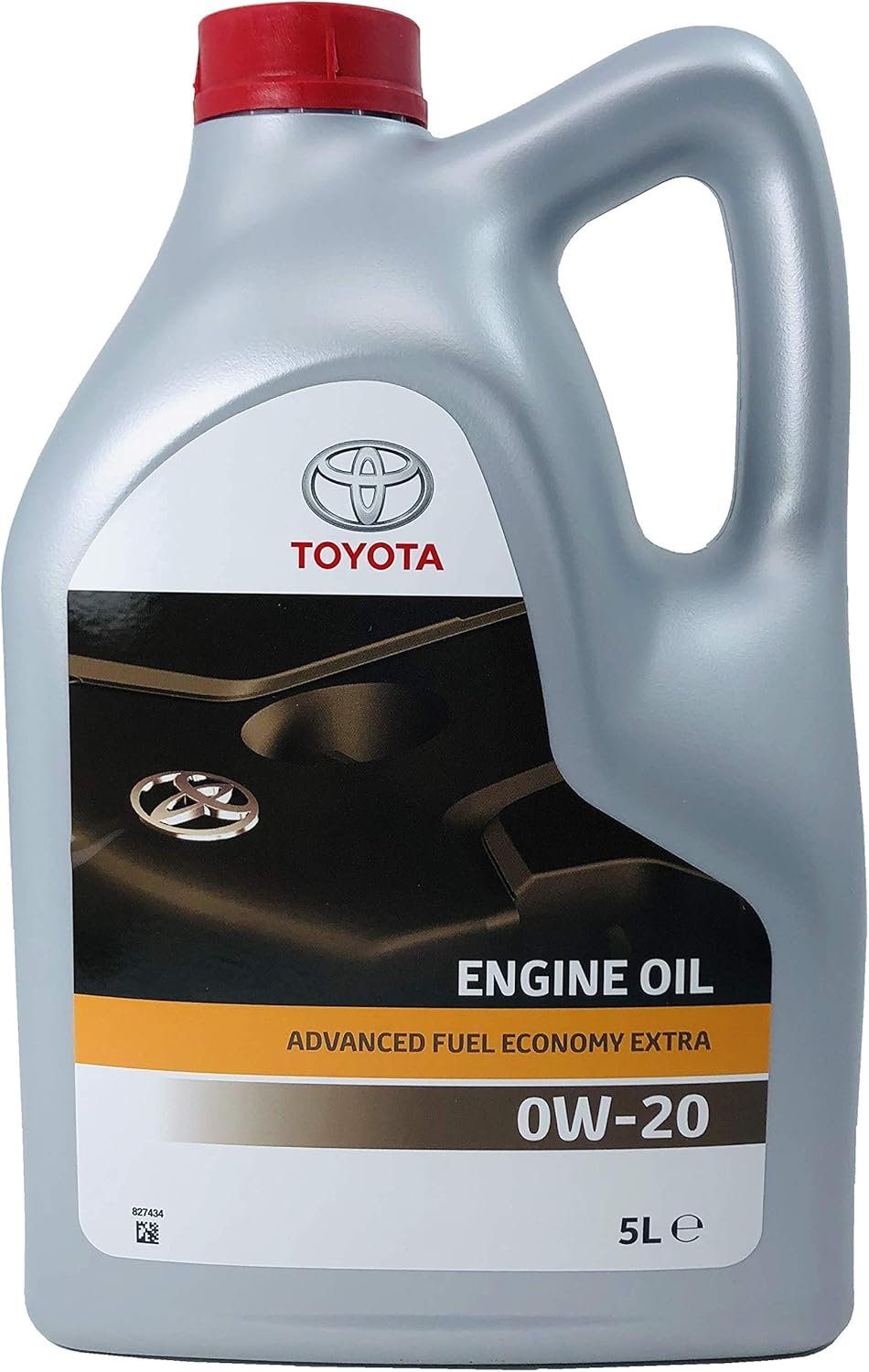
The Toyota Yaris 1.5 Hybrid requires ACEA C5 rated SAE 0W-20 engine oil, with a total capacity of 3.6 litres including the filter. Choose from proven options — Toyota Genuine Motor Oil 0W-20, Mobil 1 ESP x2 0W-20, Castrol EDGE 0W-20, or Shell Helix Ultra Professional AS-L 0W-20 — and verify the ACEA C5 rating on the bottle before purchase.
Toyota’s reputation for hybrid reliability is well-earned, and the M15A-FXE Atkinson-cycle engine is a masterclass in efficient engineering. Its small 3.6-litre sump and ultra-tight tolerances make oil specification genuinely critical rather than merely advisory. The £20-28 cost of an oil change is trivial compared to the potential consequences of incorrect lubrication — EGR system repairs at £400-600, catalyst replacement at £600-1,000, or the gradual erosion of the fuel economy that makes this car worth owning. Maintain annual or 10,000-mile oil change intervals with quality ACEA C5 oil, monitor the EGR system and 12V battery as the miles accumulate, and the Yaris Hybrid will deliver hundreds of thousands of efficient, reliable miles.
Our Top Picks
As an Amazon Associate, we may earn from qualifying purchases. This doesn't affect our recommendations — we only suggest oils that hold the exact OEM approval for your engine.