 Oil-
Oil-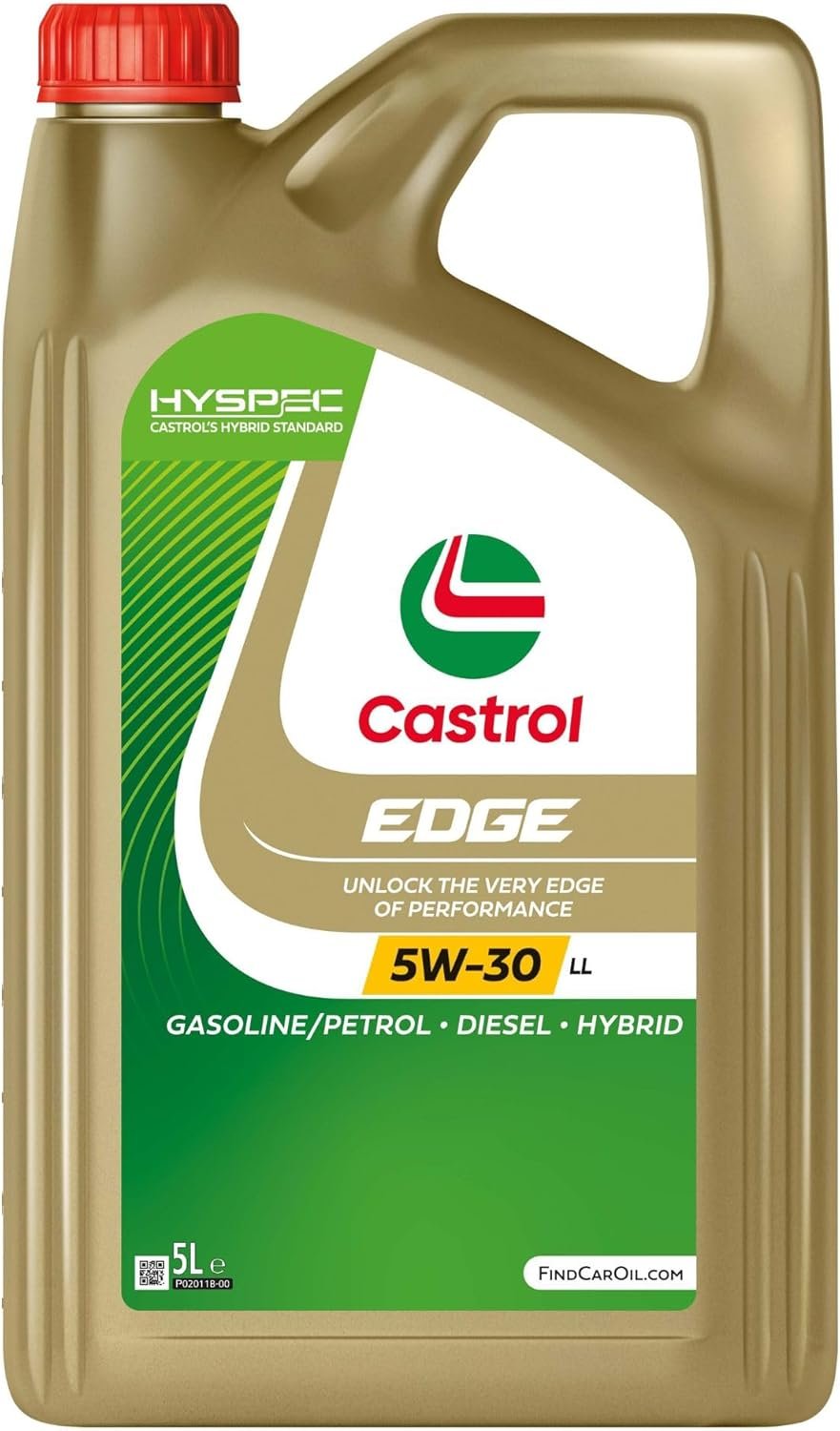
As an Amazon Associate, we may earn from qualifying purchases. This doesn't affect our recommendations — we only suggest oils that hold the exact OEM approval for your engine.
Best Engine Oil for SEAT Ibiza 6F 1.0 TSI (95/110 HP)
The SEAT Ibiza 6F, launched in 2017 as the first car on Volkswagen Group’s MQB A0 platform, brought sharper Spanish styling and a genuinely fun driving character to the supermini class. Under the bonnet sits the EA211 evo 1.0 TSI three-cylinder turbo, shared with the VW Polo AW and Skoda Fabia, but wrapped in a package that appeals to a younger, more style-conscious audience. The Ibiza has always been the sportier sibling in VW Group’s small-car family, and for owners who want to keep that character alive over 200,000 km and beyond, correct oil selection is where long-term reliability starts. This guide covers the exact specification, capacity, and recommended products for the DKLA and DKRF engine variants, alongside the maintenance practices that prevent the common issues direct injection three-cylinders are known for.
Quick Answer: Recommended Oil
For SEAT Ibiza 6F 1.0 TSI (95/110 HP):
- Specification: VW 504 00 / 507 00 with ACEA C3
- Viscosity: SAE 5W-30 (alternative: 0W-20 for maximum fuel economy)
- Oil capacity: 4.0 litres with filter (3.7 L without)
Key point: Only use oil carrying the VW 504 00 / 507 00 approval number printed on the container. SEAT is part of the Volkswagen Group and uses VW’s oil specifications across its range. A generic ACEA C3 oil without the VW approval number may lack the specific sludge resistance, turbo protection, and catalyst compatibility tests that the 504 00 norm demands.
The 1.0 TSI EA211 Evo: Three Cylinders, Serious Engineering
The 1.0 TSI fitted to the Ibiza 6F belongs to Volkswagen’s EA211 evo engine family, a significant evolution of the original EA211 platform. Engine code DKLA produces 95 HP while the DKRF delivers 110 HP, both from an inline three-cylinder layout displacing 999cc. The “evo” revision brought a Miller combustion cycle with a higher geometric compression ratio and earlier exhaust valve closing, a variable-geometry turbocharger on the 110 HP variant, and coated cylinder bores replacing traditional iron liners. These changes improved thermal efficiency and refined the naturally characterful three-cylinder throb into something smoother and more willing to rev.
Despite the SEAT badge and Martorell assembly, this is mechanically the same engine found in the VW Polo AW and Skoda Fabia. The MQB A0 platform underneath is identical too. What differs is the calibration, the styling, and the ownership experience. SEAT positions the Ibiza as the driver’s choice in the segment, and a significant proportion of UK Ibiza buyers are younger drivers covering higher proportions of urban miles. That driving pattern has direct consequences for oil health, as we will explain below.
Direct injection is the critical technology to understand here. Fuel is sprayed directly into the combustion chamber at pressures up to 350 bar, bypassing the intake valves entirely. This delivers precise fuel metering and strong efficiency, but it means the intake valve backs receive no fuel washing. Over tens of thousands of kilometres, carbon deposits from crankcase ventilation gases bake onto the valve stems and ports, gradually restricting airflow and causing rough idle, hesitation, and reduced power. Oil quality influences this process: oils with strong detergent packages and low volatility produce fewer crankcase vapour deposits, slowing carbon accumulation on the valves.
Technical Specifications: 1.0 TSI (DKLA / DKRF)
| Specification | Value |
|---|---|
| Displacement | 999cc (1.0 litre) |
| Layout | Inline-3, transverse, aluminium block |
| Valvetrain | DOHC, 12 valves, timing belt |
| Turbocharger | Single-scroll (DKLA) / Variable-geometry (DKRF) |
| Power | 95 HP (DKLA) / 110 HP (DKRF) @ 5,000-5,500 RPM |
| Torque | 175 Nm (DKLA) / 200 Nm (DKRF) @ 2,000-3,500 RPM |
| Fuel Type | Petrol, 95 RON minimum (98 RON recommended) |
| Recommended Viscosity | SAE 5W-30 |
| Alternative Viscosity | SAE 0W-20 |
| Oil Capacity (without filter) | 3.7 litres |
| Oil Capacity (with filter) | 4.0 litres |
| ACEA Norm | C3 |
| VW Norm | VW 504 00 / 507 00 |
Why VW 504 00 / 507 00 Matters
The VW 504 00 specification is not merely a viscosity recommendation. It defines a complete performance envelope that the oil must satisfy through laboratory testing and real-engine validation conducted under Volkswagen’s supervision. For the 1.0 TSI, the critical requirements include:
Turbocharger coking resistance. When you park the Ibiza after a spirited drive, residual heat soaks into the turbo housing. Oil sitting in the bearing journal must resist forming hard carbon deposits (coking) that would restrict oil flow on the next start. VW 504 00 includes specific turbo coking bench tests that generic ACEA C3 oils are not required to pass.
Low SAPS compatibility. Reduced Sulphated Ash, Phosphorus, and Sulphur content protects the catalytic converter and particulate filter (where fitted on later models) from chemical poisoning over the vehicle’s lifetime. This is especially important on the Ibiza, where SEAT introduced a petrol particulate filter on some 2019+ variants to meet Euro 6d emissions.
Sludge resistance under thermal stress. The EA211 evo’s compact three-cylinder architecture concentrates heat in a small block. The integrated exhaust manifold, cast directly into the cylinder head, raises underbonnet temperatures further. Oil must resist thermal breakdown and sludge formation under these conditions while maintaining flow through narrow internal galleries.
The 0W-20 alternative. VW’s more recent VW 508 00 / 509 00 specification permits 0W-20 viscosity for maximum fuel economy. Some later-production Ibiza 1.0 TSI units may reference this on the oil filler cap. If your vehicle specifies 0W-20, use only oils carrying VW 508 00 approval. Do not mix 0W-20 with 5W-30 in the sump; if topping up, match the viscosity already in the engine.
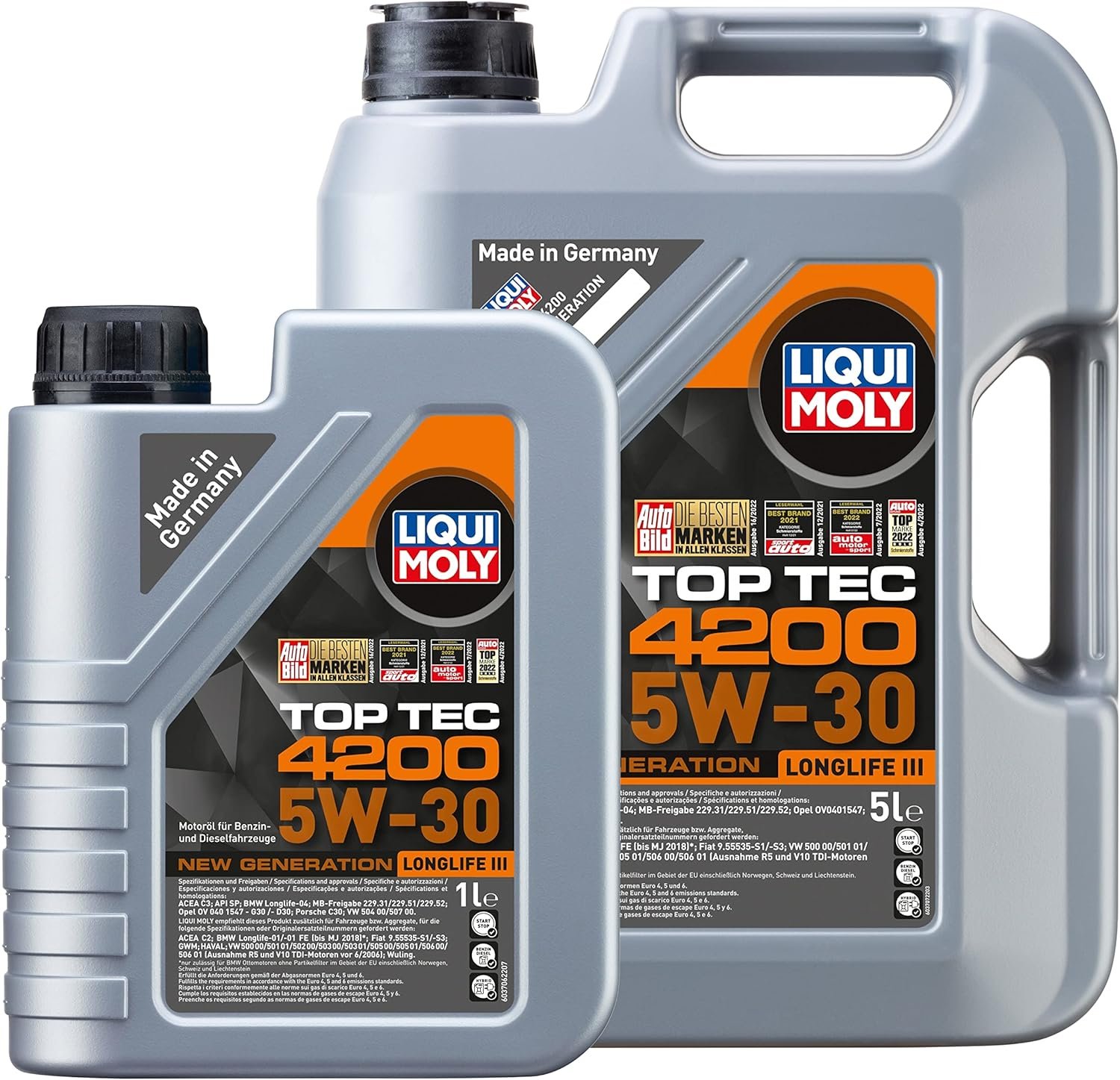
Best Value: Liqui Moly Top Tec 4200 5W-30 German-engineered with full VW 504 00 approval at the most competitive price point in this list. Liqui Moly’s detergent package is particularly effective at combating the carbon and soot byproducts of direct injection, and the brand has a strong following among independent VW Group specialists. Excellent cold-start protection is relevant for UK winters, and at £34-40 for 5 litres, it delivers genuine VW-approved protection without the premium price tag. The best choice for owners maintaining disciplined change intervals on a budget.
Oil Change Intervals
SEAT Official Recommendation:
- Variable LongLife service: up to 30,000 km or 24 months
- Fixed service: 15,000 km or 12 months
Recommended Practice: 12,000-15,000 km or 12 months, whichever comes first.
SEAT’s variable service indicator can extend intervals to 30,000 km under ideal motorway conditions, but the reality of UK Ibiza ownership rarely matches that scenario. The Ibiza’s core demographic tends towards urban and suburban driving: daily commutes, school runs, city-centre errands, and weekend trips. This pattern generates exactly the conditions that degrade oil fastest: cold starts, short journeys that never reach full operating temperature, and frequent stop-start cycles.
Shorten to 7,000-8,000 km (roughly 4,500-5,000 miles) if:
- Predominantly city driving with trips under 10 km
- Frequent cold starts without reaching full operating temperature
- Heavy stop-start traffic daily
- Vehicle used for delivery driving or taxi service
- Oil level drops noticeably between services
- Engine has covered more than 100,000 km
Short urban journeys are particularly damaging because unburned fuel washes past the piston rings and accumulates in the sump, diluting the oil. The three-cylinder’s small 4.0-litre oil volume means even modest fuel contamination has a proportionally large effect on oil chemistry. Frequent oil changes flush this contamination before it can cause harm.
Carbon Buildup: The Direct Injection Challenge
Carbon buildup on the intake valves is the single most discussed maintenance issue for the EA211 evo across all VW Group applications. Because the 1.0 TSI injects fuel directly into the cylinder, the intake valve backs receive no fuel washing to keep them clean. Crankcase gases recirculated through the PCV system deposit oily carbon on the valve stems, and over 60,000-100,000 km this buildup can become significant enough to cause rough idle, misfires, and reduced power.
Oil plays a supporting role here. Lower-volatility oils produce fewer crankcase vapours, reducing the raw material available for carbon deposits. VW 504 00 approved oils are formulated with this in mind. Beyond oil choice, two practical measures help:
Use super unleaded (RON 98) fuel. Higher-octane petrol burns more completely, reducing the combustion byproducts that contribute to carbon formation. The 1.0 TSI’s high compression ratio and Miller cycle benefit from RON 98, and many owners report smoother running and marginally better fuel economy on super unleaded. The additional cost of 5-8p per litre is modest insurance against a walnut blasting bill of £300-500 down the line.
Drive the car hard occasionally. Sustained higher RPM and load generates the heat and airflow velocity that helps prevent deposits from consolidating on the valves. A monthly motorway run at full operating temperature, using the engine through its rev range, is genuinely beneficial for a car that spends most of its life in urban traffic.
Known Weak Points and Maintenance Notes
Timing belt replacement. Unlike the timing chain used in some older VW Group engines, the EA211 evo uses a toothed timing belt. SEAT’s official replacement interval is around 210,000 km, but independent specialists widely recommend replacement at 90,000-120,000 km, especially on cars used predominantly in stop-start urban driving. The belt is not expensive in itself, but labour is significant due to access. Budget £350-550 at an independent garage. A snapped timing belt destroys the engine, so this is not a service to defer.
Plastic water pump housing. The EA211 evo uses a water pump with a plastic housing bolted to the engine block. This design is lighter and cheaper to manufacture, but the housing can develop hairline cracks over time, particularly after repeated thermal cycling. A small coolant weep around the pump is the early warning sign. Replacement is straightforward and costs £150-250 including labour, but ignoring it risks overheating and head gasket damage. Check for coolant residue around the pump at every service.
Coil pack failures. Three-cylinder engines work each coil pack harder than a four-cylinder, and occasional coil failures are reported on higher-mileage Ibizas. A failed coil causes immediate rough running and a check engine light. Replace promptly, as sustained misfiring dilutes engine oil with unburned fuel and can damage the catalytic converter. Individual coils cost £20-40 each.
Long-Term Reliability
The EA211 evo 1.0 TSI is fundamentally a robust engine. It does not suffer from the timing chain tensioner failures that plagued the earlier EA111 family, and the three-cylinder layout means fewer moving parts and lower internal friction than the four-cylinder it replaced. Owners who maintain correct oil specification, respect sensible change intervals, and address the timing belt and water pump proactively can realistically expect 200,000 km and beyond from this engine without major mechanical intervention.
The SEAT Ibiza 6F shares every mechanical component with the VW Polo AW and Skoda Fabia on the MQB A0 platform, which means parts availability is excellent and independent garage familiarity is widespread. This is one of the most produced engine and platform combinations in Europe, and the support infrastructure reflects that.
Conclusion
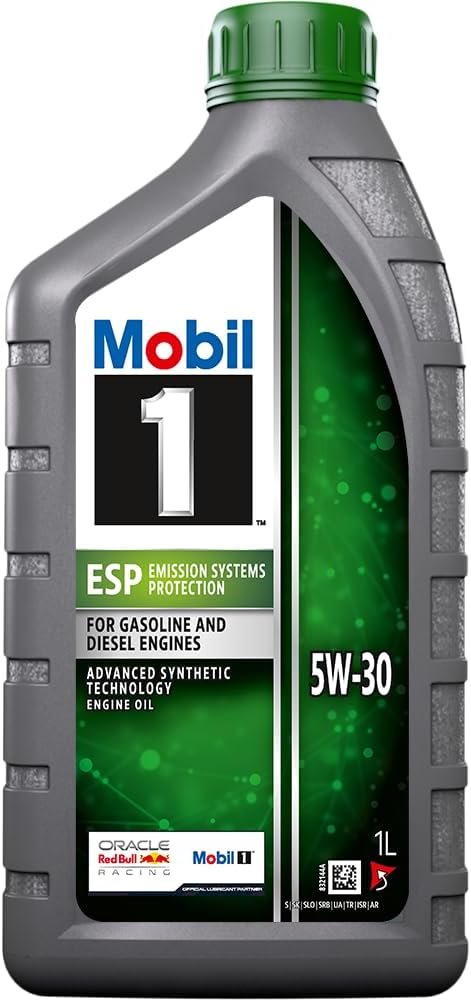
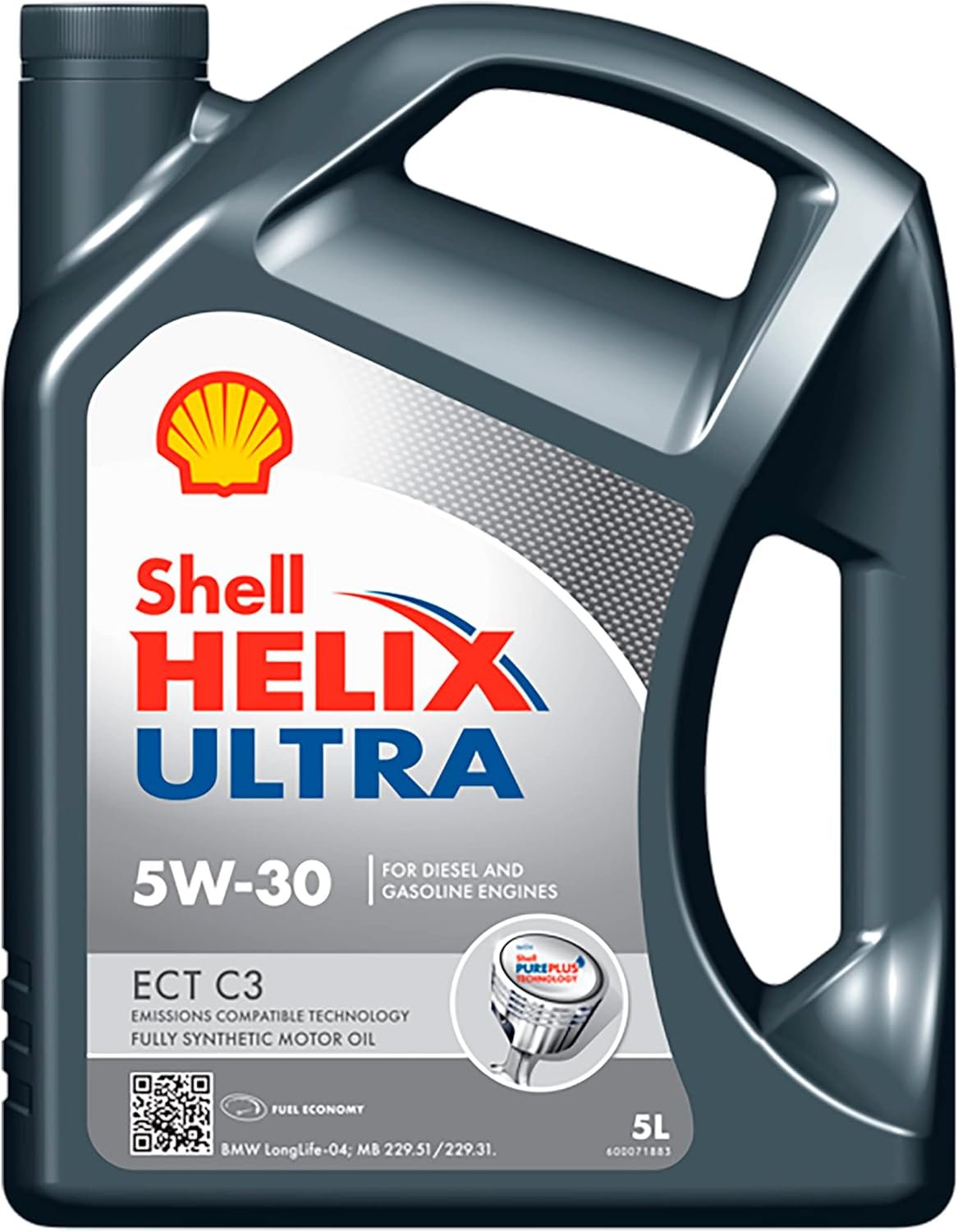
The SEAT Ibiza 6F 1.0 TSI requires SAE 5W-30 engine oil meeting VW 504 00 / 507 00 and ACEA C3, with a total capacity of 4.0 litres including the filter. Castrol EDGE Professional LL 03 5W-30 is the factory-fill OEM choice at around £43-50 for 5 litres. Mobil 1 ESP 5W-30, Shell Helix Ultra ECT C3 5W-30, and Liqui Moly Top Tec 4200 5W-30 all carry full VW 504 00 approval at varying price points, with Liqui Moly offering the strongest value at £34-40.
Shorten oil change intervals to 7,000-8,000 km if city driving dominates your routine, use RON 98 fuel to reduce carbon buildup, and do not defer the timing belt beyond 120,000 km. Watch the plastic water pump housing for coolant weeps. These are straightforward, inexpensive measures that protect an engine designed to last well past 200,000 km. The Ibiza delivers the sharpest styling and the most entertaining drive in VW Group’s supermini lineup. Keep the oil right, and it will keep delivering for years.
Our Top Picks
As an Amazon Associate, we may earn from qualifying purchases. This doesn't affect our recommendations — we only suggest oils that hold the exact OEM approval for your engine.