 Oil-
Oil-
As an Amazon Associate, we may earn from qualifying purchases. This doesn't affect our recommendations — we only suggest oils that hold the exact OEM approval for your engine.
Best Engine Oil for Jeep Wrangler JL 3.6L Pentastar V6 (285 HP)
The Jeep Wrangler JL (2018-present) powered by the 3.6-liter Pentastar V6 is the most popular configuration of one of the most iconic vehicles on American roads. The ERG-coded engine produces 285 horsepower and 260 lb-ft of torque, enough to crawl Moab rock shelves and cruise Interstate 70 at highway speeds the same afternoon. But the Pentastar V6 in the JL carries a reduced oil capacity compared to the older JK generation — just 5.0 quarts with filter versus the JK’s 6.0 quarts — which means the oil works harder and degrades faster, especially under the severe conditions that define how most Wranglers actually get used. Lifter tick, camshaft failures, and the legendary oil filter housing leak are all well-documented problems on this engine, and every one of them is influenced by oil quality and change frequency. This guide covers the correct specification, capacity, and best oil choices for the Wrangler JL 3.6 Pentastar under both street driving and the off-road punishment these vehicles were built for.
Quick Answer: Recommended Oil
For Jeep Wrangler JL 3.6L Pentastar V6 (285 HP, ERG):
- Specification: API SP / FCA MS-6395
- Viscosity: SAE 0W-20
- Oil capacity: 5.0 quarts with filter (4.7 quarts without)
Critical: The JL Wrangler 3.6 Pentastar requires 0W-20 meeting FCA material standard MS-6395. Do not use 5W-20 or 5W-30 thinking heavier oil will protect against lifter tick or extend life during off-road use. The hydraulic lash adjusters, variable valve timing solenoids, and oil pump calibration are designed around 0W-20 flow characteristics. Thicker oil delays cold-start lubrication and starves the components most vulnerable to failure.
The 3.6L Pentastar V6 Engine
The Pentastar 3.6 is a 3,604cc 60-degree V6 that has served as the workhorse engine across Chrysler, Dodge, Jeep, and Ram vehicles since 2011. The ERG variant in the JL Wrangler produces 285 horsepower at 6,400 RPM and 260 lb-ft of torque at 4,800 RPM, paired with either the six-speed manual, the eight-speed 850RE automatic, or the optional eTorque mild hybrid system.
The engine features dual overhead cams with variable valve timing on both intake and exhaust, a die-cast aluminum block with iron cylinder liners, and a two-stage variable-displacement oil pump. The ESS (Engine Stop-Start) system, standard on automatic-equipped JL models, shuts the engine off at traffic lights and restarts it when the brake is released. This subjects the oil to additional thermal cycling and repeated cold-start wear events throughout every drive. The ESS system is one reason Jeep mandates 0W-20 — rapid circulation on restart is essential for bearing protection during the split-second before full oil pressure develops.
A key change from the JK to JL generation is the reduced oil capacity. The JK’s 3.6 Pentastar held 6.0 quarts. The JL holds 5.0 quarts. That is a 17% reduction in oil volume protecting the same displacement engine at higher power output. Less oil means higher thermal load per unit volume, faster additive depletion, and a narrower margin for error on change intervals. This single fact should inform every maintenance decision you make.
Understanding FCA MS-6395 Oil Specifications
FCA (now Stellantis) material standard MS-6395 is the specification governing engine oil for all current Pentastar applications. It builds on the API SP service category with additional requirements for low-speed pre-ignition (LSPI) protection, oxidation stability under high thermal loads, and deposit control in the variable valve timing system.
Any full synthetic 0W-20 carrying the API SP certification meets the baseline requirements. However, Mopar-branded oils are formulated specifically to meet MS-6395 in its entirety, including supplemental tests for bearing wear, sludge resistance, and VVT solenoid cleanliness that are not covered by API SP alone. For owners who want the most conservative approach, Mopar MaxPro 0W-20 is the direct specification match.
The practical reality is that major brands like Pennzoil, Mobil 1, and Valvoline all produce 0W-20 formulations that meet or exceed MS-6395 performance requirements through the API SP standard. Stellantis does not publish a formal approval list the way European manufacturers do, so the API SP donut is your verification mark.
Technical Specifications: 3.6L Pentastar V6 (ERG)
| Specification | Value |
|---|---|
| Displacement | 3,604cc (3.6 liters) |
| Layout | 60-degree V6, aluminum block, aluminum heads |
| Valvetrain | DOHC, 24 valves, dual VVT, timing chain |
| Fuel System | Multi-point fuel injection |
| Power | 285 HP @ 6,400 RPM |
| Torque | 260 lb-ft @ 4,800 RPM |
| Compression Ratio | 11.3:1 |
| Fuel Type | Regular unleaded (87 octane minimum) |
| Recommended Viscosity | SAE 0W-20 |
| Oil Capacity (without filter) | 4.7 quarts (4.5 liters) |
| Oil Capacity (with filter) | 5.0 quarts (4.7 liters) |
| Oil Specification | API SP / FCA MS-6395 |
| Timing | Chain (lifetime, no scheduled replacement) |
Pennzoil’s PurePlus gas-to-liquid base stock delivers exceptional purity with fewer impurities than conventional petroleum-derived base oils. Strong oxidation resistance is critical for the Pentastar’s reduced 5.0-quart capacity, which puts greater thermal stress on every molecule. Excellent detergent properties keep VVT passages and lash adjuster oil galleries clean.
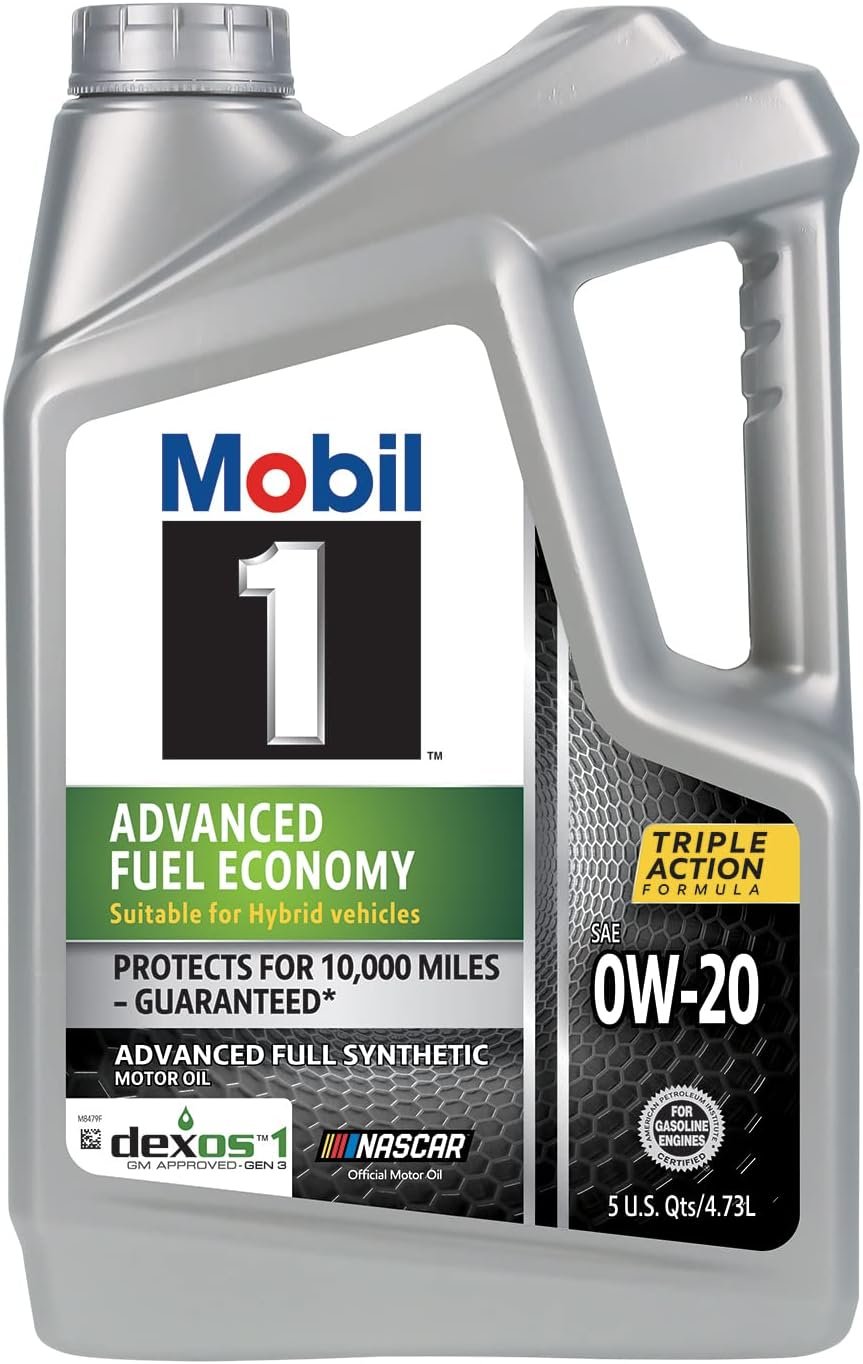
ExxonMobil’s SuperSyn base stock technology provides outstanding thermal stability for Wranglers that see sustained high-RPM operation while climbing grades in low-range or running at highway speed loaded with gear. Strong LSPI protection for the Pentastar’s 11.3:1 compression ratio. Maintains viscosity grade integrity across the full drain interval.
Best Value: Valvoline Advanced Full Synthetic 0W-20 (~$22-27/5 qt) Solid API SP formulation at the most accessible price point. For owners who shorten their change intervals due to off-road use — which should be most Wrangler owners — the lower cost per change makes Valvoline the practical choice. Widely available at Walmart, AutoZone, O’Reilly, and Amazon.
Oil Change Intervals
Jeep Official Recommendation:
- Oil change indicator system: typically indicates between 8,000 and 10,000 miles
- Severe conditions: 3,750 miles or 4 months
Here is the reality every Wrangler owner needs to understand: if you take your Jeep off-road, you are operating under severe conditions. Period. Jeep defines severe conditions as dusty roads, off-road operation, trailer towing, short trips under 10 miles, extensive idling, and extreme temperatures. A Wrangler that sees trail use even once a month qualifies for the severe schedule.
Recommended practice: 5,000 miles or 6 months for Wranglers driven primarily on-road. 3,500 to 4,000 miles for any Wrangler that sees regular trail use, dusty environments, or towing. After any sustained water fording where water may have contacted the air intake or engine bay, change the oil immediately regardless of mileage. Water contamination in engine oil causes rapid bearing corrosion and additive failure.
The reduced 5.0-quart capacity makes this advice even more important. With 17% less oil than the JK, additive depletion and thermal degradation happen faster. An extra oil change per year costs $30-40. A Pentastar engine replacement costs $4,000-6,000.
Common 3.6 Pentastar Problems Related to Oil
Lifter Tick and Hydraulic Lash Adjuster Failure
The most discussed problem on Pentastar forums. A ticking or tapping noise at startup that may persist for seconds or minutes before quieting — or may never quiet at all. The hydraulic lash adjusters (HLAs) rely on oil pressure to maintain zero valve lash. When oil viscosity is incorrect, oil passages are clogged with sludge, or oil pressure is low due to a worn pump, the HLAs bleed down and clatter. In mild cases, this is an annoyance. In severe cases, collapsed HLAs allow valve-to-piston contact, bending valves and damaging pistons. FCA issued technical service bulletins addressing revised HLA designs in later production runs. Using quality 0W-20 with strong detergent properties and changing on the severe schedule is the most effective prevention.
Camshaft and Rocker Arm Wear
Related to and often caused by the same oil starvation that triggers lifter tick. The cam lobes and roller rocker arm followers wear prematurely when oil film breaks down. This is particularly acute during cold starts before full oil pressure develops — another reason 0W-20 is non-negotiable, as its low cold-viscosity reaches overhead components faster than heavier grades. Engines with over 150,000 miles should be monitored for increased valve train noise.
Oil Filter Housing Leak
Among Pentastar owners, this is legendary. The oil filter housing adapter, mounted to the engine block, uses an O-ring seal that hardens and shrinks over time. The resulting leak drips oil onto the exhaust manifold, creating smoke, smell, and a fire hazard. Replacement of the O-ring is a relatively inexpensive repair ($50-150 in parts) but is time-consuming due to access constraints. Many owners replace the housing adapter entirely with an updated design. Inspect for oil weeping around the filter housing at every service. Catching it early avoids the exhaust drip and potential fire risk.
ESS (Engine Stop-Start) System Concerns
The automatic ESS system cycles the engine off and on dozens of times per drive in city traffic. Each restart is a brief period of boundary lubrication where metal-to-metal contact is most likely. While the 0W-20 viscosity and rapid-circulation oil pump mitigate this, the cumulative effect over thousands of cycles adds wear that steady-running engines do not experience. Owners who dislike ESS often disable it with aftermarket devices, but regardless of ESS status, the oil specification remains 0W-20. If you run ESS active, shortening your change interval by 500-1,000 miles is a reasonable precaution.
Why Correct Oil Matters for the Pentastar
The Pentastar V6 is not fragile. Wranglers regularly reach 250,000 to 300,000 miles on original engines when maintained properly. But the reduced JL oil capacity, ESS thermal cycling, and inherent vulnerabilities in the HLA and VVT systems mean the engine has less tolerance for neglect than simpler predecessors. Using 0W-20 meeting API SP ensures rapid cold-start circulation to the hydraulic lash adjusters, correct oil film thickness at the cam lobes, clean VVT solenoid passages, and adequate LSPI protection under load. Using heavier oil or extending intervals beyond what the reduced capacity can sustain invites exactly the failures — lifter tick, cam wear, premature timing chain stretch — that define high-mileage Pentastar problems.
Conclusion
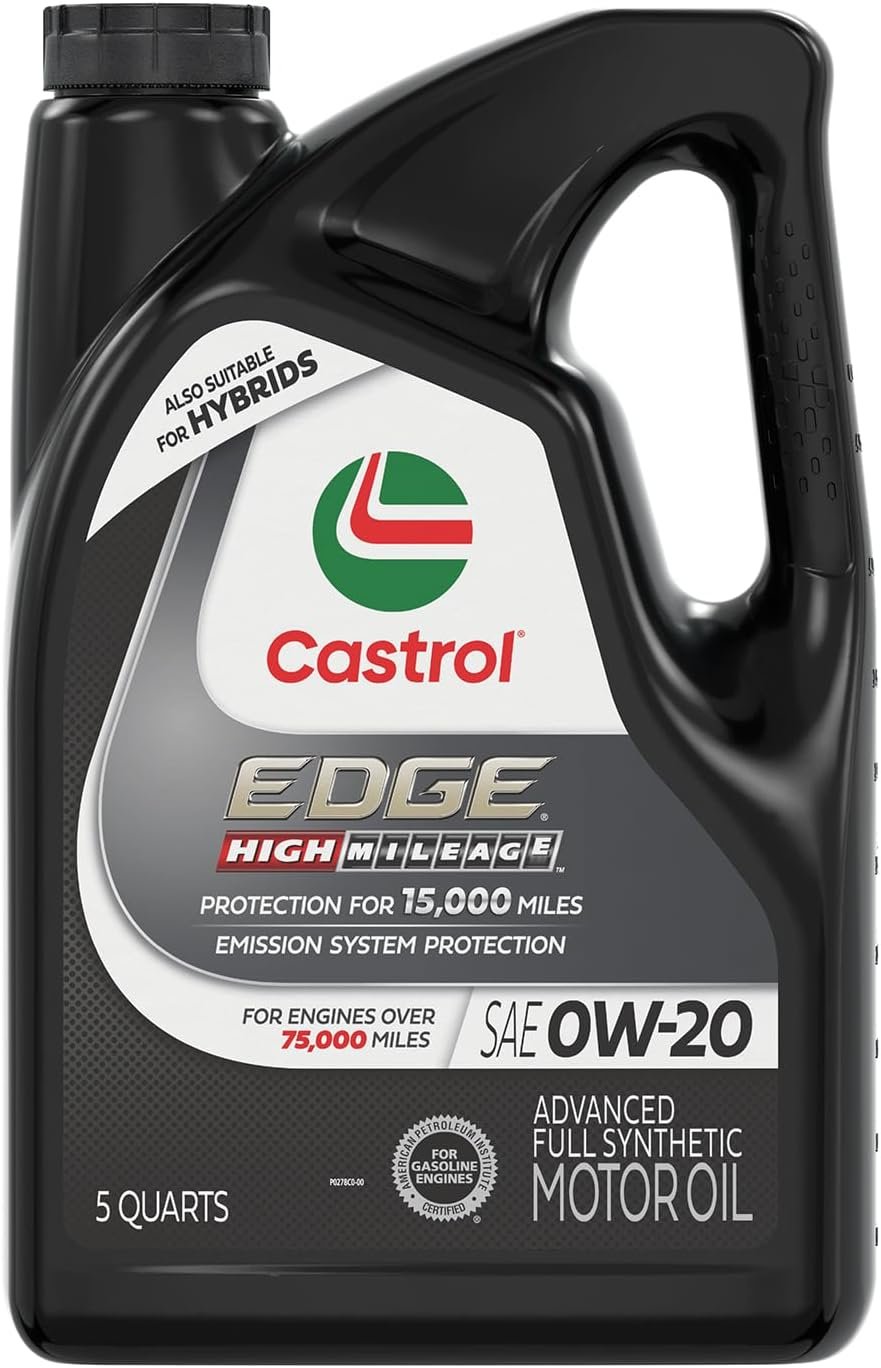
The Jeep Wrangler JL 3.6L Pentastar V6 requires 5.0 quarts of API SP / MS-6395 compliant SAE 0W-20 full synthetic engine oil. Use Mopar MaxPro, Pennzoil Ultra Platinum, Mobil 1 Advanced Fuel Economy, or Valvoline Advanced Full Synthetic, all in 0W-20. Change at 5,000 miles for street driving and 3,500 to 4,000 miles for any off-road use. Inspect the oil filter housing for leaks at every service. Monitor for lifter tick and address it before it progresses to valve damage.
The Pentastar is a proven powertrain capable of 250,000 miles or more. The $25-35 spent on 5.0 quarts of quality 0W-20 at shortened intervals is the cheapest defense against the HLA failures, cam wear, and oil housing leaks that define neglected examples. Treat the reduced oil capacity as a reminder that maintenance margins are tighter than the JK, and your Wrangler will outlast the trail.
Our Top Picks
As an Amazon Associate, we may earn from qualifying purchases. This doesn't affect our recommendations — we only suggest oils that hold the exact OEM approval for your engine.