
Best Engine Oil for VW Golf 5 1.9 TDI 90/105 HP
The Volkswagen Golf 5 1.9 TDI represents one of the most popular diesel engines ever produced by the VAG group. Manufactured from 2003 to 2008, this Pumpe Düse (PD) turbodiesel delivers 105 horsepower while achieving exceptional fuel economy of 50-60 mpg. Understanding proper oil specifications for this engine proves absolutely critical for longevity, as the 1.9 TDI PD incorporates a unique unit injector system that places extreme demands on the camshaft, making correct oil selection essential for engine survival.
The 1.9 TDI Pumpe Düse Engine: Legendary Efficiency
The 1.9 TDI debuted in the Golf 5 in 2003 as part of the EA188 engine family. This engine earned legendary status for its remarkable combination of fuel efficiency, torque, and durability when properly maintained.
The engine features a cast iron block providing exceptional strength and longevity, paired with an aluminium cylinder head. At 105 HP and 250 Nm of torque available from just 1,900 rpm, the 1.9 TDI delivers effortless performance particularly suited to motorway cruising and economical daily driving.
The defining technology is the Pumpe Düse (Unit Injector) system. Unlike conventional common rail diesels, each cylinder has its own high-pressure injection pump built directly into the injector, driven by dedicated lobes on the camshaft. This system generates injection pressures up to 2,050 bar, delivering exceptional atomisation and combustion efficiency.
Engine Oil Specifications for VW Golf 5 1.9 TDI
VW Golf 5 1.9 TDI (2003-2008)
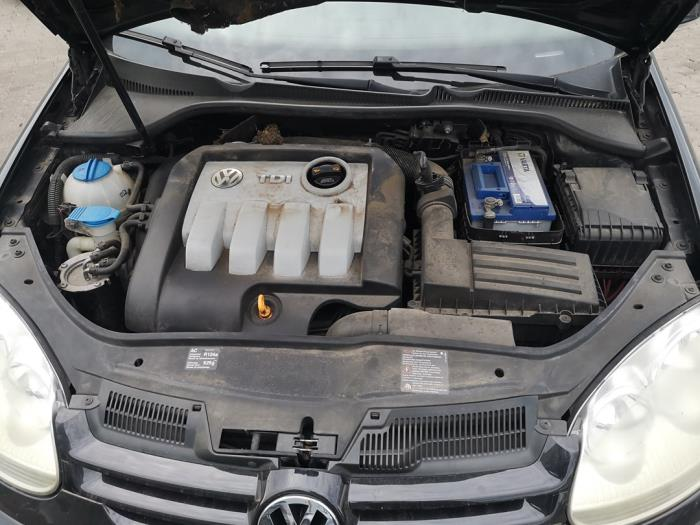
Technical Specifications:
- Oil viscosity: SAE 5W-40 (strongly recommended for PD engines)
- Oil capacity: 4.3 litres with filter change
- Required specification: VW 505.01 (without DPF) or VW 507.00 (with DPF)
- Alternative specification: ACEA B4 with high HTHS viscosity (>3.5 mPa·s)
- Power output: 105 HP (77 kW) at 4,000 rpm
- Torque: 250 Nm at 1,900 rpm
- Fuel type: Diesel
- Compression ratio: 18.5:1 (BLS, BXE) or 19.0:1 (BKC, BJB)
- Engine codes: BKC, BLS, BXE, BJB
- Configuration: Inline 4-cylinder, turbocharged
- Features: Pumpe Düse unit injectors, variable geometry turbo, intercooler
- Recommended oil: Castrol Edge Turbo Diesel 5W-40 (see on Amazon)
The Critical Camshaft Lubrication Issue
The most distinctive feature of the 1.9 TDI PD is also its greatest vulnerability: the camshaft-driven unit injectors. The camshaft lobes that actuate the injector pumps experience extremely high contact pressures, far exceeding those in conventional engines.
This unique design makes oil quality absolutely critical:
- Extreme pressure protection: The injector cam lobes require oil with exceptional film strength
- Anti-wear additives: Special additives protect against metal-to-metal contact
- Viscosity retention: Oil must maintain protective viscosity under extreme shear forces
- Cleanliness: Deposits can interfere with precise injector operation
Using incorrect oil accelerates camshaft wear, eventually causing injector pump failure, loss of power, and potential engine damage. This failure mode has been well-documented in PD engines running on inadequate oil specifications.
Understanding VW 505.01 Specification
Volkswagen developed the VW 505.01 specification specifically for Pumpe Düse diesel engines. This specification addresses the unique demands of the camshaft-driven unit injector system:
High HTHS viscosity: The oil must maintain viscosity above 3.5 mPa·s at 150°C under high shear conditions. This ensures adequate film thickness on the highly loaded injector cam lobes.
Enhanced anti-wear protection: Special additive packages protect against the extreme contact pressures between cam lobes and followers, preventing the premature wear that plagued early PD engines.
Shear stability: The formulation resists viscosity breakdown despite the mechanical shearing forces in the valve train, maintaining protection throughout the service interval.
Thermal stability: Withstands the high temperatures generated around the unit injectors without degrading.
VW 505.01 vs VW 507.00: Which to Use?
Understanding the difference between these specifications is crucial:
VW 505.01: Designed for PD engines without Diesel Particulate Filter (DPF). This is a full-SAPS oil (higher sulphated ash content) providing maximum camshaft protection. Available primarily in 5W-40 viscosity.
VW 507.00: Designed for engines with DPF, including some later PD engines (like BLS code). This is a low-SAPS oil protecting the DPF from ash accumulation. Available in 5W-30 viscosity.
Critical guidance:
- Golf 5 1.9 TDI without DPF (BKC, BXE, BJB): Use VW 505.01 5W-40
- Golf 5 1.9 TDI with DPF (BLS): Use VW 507.00 5W-30, though many specialists still recommend 505.01 5W-40
The 5W-40 vs 5W-30 Debate for PD Engines
This is perhaps the most debated topic among TDI owners. While Volkswagen technically approved both viscosities, real-world experience strongly favours 5W-40:
Why 5W-40 is preferred for PD engines:
- Thicker protective film: Higher viscosity at operating temperature provides better protection for the heavily loaded cam lobes
- Documented success: Engines running 5W-40 show significantly less camshaft wear in oil analyses and inspections
- Forum consensus: Experienced TDI owners and specialists overwhelmingly recommend 5W-40
- HTHS viscosity: 5W-40 oils maintain higher HTHS values, critical for cam protection
The 5W-30 concern:
Many early PD camshaft failures occurred in vehicles using VW-approved 5W-30 oils. While correlation doesn’t prove causation, the TDI community has largely moved away from 5W-30 in PD engines without DPF.
Exception for DPF-equipped vehicles: If your Golf 5 has a DPF (engine code BLS), you must use low-SAPS VW 507.00 oil to protect the filter. In this case, 5W-30 is necessary, but maintain conservative oil change intervals.
Common 1.9 TDI PD Problems and Oil-Related Prevention
The 1.9 TDI PD earned a reputation for reliability, but specific issues require attention:
Camshaft and Follower Wear
Symptoms: Rough running, loss of power, diesel knock, engine warning light, metal particles in oil
Cause: Inadequate lubrication of the high-pressure cam lobes that drive the unit injectors. Contact pressures are extreme, requiring oil with exceptional anti-wear properties.
Prevention:
- Use ONLY VW 505.01 or 507.00 approved 5W-40 oil
- Never exceed 15,000 km between oil changes (10,000 km recommended)
- Monitor oil condition and level regularly
- Consider oil analysis to detect early wear
Cost of failure: Camshaft and follower replacement typically costs £800-1,500
Unit Injector Problems
Symptoms: Rough idle, misfires, excessive smoke, poor starting, injector knock
Cause: Injector seals deteriorate over time; internal components wear. The single-bolt mounting design on later engines can allow slight movement.
Prevention:
- Use correct oil specification
- Replace copper injector seals during major services
- Address any rough running promptly
Variable Geometry Turbo (VGT) Issues
Symptoms: Loss of power, limp mode, turbo whistle, check engine light
Cause: The variable vanes in the turbocharger can stick due to carbon buildup from short journeys or EGR-related deposits.
Prevention:
- Regular motorway driving at higher RPMs
- Quality diesel fuel
- Consider EGR cleaning or deletion where legal
- Maintain correct oil levels
Connecting Rod Issues (BXE/BLS Engines)
Symptoms: Catastrophic engine failure, knocking, oil pressure loss
Cause: Some BXE and BLS engines from certain production periods experienced connecting rod bearing failures. This appears related to manufacturing issues rather than oil specification.
Prevention:
- Maintain meticulous oil change records
- Use high-quality oil meeting specifications
- Monitor for any unusual engine noises
- Be aware this is a known issue for these specific engine codes
Approved Oil Brands and Formulations
Use only oils explicitly meeting VW 505.01 or VW 507.00 specifications:
Castrol Edge Turbo Diesel 5W-40: VW-approved oil widely available. Full synthetic meeting 505.01. The gold-bottle professional version is used by VW dealers.
Mobil 1 Turbo Diesel Truck 5W-40: Excellent choice with proven track record in PD engines. High HTHS viscosity provides superior cam protection.
Shell Rotella T6 5W-40: Popular alternative with strong anti-wear performance. Widely used by TDI enthusiasts with excellent results.
Liqui Moly Top Tec 4100 5W-40: German-made synthetic meeting VW 505.01. Excellent reputation among European diesel owners.
Liqui Moly Top Tec 4200 5W-30: Meets VW 507.00 for DPF-equipped vehicles. Use only if your Golf 5 has a DPF.
Fuchs Titan GT1 Pro C-3 5W-30: VW 507.00 approved for DPF vehicles. Premium synthetic option.
Motul Specific 505.01 5W-40: Specifically formulated for PD engines. Excellent anti-wear properties.
Critical warning: Avoid oils only meeting VW 505.00 or generic ACEA B3/B4 specifications. These lack the specific anti-wear additives required for PD engines. Always verify VW 505.01 or 507.00 approval on the container.
Oil Change Intervals: Protecting Your Camshaft
Volkswagen’s official service schedule offered both fixed and LongLife options. However, for PD engines, conservative intervals are strongly recommended:
Recommended Practical Intervals
Normal driving (10,000-12,000 km or 12 months):
This interval provides excellent camshaft protection while respecting modern synthetic oil capabilities. Most TDI specialists consider this the maximum safe interval for PD engines.
Severe service (7,500-10,000 km or 6 months):
Severe service includes:
- Predominantly short trips under 15 km
- Extensive stop-start urban driving
- Cold climate operation
- Frequent cold starts
- Towing or heavy loads
Extended intervals warning: VW’s LongLife service allowing up to 30,000 km is not recommended for PD engines. Extended intervals correlate with increased camshaft wear, regardless of oil specification.
Why Conservative Intervals Matter
The PD engine’s camshaft operates under conditions far more demanding than conventional engines. Oil degrades not just through contamination but through mechanical shearing from the extreme pressures in the valve train. Fresh oil with full additive strength provides optimal protection.
The cost difference between one or two extra oil changes annually versus a camshaft replacement makes conservative intervals financially sensible.
Timing Belt Considerations
The 1.9 TDI uses a timing belt driving the camshaft:
Replacement interval: 90,000-120,000 km or 5 years, whichever comes first
What’s included: Complete timing belt service includes belt, tensioner, idler pulleys, and water pump.
Cost: Complete timing belt kit replacement typically costs £350-600 at independent specialists, £500-900 at VW dealers.
Critical: Never skip or delay timing belt replacement. Belt failure causes catastrophic engine damage with bent valves and potential piston damage.
High-Mileage Considerations (150,000+ km)
As 1.9 TDI PD engines accumulate mileage, focus shifts to preservation:
- Continue VW 505.01 5W-40 exclusively: The camshaft needs protection at any mileage
- Shorter intervals: 10,000 km maximum, consider 7,500 km
- Inspect camshaft: Have a specialist inspect cam lobes if concerned about wear
- Turbo condition: Listen for unusual turbo sounds indicating bearing wear
- Injector seals: Plan replacement if not recently done
- Fuel system: Consider injector cleaning or replacement at very high mileage
Essential Maintenance Reminders
- Use ONLY VW 505.01 5W-40 oil (or 507.00 for DPF models) — camshaft survival depends on correct specification
- Never exceed 15,000 km between changes — 10,000 km maximum recommended
- Choose 5W-40 viscosity for non-DPF engines — provides superior cam lobe protection
- Check oil level monthly — diesel engines can consume oil, especially turbocharged variants
- Replace oil filter at every change — use quality OEM or equivalent filters
- Monitor for warning signs — rough running, metal particles, or unusual noises warrant immediate investigation
- Maintain timing belt schedule — failure is catastrophic
- Use quality diesel fuel — helps protect injectors and reduces deposits
- Allow proper warm-up — avoid high loads until engine reaches temperature
- Keep service records — essential for warranty claims and resale value
Conclusion
The Volkswagen Golf 5 1.9 TDI represents the pinnacle of the Pumpe Düse diesel era, delivering exceptional fuel economy, strong torque, and proven durability when properly maintained. Its combination of efficiency and longevity made it one of the best-selling diesel engines in Europe.
Success with the 1.9 TDI PD requires absolute commitment to using VW 505.01 5W-40 oil exclusively (or 507.00 for DPF models), maintaining conservative oil change intervals of 10,000 km maximum, and never compromising on oil quality. The camshaft-driven unit injectors that give this engine its efficiency also demand respect through proper lubrication.
With correct care, the 1.9 TDI regularly exceeds 300,000 km, delivering reliable, economical transportation. Owners who understand and respect the PD system’s requirements enjoy one of the finest diesel engines ever produced. Those who cut corners on oil specification or extend drain intervals risk the well-documented camshaft failures that have given some PD engines an undeserved poor reputation.
The message is clear: for the 1.9 TDI PD, using VW 505.01 5W-40 oil and maintaining regular service intervals isn’t just important — it’s the difference between an engine that lasts 300,000 km and one that fails at 100,000 km.