
Best Engine Oil for VW Golf 6 1.4 TSI (2008-2012)
The Volkswagen Golf 6 1.4 TSI represents a significant milestone in downsized turbocharged engine technology, combining impressive performance with fuel efficiency that helped define modern European motoring. This compact powerplant delivers 122-160 horsepower from just 1,390cc while achieving fuel economy figures of 40-50 mpg. Understanding proper oil specifications for this direct-injection turbocharged engine proves absolutely critical for longevity, as the 1.4 TSI incorporates technologies including a timing chain system and high-pressure turbocharger that demand specific lubrication for reliable operation.
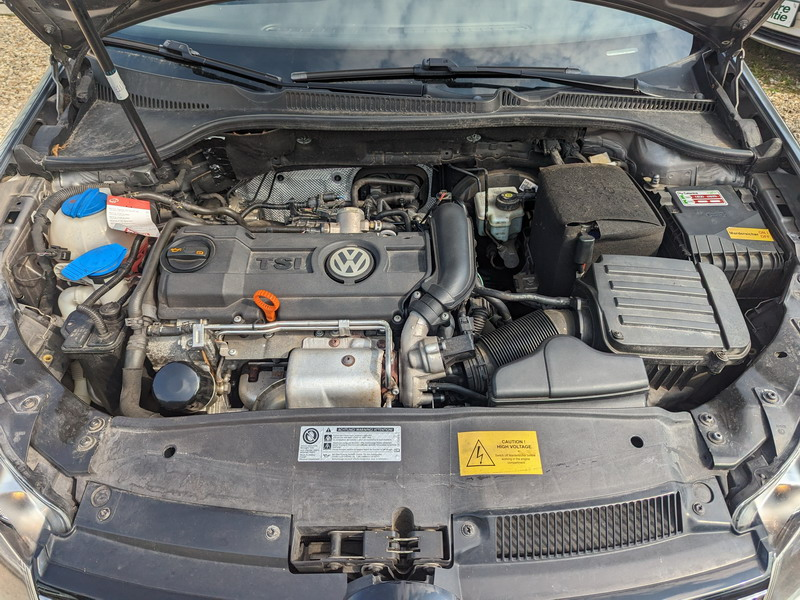
The 1.4 TSI Engine: Compact Powerhouse
The 1.4 TSI debuted as part of Volkswagen’s EA111 engine family, proving that small displacement combined with turbocharging could match larger naturally aspirated engines. Available in single-turbo (122 HP) and twin-charged versions (160 HP with both turbo and supercharger), this engine became the backbone of VW Group’s efficiency strategy across Golf, Scirocco, Jetta, and numerous Audi, Seat, and Skoda models.
The engine features an aluminium cylinder head on an iron block, chosen for durability in this high-stress turbocharged application. At just 107kg, the 1.4 TSI represents excellent packaging efficiency. Key technologies include direct fuel injection for precise fuel delivery, variable valve timing on intake and exhaust camshafts, and a timing chain system designed for extended service life.
The Timing Chain System
Unlike timing belt engines requiring scheduled replacement, the 1.4 TSI uses a timing chain intended to last the engine’s lifetime. However, early EA111 engines developed a reputation for premature timing chain tensioner failure, particularly affecting vehicles manufactured between 2008-2011. Volkswagen revised the tensioner design multiple times, with later production units proving more reliable.
The timing chain system makes oil quality absolutely critical. The chain tensioner relies on hydraulic oil pressure to maintain proper tension. Poor quality oil, extended drain intervals, or incorrect specifications can accelerate wear on the tensioner and chain, potentially leading to catastrophic engine damage if the chain skips timing.
Engine Oil Specifications for VW Golf 6 1.4 TSI
Golf 6 1.4 TSI (2008-2012)
Recommended oil: Castrol EDGE 5W-40 Engine Oil (see on Amazon)
Technical Specifications:
- Oil viscosity: SAE 5W-40 or 5W-30 (VW 502 00 approved)
- Alternative viscosity: 0W-40 (VW 502 00 approved)
- Oil capacity: 3.6 litres with filter change
- Required specification: VW 502 00 (fixed service intervals)
- Alternative specification: VW 504 00 (LongLife service intervals)
- Power outputs: 122 HP (90 kW) single turbo, 160 HP (118 kW) twincharger
- Torque: 200 Nm (147 lb-ft), up to 240 Nm on twincharger
- Engine codes: CAXA (122 HP), CAVD (160 HP twincharger)
- Configuration: Inline 4-cylinder, turbocharged, direct injection
- Features: Timing chain, variable valve timing, intercooler
Understanding VW 502 00 Specification
Volkswagen developed the VW 502 00 specification for gasoline engines operating under demanding conditions. This specification ensures oils provide adequate protection for turbocharged, direct-injection engines like the 1.4 TSI:
High-temperature stability: The formulation maintains protective film strength at the extreme temperatures experienced by turbocharger bearings, which can reach oil temperatures exceeding 150°C.
Shear stability: VW 502 00 oils resist viscosity breakdown under the mechanical stress of high-RPM turbo operation, maintaining their protective properties throughout the service interval.
Detergent packages: Special additive chemistry helps manage carbon deposits inherent to direct injection engines, keeping critical components clean.
Timing chain protection: The oil must maintain consistent viscosity to ensure the hydraulic timing chain tensioner operates correctly, preventing chain slack that could lead to timing problems.
Critical warning: Generic oils meeting only API SN or ACEA A3/B4 specifications without explicit VW 502 00 approval may lack the specific additive packages required for this engine. Always verify VW 502 00 approval on the container before use.
VW 502 00 vs VW 504 00: Which Specification?
Confusion exists around which specification to use for the Golf 6 1.4 TSI. Understanding the difference helps owners make informed decisions:
VW 502 00 (Fixed Service):
- Designed for 15,000 km or 12-month oil change intervals
- Typically 5W-40 or 0W-40 viscosity
- Higher SAPS (Sulphated Ash, Phosphorus, Sulphur) additive levels
- Better suited for shorter, more frequent oil changes
- Preferred by enthusiasts and specialists for the 1.4 TSI
VW 504 00 (LongLife Service):
- Designed for extended 30,000 km or 24-month intervals
- Typically 5W-30 viscosity
- Low SAPS formulation compatible with emissions systems
- Used by VW dealers following factory service schedules
Recommendation for 1.4 TSI owners: Most independent specialists recommend VW 502 00 oils with more frequent changes (10,000 km maximum) rather than VW 504 00 with extended intervals. The timing chain tensioner and turbocharger benefit from fresh oil, and the direct injection system’s tendency toward carbon buildup means more frequent changes help maintain engine cleanliness.
Common 1.4 TSI Problems and Oil-Related Prevention
While the 1.4 TSI earned praise for its performance-efficiency balance, certain issues developed over time. Many relate directly to oil maintenance:
Timing Chain Tensioner Failure
Symptoms: Rattling noise on cold start, check engine light, engine misfires, poor performance
Cause: Hydraulic tensioner loses pressure or fails mechanically, allowing chain to develop slack
Prevention:
- Use ONLY VW 502 00 or 504 00 approved oil
- Change oil every 10,000 km maximum
- Never leave the car in gear on hills (chain can skip when engine off)
- Allow engine to idle briefly before shutdown after spirited driving
Cost of failure: Timing chain kit replacement typically £600-1,200 at independent specialists
Carbon Buildup on Intake Valves
Symptoms: Rough idle, hesitation, reduced power, poor fuel economy
Cause: Direct injection doesn’t wash intake valves with fuel, allowing carbon accumulation from crankcase ventilation
Prevention:
- Use quality 95+ RON fuel from major brands
- Regular motorway driving at higher RPMs
- Consider walnut blasting cleaning every 60,000-80,000 km
- Use oils with strong detergent packages (VW 502 00)
Turbocharger Issues
Symptoms: Whistling noise, loss of power, blue smoke, oil consumption
Cause: Oil starvation from clogged passages, coking from heat cycles, incorrect viscosity
Prevention:
- Use correct VW-approved oil ensuring instant cold-start lubrication
- Allow engine to idle 30-60 seconds before shutdown after boost
- Regular oil changes prevent varnish buildup in oil passages
Approved Oil Brands and Formulations
Only use oils explicitly meeting VW 502 00 or 504 00 specification:
Castrol Edge 5W-40 A3/B4: Widely available full synthetic meeting VW 502 00. Strong shear stability and excellent turbo protection. Available at Halfords, EuroCarParts, and motor factors across Europe.
Mobil 1 0W-40: Premium full synthetic meeting VW 502 00 with excellent cold-flow properties. Ideal for cold climate operation and provides superior turbocharger protection.
Liqui Moly Synthoil High Tech 5W-40: German-made full synthetic meeting VW 502 00. Popular choice among European car enthusiasts with strong detergent properties.
Shell Helix Ultra 5W-40: Full synthetic meeting VW 502 00. Widely available globally with proven performance in turbocharged applications.
Motul 8100 X-cess 5W-40: Premium synthetic meeting VW 502 00 with high HTHS viscosity providing excellent protection under extreme conditions.
Fuchs Titan GT1 Pro C3 5W-30: Meets both VW 502 00 and 504 00 specifications, offering flexibility for different service approaches.
Critical: Always verify the VW 502 00 or 504 00 approval printed on the container. Oils meeting only generic ACEA A3/B4 without explicit VW approval may not provide adequate protection for the timing chain tensioner system.
Oil Change Intervals: VW Recommendations vs Best Practice
Volkswagen’s official service schedule offers two approaches for UK and European market Golf 6 models:
Fixed Service: 15,000 km or 12 months with VW 502 00 oil
LongLife Service: 30,000 km or 24 months with VW 504 00 oil
However, given the timing chain tensioner’s sensitivity to oil condition and the direct injection engine’s carbon buildup tendency, many specialists recommend more conservative intervals:
Recommended Practical Intervals
Normal driving (10,000 km or 12 months):
This interval provides excellent timing chain protection while respecting modern synthetic capabilities. Most independent VW specialists and enthusiast communities recommend 10,000 km maximums for EA111 1.4 TSI engines.
Severe service (7,500 km or 6 months):
Severe service includes predominantly short trips under 10 km, extensive stop-start traffic, cold climate without adequate warm-up time, or spirited driving with frequent boost usage.
First oil change (5,000 km):
Perform initial service earlier than manufacturer recommendations to remove break-in particles and establish clean conditions for the timing chain system.
Why Conservative Intervals Matter
The hydraulic timing chain tensioner requires clean, properly viscous oil to maintain chain tension. Degraded oil can cause the tensioner to lose pressure, allowing the chain to develop slack. Combined with the direct injection engine’s tendency toward internal contamination, fresh oil provides significant insurance against expensive repairs.
High-Mileage Considerations (100,000+ km)
As Golf 6 1.4 TSI engines accumulate mileage, maintenance emphasis shifts:
- Continue VW 502 00 oil exclusively—maintain manufacturer specification
- Shorter intervals: 7,500-10,000 km maximum regardless of driving conditions
- Timing chain inspection: Have chain condition assessed if rattling develops
- Carbon cleaning: Consider professional intake valve cleaning at 80,000-100,000 km
- Turbo inspection: Address any unusual whistling or smoke immediately
- Oil consumption monitoring: Some consumption (up to 0.5L per 1,000 km) is normal; excessive consumption indicates potential issues
Essential Maintenance Reminders
- Use ONLY VW 502 00 or 504 00 approved oil—timing chain system depends on correct specification
- Never exceed 10,000 km between changes—shorter intervals protect against known weaknesses
- Check oil level fortnightly—turbo engines can consume oil between services
- Replace oil filter at every change using VW genuine or equivalent quality
- Monitor for timing chain rattle—address immediately if cold-start rattling develops
- Use quality 95+ RON fuel from major brands to minimise carbon buildup
- Allow proper warm-up—avoid high boost until oil reaches operating temperature
- Brief idle before shutdown—30 seconds after spirited driving protects turbo
- Keep detailed service records with oil brand and specification noted
Conclusion
The Volkswagen Golf 6 1.4 TSI represents excellent engineering, delivering performance and efficiency in a practical package. Its turbocharged, direct-injection design rewards owners who understand its specific maintenance requirements.
Success with the 1.4 TSI requires commitment to using VW 502 00 or 504 00 approved oils exclusively, maintaining conservative oil change intervals (10,000 km maximum), and addressing any timing chain symptoms promptly. The relatively modest additional cost of proper oil and more frequent changes provides significant insurance against timing chain failure—a repair that can exceed £1,000 and risks catastrophic engine damage if ignored.
With correct care, the Golf 6 1.4 TSI delivers engaging performance and excellent fuel economy for years of reliable service. Those who respect its maintenance requirements enjoy a refined, efficient driving experience backed by Volkswagen’s engineering expertise.