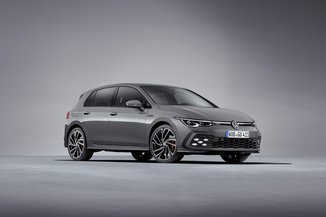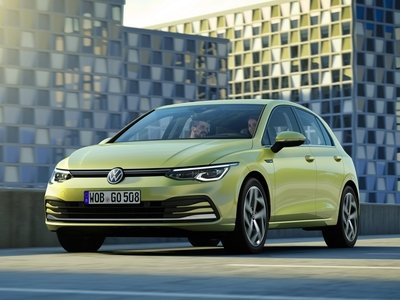
Best Engine Oil for VW Golf Mk7 1.5 TSI 130/150 HP
The Volkswagen Golf Mk7 with the 1.5 TSI EA211 EVO engine (2017-2020) represents VW’s modern approach to efficient turbocharged performance, introducing Active Cylinder Technology (ACT) that deactivates two of four cylinders under light loads achieving exceptional fuel economy (4.8-5.5 L/100 km) while delivering responsive acceleration (8.5-9.2s 0-100 km/h). Available in 130 HP and 150 HP outputs sharing identical architecture, this advanced four-cylinder combines direct injection (up to 350 bar), Miller-cycle combustion, variable-geometry or wastegate turbocharging, and integrated GPF emissions control. Understanding the critical VW 504 00/507 00 oil specification, managing carbon accumulation requiring walnut blasting around 60,000-80,000 km, recognizing ACT vibration as normal design features, and appreciating timing belt “lifetime” service controversy enables owners to maximize reliable operation this innovative EA211 EVO powerplant delivers with appropriate 5W-30 oil and informed maintenance.
Quick Answer: Recommended Oil
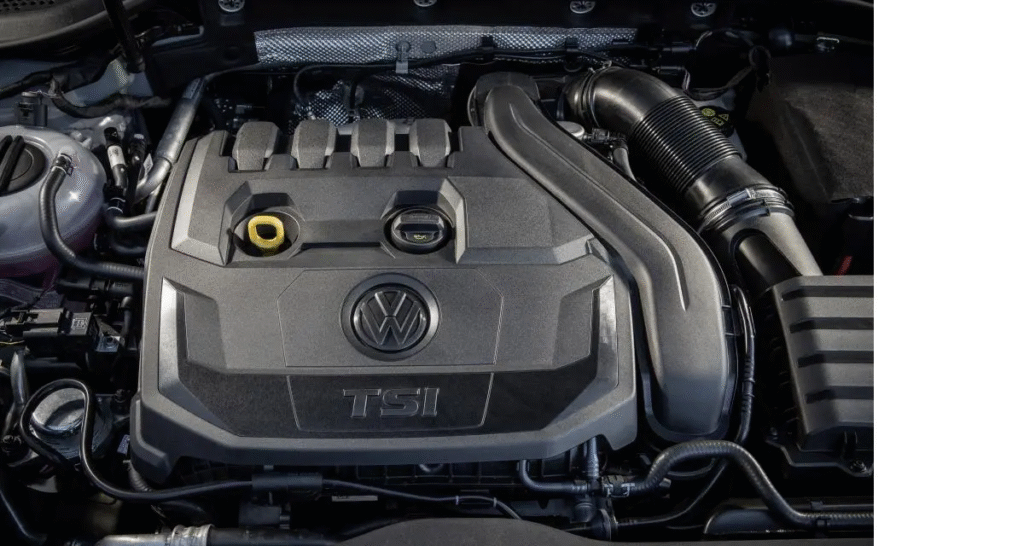
For Golf Mk7 1.5 TSI (both variants):
- Required viscosity: SAE 5W-30 (mandatory for VW specification)
- VW specification: 504 00/507 00 (essential for GPF and timing belt protection)
- ACEA specification: C3 (mid-SAPS for GPF compatibility)
- Oil capacity: 4.3 liters with filter
- Recommended oils:
- Castrol Edge Professional 5W-30 LL (VW 504 00/507 00 approved)
- Mobil 1 ESP Formula 5W-30 (Superior thermal stability)
- Shell Helix Ultra Professional AM-L 5W-30 (OEM quality)
- TotalEnergies Quartz Ineo Long Life 5W-30 (Value quality)
EA211 EVO Technology Focus: This advanced engine emphasizes preventive maintenance over emergency interventions. VW 504 00/507 00 oil at 12,000-15,000 km (shortened from official intervals for ACT protection), timing belt inspection starting at 100,000-120,000 km despite “lifetime” claims, walnut blasting for carbon removal 60,000-80,000 km, software updates addressing ACT drivability, and driving techniques supporting cylinder deactivation operation prove essential for long-term reliability with this sophisticated, efficient powertrain.
The 1.5 TSI EA211 EVO Engine (ACT Technology)
The 1.5 TSI EA211 EVO in the Golf Mk7 represents VW’s evolutionary response to increasingly stringent efficiency and emissions requirements. With 1,498cc displacement across four cylinders, this turbocharged gasoline engine delivers modern performance (130-150 HP, 200-250 Nm) while achieving remarkable fuel economy through innovative Active Cylinder Technology deactivating cylinders 2 and 3 under light loads—effectively running as a two-cylinder engine during urban cruising, highway coasting, and steady-state motorway operation.
Technical Foundation: Aluminum cylinder block with cast-iron liners (130 HP) or plasma-coated cylinder walls (150 HP), aluminum DOHC cylinder head with integrated exhaust manifold, Bosch Generation 4.0 direct injection (up to 350 bar, five-hole injectors), variable-geometry turbocharger (130 HP) or wastegate turbo (150 HP), water-cooled intercooler, Miller-cycle combustion (early inlet valve closing, 12.5:1 compression), timing belt drive (maintenance-free composite construction), GPF (Gasoline Particulate Filter) integration.
ACT (Active Cylinder Technology): The defining feature differentiating the 1.5 TSI from competitors. Under light loads (urban cruising 50-70 km/h, motorway coasting, steady-state driving), the engine management system deactivates fuel injection and spark in cylinders 2 and 3. The intake and exhaust valves remain closed, creating sealed compression chambers acting as “air springs” following crankshaft rotation with minimal friction. The remaining cylinders 1 and 4 operate at higher efficiency due to increased individual load. Fuel economy improvements: 10-15% in real-world mixed driving versus conventional four-cylinder operation.
ACT Operation Characteristics: Cylinder deactivation produces noticeable but entirely normal characteristics: subtle vibration change when switching between 2-cylinder and 4-cylinder modes, distinctive “boom” or resonance when reactivating cylinders during acceleration, enhanced awareness of engine operation compared to conventional four-cylinder engines. These characteristics represent design features—not malfunctions—optimized for efficiency rather than complete refinement.
Technical Specifications by Power Output
1.5 TSI 130 HP (96 kW) – Code DPBA:
Power 130 HP @ 5,000-6,000 RPM, torque 200 Nm @ 1,500-3,500 RPM, 9.2s 0-100 km/h, 205 km/h top speed, 5.0-5.5 L/100 km (114-125 g/km CO2). Iron cylinder liners, VTG turbo. 6-speed manual or 7-speed DSG. Weight 1,270-1,320 kg.
1.5 TSI 150 HP (110 kW) – Code DPCA/DADA:
Power 150 HP @ 5,000-6,000 RPM, torque 250 Nm @ 1,500-3,500 RPM, 8.5s 0-100 km/h, 224 km/h top speed, 4.8-5.2 L/100 km (110-119 g/km CO2). Plasma-coated cylinders, sodium-filled exhaust valves, wastegate turbo. 6-speed manual or 7-speed DSG. Weight 1,270-1,330 kg.
Oil Requirements (Both Variants):
Viscosity SAE 5W-30 only, VW 504 00/507 00 mandatory, capacity 4.3 liters with filter, ACEA C3, intervals 12,000-13,000 km recommended (VW official 15,000 km).
Both variants share identical architecture and ACT technology. The 150 HP achieves higher output through plasma-coated cylinders, optimized turbo calibration, sodium-filled valves, and ECU mapping. The torque difference (200 vs 250 Nm) provides more responsive acceleration.
Oil Specification: VW 504 00/507 00
VW 504 00/507 00 represents Volkswagen’s advanced low-SAPS specification for turbocharged engines with GPF emissions control—particularly critical for the 1.5 TSI’s sophisticated systems.
ACEA C3 Rating: Mid-SAPS formulation balancing robust wear protection with GPF compatibility. Prevents GPF ash accumulation requiring expensive replacement (£800-1,200) or professional cleaning (£300-500).
5W-30 Viscosity Benefits: Excellent cold-start protection critical for ACT operation, adequate high-temperature protection for turbocharged performance, fuel economy contribution, optimal turbocharger bearing protection, timing belt lubrication compatibility.
Timing Belt Protection: The 1.5 TSI uses an oil-lubricated timing belt—not a dry belt. Quality VW 504 00/507 00 oil maintains proper belt lubrication, prevents premature wear, supports ACT camshaft control, enables VW’s “lifetime” service claims.
Capacity (4.3 Liters): Adequate thermal capacity for turbocharged operation, reasonable contaminant dilution for 12,000-15,000 km intervals, sufficient for ACT operation where two cylinders periodically run without combustion.
Top Oil Recommendations
Best Overall: Castrol Edge Professional 5W-30 LL
VW 504 00/507 00 approved formulation specifically engineered for VW Group turbocharged engines with GPF. Proven protection for ACT cylinder deactivation systems requiring robust oil film strength despite periodic two-cylinder operation. Widely available, reasonable pricing for 4.3L capacity. Cost: £45-58/5L.
High-Performance Choice: Mobil 1 ESP Formula 5W-30
Meets VW 504 00/507 00 with exceptional thermal stability for sustained high-speed motorway operation where the 1.5 TSI excels. Superior shear stability maintains viscosity through extended 15,000 km intervals. Robust turbocharger protection under sustained boost (particularly 150 HP variant). Cost: £50-65/5L.
OEM Quality: Shell Helix Ultra Professional AM-L 5W-30
VW 504 00/507 00 approved offering proven GPF protection and ACT system compatibility. Formulation used in VW workshops globally. Adequate protection for normal driving patterns across both power variants. Cost: £43-55/5L.
Value Quality: TotalEnergies Quartz Ineo Long Life 5W-30
ACEA C3 approved providing solid performance for 12,000-15,000 km intervals. Adequate GPF protection and wear characteristics at mid-range pricing. Widely available across Europe. Cost: £38-48/5L.
Oil Change Intervals & Service Schedule
VW Official: 15,000 km or 12 months (flexible service regime)
Recommended Practice: 12,000-13,000 km or annually
Interval Considerations (ACT Engine):
- Primarily urban driving with frequent ACT operation: 12,000 km
- Mixed urban/motorway driving: 12,000-13,000 km
- Predominantly motorway use: 13,000-15,000 km
- Always annually regardless of mileage
- ACT engines warrant slightly shortened intervals: Periodic two-cylinder operation creates unique thermal and oil distribution patterns
ACT-Specific Considerations: Cylinder deactivation creates distinct oil behavior. When cylinders 2 and 3 deactivate, oil film requirements change—the sealed cylinders require minimal lubrication while active cylinders 1 and 4 operate under higher individual loads requiring robust protection. This intermittent high-load/low-load cycling proves more demanding than conventional four-cylinder operation, justifying conservative 12,000-13,000 km intervals despite VW’s 15,000 km claims.
Regular Maintenance Requirements
Timing Belt Service (Lifetime Service Controversy)
VW Official Position: “Lifetime” or 150,000 miles (240,000 km) service interval, no time-based replacement
UK Reality: VW UK originally recommended 5 years or 60,000 miles, recently aligned with European “lifetime” guidance
Professional Consensus: Inspect starting at 100,000-120,000 km, consider replacement based on condition
The Controversy: The 1.5 TSI timing belt uses advanced composite construction (teflon-reinforced materials) with oil lubrication enabling extended service life versus traditional dry belts requiring 60,000-80,000 km replacement. However, professional mechanics report variability in actual belt condition—some belts show excellent condition at 120,000 km, others demonstrate concerning wear requiring replacement. The ACT system complicates service: specialized diagnostic equipment (£1,500-2,000 tooling investment) required for precise camshaft alignment ensuring proper cylinder deactivation operation.
Recommended Strategy:
- 100,000-120,000 km: Professional inspection with VW diagnostic equipment
- Visible wear indicators: Replace immediately regardless of mileage
- Conservative approach: Consider replacement at 150,000-180,000 km despite “lifetime” claims
- Cost: £600-1,000 including water pump (belt-driven, replace preventively)
Service Components: Timing belt, water pump (belt-driven), coolant flush/refill, ACT system calibration with diagnostic equipment.
Carbon Buildup & ACT System Management
Carbon Accumulation (Direct Injection): DI engines inject fuel directly into combustion chambers—intake valves receive no fuel washing, enabling carbon buildup. Symptoms: rough idle, hesitation, reduced power. Typical onset 60,000-80,000 km. Service: Walnut blasting £300-500. Prevention: regular motorway driving (high-RPM operation), periodic “Italian tune-up” (5-10 minutes at 4,000-5,000 RPM), quality fuel additives every 3,000-5,000 km. Carbon buildup proves inevitable—prevention delays but doesn’t eliminate service requirement.
ACT Normal Characteristics (NOT Malfunctions): Subtle vibration when switching 2-cylinder ↔ 4-cylinder modes, distinctive “boom” sound reactivating cylinders, enhanced engine sound versus conventional engines, occasional hesitation 1,200-2,000 RPM during transitions. Software updates: VW released multiple updates improving ACT smoothness—ensure latest ECU calibration installed. Driving techniques: gentle throttle during urban cruising (maximizes 2-cylinder operation), anticipate acceleration needs, maintain steady motorway speeds, avoid “lugging” below 1,500 RPM.
GPF & Turbocharger Maintenance
GPF (Gasoline Particulate Filter): Integrated emissions control capturing particulate matter. Unlike diesel DPF, GPF regenerates passively during normal operation without active cycles. Quality VW 504 00/507 00 oil at appropriate intervals extends GPF life beyond 150,000 km. Incorrect oil accelerates ash accumulation requiring replacement/cleaning.
Turbocharger Care: 130 HP VTG turbo provides excellent low-end response but requires clean oil. 150 HP wastegate turbo slightly simpler but still demands proper maintenance. Replacement £700-1,200 if catastrophic failure. Prevention: Quality oil, 30-60 seconds warm-up after cold starts, avoid aggressive driving immediately after starting.
130 HP vs 150 HP: Choosing Your Variant
130 HP: Adequate torque (200 Nm), VTG turbo, best fuel economy (5.0-5.5 L/100 km), iron cylinder liners, ideal for efficient commuting.
150 HP: Strong torque (250 Nm), plasma-coated cylinders, sodium-filled valves, wastegate turbo, moderate economy penalty (4.8-5.2 L/100 km), most engaging for enthusiastic driving.
Maintenance: Both share identical service requirements. The 150 HP’s higher performance warrants consistent 12,000-13,000 km oil intervals. Both use identical ACT technology—the 150 HP’s additional torque enables more frequent 2-cylinder operation during cruising.
Maximizing Golf Mk7 1.5 TSI Longevity
Essential Maintenance: VW 504 00/507 00 oil at 12,000-13,000 km, timing belt inspection 100,000-120,000 km (consider replacement by 150,000-180,000 km), walnut blasting 60,000-80,000 km, software updates for ACT, quality fuel, spark plugs 60,000-80,000 km.
ACT Best Practices: Understand normal vibration/sound characteristics, drive smoothly maximizing 2-cylinder operation, avoid excessive urban idling, periodic motorway driving for carbon management, ensure latest ECU calibration.
Long-Term Reliability: The 1.5 TSI EA211 EVO proves robust with comprehensive maintenance. Early 2017-2018 models experienced more ACT complaints resolved through software. Later 2019-2020 production incorporated refinements improving smoothness. Key: understand ACT as design feature not defect, maintain timing belt despite “lifetime” claims, manage carbon proactively, use correct VW 504 00/507 00 oil consistently.
Conclusion
The Volkswagen Golf Mk7 1.5 TSI (130/150 HP) requires VW 504 00/507 00 approved SAE 5W-30 oil meeting ACEA C3 specification with 4.3-liter capacity for optimal protection of the sophisticated ACT cylinder deactivation system, GPF emissions control, and oil-lubricated timing belt assembly.
Choose proven oils: Castrol Edge Professional LL, Mobil 1 ESP Formula, Shell Helix Ultra Professional AM-L, or TotalEnergies Quartz Ineo Long Life. Verify VW 504 00/507 00 or ACEA C3 approval.
EA211 EVO Excellence: The 1.5 TSI achieves impressive efficiency (4.8-5.5 L/100 km) and responsive performance (8.5-9.2s 0-100 km/h) through innovative ACT technology. Understanding normal ACT characteristics (vibrations, sounds during cylinder switching), managing predictable carbon accumulation (walnut blasting 60,000-80,000 km), addressing timing belt service controversy (inspect at 100,000-120,000 km despite “lifetime” claims), and using correct oil specification enable confident long-term ownership.
When maintained comprehensively with VW 504 00/507 00 specification oil at conservative intervals, timing belt attention, proactive carbon management, and software updates addressing drivability, the Golf Mk7 1.5 TSI delivers the sophisticated efficiency and performance VW intended—proving that modern turbocharged engines with cylinder deactivation technology achieve reliable operation when owners understand their unique characteristics and maintenance requirements rather than treating them as conventional four-cylinder engines requiring conventional service approaches.