Best Engine Oil for Volkswagen Polo 6 1.0 MPI 65/75/80 HP
The Volkswagen Polo 6 with the 1.0 MPI (Multi-Point Injection) engine represents a refreshingly simple approach in an era dominated by complex turbocharged technology. Available in 65 HP, 75 HP, and 80 HP configurations, this naturally-aspirated three-cylinder engine prioritizes reliability, low running costs, and straightforward maintenance over outright performance. With no turbocharger, no direct injection, and conventional port fuel injection, the 1.0 MPI offers worry-free motoring for budget-conscious buyers—provided you use the correct oil specification.
Quick Answer: Recommended Oil
For Polo 6 1.0 MPI (65/75/80 HP):
- Recommended viscosity: SAE 5W-30 (best all-around choice)
- Alternative viscosities: 5W-40 or 10W-40 (acceptable but not optimal)
- VW specification: VW 502 00 (standard) or VW 504 00 (longlife, optional)
- Oil capacity: 3.75 liters with filter
- Recommended oils:
Simplicity principle: Unlike turbocharged TSI engines requiring ultra-specific oils, the 1.0 MPI tolerates a wider range of specifications. VW 502 00 with 5W-30 viscosity provides optimal protection without premium pricing.
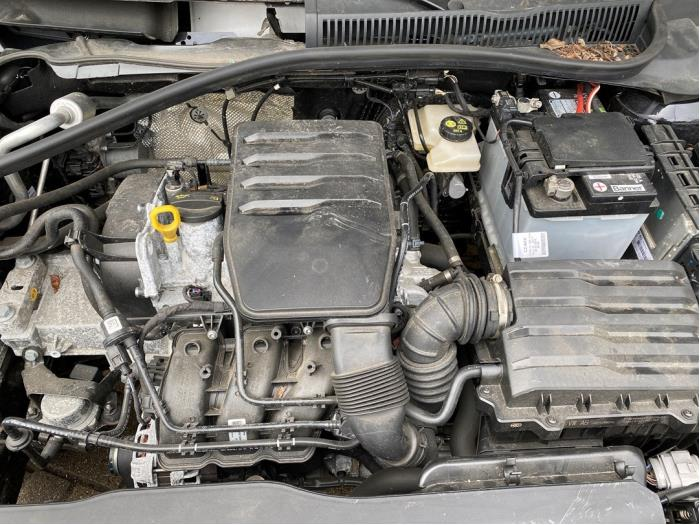
The 1.0 MPI EA211 Engine
Part of Volkswagen’s modular EA211 engine family introduced in 2012, the 1.0 MPI shares fundamental architecture with its turbocharged TSI siblings but strips away complexity. This three-cylinder naturally-aspirated unit displaces 999cc through the same 74.5mm bore used across the EA211 range. The modest displacement combines with port fuel injection to deliver adequate performance for city driving while sipping fuel at just 4.8-5.2 L/100 km.
Simple By Design
No Turbocharger: The defining characteristic separating the 1.0 MPI from TSI variants is the complete absence of forced induction. Air enters through a conventional intake manifold without compression, exhaust exits through a standard manifold without turbine. This simplicity eliminates turbo bearings requiring instant oil circulation, wastegate actuators prone to sticking, and the intense thermal stress that demands synthetic oil.
Port Fuel Injection: Unlike direct injection TSI engines spraying fuel directly into combustion chambers at 200+ bar pressure, the 1.0 MPI uses conventional multi-point injection. Individual injectors spray fuel into intake ports at low pressure (3-5 bar), where it mixes with incoming air before entering cylinders. This “old-fashioned” approach completely eliminates intake valve carbon buildup—the plague of direct injection engines.
Three-Cylinder Configuration: Sharing the 1.0 TSI’s triple-cylinder layout, the MPI variant uses identical bore spacing and aluminum construction. However, without turbocharger cooling demands or direct injection heat, the naturally-aspirated design runs cooler and stresses oil less. The same balancer shaft system eliminates vibration characteristic of three-cylinder engines.
Timing Belt System: Following EA211 family design, the 1.0 MPI uses a low-friction timing belt rather than chain. The belt requires replacement every 90,000-120,000 km depending on market, but eliminates timing chain tensioner failures that plagued older Volkswagen engines. Belt-driven design also reduces internal friction, contributing to the MPI’s efficiency.
Power Output Variants
65 HP (48 kW): Base specification delivering 95 Nm torque @ 3,000-4,300 RPM. Entry-level Polo targeting maximum economy. Adequate for urban use; struggles on motorways.
75 HP (55 kW): Mid-range variant producing 95 Nm torque. Same mechanics as 65 HP with ECU recalibration. Popular across Europe balancing performance and economy.
80 HP (59 kW): Top MPI specification generating 93-95 Nm torque. Introduced 2019 as most powerful naturally-aspirated variant. Acceptable acceleration for daily driving. Compression ratio: 10.5:1 across all variants.
Understanding VW Oil Specifications
The 1.0 MPI’s naturally-aspirated design permits simpler oil requirements compared to turbocharged engines.
VW 502 00 (Standard Specification – Recommended)
VW 502 00 represents Volkswagen’s mainstream petrol engine oil standard used successfully for decades.
Key Features:
- SAE 5W-30 or 5W-40 viscosity (5W-30 preferred)
- ACEA A3/B4 performance level
- Fixed service intervals (10,000-15,000 km)
- Traditional additive package
- Proven formulation across millions of engines
Advantages:
- Lower cost than VW 504 00 (£25-40 for 5L vs £40-60)
- Widely available from all major brands
- Adequate protection for naturally-aspirated operation
- No complicated low-SAPS requirements
Who Should Use VW 502 00:
- Budget-conscious owners
- Those performing 10,000 km service intervals
- Drivers seeking maximum parts availability
- Anyone wanting simple, proven protection
VW 504 00 (Longlife Specification – Optional)
VW 504 00 is the advanced standard developed for turbocharged engines but fully compatible with the 1.0 MPI.
Key Features:
- SAE 5W-30 or 0W-30 viscosity only
- ACEA C3 performance level (low SAPS)
- Extended service capability (up to 30,000 km theoretical)
- Premium synthetic formulation
- Superior thermal stability
Advantages:
- Better protection if extending drain intervals
- Excellent cold-start performance (especially 0W-30)
- Modern formulation meeting latest standards
- Compatible across entire VW range
Who Should Use VW 504 00:
- Owners following VW longlife service
- Cold climate operators (0W-30 variant)
- Those wanting maximum protection
- Drivers keeping vehicles long-term (200,000+ km)
Practical Note: While VW 504 00 offers superior protection, the 1.0 MPI’s unstressed naturally-aspirated operation doesn’t demand it. VW 502 00 provides entirely adequate protection at lower cost for most owners.
Why 5W-30 Viscosity Is Optimal
The “5W-30” designation balances cold-start protection with operating efficiency for the 1.0 MPI.
5W (Winter Rating): Ensures oil flows at -30°C, providing instant lubrication to timing belt tensioner, camshafts, and crankshaft bearings during cold starts. While the MPI lacks a turbocharger requiring immediate circulation, proper cold-start lubrication prevents accelerated wear during warm-up cycles that represent the most damaging operating phase.
30 (Operating Viscosity): Maintains adequate film strength at 100°C while remaining thin enough to minimize friction in the MPI’s narrow oil passages. The naturally-aspirated design doesn’t generate extreme heat like turbocharged engines, so heavy 40-weight viscosity provides no additional protection while reducing fuel economy.
5W-40 and 10W-40: While VW approves these heavier viscosities, they offer no advantage for the 1.0 MPI in modern climates. 5W-40 reduces fuel economy by 0.2-0.3 L/100 km compared to 5W-30. 10W-40 additionally harms cold-start protection in winter temperatures. Use only if 5W-30 is genuinely unavailable.
Technical Specifications by Power Output
All 1.0 MPI variants share identical oil requirements:
- Engine configuration: Inline-3 cylinder, transverse
- Displacement: 999cc (1.0 liter)
- Valvetrain: DOHC, 12 valves, timing belt-driven
- Compression ratio: 10.5:1 (all variants)
- Fuel system: Multi-Point Injection (port injection)
- Aspiration: Naturally-aspirated (no turbo)
- Oil capacity: 3.75 liters with filter
- Oil filter: Mann W 712/73 or Mahle OC 996
- Oil viscosity: SAE 5W-30 (preferred), 5W-40 or 10W-40 (acceptable)
- Oil specification: VW 502 00 (standard) or VW 504 00 (premium)
- ACEA rating: A3/B4 (VW 502 00) or C3 (VW 504 00)
- API rating: SN or higher
The 3.75-liter capacity is 0.25L less than the turbocharged 1.0 TSI (4.0L), reflecting the simpler design without turbo oil lines.
Top Oil Recommendations
Best Value: Castrol GTX Magnatec 5W-30 A3/B4
Meeting VW 502 00 specification, Castrol’s GTX Magnatec provides intelligent molecules that cling to engine components during shutdown, reducing cold-start wear. Excellent for the 1.0 MPI’s naturally-aspirated operation where frequent short trips create repeated warm-up cycles. Widely available and competitively priced (£30-38 for 5L). Ideal for owners performing 10,000-12,000 km service intervals.
Premium Choice: Mobil 1 ESP Formula 5W-30
While formulated for low-SAPS requirements (VW 504 00), Mobil 1’s advanced synthetic works superbly in the 1.0 MPI. Superior thermal stability and extended drain capability make it worth premium pricing (£45-55 for 5L) for owners following longlife service or keeping vehicles long-term. Excellent cold-start protection to -35°C.
European Standard: Shell Helix HX7 Professional 5W-30
Shell’s VW 502 00 approved formulation balances protection and value. Strong detergent package keeps engine clean over extended use—important for naturally-aspirated engines lacking forced induction’s self-cleaning effect. Widely stocked across European garages and dealerships. Competitive pricing (£28-35 for 5L).
German Quality: Liqui Moly Leichtlauf High Tech 5W-30
German-engineered oil meeting VW 502 00 with excellent anti-wear additives. Particularly strong in cold-start scenarios and stop-start city driving common to Polo use. Robust additive package maintains properties throughout 10,000-15,000 km intervals. Mid-range pricing (£35-42 for 5L) reflects quality engineering.
Oil Change Intervals
VW Official Recommendation:
- Fixed service: 15,000 km or 1 year
- Longlife service: Up to 30,000 km (with VW 504 00 oil)
Recommended Practice: 10,000-12,000 km or annually for most drivers.
Realistic Interval Rationale: While the 1.0 MPI lacks the turbocharger stress and direct injection fuel dilution affecting TSI engines, oil still degrades through normal operation. Naturally-aspirated engines running cooler actually retain contaminants longer—combustion byproducts, moisture, and fuel residue accumulate without the high-temperature “burn-off” effect of turbocharged operation.
Consider 7,500 km intervals if:
- Primarily short trips under 10 km (cold-start wear)
- Heavy city traffic (frequent acceleration/deceleration)
- Dusty environments (increased contamination)
- Vehicle exceeds 100,000 km
- Maximum engine longevity desired (300,000+ km)
The modest £30-40 oil cost every 10,000 km represents excellent insurance against premature wear.
Why Correct Oil Matters
Timing Belt Protection: While the timing belt itself doesn’t contact oil, the hydraulic tensioner maintaining proper tension operates via oil pressure. Degraded oil causes inadequate tensioning, leading to belt slippage, noise, and potential jumping—catastrophic in interference engines like the 1.0 MPI.
Extended Engine Life: The 1.0 MPI’s simple design enables extraordinary longevity with proper maintenance. Many owners report 250,000-300,000+ km with original engines—longevity impossible with degraded oil. Fresh VW-approved oil ensures maximum lifespan.
Fuel Economy: The MPI achieves impressive efficiency (4.8-5.2 L/100 km) partly through low-friction 5W-30 oil. Heavier viscosities increase internal resistance, costing 0.2-0.4 L/100 km in real-world consumption. Over 150,000 km, this difference represents £800-1,200 in fuel costs—far exceeding premium oil expenses.
Preventing Oil Consumption: Some EA211 engines consume oil due to piston ring or PCV valve issues. While less common in naturally-aspirated MPI variants versus turbocharged TSI models, using quality VW-approved oil minimizes consumption by maintaining ring seal and proper PCV operation.
Common 1.0 MPI Problems
Water Pump Leaks: Plastic housing can crack causing coolant loss. Replacement costs £300-600. Proactive replacement at 80,000-100,000 km recommended.
Timing Belt Service: Requires replacement every 90,000-120,000 km. Failure risks catastrophic engine damage (£2,000-3,500). Combined belt and water pump service costs £400-700.
Minor Oil Consumption: Some high-mileage engines consume 0.2-0.5L per 10,000 km. Usually PCV valve or valve stem seals rather than rings. Address consumption exceeding 0.5L per 10,000 km.
Ignition Coil Failure: Individual coils occasionally fail causing misfires. Replacement costs £80-150 per coil.
Advantages Over Turbocharged Alternatives
Lower Maintenance Costs: No turbocharger service, no carbon cleaning, simplified systems. Annual maintenance £200-300 versus £400-600 for TSI models.
Superior Reliability: Naturally-aspirated operation eliminates turbo failures (£1,200-1,800), timing chain problems, and fuel dilution concerns. Routinely exceeds 250,000 km.
Flexible Oil Requirements: TSI engines demand specific synthetics. The MPI tolerates wider specifications and slightly extended intervals without damage.
Conclusion
The Volkswagen Polo 6 1.0 MPI 65/75/80 HP requires VW 502 00 approved SAE 5W-30 oil for optimal protection and longevity. While VW 504 00 oils offer premium performance, the naturally-aspirated MPI’s unstressed operation doesn’t demand ultra-synthetic formulations. Quality VW 502 00 oil from trusted brands—Castrol GTX, Shell Helix, Mobil 1, or Liqui Moly—provides entirely adequate protection at lower cost.
Prioritize 10,000-12,000 km service intervals rather than VW’s optimistic 15,000-30,000 km recommendations. The modest £30-40 invested in regular oil changes prevents timing belt tensioner failures (£400-700 repair), premature engine wear, and preserves the exceptional longevity that makes the 1.0 MPI so appealing.
In an era of complex turbocharged engines requiring premium oils and specialized maintenance, the 1.0 MPI represents refreshing simplicity. No turbocharger bearings to oil-starve, no carbon-clogged valves requiring walnut blasting, no timing chains to stretch. Just straightforward port injection, naturally-aspirated reliability, and low running costs—provided you use correct 5W-30 oil and change it regularly.
Combined with timely timing belt service (90,000-120,000 km), regular coolant system monitoring, and quality VW-approved oil changed every 10,000 km, your Polo 6 1.0 MPI will deliver worry-free transportation well beyond 250,000 km at ownership costs far below turbocharged alternatives.