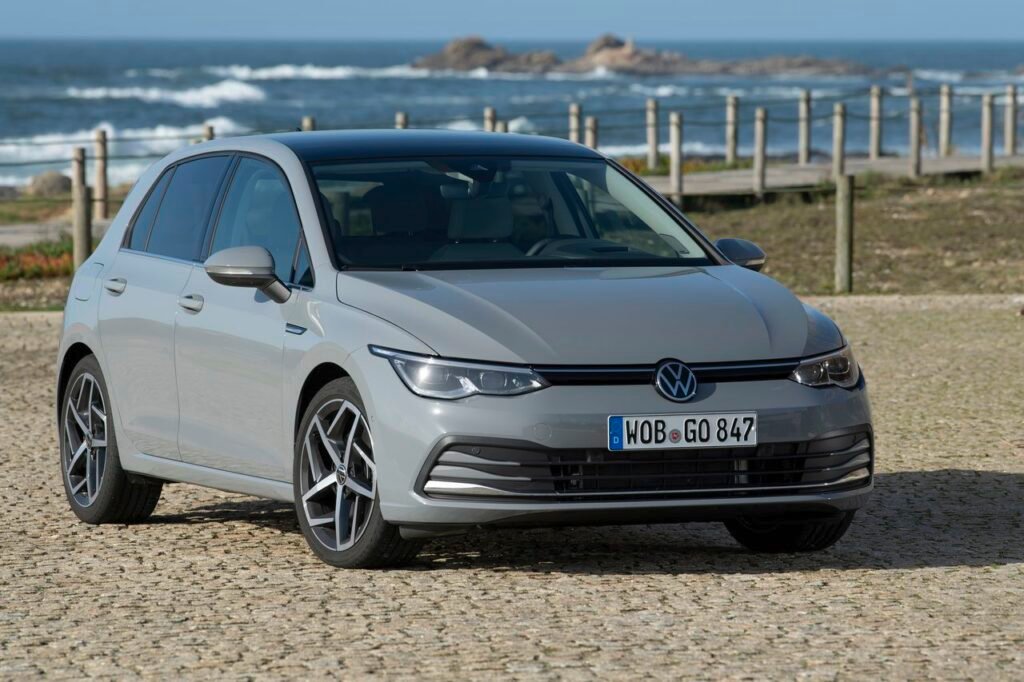
Best Engine Oil for Volkswagen Golf 8 1.0 TSI 90/110 HP
The Volkswagen Golf 8 with the 1.0 TSI three-cylinder engine represents an efficient and economical entry point to the iconic hatchback lineup. This compact turbocharged powerplant delivers either 90 or 110 horsepower, providing adequate performance for urban and highway driving while achieving impressive fuel economy figures of 4.3-5.2 L/100 km. Understanding proper oil specifications for this high-strung small-displacement engine proves essential for reliability, as the three-cylinder design operates under significant stress to extract respectable power from just 999 cubic centimeters.
The 1.0 TSI Engine: Small Displacement, High Technology
The EA211 1.0 TSI belongs to Volkswagen’s latest-generation small-displacement engine family, featuring a three-cylinder inline configuration with 999cc displacement. Despite its modest size, this sophisticated powerplant incorporates cutting-edge technologies including direct fuel injection, a variable geometry turbocharger (VGT), Miller cycle combustion, and a gasoline particulate filter meeting Euro 6d-ISC-FCM emissions standards.
The three-cylinder architecture brings inherent advantages including reduced weight and friction losses, contributing directly to excellent fuel economy. However, three-cylinder engines experience greater mechanical stress than equivalent four-cylinder designs due to inherent imbalance in firing pulses. The 1.0 TSI fires once every 240 degrees of crankshaft rotation rather than every 180 degrees like a four-cylinder, creating vibration challenges that require precise engineering and robust components.
To extract 90-110 horsepower from such small displacement, Volkswagen pushes this engine relatively hard. The turbocharger operates at elevated boost pressures, cylinder pressures reach high levels, and specific output (90-110 HP per liter) exceeds many larger engines. This intensive operation demands exceptional lubrication, making oil selection and maintenance intervals critically important for longevity.
eTSI Mild Hybrid Integration
The 1.0 eTSI variants add a 48-volt mild hybrid system comprising a belt-driven starter-generator and compact lithium-ion battery. This technology enables several efficiency-enhancing features including extended start-stop operation (functional up to 15 km/h), coasting/sailing mode where the engine shuts off during deceleration, and brake energy recuperation.
The mild hybrid system creates additional lubrication challenges through frequent engine start-stop cycles. The 1.0 eTSI experiences hundreds more restart events annually compared to conventional versions, with each shutdown allowing oil to drain from upper engine components. When the engine restarts seconds later, proper oil viscosity becomes critical for instant circulation preventing dry-start wear. This makes the specified ultra-low viscosity 0W-20 synthetic absolutely mandatory rather than optional.
The 7-speed DSG dual-clutch transmission pairs exclusively with eTSI variants, providing smooth automated gear changes that complement the mild hybrid system’s refined operation. Interestingly, the mild hybrid system doesn’t change engine oil specifications—both conventional TSI and eTSI variants require identical VW 508 00 approved oils.
Understanding Three-Cylinder Stress and Oil Demands
Three-cylinder engines present unique engineering challenges that affect lubrication requirements. The inherent imbalance from odd-cylinder firing creates secondary vibrations requiring balance shafts to mitigate. These components add moving parts that depend on oil circulation, and the vibration itself subjects oil to additional shearing forces.
The high specific output (90-110 HP from 999cc equals 90-110 HP per liter) means cylinder pressures and temperatures exceed larger, lower-stressed engines. During boost, combustion chamber temperatures climb rapidly, and the small displacement means less thermal mass to absorb heat. The oil operates in a demanding environment requiring exceptional thermal stability and oxidation resistance.
The turbocharger operates at extreme speeds exceeding 200,000 RPM, with bearings entirely dependent on pressurized oil for survival. The variable geometry mechanism adds complexity and additional lubrication demands. Even brief oil starvation or contaminated oil can damage turbo bearings, causing failures costing €1,500-2,500 to repair.
Engine Oil Specifications
1.0 TSI 90 HP
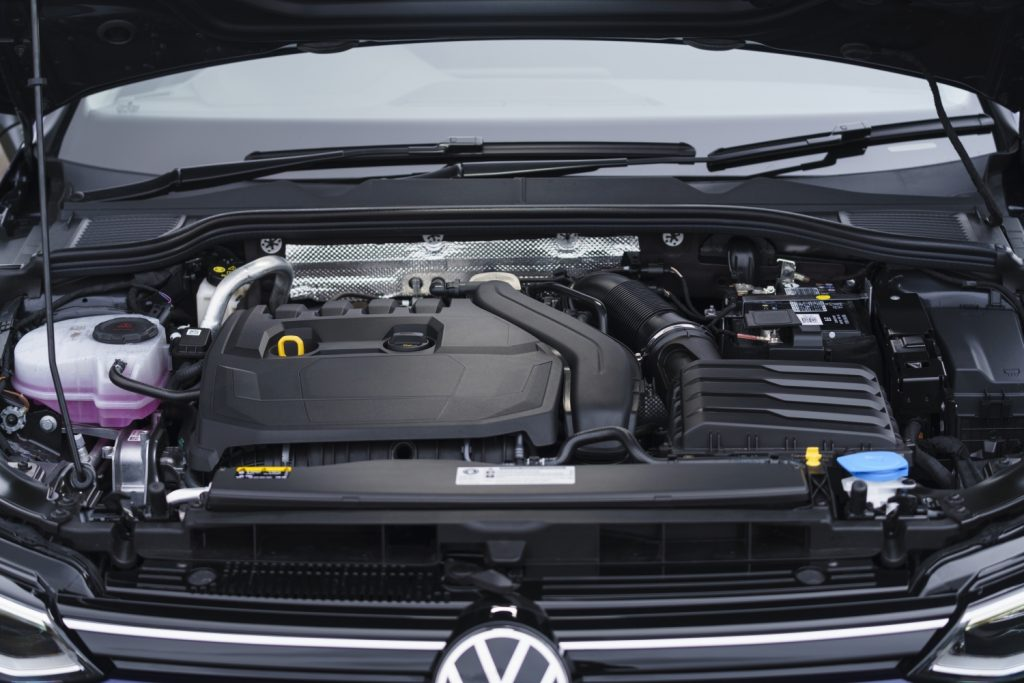
Technical Specifications:
- Oil viscosity: SAE 0W-20 (mandatory)
- Oil capacity: 3.7-4.0 liters (3.9-4.2 quarts) with filter
- Required specification: VW 508 00 / VW 509 00, ACEA C5, API SN Plus or SP
- Horsepower: 90 HP (66 kW) @ 5,000-5,500 RPM
- Torque: 160 Nm (118 lb-ft) @ 1,500-3,500 RPM
- Fuel type: Gasoline (95 RON minimum)
- Compression ratio: 10.5:1
- Engine code: DLAB
- Configuration: Inline 3-cylinder, turbocharged
- Features: Direct injection, VGT turbocharger, Miller cycle, gasoline particulate filter
- Available transmissions: 5-speed manual, 6-speed manual
- Recommended oil filter: Mann HU 719/7 x or original VW filter
Recommended oil: Castrol EDGE Professional LL IV FE 0W-20 (see on Amazon)
1.0 TSI 110 HP (DLAA Engine Code)
Technical Specifications:
- Oil viscosity: SAE 0W-20 (mandatory)
- Oil capacity: 3.7-4.0 liters (3.9-4.2 quarts) with filter
- Required specification: VW 508 00 / VW 509 00, ACEA C5, API SN Plus or SP
- Horsepower: 110 HP (81 kW) @ 5,000-5,500 RPM
- Torque: 200 Nm (148 lb-ft) @ 2,000-3,000 RPM
- Fuel type: Gasoline (95 RON minimum, 98 RON recommended)
- Compression ratio: 10.5:1
- Engine code: DLAA
- Configuration: Inline 3-cylinder, turbocharged
- Features: Direct injection, VGT turbocharger, Miller cycle, gasoline particulate filter
- Available transmissions: 6-speed manual, 7-speed DSG
- 0-100 km/h: 10.2 seconds (DSG), 10.9 seconds (manual)
- Recommended oil filter: Mann HU 719/7 x or original VW filter
Recommended oil: Mobil 1 ESP Formula 0W-20 (see on Amazon)
1.0 eTSI 90 HP (Mild Hybrid)
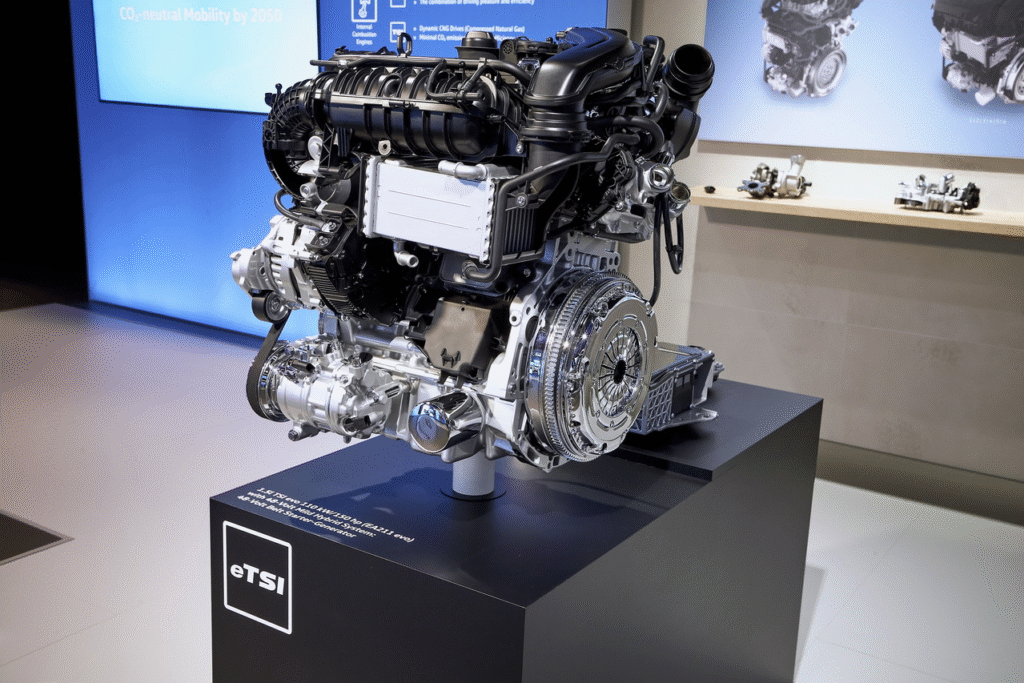
Technical Specifications:
- Oil viscosity: SAE 0W-20 (mandatory)
- Oil capacity: 3.7-4.0 liters (3.9-4.2 quarts) with filter
- Required specification: VW 508 00 / VW 509 00, ACEA C5, API SN Plus or SP
- Horsepower: 90 HP (66 kW) @ 5,000-5,500 RPM
- Torque: 175 Nm (129 lb-ft) @ 1,500-4,000 RPM
- Fuel type: Gasoline (95 RON minimum)
- 48V mild hybrid system: Belt-driven starter-generator, 48V lithium-ion battery
- Transmission: 7-speed DSG only
- Combined fuel consumption: 4.5-4.9 L/100 km (WLTP)
- Additional features: Extended start-stop, coasting mode, brake energy recuperation
- Recommended oil filter: Mann HU 719/7 x or original VW filter
Recommended oil: Shell Helix Ultra Professional AF 0W-20 (see on Amazon)
1.0 eTSI 110 HP (Mild Hybrid)
Technical Specifications:
- Oil viscosity: SAE 0W-20 (mandatory)
- Oil capacity: 3.7-4.0 liters (3.9-4.2 quarts) with filter
- Required specification: VW 508 00 / VW 509 00, ACEA C5, API SN Plus or SP
- Horsepower: 110 HP (81 kW) @ 5,000-5,500 RPM
- Torque: 200 Nm (148 lb-ft) @ 2,000-3,000 RPM
- Fuel type: Gasoline (95 RON minimum, 98 RON recommended)
- 48V mild hybrid system: Belt-driven starter-generator, 48V lithium-ion battery
- Transmission: 7-speed DSG only
- 0-100 km/h: 10.2 seconds
- Combined fuel consumption: 4.3-5.2 L/100 km (WLTP)
- Additional features: Extended start-stop, coasting mode, brake energy recuperation
- Recommended oil filter: Mann HU 719/7 x or original VW filter
Recommended oil: Total Quartz INEO First 0W-20 (see on Amazon)
The Critical Importance of VW 508 00 Specification
Volkswagen’s VW 508 00 / 509 00 specification represents the manufacturer’s most stringent oil standard, mandatory for Golf 8 1.0 TSI engines. This goes far beyond generic API or ACEA certifications, requiring specific testing for VW’s engine technologies:
Extended drain capability: Laboratory validation for intervals up to 30,000 km (though practical intervals should be much shorter)
Low SAPS formulation: Reduced Sulfated Ash, Phosphorus, and Sulfur to protect gasoline particulate filters from contamination
LSPI protection: Stringent testing against low-speed pre-ignition events that can destroy pistons in turbocharged direct-injection engines
Thermal stability: Resistance to viscosity breakdown under the elevated temperatures three-cylinder engines with high specific output experience
Start-stop compatibility: Formulation optimized for thousands of engine restart cycles eTSI systems experience
Turbocharger protection: Enhanced film strength protecting turbo bearings operating at extreme speeds
0W-20 viscosity mandate: The ultra-low viscosity directly contributes to fuel economy targets and emissions compliance
Critical warning: Older VW specifications including VW 502 00 (conventional oil), VW 504 00 (5W-30 synthetic), or VW 507 00 (diesel) are absolutely not approved for Golf 8 1.0 TSI engines and will void warranty while potentially causing long-term damage. The 1.0 TSI requires the specific VW 508 00 formulation exclusively.
Oil Consumption: An Expected Characteristic
The 1.0 TSI engine family shows elevated oil consumption compared to larger, lower-stressed engines. Owners report consumption ranging from 300-700ml per 10,000 km, with some experiencing even higher rates during initial break-in. This occurs due to several factors:
High specific output: Extracting 90-110 HP from 999cc creates elevated cylinder pressures that stress piston rings, allowing minute oil quantities past seals
Three-cylinder vibration: The inherent imbalance subjects seals and gaskets to greater stress than smoother four-cylinder engines
Turbocharger operation: The VGT turbo consumes small oil quantities through its bearing system, normal for turbocharged engines
PCV system characteristics: The Positive Crankcase Ventilation routes blow-by gases (containing oil mist) back into the intake, where some enters combustion
Break-in period: During the first 10,000-15,000 km, piston rings bed against cylinder walls, with consumption often elevated during this phase
Volkswagen technically considers consumption up to 0.5 liters per 1,000 km within normal parameters, though most engines stabilize around 0.3-0.5L per 10,000 km after break-in completes. This seems high compared to larger engines, but represents acceptable performance for small, high-output turbocharged units.
Essential practice: Check oil level every 1,000-1,500 km, particularly during the first 20,000 km. The relatively small 3.7-4.0L capacity means even 500ml consumption represents a significant percentage. Running low risks turbocharger damage or timing chain wear, both expensive to repair.
Carbon Buildup: The Direct Injection Challenge
As a direct injection engine, the 1.0 TSI sprays fuel directly into combustion chambers rather than intake ports. While improving efficiency and power, this eliminates fuel’s cleaning action on intake valves, allowing carbon deposits to accumulate gradually over tens of thousands of kilometers.
Symptoms of carbon buildup:
- Rough idle, especially during cold starts
- Hesitation or flat spots during acceleration
- Reduced fuel economy
- Engine misfires under load
- Illuminated check engine light with misfire codes
Prevention strategies:
Use premium 98 RON fuel: Higher-octane fuel from major brands (Shell V-Power, Total Excellium, BP Ultimate) contains enhanced detergent additives that minimize carbon formation
Spirited driving sessions: Occasionally allowing the engine to reach higher RPMs (4,000-5,500 RPM) under load helps burn off forming deposits through elevated combustion temperatures
Quality fuel system cleaners: Adding products like Liqui Moly Valve Clean or Techron Concentrate every 5,000-7,500 km provides additional detergent action
Italian tune-up: Once monthly, find a safe stretch of highway and accelerate briskly through the gears, maintaining 4,000+ RPM for several minutes. This raises exhaust gas temperatures significantly, helping burn deposits.
Walnut blasting service: At 60,000-80,000 km intervals, consider professional walnut shell blasting to remove accumulated carbon. This service costs €200-400 but dramatically restores performance on affected engines.
Compared to larger engines, the 1.0 TSI’s small combustion chambers and high specific output may accelerate carbon accumulation. Proactive prevention through premium fuel and occasional spirited driving helps minimize this common direct-injection issue.
Turbocharger Longevity Considerations
The variable geometry turbocharger represents one of the 1.0 TSI’s most sophisticated and failure-prone components. The VGT mechanism adjusts internal vanes to optimize boost across the RPM range, providing instant response without traditional turbo lag. However, this complexity introduces additional failure points.
Common turbocharger issues:
Carbon buildup in VGT mechanism: Exhaust soot accumulates on variable geometry vanes, causing them to stick or operate sluggishly
Bearing wear: Inadequate oil maintenance or low oil levels accelerate bearing damage, leading to shaft play and oil consumption
Wastegate problems: The electronically controlled wastegate can malfunction, causing overboost or underboost conditions
Oil seal failure: Degraded turbo seals allow oil into the intake or exhaust, visible as blue smoke
Prevention requires meticulous maintenance:
Strict oil change intervals: Never exceed 15,000 km between changes, with 10,000-12,000 km preferable for turbocharged engines
Use only VW 508 00 oils: The low-SAPS formulation minimizes carbon-causing ash deposits while providing adequate turbo bearing protection
Monitor oil levels religiously: Check every 1,000-1,500 km, maintaining proper level. Low oil starves turbo bearings within seconds under boost.
Avoid aggressive driving when cold: Allow 3-5 minutes of gentle driving before boost operation, giving oil time to reach full operating temperature
Cool-down period: After spirited driving, idle for 30-60 seconds before shutdown, allowing the turbo to cool gradually rather than stopping oil circulation abruptly with components at peak temperature
Quality fuel: Premium 98 RON fuel burns cleaner, reducing exhaust carbon that can foul VGT mechanisms
Turbocharger replacement costs €1,500-2,500 including labor, making prevention far more economical than repair.
Oil Change Intervals: Theory vs. Prudent Practice
Volkswagen officially recommends oil changes at 15,000 km or 12 months for Golf 8 1.0 TSI engines using VW 508 00 oil, with some markets extending this to 30,000 km. While modern synthetic oils theoretically support these intervals under laboratory ideal conditions, real-world driving and the 1.0 TSI’s stressed operation warrant more conservative approaches.
Recommended practical intervals:
Every 10,000-12,000 km or annually for normal driving: This frequency provides excellent protection while avoiding risks of VW’s aggressive official recommendations. Most independent mechanics and enthusiasts consider this the maximum prudent interval for small turbocharged engines.
Every 7,500-10,000 km for severe service including:
- Predominantly short trips under 10 km (especially in winter)
- Extensive city driving with frequent stop-and-go traffic
- Mountainous or hilly terrain requiring sustained boost
- Dusty or dirty environments
- Extreme temperature operation (sustained below 0°C or above 35°C)
- Spirited driving or frequent full-throttle acceleration
The critical first oil change: Perform initial service at 5,000-7,500 km rather than waiting for VW’s 15,000-30,000 km recommendation. This removes metallic particles from break-in wear and establishes a maintenance baseline. Many progressive dealers now recommend this despite it not being officially mandated.
For eTSI mild hybrid variants: The thousands of additional start-stop cycles create more demanding conditions. Consider the shorter end of recommended intervals (10,000 km maximum) to account for this stress.
The 1.0 TSI’s small displacement, three-cylinder stress, high specific output, and turbocharging all argue for conservative oil change intervals. The modest cost of more frequent services provides insurance against expensive turbocharger or timing chain repairs.
Approved Oil Brands and Formulations
Only use oils explicitly displaying VW 508 00 or VW 509 00 approval. Major brands offering approved formulations:
Castrol EDGE Professional LL IV FE 0W-20: Premium synthetic meeting VW 508 00/509 00 with Fluid TITANIUM technology. Excellent thermal stability and LSPI protection.
Mobil 1 ESP Formula 0W-20: Advanced synthetic meeting VW 508 00/509 00 standards. Popular among VW enthusiasts for proven protection.
Shell Helix Ultra Professional AF 0W-20: PurePlus Technology synthetic meeting VW 508 00/509 00. Strong oxidation resistance.
Total Quartz INEO First 0W-20: French synthetic meeting VW 508 00/509 00 with excellent European market availability.
Liqui Moly Special Tec LR 0W-20: German synthetic with molybdenum friction modifiers, VW 508 00/509 00 approved.
Ravenol VMP 0W-20: High-performance synthetic meeting VW 508 00/509 00, popular in German markets.
Genuine VW Longlife IV 0W-20: Factory-branded oil guaranteeing warranty compliance, typically supplied by major manufacturers.
Critical: Never use oils approved only to older specs like VW 502 00, 504 00, or 507 00. These lack the precise formulation the 1.0 TSI requires.
Fuel Quality and Premium Fuel Benefits
The 1.0 TSI’s turbocharging and direct injection make fuel quality critically important:
Minimum: 95 RON meets VW’s specification
Recommended: 98 RON premium provides measurable benefits:
- Reduced carbon deposits on intake valves
- Lower LSPI risk under boost
- Better fuel economy (often offsetting higher cost)
- Cleaner combustion reducing oil contamination
Premium 98 RON fuels from Shell, Total, BP contain enhanced detergents helping maintain system cleanliness. Consider using premium fuel for at least one tank every three fill-ups.
High-Mileage Maintenance Adjustments
As 1.0 TSI engines accumulate kilometers:
Continue VW 508 00 oils exclusively: Unlike some engines, the 1.0 TSI must use 0W-20 regardless of mileage due to tight tolerances
Monitor oil consumption closely: Check every 1,000 km on engines with 80,000+ km, addressing increases promptly
Shorter intervals after 100,000 km: Reduce to 10,000 km maximum even under normal driving
Proactive carbon removal: Schedule walnut blasting at 60,000-80,000 km intervals
Consistent premium fuel: High-mileage engines benefit more from quality 98 RON fuel
Turbocharger assessment: Have turbo inspected around 100,000 km for shaft play or oil leaks
Essential Maintenance Reminders
Never exceed 12,000-15,000 km between oil changes regardless of VW’s official recommendations
Check oil levels every 1,000-1,500 km – the small capacity means consumption significantly impacts level
Use only VW 508 00/509 00 approved 0W-20 oils – other specs void warranty and risk damage
Replace filters with every change using quality Mann, Mahle, or OE VW parts
Use premium 98 RON fuel regularly to minimize carbon buildup
Allow proper warm-up before boost operation when cold
Monitor for warning signs: Turbo noise, excessive consumption, rough idle, or carbon symptoms require immediate attention
Keep detailed records documenting every service with dates, mileage, oil brand, and observations
The Volkswagen Golf 8 1.0 TSI represents an efficient and economical compact hatchback ideal for urban and highway driving. While the three-cylinder turbocharged design demands careful maintenance, proper oil care ensures these sophisticated engines deliver reliable service and excellent fuel economy throughout their lifespan.