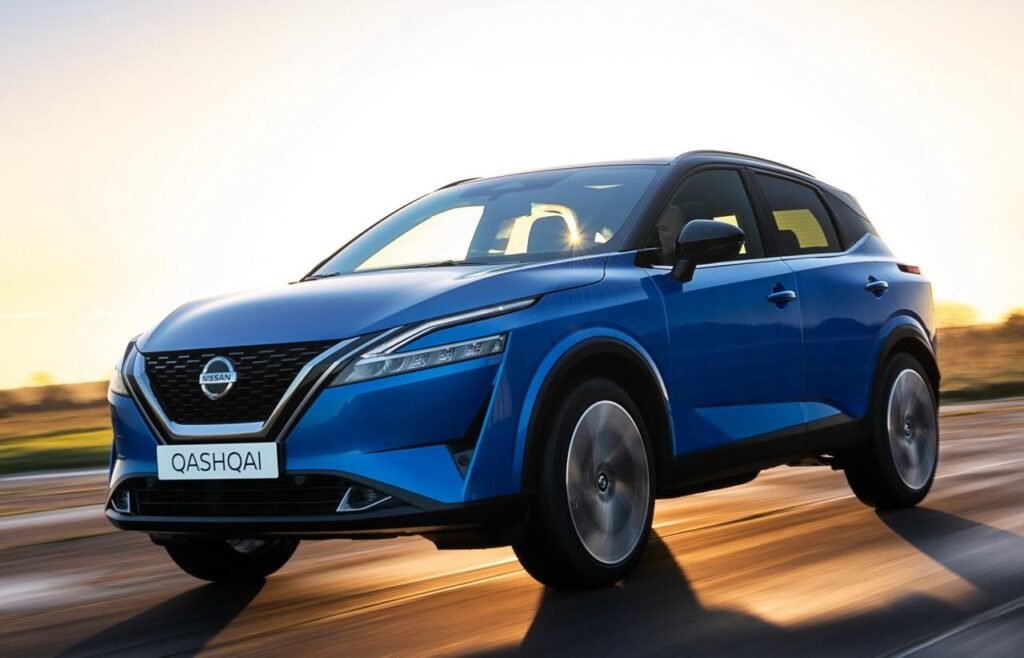
Best Engine Oil for Nissan Qashqai I (2007-2013): Complete Guide for All Engine Types
Introduction: Choosing the Right Engine Oil for Your Nissan Qashqai I
The Nissan Qashqai I, launched in 2007, revolutionized the compact crossover segment by combining SUV styling with car-like handling and efficiency. This pioneering model became one of Europe’s best-selling crossovers, appealing to drivers seeking elevated driving positions and versatile practicality without traditional SUV compromises. Whether you own a gasoline or diesel variant, maintaining optimal engine performance requires careful attention to one fundamental aspect: using the correct engine oil for your specific powertrain.
The first-generation Qashqai offered a focused engine range spanning efficient gasoline engines and robust diesel options designed for European driving conditions. Each powertrain incorporates technologies requiring specific oil specifications to ensure proper protection, maintain efficiency, and deliver the reliability Nissan engineered into these vehicles. Understanding these requirements and following proper maintenance procedures ensures your Qashqai I continues delivering dependable service well beyond typical ownership periods.
This guide provides detailed, engine-specific recommendations for every Nissan Qashqai I variant sold between 2007 and 2013. All recommendations are based on Nissan’s official specifications using ACEA standards, proven oil formulations, and automotive best practices. We’ll explore which oils to use, why these specifications matter, identify common issues specific to each engine, and provide maintenance strategies that help your Qashqai I deliver hundreds of thousands of kilometers of trouble-free service.
Understanding ACEA Oil Specifications for Nissan Engines
Nissan relies primarily on ACEA (Association des Constructeurs Européens d’Automobiles) specifications for defining oil requirements across the Qashqai I range. ACEA A3/B4 applies to gasoline engines, ensuring oils provide adequate protection during extended drain intervals, resist thermal breakdown, and incorporate detergent additives preventing deposit formation. ACEA C4 applies to diesel engines, representing a “Low SAPS” (Sulfated Ash, Phosphorus, and Sulfur) formulation designed for diesel particulate filter compatibility while maintaining adequate wear protection for high-pressure fuel injection systems.
The 5W-30 viscosity specified across all Qashqai I engines reflects Nissan’s engineering objectives balancing fuel efficiency with adequate protection. The “5W” indicates excellent cold-start protection with adequate fluidity down to approximately -30°C, while the “30” provides sufficient film strength at operating temperatures for protecting bearings and wear surfaces designed with modern tight tolerances.
Complete Oil Recommendation Table
See details
Engine | Type | Power | ACEA Standard | Viscosity | Capacity | Service Interval | Common Issues |
|---|---|---|---|---|---|---|---|
1.6L | Gasoline | 117 hp | A3/B4 | 5W-30 | 4.3 L | 15,000 km/1 year | Timing chain tensioner |
2.0L | Gasoline | 141 hp | A3/B4 | 5W-30 | 4.8 L | 15,000 km/1 year | Oil consumption |
1.5 dCi | Diesel | 106 hp | C4 | 5W-30 | 4.5 L | 20,000 km/1 year | Fuel injectors |
2.0 dCi | Diesel | 150 hp | C4 | 5W-30 | 6.3 L | 20,000 km/1 year | DPF clogging |
Best Engine Oil for Nissan Qashqai I Gasoline Engines
1.6L 117 hp Engine: The Efficient Four-Cylinder
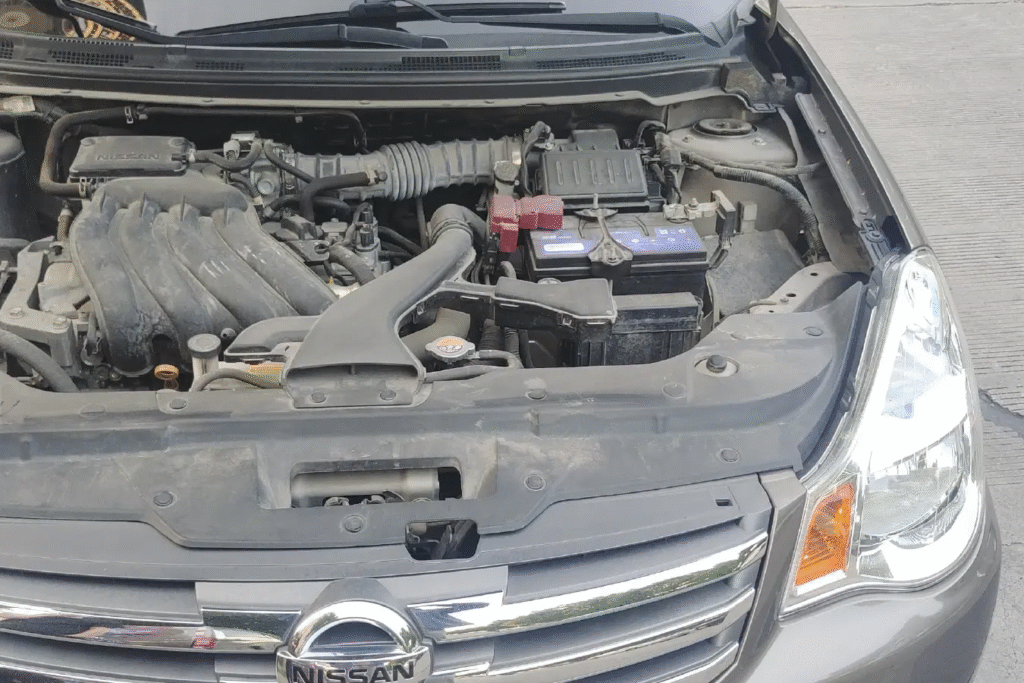
Technical Specifications:
- Oil capacity: 4.3 liters (with filter replacement)
- Oil filter type: Cartridge-style replaceable element
- Recommended oil: Mobil 1 ESP Formula 5W-30 (view on Amazon)
- Oil standard: ACEA A3/B4
- Timing system: Chain-driven (lifetime component when properly maintained)
- Service interval: 15,000 km or 1 year (whichever comes first)
The 1.6-liter naturally aspirated engine represents the entry-level gasoline option, producing 117 horsepower and approximately 158 Nm of torque. This four-cylinder engine prioritizes fuel efficiency and reliability through straightforward design, making it ideal for urban commuting and light highway use. The timing chain system eliminates periodic belt replacement requirements, though the chain tensioner proves vulnerable and requires quality oil for proper operation.
Mobil 1 ESP Formula 5W-30 provides optimal protection while meeting ACEA A3/B4 specifications. This fully synthetic oil maintains proper viscosity throughout the service interval while resisting thermal breakdown and providing superior cold-start protection. The advanced formulation ensures the timing chain tensioner receives adequate oil pressure for maintaining proper chain tension throughout the engine’s operational life.
The timing chain tensioner represents the 1.6L engine’s primary vulnerability. Early warning signs include rattling noises from the front of the engine during cold starts or immediately after shutdown. This rattling indicates excessive chain slack from tensioner wear or inadequate oil pressure. If you notice unusual noises, have your Qashqai inspected immediately, as progressive chain wear can eventually cause jumped timing and catastrophic engine damage.
Preventing timing chain issues requires maintaining oil levels between minimum and maximum marks at all times, checking at least monthly. Never extend oil change intervals beyond the recommended 15,000 kilometers, and use only oils meeting ACEA A3/B4 specifications. Regular oil level monitoring becomes particularly important as the vehicle accumulates mileage, as even modest consumption can indicate developing issues requiring attention.
2.0L 141 hp Engine: The Performance-Oriented Option
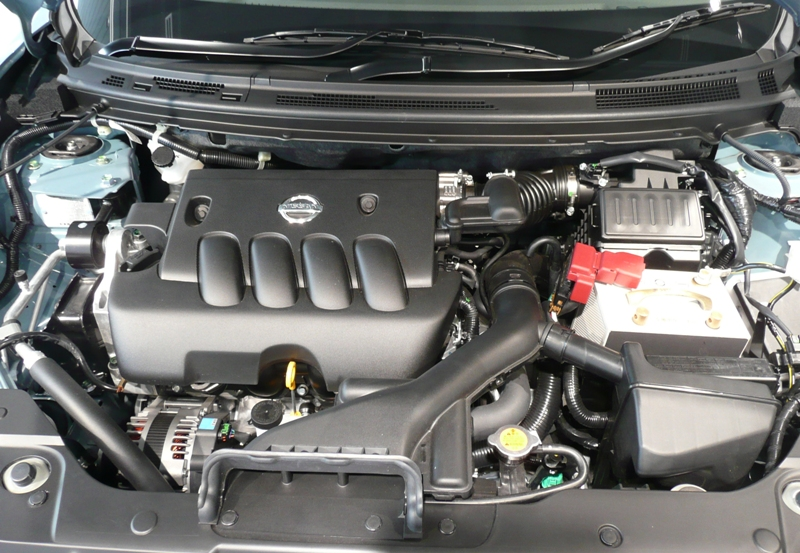
Technical Specifications:
- Oil capacity: 4.8 liters (with filter replacement)
- Oil filter location: Accessible from top of engine
- Recommended oil: Mobil 1 ESP Formula 5W-30 (view on Amazon)
- Oil standard: ACEA A3/B4
- Timing system: Chain-driven
- Service interval: 15,000 km or 1 year (whichever comes first)
The 2.0-liter naturally aspirated engine provides stronger performance, producing 141 horsepower and approximately 196 Nm of torque. This four-cylinder engine delivers noticeably better acceleration and highway passing ability while maintaining reasonable fuel economy. The increased displacement and higher output demand quality oil changed at proper intervals to ensure longevity under varied driving conditions.
Oil consumption represents the 2.0L engine’s most characteristic issue, with many examples consuming between 0.5 and 1.0 liters per 1,000 kilometers, particularly as mileage accumulates. While Nissan technically considers consumption up to one liter per 1,000 kilometers within acceptable specifications, such high consumption rates warrant investigation into potential causes including worn piston rings, degraded valve stem seals, or other issues requiring professional diagnosis.
Regular oil level monitoring becomes absolutely critical for 2.0L owners. Check oil levels at least every 1,000 kilometers and always before long journeys, maintaining levels between the minimum and maximum marks on the dipstick. Never allow the level to drop below minimum, as even brief periods of inadequate lubrication can cause bearing damage or accelerate wear on components already stressed by higher output characteristics. Keep a spare liter of the correct specification oil in your vehicle, as finding yourself low on oil during a journey can force difficult choices between continuing with insufficient oil or being stranded.
Best Engine Oil for Nissan Qashqai I Diesel Engines
1.5 dCi 106 hp Engine: The Economical Diesel
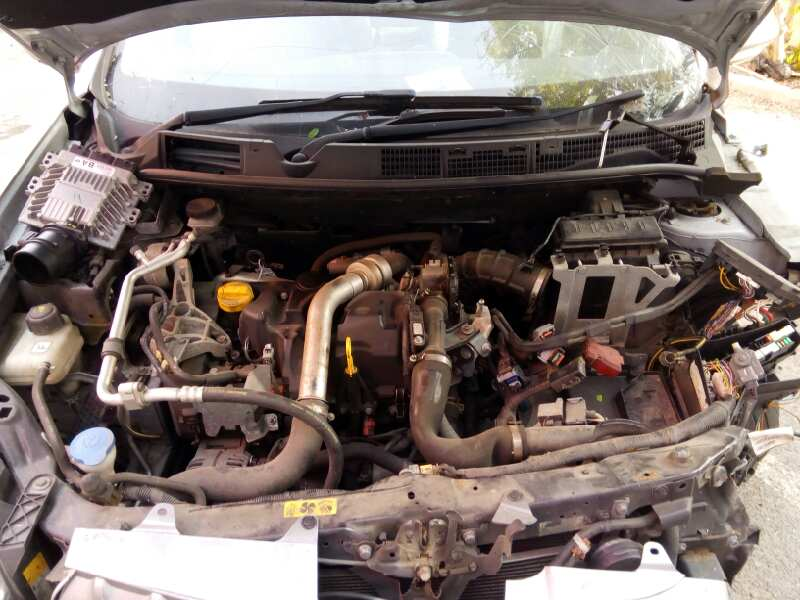
Technical Specifications:
- Oil capacity: 4.5 liters (with filter replacement)
- Oil filter type: Cartridge element
- Recommended oil: Total Quartz INEO ECS 5W-30 (view on Amazon)
- Oil standard: ACEA C4 (Low SAPS)
- DPF equipped: Yes (requires ACEA C4 specification oil)
- Service interval: 20,000 km or 1 year (whichever comes first)
The 1.5 dCi turbocharged diesel represents one of the most popular engines in the Qashqai I range, producing 106 horsepower and approximately 240 Nm of torque. This sophisticated four-cylinder diesel combines common-rail direct injection with turbocharging to deliver exceptional fuel economy regularly exceeding 50 miles per gallon while providing strong low-end torque ideal for crossover applications.
Total Quartz INEO ECS 5W-30 provides optimal protection while meeting the mandatory ACEA C4 Low SAPS specification required for DPF compatibility. This fully synthetic oil balances reduced ash content for particulate filter protection with adequate wear protection for the high-pressure fuel injection system operating at extreme pressures. The advanced dispersancy keeps soot contamination suspended rather than allowing deposit formation on critical engine surfaces.
Fuel injectors represent the 1.5 dCi’s primary maintenance concern, proving sensitive to fuel quality and contamination. Modern common-rail diesel injectors operate at extreme pressures and require quality diesel fuel from reputable suppliers. Symptoms of injector problems include difficult starting particularly when cold, rough idling, excessive smoke during acceleration, reduced performance, and increased fuel consumption. Professional injector cleaning every 60,000 kilometers helps maintain optimal spray patterns and combustion efficiency.
The diesel particulate filter requires regular highway driving to promote passive regeneration where accumulated soot burns off at elevated exhaust temperatures. Vehicles used primarily for short urban trips often cannot achieve conditions necessary for passive regeneration, leading to progressive filter clogging. Incorporate weekly highway sessions of 20-30 minutes at speeds above 70 km/h to maintain DPF health and prevent expensive filter replacement or forced regeneration procedures.
2.0 dCi 150 hp Engine: The Powerful Diesel Variant
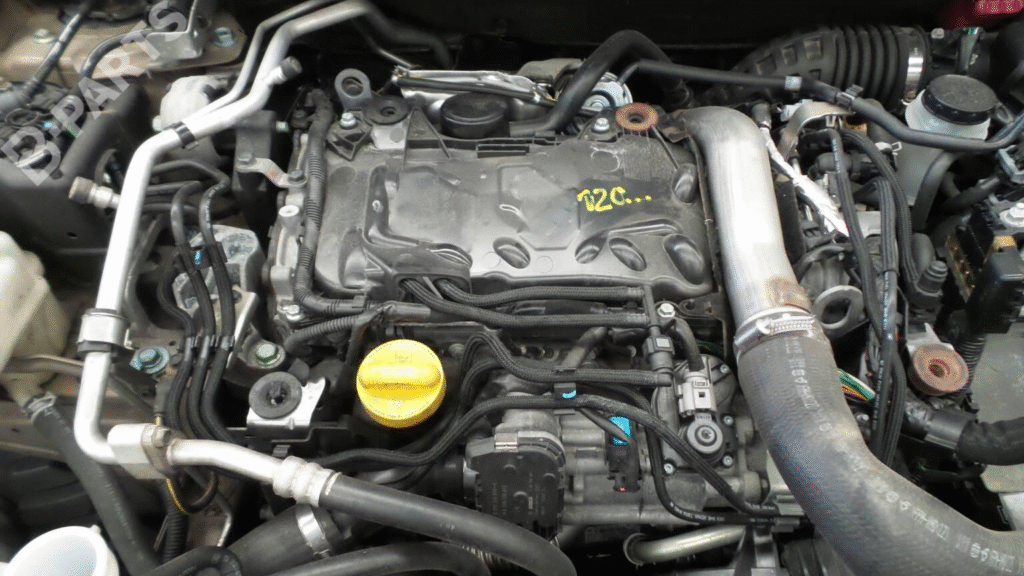
Technical Specifications:
- Oil capacity: 6.3 liters (with filter replacement)
- Oil filter location: Top-mounted for easy access
- Recommended oil: Total Quartz INEO ECS 5W-30 (view on Amazon)
- Oil standard: ACEA C4 (Low SAPS)
- Turbocharger type: Variable geometry
- Service interval: 20,000 km or 1 year (whichever comes first)
The 2.0 dCi produces 150 horsepower and up to 320 Nm of torque, delivering strong performance while maintaining impressive fuel economy. This sophisticated four-cylinder turbocharged diesel incorporates a variable geometry turbocharger that optimizes boost pressure across the engine’s rev range, providing excellent low-end torque and adequate high-speed power suitable for highway driving and towing duties.
The DPF system represents the primary maintenance concern for 2.0 dCi owners. The larger engine generates more particulate matter than the 1.5 dCi, making regular highway driving even more critical for preventing filter clogging. Symptoms of DPF issues include reduced performance, increased fuel consumption, unusual smells from the exhaust, and eventually warning lights indicating filter problems. Never ignore DPF warning lights, as continued operation with a severely clogged filter causes excessive exhaust backpressure that can damage the turbocharger or crack exhaust components.
Using exclusively ACEA C4 specification Low SAPS oils represents non-negotiable for DPF-equipped diesel engines. Conventional oils contain higher ash-forming compounds that dramatically accelerate filter clogging and reduce DPF service life. The larger 6.3-liter oil capacity provides additional contamination capacity, but this doesn’t eliminate the need for timely oil changes using correct specifications.
Complete Oil Change Procedure
Performing oil changes on the Nissan Qashqai I follows standard procedures with some model-specific considerations.
Required Tools and Materials:
- Oil filter wrench or appropriate socket
- New oil filter (Purflux LS998 for gasoline, LS946 for diesel)
- New drain plug crush washer
- Appropriate quantity and specification of engine oil
- Oil drain pan with 7-liter capacity
- Funnel, clean rags, and protective gloves
Procedure:
Begin by warming the engine through a 5-10 minute drive. Position the vehicle on level ground, engage the parking brake, then safely raise and support the front end. Locate the drain plug on the oil pan bottom, place your drain pan beneath it, then carefully loosen. Allow complete draining for 10-15 minutes.
Most Qashqai I engines feature top-mounted cartridge-style filters accessible from the engine bay. Use the appropriate socket to loosen the filter housing cap, remove the old element, clean the housing thoroughly, then install the new filter ensuring O-rings are properly seated. Reinstall the housing cap torquing to specification (typically 25 Nm).
Clean the drain plug, install a new washer, then reinsert and torque to specification (typically 25-30 Nm). Lower the vehicle, remove the oil filler cap, and begin adding oil gradually. Add approximately 80% of total capacity initially, check the level after several minutes, then add remaining oil in small increments until reaching maximum.
Start the engine and idle for one minute while monitoring the oil pressure warning light. Check for leaks, shut off the engine, wait five minutes, then perform a final level check. Reset the service indicator following your owner’s manual procedure.
Common Problems and Preventive Maintenance
Understanding characteristic issues for each Qashqai I engine allows preventive maintenance that avoids costly repairs.
1.6L Timing Chain Tensioner: Listen for rattling noises during cold starts. Use only ACEA A3/B4 specification oils, maintain proper oil levels, and investigate unusual noises promptly to prevent progressive wear.
2.0L Oil Consumption: Monitor oil levels every 1,000 km and investigate consumption exceeding 1.0 liter per 1,000 km. Keep spare oil in vehicle and maintain levels between minimum and maximum marks.
1.5 dCi Injector Issues: Use quality diesel fuel from reputable suppliers, replace fuel filters at recommended intervals, and consider professional injector cleaning every 60,000 km.
2.0 dCi DPF Clogging: Incorporate weekly highway sessions of 20-30 minutes to promote passive regeneration. Use only ACEA C4 Low SAPS oils and never ignore DPF warning lights.
The Risks of Using Incorrect Engine Oil
Using incorrect oil specifications can cause severe consequences for your Qashqai I. Inadequate lubrication accelerates wear on critical components, thermal breakdown compromises protection under operating temperatures, DPF contamination from high-SAPS oils leads to expensive filter replacement, and voided warranty coverage may result if non-compliant oils cause damage during the warranty period. Always use oils meeting Nissan’s specified ACEA standards to ensure optimal protection and maintain warranty validity.
Practical Tips for Successful Oil Changes
Ensure you have all necessary tools before beginning. Warm the engine slightly but not to full operating temperature to facilitate draining while preventing burns from excessively hot oil. Always replace the oil filter during every oil change, as old filters cannot adequately filter fresh oil. Verify the oil level after filling and allow several minutes for oil to drain into the pan before taking final readings. Dispose of used oil properly at designated collection centers to protect the environment and comply with local regulations.
Conclusion: Protecting Your Nissan Qashqai I Investment
Selecting the correct engine oil represents one of the most important maintenance decisions for your Nissan Qashqai I. Whether you own an efficient 1.6L, powerful 2.0L gasoline, economical 1.5 dCi, or robust 2.0 dCi diesel, following these recommendations ensures optimal engine protection throughout its service life.
By using oils meeting appropriate ACEA specifications (A3/B4 for gasoline, C4 for diesel), maintaining proper service intervals, monitoring oil levels between changes, and addressing engine-specific maintenance concerns proactively, you can expect hundreds of thousands of kilometers of reliable service. The modest cost of premium synthetic oil represents excellent insurance against expensive engine damage while preserving the dependable performance that made the Qashqai I a crossover segment leader.
Sources: Nissan Qashqai I Owner’s Manual and Official Service Documentation, Mobil 1 Technical Resources 2023, Total Quartz Product Specifications 2023, ACEA Oil Standards
Disclaimer: This guide provides general recommendations based on manufacturer specifications and industry best practices. Always consult your vehicle’s owner’s manual for specific concerns about your individual vehicle.