
Best Engine Oil for Ford Fiesta Mk7 1.5 TDCi 85/120 HP
The Ford Fiesta Mk7 with the 1.5 TDCi four-cylinder turbodiesel engine (2017-2022) represented Ford’s efficient diesel offering in the supermini segment, delivering exceptional fuel economy of 3.5-3.8 L/100 km with adequate torque for daily driving. Available in 85 HP and 120 HP outputs, this Duratorq diesel (based on the PSA DV6 platform) prioritized efficiency and low running costs. Understanding the correct oil specification—particularly Ford’s unique WSS-M2C950-A approval—proactive timing belt service timing, and appropriate maintenance approach enables owners to maximize the reliable operation this engine is capable of delivering when properly maintained.
Quick Answer: Recommended Oil
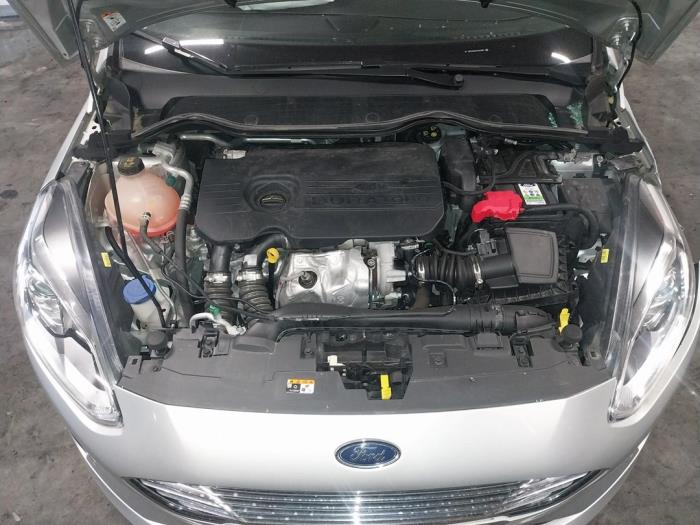
For Fiesta Mk7 1.5 TDCi (both variants):
- Required viscosity: SAE 0W-30 (mandatory for Ford specification)
- Ford specification: WSS-M2C950-A (mandatory)
- Alternative specs: ACEA C2, PSA B71 2290, PSA B71 2312
- Oil capacity: 3.85 liters with filter
- Recommended oils:
- Castrol Magnatec Stop-Start D 0W-30 (Ford WSS-M2C950-A)
- Mobil Super 3000 Formula F 0W-30 (Ford WSS-M2C950-A)
- Shell Helix Ultra Professional AJ-L 0W-30 (Ford WSS-M2C950-A)
- TotalEnergies Quartz Ineo FDE 0W-30 (Ford WSS-M2C950-A)
Critical: Ford WSS-M2C950-A specification is mandatory—not optional. This low-SAPS formulation meets both Ford’s engineering requirements and ACEA C2 DPF compatibility standards. Regular oil changes at 15,000 km or annually combined with proactive timing belt service around 75,000-80,000 km (not the full 120,000 km interval!) maximize long-term reliability across both power variants.
The 1.5 Duratorq TDCi Engine
Introduced for the Fiesta Mk7 in 2017, the 1.5 TDCi represented Ford’s partnership with PSA Group, utilizing the proven DV6 diesel platform with Ford-specific calibrations. This 1,499cc turbodiesel features aluminum block, 8-valve SOHC cylinder head, timing belt drive, and variable geometry turbocharger—delivering segment-leading fuel economy with adequate mid-range torque. Common-rail direct injection operates at high pressure, VGT turbocharger provides responsive low-RPM torque, comprehensive emissions control includes close-coupled DPF and EGR meeting Euro 6 standards.
Technical Specifications by Power Output
1.5 TDCi 85 HP (63 kW) – Base:
- Engine code: XUJL
- Production: 2017-2022 (Fiesta Mk7/Mk8)
- Power: 85 HP (63 kW) @ 3,750 RPM
- Torque: 215 Nm (159 lb-ft) @ 1,750-2,500 RPM
- 0-100 km/h: 12.5 seconds
- Top speed: 175 km/h
- Fuel economy: 3.5-3.8 L/100 km
- CO2: 87-92 g/km
- Transmission: 6-speed manual
- Rear brakes: Drum (203mm)
1.5 TDCi 120 HP (88 kW) – Performance:
- Engine code: XWJA
- Production: 2017-2022 (Fiesta Mk7/Mk8)
- Power: 120 HP (88 kW) @ 3,600 RPM
- Torque: 270 Nm (199 lb-ft) @ 1,750-2,500 RPM
- 0-100 km/h: 9.6 seconds
- Top speed: 195 km/h
- Fuel economy: 3.5 L/100 km
- CO2: 89-92 g/km
- Transmission: 6-speed manual
- Rear brakes: Solid disc (252mm)
Oil Requirements (Both Variants):
- Viscosity: SAE 0W-30 only
- Specification: Ford WSS-M2C950-A mandatory
- Capacity: 3.85 liters with filter
- Filter: Motorcraft FL-2051-S or equivalent
- ACEA rating: C2 (low-SAPS DPF compatible)
Both power variants share identical mechanical construction—the 120 HP version achieves higher output through ECU calibration providing increased turbo boost pressure (approximately 25% more torque). This means maintenance requirements and oil specification remain identical across the power range.
Understanding Power Variant Differences
The 85 HP and 120 HP versions share identical engine architecture: same 1,499cc displacement, 8-valve SOHC head, timing belt system, VGT turbocharger hardware, common-rail injection, and DPF. Power difference results entirely from ECU programming controlling turbocharger boost pressure.
Maintenance Implications: Both require identical service—same Ford WSS-M2C950-A oil, same proactive timing belt at 75,000-80,000 km, same DPF regeneration requirements, same EGR attention around 80,000-120,000 km. The 120 HP experiences slightly higher thermal stress from increased boost, making consistent 12,000-15,000 km oil intervals particularly important for turbocharger longevity. The 85 HP provides adequate performance with 3.5-3.8 L/100 km economy; the 120 HP offers stronger acceleration (9.6s vs 12.5s 0-100) with minimal economy penalty (3.5 L/100 km).
Oil Specification: Ford WSS-M2C950-A Explained
Why Ford WSS-M2C950-A is Mandatory
Ford WSS-M2C950-A represents Ford’s specific low-SAPS diesel oil specification meeting both DPF compatibility requirements and Ford’s engineering standards for the 1.5 TDCi. This specification aligns with ACEA C2 (low-SAPS), PSA B71 2290/2312 (reflecting the PSA partnership), and BMW Longlife-12 FE standards.
Critical Requirements:
0W-30 Viscosity: Significantly lighter than traditional 5W-30 diesel oils. The 0W-30 grade provides improved cold-start fluidity reducing wear during frequent urban stop-start operation, enhanced fuel economy (important for small displacement engines), optimal flow through narrow oil passages in the compact engine design, and reduced friction supporting DPF regeneration by lowering soot production.
Low-SAPS Formulation: Ultra-low Sulfated Ash, Phosphorus, and Sulfur content (≤0.8% ash) prevents ash accumulation poisoning the DPF catalyst substrate. Standard diesel oils create ash deposits permanently clogging the filter within 40,000-60,000 km, requiring £1,000-1,500 DPF replacement.
Ford-Specific Additives: WSS-M2C950-A includes additives specifically formulated for Ford diesel engines including enhanced detergency for EGR valve carbon control, timing belt tensioner hydraulic system compatibility, turbocharger bearing protection under high boost conditions, and extended drain capability supporting 15,000 km intervals when appropriate.
Consequences of Wrong Oil: Using generic 5W-30 or 5W-40 diesel oil (even VW 507 00 approved oils) lacks Ford’s specific additive package and uses incorrect viscosity. This accelerates DPF ash accumulation, increases timing belt tensioner wear, and provides inadequate protection during cold starts—key failure points in the 1.5 TDCi.
Top Oil Recommendations
Best Overall: Castrol Magnatec Stop-Start D 0W-30
Ford WSS-M2C950-A approved formulation specifically engineered for modern Ford diesel engines with DPF and stop-start systems. Magnatec’s “intelligent molecules” cling to engine components during stop-start cycles reducing wear during the thousands of engine starts typical in urban driving. Excellent low-temperature fluidity supports optimal timing belt tensioner operation. Cost: £45-60/5L. Best for urban-focused driving patterns.
Performance Choice: Mobil Super 3000 Formula F 0W-30
Advanced full synthetic meeting Ford WSS-M2C950-A with superior thermal stability for sustained motorway driving or the higher-stress 120 HP variant. Robust low-SAPS additive package protects turbo VGT vanes under increased boost while maintaining DPF compatibility. Excellent shear stability maintains 0W-30 viscosity through 15,000 km intervals. Cost: £50-65/5L.
OEM Quality: Shell Helix Ultra Professional AJ-L 0W-30
Ford WSS-M2C950-A approved oil offering OEM-level DPF protection and timing belt system compatibility. Proven formulation used in Ford service networks. Adequate thermal stability for normal driving patterns across both power variants. Cost: £48-62/5L.
Value Leader: TotalEnergies Quartz Ineo FDE 0W-30
Ford WSS-M2C950-A approved offering solid performance at competitive pricing. HC synthetic (hydro-cracked) base provides adequate protection for standard service intervals. Widely available. Cost: £40-50/5L. Best for owners maintaining 12,000-15,000 km intervals.
Oil Change Intervals
Ford Official:
- Fixed service: 15,000 km or 12 months (whichever first)
- Some markets: Up to 20,000 km with extended drain oil
Recommended Practice: 12,000-15,000 km or annually.
Why Appropriate Intervals Matter:
The 1.5 TDCi’s compact displacement and urban-focused duty cycle makes regular oil changes particularly important. Fresh 0W-30 oil maintains optimal cold-start protection critical for timing belt tensioner hydraulic operation, supports DPF regeneration through reduced soot production, protects turbocharger bearings during high boost cycles (especially 120 HP), and prevents EGR valve carbon accumulation through enhanced detergency.
For diesels used primarily for short trips under 15 km, 12,000 km intervals help compensate for fuel dilution from frequent cold starts and incomplete DPF regenerations. Vehicles used predominantly for longer motorway journeys can safely extend to 15,000 km intervals.
Practical Schedule:
- Primarily urban/short trips: 12,000 km intervals
- Mixed urban/motorway driving: 12,000-13,000 km intervals
- Predominantly motorway use: 13,000-15,000 km intervals
- Always annually regardless of mileage
Critical Timing Belt Service
Ford Official Schedule: 120,000 km or 8 years
Recommended Practice: 75,000-80,000 km proactive service
Why Earlier Service is Essential:
The 1.5 TDCi has documented premature timing belt wear issues affecting units from 75,000-100,000 km—significantly before the official 120,000 km interval. Mechanics specializing in Ford diesels report multiple cases of belt deterioration or failure around 80,000-90,000 km, prompting widespread recommendation for proactive service around 75,000-80,000 km maximum.
Ford Now Mandates: High-pressure fuel pump sprocket replacement during timing belt service. This component experiences wear and must be replaced alongside the belt, tensioners, and water pump to prevent subsequent failures.
Complete Timing Belt Service Includes:
- Timing belt (primary component)
- Timing belt tensioner
- Water pump (driven by timing belt)
- High-pressure fuel pump sprocket (mandatory per Ford)
- Auxiliary belt if showing wear
- All coolant (water pump replacement)
Cost: £400-600 at independent specialist, £600-800 at Ford dealer. This represents essential preventive maintenance—timing belt failure causes catastrophic engine damage requiring £3,000-5,000+ repairs or engine replacement.
Symptoms of Timing Belt Wear: Unusual ticking noise from timing cover, slight misfiring, check engine light (rare until actual failure). However, many belts fail without warning—proactive service around 75,000-80,000 km eliminates risk entirely.
Understanding DPF Regeneration & Common Maintenance
DPF Regeneration: The close-coupled DPF requires periodic high-temperature “regeneration” burning off soot. This occurs automatically during sustained motorway driving at 2,000+ RPM for 15-20 minutes. Weekly motorway drives (20+ km), premium diesel, and Ford WSS-M2C950-A oil support healthy operation. Urban-focused usage (under 10-15 km trips) may require professional DPF cleaning (£350-500) or replacement (£1,000-1,500) around 80,000-120,000 km without appropriate driving patterns.
EGR Valve Service: Accumulates carbon around 80,000-120,000 km. Professional cleaning (£150-300) typically resolves rough idle or reduced power; replacement (£400-700) if mechanical failure. Ford WSS-M2C950-A oil’s detergency minimizes carbon versus generic oils.
Fuel Injector Maintenance: May require attention around 120,000-150,000 km. Professional cleaning (£200-400) often resolves rough idle/black smoke; replacement (£600-1,200) if needed. Premium diesel and annual fuel filter changes maximize longevity.
Turbocharger Care: VGT turbocharger requires Ford WSS-M2C950-A oil. Issues typically stem from oil feed pipe sludge. Regular changes at appropriate intervals prevent turbo wear (£800-1,200 replacement if needed).
Early Models (2017-2018): Some units experienced hesitation during acceleration related to EGR programming. Ford released ECU updates; most affected vehicles updated. Current models (2019+) typically unaffected.
Why Correct Oil Specification Matters
Ford WSS-M2C950-A’s 0W-30 viscosity and low-SAPS formulation specifically address the 1.5 TDCi’s design requirements: optimal cold-start protection for compact engine with timing belt tensioner hydraulic system, enhanced fuel economy supporting class-leading consumption figures, reduced soot production supporting DPF longevity, and proper viscosity for narrow oil passages in PSA-derived architecture.
Generic diesel oils—even quality 5W-30 specifications—lack Ford’s specific additive package and use incorrect viscosity. This accelerates DPF ash accumulation (£1,000-1,500 replacement), increases timing belt tensioner wear (critical given premature belt issues), and provides inadequate cold-start protection. The £5-10 per oil change savings becomes a £1,500+ loss.
Maximizing Fiesta 1.5 TDCi Longevity
Essential Maintenance Strategy:
- Ford WSS-M2C950-A oil exclusively at 12,000-15,000 km intervals
- Proactive timing belt service 75,000-80,000 km (not 120,000 km!)
- Include HP fuel pump sprocket replacement with timing belt
- Weekly motorway drive supporting DPF regeneration
- Premium diesel fuel brands
- Address check engine lights promptly
- Monitor for EGR valve symptoms around 80,000-120,000 km
Choosing Between Power Variants: The 85 HP provides adequate performance for urban driving with segment-leading fuel economy (3.5-3.8 L/100 km). The 120 HP offers noticeably stronger acceleration (9.6s vs 12.5s 0-100) and improved motorway capability with minimal fuel economy penalty (3.5 L/100 km). Both share identical maintenance requirements and long-term reliability when properly serviced.
Conclusion
The Ford Fiesta Mk7 1.5 TDCi across both power variants requires Ford WSS-M2C950-A approved SAE 0W-30 oil for DPF longevity and optimal engine protection. This specification is mandatory—not optional.
Prioritize 12,000-15,000 km service intervals with quality Ford WSS-M2C950-A oil. Choose proven brands: Castrol Magnatec Stop-Start D, Mobil Super 3000 Formula F, Shell Helix Ultra Professional AJ-L, or TotalEnergies Quartz Ineo FDE.
Critical: Plan proactive timing belt service at 75,000-80,000 km maximum—not the official 120,000 km interval. Include high-pressure fuel pump sprocket replacement (now mandated by Ford) and water pump. This £400-600 preventive service eliminates catastrophic failure risk.
Combined with weekly motorway regeneration cycles, premium diesel fuel, and attention to EGR/DPF maintenance when needed, your Fiesta 1.5 TDCi delivers exceptional fuel economy (3.5-3.8 L/100 km) and reliable transportation well beyond 150,000 km. Understanding the critical timing belt service timing and maintaining consistent Ford WSS-M2C950-A oil specification maximizes longevity across both 85 HP and 120 HP variants.