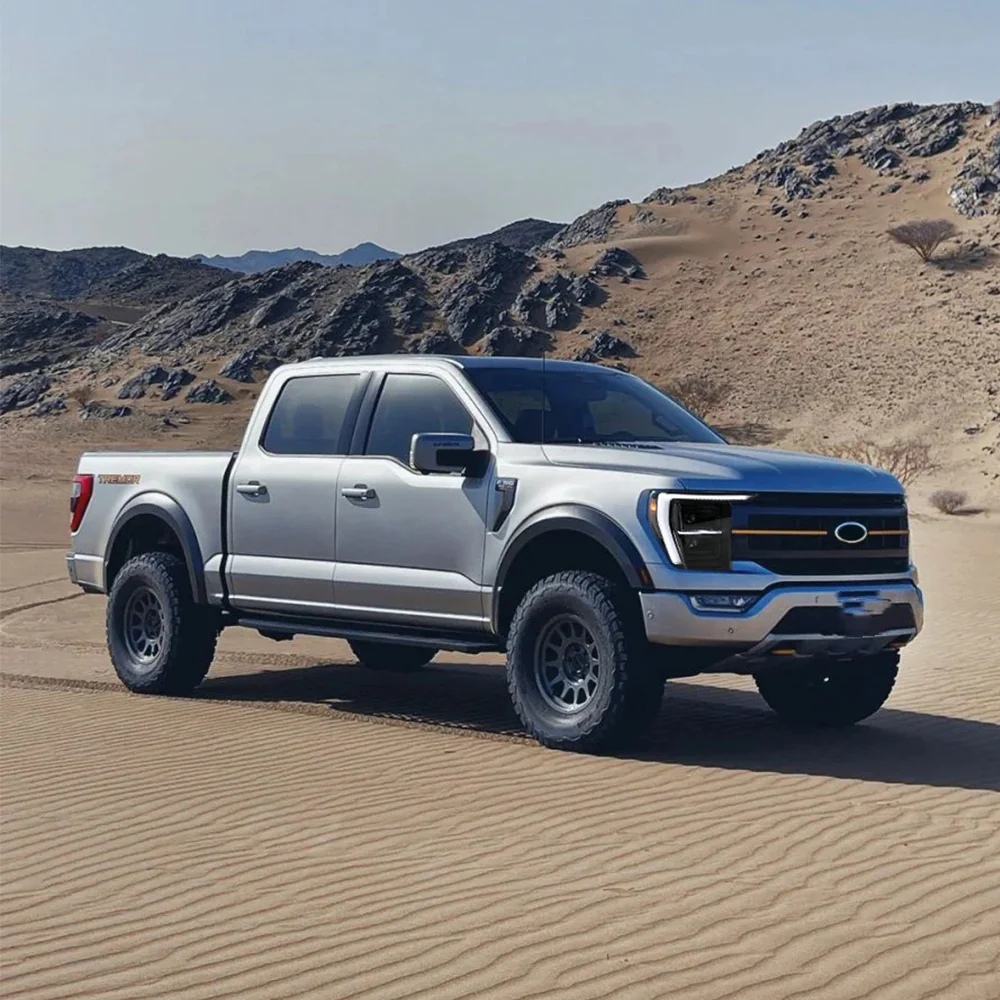
Best Engine Oil for Ford F-150 5.4L Triton: Complete Guide
The Ford 5.4L Triton V8 requires SAE 5W-20 oil meeting Ford specification WSS-M2C930-A. Oil capacity is 6.0 quarts (1997-2003 2-valve) or 7.0 quarts (2004-2010 3-valve). The best oils are Motorcraft Synthetic Blend 5W-20, Pennzoil Platinum 5W-20, or Mobil 1 5W-20. Change oil every 5,000 miles to prevent cam phaser failure (3-valve) and timing chain issues. High-mileage engines (100,000+ miles) may benefit from 5W-30 for extra protection.
If you own a 5.4L Triton, you already know this engine demands respect when it comes to maintenance. Between spark plug ejection issues (1997-2003), cam phaser failures (2004-2010), timing chain problems, and various oil leaks, choosing the right oil and maintaining proper service intervals isn’t just recommended—it’s essential to avoiding catastrophic failure and thousand-dollar repair bills.
This comprehensive guide covers the best oils for your 5.4L Triton, explains why oil selection matters so much for this engine’s known problems, and provides maintenance strategies to maximize lifespan.
Quick Answer: Official Ford Specifications
For ALL 5.4L Triton engines (1997-2010):
- Primary Viscosity: SAE 5W-20
- Ford Specification: WSS-M2C930-A
- API Rating: SN or higher (SP current)
- ILSAC Rating: GF-5 or GF-6A
Capacity:
- 2-Valve (1997-2003): 6.0 quarts with filter
- 3-Valve (2004-2010): 7.0 quarts with filter
Alternative for Extreme Cold (below -20°F):
- SAE 0W-20 meeting same specifications
CRITICAL NOTE: Ford specifies 5W-20, NOT 5W-30. However, many experienced mechanics and owners with high-mileage engines recommend 5W-30 for better protection—we’ll discuss this controversy later.
Best Engine Oils for Ford F-150 5.4L Triton
Based on Ford specifications, known engine problems, and real-world experience:
Top Tier Choices (Ford Specification 5W-20)
1. Motorcraft SAE 5W-20 Synthetic Blend
- Meets WSS-M2C930-A specification
- Ford’s official oil, guaranteed warranty protection
- Excellent price-to-performance ratio
- Approximate price: $25-30 per 5 quarts
2. Pennzoil Platinum Full Synthetic 5W-20
- Meets Ford WSS-M2C930-A
- PurePlus technology (natural gas base)
- Excellent cleanliness for carbon reduction
- Approximate price: $28-35 per 5 quarts
3. Mobil 1 5W-20 Advanced Full Synthetic
- Meets Ford specifications
- Excellent cam phaser protection
- Proven track record with Triton engines
- Approximate price: $30-40 per 5 quarts
4. Valvoline Advanced Full Synthetic 5W-20
- Meets WSS-M2C930-A
- Good thermal stability
- Widely available
- Approximate price: $25-32 per 5 quarts
5. Castrol Edge 5W-20
- Meets Ford specifications
- Fluid Titanium technology
- Good film strength
- Approximate price: $28-35 per 5 quarts
High-Mileage Options (100,000+ Miles)
6. Valvoline High Mileage 5W-20
- Seal conditioners reduce leaks
- Extra detergents for carbon control
- Approximate price: $22-28 per 5 quarts
7. Pennzoil High Mileage 5W-20
- Meets Ford specs
- Reduces oil consumption
- Approximate price: $25-30 per 5 quarts
8. Mobil 1 High Mileage 5W-20
- Superior wear protection
- Good for engines with cam phaser issues
- Approximate price: $30-38 per 5 quarts
Budget-Friendly Options
9. Motorcraft Conventional 5W-20
- Meets all Ford specifications
- Suitable for normal driving
- Change every 5,000 miles
- Approximate price: $18-25 per 5 quarts
10. Valvoline Daily Protection 5W-20
- Meets Ford specs
- Basic conventional formulation
- 5,000-mile intervals max
- Approximate price: $15-22 per 5 quarts
Understanding the 5.4L Triton Generations
Ford produced two main variants of the 5.4L Triton with significantly different characteristics:
2-Valve (2V) SOHC – 1997-2003
Applications: 1997-2003 F-150, 1997-2002 Expedition, 1998-2002 Navigator, E-Series vans
Power: 260 HP / 350 lb-ft (early), 300 HP / 365 lb-ft (later)
Oil Specification: SAE 5W-20 (WSS-M2C930-A)
Oil Capacity: 6.0 quarts with filter
Key Characteristics:
- Single overhead cam per bank (2 valves per cylinder)
- Simple, non-VVT design
- CRITICAL PROBLEM: Spark plug ejection (threads strip from aluminum heads)
- More reliable overall than 3-valve version
- Timing chains generally last 150,000+ miles
3-Valve (3V) SOHC – 2004-2010
Applications: 2004-2010 F-150/F-Super Duty, 2005-2014 Expedition/Navigator, 2005-2014 E-Series
Power: 300 HP / 365 lb-ft
Oil Specification: SAE 5W-20 (WSS-M2C930-A)
Oil Capacity: 7.0 quarts with filter (NOTE: 1 quart more than 2V!)
Key Improvements:
- Three valves per cylinder for better breathing
- Variable Valve Timing (VVT) via cam phasers
- Better performance and fuel economy
New Problems:
- CRITICAL PROBLEM: Cam phaser failure causing startup rattle
- Spark plugs break off during removal (2004-2008)
- Timing chain tensioner failures
- Higher oil consumption
Identifying Your 5.4L Triton Version
VIN Method (8th digit):
- “L” = 2-valve engine
- “5” or “N” = 3-valve engine
Visual Method:
- 2V: Simpler valve covers, no VCT solenoids visible
- 3V: VCT solenoids mounted on front of valve covers
Oil Capacity Method:
- Holds 6 quarts = 2-valve
- Holds 7 quarts = 3-valve
Common Problems with the 5.4L Triton Engine
Understanding these problems explains why oil selection and maintenance matter so much:
1. Spark Plug Ejection (2-Valve: 1997-2003)
The Problem: Perhaps the most infamous issue with the 5.4L Triton—spark plugs literally blow out of the cylinder head while driving. Ford designed the aluminum cylinder heads with only 4 threads holding each spark plug instead of the typical 8-12 threads. These shallow, weak aluminum threads strip under combustion pressure, allowing the spark plug to eject violently from the engine.
Symptoms: Sudden loss of power, loud popping/hissing noise, rough idle, check engine light, visible damage to coil boot
Frequency: Extremely common on 1997-2003 2-valve engines, affects approximately 20-30% of these engines during their lifetime
Cost:
- Thread repair kit: $500-900 per cylinder
- New cylinder heads: $3,000-5,000+ if heads are damaged beyond repair
- Emergency roadside repair if it happens while driving: $150-300 tow
Why Oil Doesn’t Help: This is a design flaw unrelated to lubrication. However, checking spark plug torque regularly can help prevent ejection.
Prevention:
- Check spark plug torque every 30,000 miles (10-12 lb-ft, never over-tighten!)
- Never let anyone over-torque spark plugs during replacement
- Some owners preventatively install thread inserts (Time-Sert, Helicoil)
2. Broken Spark Plugs (3-Valve: 2004-2008)
The Problem: Ford “fixed” the ejection issue in 2004 by extending the spark plug design—but created a new nightmare. The 2-piece spark plug has a long extended tip that sits deep in the cylinder head. Carbon deposits build up in the gap between the plug and head, essentially welding the plug in place. When removed, the plugs break, leaving the lower portion stuck in the head.
Symptoms: Plug breaks during routine maintenance, requires special extraction tools, adds hours to simple tune-up
Cost:
- Normal extraction: $50-150 per broken plug (shop labor)
- Difficult extraction: $200-400 per cylinder
- Complete tune-up on 3V if all 8 plugs break: $800-1,500
Why Oil Matters: High-quality oil with good detergent packages reduces carbon buildup, making plug removal easier.
Prevention:
- Replace spark plugs every 60,000-80,000 miles (don’t wait for 100K)
- Use anti-seize compound on threads during installation
- Apply penetrating oil 24 hours before removal
- Heat engine to operating temp before removal (thermal expansion helps)
3. Cam Phaser Failure (3-Valve: 2004-2010)
The Problem: The 3-valve’s Variable Valve Timing system uses cam phasers to adjust valve timing. The internal locking pin and spring fail, causing the phaser to rattle loudly—especially at cold startup. This occurs because oil pressure hasn’t built up yet to suppress the movement. Some phasers eventually fail completely, causing poor performance and check engine codes.
Symptoms:
- Loud rattling/knocking at cold startup (disappears when warm)
- Sound like “marbles in a can” or “diesel engine”
- Codes P0011, P0021 (cam timing over-advanced)
- Rough idle, hesitation, power loss (if severe)
Frequency: Very common on 2004-2010 3-valve engines with 80,000+ miles, especially with extended oil change intervals
Cost:
- Replace cam phasers (parts + labor): $1,500-2,500
- Full timing chain service w/ phasers: $2,500-4,000
- Cam phaser lockout kit (eliminates VVT): $500-800
Why Oil CRITICALLY Matters: Cam phasers operate entirely on oil pressure. Using correct viscosity (5W-20), changing oil frequently (every 5,000 miles max), and using quality synthetic dramatically extends phaser life.
Prevention:
- 5,000-mile oil changes religiously (NEVER extend past 7,500)
- Use full synthetic 5W-20
- Some owners successfully use 5W-30 after 100K miles for extra protection
- Check oil level weekly (low oil accelerates phaser wear)
4. Timing Chain Stretch & Tensioner Failure (Primarily 3-Valve)
The Problem: The 3-valve uses phenolic (plastic-composite) timing chain tensioners that warp, fail, and blow out their gaskets. This causes oil pressure loss to the top end and allows timing chains to slap, stretch, and eventually fail. The weakened oil pump compounds the problem by providing marginal oil pressure to begin with.
Symptoms: Rattling from timing cover, check engine codes, rough running, timing chain “whine,” oil leaks from timing cover
Cost: $2,000-3,500 for complete timing service (chains, guides, tensioners, oil pump)
Why Oil Matters: Fresh oil maintains hydraulic pressure in tensioners. Degraded oil allows tensioners to collapse and chains to slap.
Prevention:
- Replace timing chains + tensioners + oil pump at 150,000 miles preventatively
- Use upgraded cast iron tensioners (Cloyes) instead of plastic Ford parts
- 5,000-mile oil changes with quality synthetic
5. Oil Consumption (High Mileage)
Many 5.4L Tritons consume oil at rates of 1 quart per 1,000-2,000 miles after 150,000+ miles. Worn piston rings and valve stem seals are typical culprits.
Why This Matters: Running just 1 quart low significantly reduces protection for cam phasers, timing components, and bearings.
Solution: Check oil level weekly on engines over 100,000 miles. Carry a quart in the truck.
6. Oil Leaks
Common leak points:
- Oil pan gasket: Especially on early models
- Valve cover gaskets: Warps over time
- Front timing cover: RTV sealant fails
- Oil pressure sending unit: Common, cheap fix
- Rear main seal: Expensive repair
Cost: $200-800 depending on location
The 5W-20 vs. 5W-30 Debate
This is controversial in the 5.4L Triton community:
Ford’s Position: 5W-20 ONLY
- Official specification since introduction
- Designed for fuel economy (CAFE standards)
- Required for warranty protection
Experienced Mechanics/Owners Argue for 5W-30:
- Thicker oil provides better protection for worn engines
- Reduces cam phaser noise on high-mileage engines
- Better film strength at operating temperature
- May reduce oil consumption
- Many report running 5W-30 for 100,000+ miles without issues
Our Recommendation:
- Under 100,000 miles or under warranty: Use 5W-20 as specified
- 100,000+ miles, out of warranty: Consider 5W-30 if experiencing:
- Cam phaser noise
- Oil consumption (over 1qt/2,000 miles)
- Low oil pressure warnings
IMPORTANT: Using 5W-30 instead of 5W-20 may:
- Reduce fuel economy by 1-2%
- Void warranty claims if under warranty
- Reduce cold-start protection slightly
Test with one oil change of 5W-30 and monitor results before committing.
Recommended Oil Change Intervals
Ford’s Official Recommendation:
- Normal service: 7,500 miles or 6 months
- Severe service: 5,000 miles or 6 months
Our Recommendations Based on Real-World Experience:
Ideal Interval: 5,000 miles or 6 months
This interval is critical because:
- Prevents cam phaser wear (3V engines)
- Maintains timing chain tensioner pressure
- Removes carbon-forming contaminants
- Protects against timing chain stretch
- Cost: ~$150/year extra vs. 10K intervals = cheap insurance vs. $3,000+ repairs
Severe Duty: 3,000-4,000 miles
Required if you:
- Tow trailers regularly
- Haul heavy loads frequently
- Drive in dusty/dirty conditions
- Take mostly short trips (under 10 miles)
- Idle extensively
- Drive in extreme temperatures
- Have 3V engine with cam phaser noise
- Engine has over 150,000 miles
Extended Intervals (NOT Recommended):
Some synthetics claim 10,000-15,000-mile capability. DO NOT use these intervals on the 5.4L Triton due to its sensitivity to oil degradation affecting cam phasers and timing components.
Synthetic vs. Conventional Oil
For the 5.4L Triton, full synthetic is strongly recommended:
Why Synthetic is Better:
- Cam Phaser Protection (3V): Flows better at startup, maintaining oil pressure to phasers faster
- Temperature Resistance: Handles extreme operating temps better
- Carbon Control: Superior detergents reduce spark plug carbon buildup
- Longer Service Life: Maintains properties better (though still change at 5K)
- Cold Weather: Flows better at startup, protecting timing components
Motorcraft vs. Aftermarket:
Ford’s Motorcraft 5W-20 is a synthetic blend, not full synthetic. It meets all specifications and works well, but full synthetic from Pennzoil, Mobil 1, or Valvoline provides extra protection margin.
Cost Comparison:
- Conventional: $20-25/change → $80-100/year (4 changes)
- Synthetic: $30-40/change → $120-160/year (4 changes)
- Extra cost: $40-60/year to prevent $2,000-4,000 repairs
Special Considerations for High-Mileage 5.4L Tritons
If your Triton has exceeded 150,000 miles:
1. Stick with correct viscosity
- 5W-20 or 5W-30 (if recommended by mechanic)
- Do NOT use 10W-30 or thicker (too thick for cam phasers)
2. Use high-mileage formulations
- Seal conditioners reduce leaks
- Extra detergents combat carbon
3. Shorten intervals
- 4,000-5,000 miles maximum
- Never exceed 6,000 miles
4. Monitor oil level weekly
- Check every Sunday morning (cold engine)
- Top off when down 1/2 quart
- Investigate if consuming over 1qt/2,000 miles
5. Watch for leaks
- Oil pan, valve covers, timing cover
- Fix leaks promptly to maintain proper level
6. Consider oil analysis
- Send samples to Blackstone Labs ($30)
- Every 2-3 changes
- Monitor wear metals (iron, aluminum, copper)
- Catches problems before catastrophic failure
7. Plan for timing service
- Budget $2,500-3,500 for chains/phasers/pump
- Do preventatively at 150,000-180,000 miles
- Don’t wait for failure
Frequently Asked Questions
Can I use 5W-30 instead of 5W-20?
Ford specifies 5W-20. Use it if under warranty or under 100,000 miles. Over 100K miles, many mechanics recommend 5W-30 for better protection and reduced cam phaser noise.
Why does my 3-valve rattle at startup?
Cam phaser failure. Change oil every 5,000 miles maximum. If severe, replace phasers ($1,500-2,500) or install lockout kit ($500-800).
My 2-valve just blew a spark plug out. What do I do?
Thread repair with Time-Sert or HeliCoil insert ($500-900). Do NOT let dealer replace heads ($3,000+) unless absolutely necessary.
How often should I really change oil?
Every 5,000 miles, especially on 3-valve engines. Never exceed 7,500 miles.
What if I’ve been using 10W-30?
Switch to 5W-20 or 5W-30 immediately. Heavier oil can starve cam phasers of pressure.
Should I use synthetic?
Yes. The extra $20-30/year prevents thousands in repairs.
How do I prevent spark plugs from breaking (3-valve)?
Replace every 60,000-80,000 miles, apply penetrating oil 24 hours before removal, heat engine to operating temp before removal.
Will high-mileage oil fix oil consumption?
It may reduce consumption slightly via seal conditioners, but won’t fix worn rings. Monitor level weekly.
Can I mix synthetic and conventional?
Yes, they’re compatible. But use full synthetic consistently for best protection.
What’s the best oil for cam phaser noise?
Full synthetic 5W-20, changed every 5,000 miles. If noise persists, consider 5W-30 (over 100K miles only).
Conclusion: Protecting Your 5.4L Triton Investment
The Ford 5.4L Triton V8 is a powerful, capable engine that can easily exceed 200,000 miles—IF you respect its maintenance needs and known weaknesses. This isn’t a forgiving engine that tolerates neglect; it demands attention, particularly regarding oil service.
The non-negotiable rules:
- Use 5W-20 oil (or 5W-30 if high-mileage and recommended)
- Change oil every 5,000 miles regardless of official recommendations
- Use full synthetic oil for maximum protection
- Check oil level weekly on engines over 100,000 miles
- Address problems immediately—don’t ignore cam phaser noise or leaks
- Plan preventative timing service at 150,000-180,000 miles (3V especially)
The payoff:
Following these guidelines, your 5.4L Triton can deliver:
- 200,000-300,000+ miles with proper care
- Reliable towing and hauling capability
- V8 power for work and recreation
The total additional cost vs. absolute minimum maintenance is approximately $100-200 per year. When compared to the $1,500-4,000 cost of cam phaser or timing chain failure, this preventive maintenance is the best investment you can make.
Choose the right oil, change it on schedule, and your 5.4L Triton—despite its known problems—will reward you with many years of reliable service.