Best Engine Oil for Ford F-150 (14th Gen)
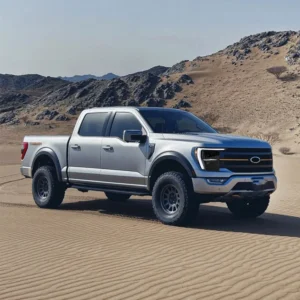
The 14th generation Ford F-150 P702 (2021-present) represents Ford’s most technologically advanced pickup truck to date, featuring completely redesigned powertrains including a revolutionary hybrid system and an exclusive supercharged V8 for the Raptor R. This generation marks a significant shift in oil specifications, with most engines transitioning to SAE 5W-30 viscosity for enhanced protection and performance. Selecting the correct engine oil for your specific motorization is essential for maintaining warranty coverage, optimizing fuel economy, and ensuring long-term reliability across all driving conditions.
Understanding the 14th Generation Engine Lineup
The 14th gen F-150 offers an unprecedented range of six distinct powertrains, from the fuel-efficient 3.3L naturally aspirated V6 to the monstrous 5.2L supercharged V8 producing 700 horsepower. This generation introduced the PowerBoost hybrid system, combining a 3.5L EcoBoost with electric motors for 430 total system horsepower and exceptional towing capacity. All engines pair with Ford’s advanced 10-speed automatic transmission, which requires precise oil specifications to maintain optimal shifting performance and component protection.
Why Oil Quality Matters More Than Ever
Modern turbocharged and hybrid engines operate under extreme thermal and mechanical stress that demands superior lubrication. The 14th generation F-150 engines feature direct injection, dual overhead camshafts, and twin-scroll turbochargers that generate combustion chamber temperatures exceeding 2,000°F and boost pressures up to 18 psi. Using substandard oil or incorrect viscosity can lead to catastrophic failures including turbocharger bearing damage, timing chain wear, and low-speed pre-ignition (LSPI) events that literally destroy pistons in milliseconds.
Ford’s switch to predominantly 5W-30 viscosity for the 14th generation reflects the increased protection demands of these advanced powertrains. The higher viscosity maintains a thicker oil film at elevated temperatures while still providing excellent cold-start protection through the “5W” rating. This change affects even the naturally aspirated 5.0L V8, which previously used 5W-20 in the 13th generation but now requires 5W-30 for optimal protection.
Oil Specifications by Engine Type
3.3L Ti-VCT V6 Engine
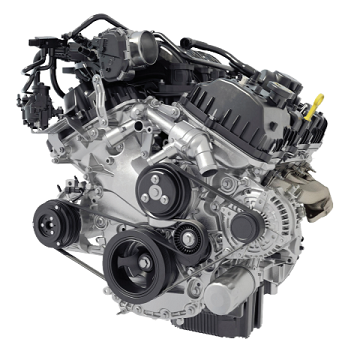
Technical Specifications:
- Oil viscosity: SAE 5W-20
- Oil capacity: 6.0 quarts (5.7L) with filter
- Required specification: WSS-M2C960-A1
- Cold climate option: SAE 0W-20 (WSS-M2C962-A1) for temperatures below -22°F
- API rating: SP
- ILSAC rating: GF-6A
- Horsepower: 290 HP @ 6,500 RPM
- Torque: 265 lb-ft @ 4,000 RPM
- Fuel type: Regular unleaded
- Recommended oil filter: Motorcraft FL-500S
Recommended oil: Motorcraft SAE 5W-20 Premium Synthetic Blend (see on Amazon)
2.7L EcoBoost V6 Engine
Technical Specifications:
- Oil viscosity: SAE 5W-30
- Oil capacity: 6.0 quarts (5.7L) with filter
- Required specification: WSS-M2C961-A1
- Cold climate option: SAE 0W-30 (WSS-M2C963-A1) for temperatures below -22°F
- API rating: SP
- ILSAC rating: GF-6A
- Horsepower: 325 HP @ 5,000 RPM
- Torque: 400 lb-ft @ 3,000 RPM
- Fuel type: Regular unleaded
- Turbocharger: Twin-scroll design
- Recommended oil filter: Motorcraft FL-2062
Recommended oil: Pennzoil Platinum Full Synthetic 5W-30 (see on Amazon)
3.5L EcoBoost V6 Engine
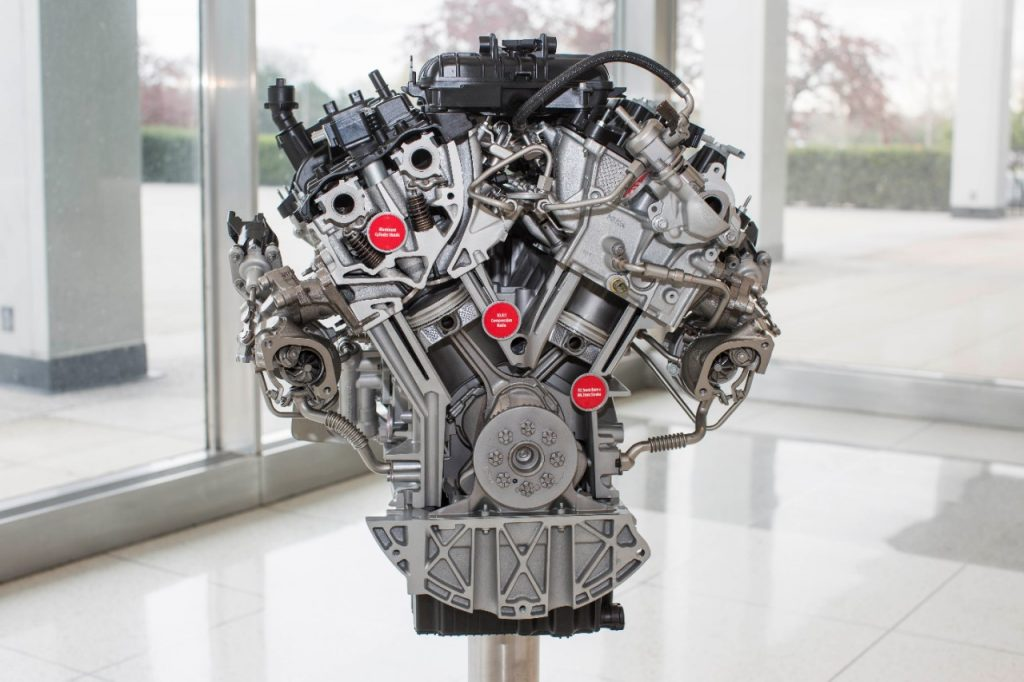
Technical Specifications:
- Oil viscosity: SAE 5W-30
- Oil capacity: 6.0 quarts (5.7L) with filter
- Required specification: WSS-M2C946-B1
- Cold climate option: SAE 0W-30 (WSS-M2C963-A1) for temperatures below -22°F
- API rating: SP
- ILSAC rating: GF-6A
- Horsepower: 400 HP @ 6,000 RPM
- Torque: 500 lb-ft @ 2,500 RPM
- Fuel type: Regular unleaded
- Turbocharger: Twin independent turbos
- Recommended oil filter: Motorcraft FL-2062
Recommended oil: Valvoline Advanced Full Synthetic 5W-30 (see on Amazon)
3.5L PowerBoost Hybrid V6 Engine
Technical Specifications:
- Oil viscosity: SAE 5W-30
- Oil capacity: 6.0 quarts (5.7L) with filter
- Required specification: WSS-M2C961-A1
- Cold climate option: SAE 0W-30 (WSS-M2C963-A1)
- API rating: SP
- ILSAC rating: GF-6A
- Total system horsepower: 430 HP
- Total system torque: 570 lb-ft
- Fuel type: Regular unleaded
- Hybrid system: 35 kW (47 HP) electric motor integrated into 10-speed transmission
- Coolant capacity: 14.5L high-temp loop, 6.8L low-temp loop
Recommended Oil: Castrol EDGE 5W-30 Advanced Full Synthetic (see on Amazon)
High-Output 3.5L EcoBoost V6 Engine
Technical Specifications:
- Oil viscosity: SAE 5W-30
- Oil capacity: 6.0 quarts (5.7L) with filter
- Required specification: WSS-M2C946-B1
- API rating: SP
- ILSAC rating: GF-6A
- Horsepower: 450 HP
- Torque: 510 lb-ft
- Fuel type: Premium unleaded recommended
- Turbocharger: High-flow twin turbos with larger compressors
- Application: Ford Raptor (2021-2022), Tremor, Limited
Recommended oil: Mobil 1 Advanced Full Synthetic 5W-30 (see on Amazon)
5.0L Ti-VCT V8 Engine
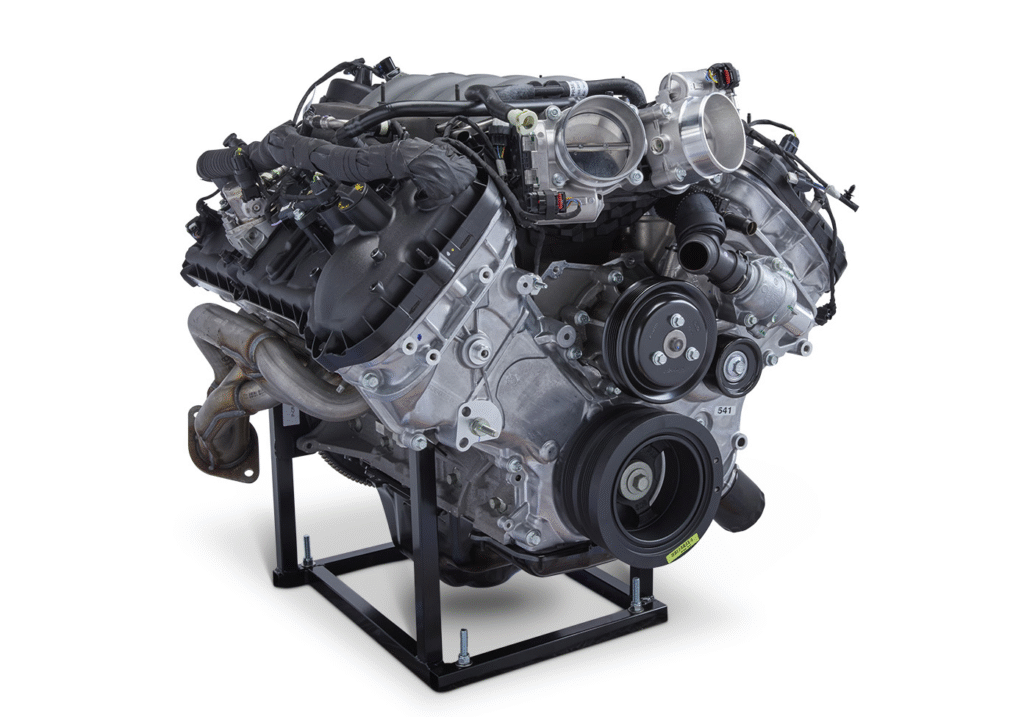
Technical Specifications:
- Oil viscosity: SAE 5W-30 (changed from 5W-20 in 13th gen)
- Oil capacity: 8.8 quarts (8.3L) with filter
- Required specification: WSS-M2C961-A1
- Cold climate option: SAE 0W-30 (WSS-M2C963-A1)
- API rating: SP
- ILSAC rating: GF-6A
- Horsepower: 400 HP @ 6,000 RPM
- Torque: 410 lb-ft @ 4,250 RPM
- Fuel type: Regular unleaded or E85 capable
- Recommended oil filter: Motorcraft FL-2062
Recommended oil: Pennzoil Platinum Full Synthetic 5W-30 (see on Amazon)
3.0L Power Stroke Diesel V6
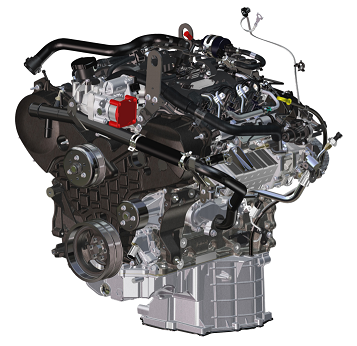
Technical Specifications:
- Oil viscosity: SAE 5W-30 (diesel-specific formulation)
- Oil capacity: 6.5 quarts (6.1L) with filter
- Required specification: WSS-M2C214-B1
- Severe duty option: SAE 5W-40 or 0W-40 (WSS-M2C171-F1)
- API rating: FA-4 or CK-4
- Horsepower: 250 HP
- Torque: 440 lb-ft
- Fuel type: Ultra-low sulfur diesel
- Turbocharger: Single variable-geometry turbo
- Maximum towing: 12,100 lbs
Recommended oil: Valvoline Advanced Full Synthetic 5W-30 (see on Amazon)
5.2L Supercharged V8 Engine (Raptor R)
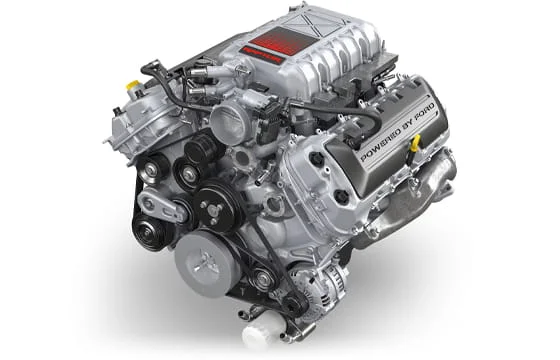
Technical Specifications:
- Oil viscosity: SAE 5W-50 (full synthetic required)
- Oil capacity: 11.5 quarts (10.88L) with filter
- Required specification: WSS-M2C931-E1
- Cold climate option: SAE 0W-40 (WSS-M2C937-A) for extreme conditions
- API rating: SP
- ILSAC rating: Not applicable (performance formulation)
- Horsepower: 700 HP
- Torque: 640 lb-ft
- Fuel type: Premium unleaded required
- Supercharger: Eaton 2.7L roots-type with air-to-liquid intercooler
- Application: Ford F-150 Raptor R (2023-present)
Recommended oil: Motorcraft SAE 5W-50 Full Synthetic (see on Amazon)
The Significance of Viscosity Changes in the 14th Generation
Ford’s decision to upgrade most engines from 5W-20 to 5W-30 viscosity reflects lessons learned from the 13th generation’s high-performance turbocharged powertrains. The thicker 5W-30 oil provides superior shear stability under the intense pressures generated by direct injection and turbocharging, maintaining proper oil film thickness even after thousands of miles. This change particularly benefits the 5.0L V8, which previously experienced occasional oil consumption issues with 5W-20 formulations under aggressive driving or towing scenarios.
The “5W” winter rating remains unchanged, ensuring both viscosities flow identically during cold starts when most engine wear occurs. The difference emerges at operating temperature, where 5W-30 maintains a Grade 30 thickness compared to 5W-20’s Grade 20 specification. This translates to approximately 15-20% thicker oil film at 212°F, providing enhanced protection for camshafts, valve trains, and piston rings.
Synthetic Blend vs. Full Synthetic: Making the Right Choice
Ford specifies synthetic blend formulations for most 14th gen F-150 engines, combining conventional base oils with synthetic components and advanced additive packages. Motorcraft’s synthetic blend meets all warranty requirements while delivering superior protection compared to conventional oils at a more accessible price point than full synthetics.
However, upgrading to full synthetic oil offers measurable benefits for demanding applications. Laboratory testing demonstrates that full synthetic formulations maintain 95% of their protective properties at 10,000 miles compared to synthetic blend’s 85% retention. For trucks regularly used for towing, hauling maximum payloads, or operating in extreme temperatures, premium full synthetics from Pennzoil Platinum, Mobil 1, Valvoline Advanced, or Castrol Edge provide enhanced thermal stability and extended protection.
The economic analysis favors full synthetic for high-mileage drivers who can extend oil change intervals safely. While full synthetic costs approximately 40-60% more per quart, extended drain intervals of 10,000 miles versus 7,500 for synthetic blend can reduce annual oil change frequency from three to two services, offsetting the higher per-change cost.
Oil Change Intervals and Service Recommendations
The 14th generation F-150 features Ford’s Intelligent Oil-Life Monitoring System that analyzes engine revolutions, temperatures, load conditions, and operating time to calculate optimal change intervals. Under normal driving conditions, this system typically recommends changes between 7,500 and 10,000 miles.
Early adopters should perform the first oil change at 1,000 miles to remove metallic particles from initial engine break-in, then follow the monitoring system thereafter. This critical first service removes microscopic metal shavings from piston rings, bearings, and valve train components that would otherwise circulate through the engine.
Severe service conditions require more frequent intervals regardless of monitoring system recommendations. These conditions include:
- Frequent trailer towing or hauling near maximum payload capacity
- Regular operation in dusty or sandy environments
- Extensive idling (police, service, or commercial use)
- Repeated short trips under 10 miles in freezing temperatures
- Regular driving in stop-and-go traffic during hot weather
For severe service, reduce intervals to 5,000-6,000 miles even when using premium full synthetic oils. The extreme conditions accelerate oil oxidation, increase soot loading (especially in diesels), and promote moisture contamination that degrades protective additives.
Critical Specifications and Certifications
When selecting aftermarket oils for your 14th gen F-150, verify these essential certifications appear on the container:
For Gasoline Engines:
- API SP: Current highest standard for gasoline engine protection, superseding SN Plus
- ILSAC GF-6A: Ensures fuel economy retention, LSPI protection, and chain wear prevention
- Ford WSS specifications: Match your specific engine (WSS-M2C960-A1 for 5W-20, WSS-M2C961-A1 or WSS-M2C946-B1 for 5W-30)
- Resource Conserving: Indicates enhanced fuel economy properties
For Diesel Engines:
- API FA-4 or CK-4: Diesel-specific ratings for modern emissions systems
- Ford WSS-M2C214-B1: Required specification for 3.0L Power Stroke
For Raptor R:
- API SP: Performance-grade certification
- Ford WSS-M2C931-E1: Exclusive high-performance specification for 5W-50 viscosity
Missing any required Ford WSS specification could void warranty coverage, even if the oil meets API and ILSAC standards. Ford’s proprietary specifications include additional testing for specific engine characteristics not covered by generic industry certifications.
Special Considerations for Hybrid PowerBoost Engines
The PowerBoost hybrid system presents unique lubrication challenges due to frequent engine start-stop cycles and transitions between gasoline and electric power. During electric-only operation, the gasoline engine remains stationary while oil slowly drains from upper components back to the sump.
When the engine restarts, proper oil viscosity becomes critical for rapid circulation to prevent dry-start wear. The specified 5W-30 synthetic blend provides optimal balance between cold-flow properties and high-temperature protection for this hybrid architecture. Despite the 6-quart capacity being identical to non-hybrid EcoBoost engines, the PowerBoost’s additional cooling requirements necessitate a more robust coolant system with separate high and low temperature loops totaling 21.3 liters.
Owners report the hybrid system’s frequent cycling creates more demanding conditions than conventional engines, making premium full synthetic oils particularly beneficial for extending component life. Castrol Edge 5W-30 and Pennzoil Ultra Platinum 5W-30 both meet the WSS-M2C961-A1 specification while providing enhanced protection against the unique stresses of hybrid operation.
The Raptor R’s Unique Lubrication Demands
The supercharged 5.2L V8 exclusive to the Raptor R requires 5W-50 full synthetic oil, the heaviest viscosity ever specified for a production F-150. This ultra-thick formulation addresses the extreme thermal loads generated by the Eaton supercharger, which compresses intake air and generates significant heat before it even enters the combustion chamber.
The massive 11.5-quart capacity (nearly 3 quarts more than the 5.0L V8) ensures adequate oil volume to absorb heat and maintain film strength across the extended oil passages feeding the supercharger’s bearings. The WSS-M2C931-E1 specification requires oils that resist viscosity breakdown under sustained high-RPM operation and repeated thermal cycling from track use or desert running.
For extreme cold climates below -4°F, Ford approves switching to 0W-40 full synthetic meeting WSS-M2C937-A specification, providing easier cold starts while maintaining adequate protection at operating temperature. However, the 5W-50 formulation remains preferred for all but the coldest environments due to its superior high-temperature characteristics.
Maximizing Engine Life Through Proper Oil Selection
Selecting the correct oil specification represents one of the most cost-effective investments in long-term engine reliability. Research demonstrates that proper oil maintenance can extend engine life by 30% and reduce wear-related failures by 45% compared to vehicles serviced with incorrect or low-quality lubricants.
For 14th generation F-150 owners, this translates to following Ford’s exact viscosity and specification requirements while considering upgrades to premium full synthetic formulations for demanding use cases. The additional $20-30 per oil change for top-tier synthetics pales in comparison to the $8,000-15,000 cost of premature engine replacement or turbocharger failure.
Always purchase oils displaying the required Ford WSS specification on the bottle, verify API and ILSAC certifications match your engine type, and maintain meticulous service records to protect warranty coverage. When in doubt, Motorcraft-branded lubricants provide guaranteed compatibility and peace of mind, though premium aftermarket oils meeting identical specifications offer comparable protection at competitive prices.