Best Engine Oil for Renault Twingo I (1993-2007): Complete Guide for All Engine Types
Introduction: Choosing the Right Engine Oil for Your Renault Twingo I
The Renault Twingo I, produced from 1993 to 2007, represents one of the most charming and practical city cars ever created. With its distinctive rear-engine layout, spacious interior achieved through clever packaging, and cheerful design, the original Twingo became an icon of European urban motoring. Whether you own an early model with the modest C3G engine or a later version with the improved D7F powerplant, maintaining this quirky French classic requires careful attention to one fundamental aspect: using the correct engine oil for your specific engine variant.
The Twingo I’s simplicity represents both its greatest strength and a challenge for modern owners. These engines were designed during an era when service intervals were shorter and oil quality standards less stringent than today. However, the basic robustness of Renault’s small-capacity engines means that with proper maintenance using quality modern oils, your Twingo I can deliver reliable service well beyond its original design life. Many examples have exceeded 200,000 kilometers with nothing more than routine maintenance and timely repairs of wear items.
This comprehensive guide provides detailed recommendations for every Renault Twingo I engine variant sold between 1993 and 2007. All recommendations balance original Renault specifications with modern oil quality standards, ensuring your classic Twingo receives adequate protection while accounting for improvements in oil technology since these engines were designed. We’ll explore not only which oils to use but also explain common issues specific to each engine variant and provide preventive maintenance strategies that help your Twingo I continue delivering economical, reliable transportation.
Understanding engine oil selection for these older Renault engines requires recognizing that they were designed for conventional mineral oils meeting simpler specifications than today’s sophisticated synthetic formulations. However, modern oils meeting or exceeding the RN0700 specification Renault used during this era provide superior protection, better cold-start performance, and extended service intervals compared to the conventional oils originally specified. The challenge lies in selecting viscosity grades appropriate for these engines’ larger bearing clearances while accounting for modern driving conditions and oil quality improvements.
Understanding Renault RN0700 Oil Specification
Renault’s RN0700 specification represented their standard for gasoline engine oils during the Twingo I’s production era. This specification ensured oils provided adequate protection for the relatively simple overhead valve and overhead cam designs Renault employed in their small-displacement engines. While less stringent than modern API or ACEA standards, RN0700 established minimum requirements for viscosity stability, anti-wear protection, oxidation resistance, and detergency necessary for these engines.
For Twingo I owners today, using oils that meet or exceed RN0700 while also complying with modern standards like API SN or ACEA A3/B4 provides the best of both worlds: compatibility with the engine’s original design parameters combined with the superior protection and longevity of contemporary synthetic formulations. The key consideration involves selecting appropriate viscosity grades that account for these engines’ design tolerances while providing adequate protection under modern driving conditions that often involve sustained highway speeds rarely experienced when these vehicles were new.
The viscosity recommendations for Twingo I engines reflect the era’s preferences for thicker oils: 10W-40 for the C3G and 5W-40 for the D7F. These grades provide adequate film strength for bearing surfaces designed with larger clearances than modern engines while offering reasonable cold-start protection. Modern synthetic oils meeting these viscosity specifications provide significantly better protection than the conventional mineral oils originally used, making them excellent choices for preserving these aging engines.
Complete Oil Recommendation Table
See details
Engine | Type | Power | Renault Standard | Viscosity | Capacity | Service Interval | Sensitive Points |
|---|---|---|---|---|---|---|---|
C3G 1.2L | Gasoline | 55 hp | RN0700 | 10W-40 | 3.5 L | 10,000 km/1 year | Timing belt |
D7F 1.2L | Gasoline | 58-60 hp | RN0700 | 5W-40 | 4.0 L | 10,000 km/1 year | Cylinder head gasket |
F8Q 1.2L | Diesel | 40 hp | RN0700 | 15W-40 | 4.5 L | 10,000 km/1 year | Fuel injectors |
Best Engine Oil for Renault Twingo I Gasoline Engines
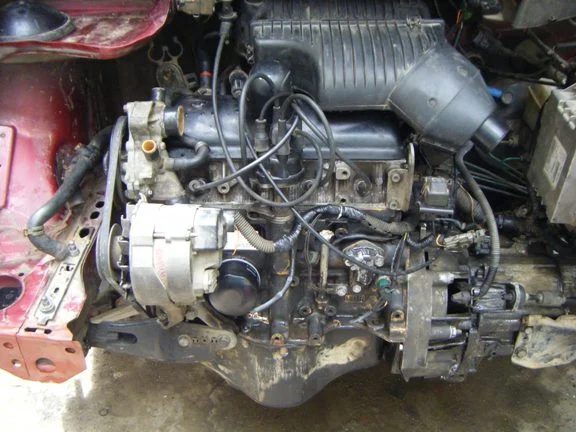
1.2L C3G 55 hp Engine: The Original Powerplant
Technical Specifications:
- Oil capacity: 3.5 liters (with filter replacement)
- Oil filter type: Spin-on cartridge
- Recommended oil: Total Quartz 7000 10W-40 (view on Amazon)
- Oil standard: RN0700 or API SN
- Timing system: Belt-driven (requires periodic replacement)
- Service interval: 10,000 km or 1 year (whichever comes first)
- Valve configuration: Overhead valve (OHV) pushrod design
The C3G engine represents Renault’s traditional approach to small-displacement powerplants, employing a simple overhead valve design with pushrods actuating the valves. Producing 55 horsepower and approximately 93 Nm of torque, this modest four-cylinder engine prioritizes simplicity and low manufacturing costs over outright performance. The basic design contributes to generally excellent reliability when properly maintained, though the timing belt system and somewhat dated pushrod valve train require attention to specific maintenance items.
Total Quartz 7000 10W-40 provides optimal protection for the C3G engine, meeting Renault’s RN0700 specification while offering the enhanced protection of modern semi-synthetic formulation. The 10W-40 viscosity grade provides adequate film strength for the engine’s larger bearing clearances characteristic of this older design while offering reasonable cold-start protection in most climates. The oil’s robust detergent package helps prevent sludge formation and deposit accumulation, particularly important in engines that may experience extended oil change intervals or less-than-ideal operating conditions.
The timing belt represents the C3G engine’s most critical maintenance item and greatest vulnerability. Unlike timing chains designed to last the engine’s lifetime, timing belts are consumable items manufactured from reinforced rubber that gradually deteriorates regardless of mileage due to heat cycling, ozone exposure, and constant flexing. Renault originally recommended timing belt replacement every 80,000 kilometers, though many experts suggest reducing this interval to 60,000-70,000 kilometers for added security, particularly on vehicles with unknown service history.
Timing belt failure causes immediate catastrophic engine damage in interference engines like the C3G, where pistons and valves occupy the same space during different portions of the four-stroke cycle. When the belt breaks or jumps timing, valves that should be closed remain open, allowing pistons to strike them as they reach top dead center. This contact instantly bends or breaks valves, damages pistons, and often destroys the cylinder head, resulting in repair costs that typically exceed the vehicle’s value. Prevention through timely belt replacement represents the only defense against this expensive failure mode.
When replacing the timing belt on the C3G engine, always replace associated components including the tensioner pulley, idler pulleys, and water pump simultaneously. These components wear at similar rates to the belt itself, and their failure can damage a new belt or cause premature failure. The additional cost of replacing these components during the same service represents excellent value compared to performing the labor-intensive timing belt service multiple times when individual components fail separately.
The pushrod valve train design, while simple and robust, requires proper oil quality to prevent excessive wear on cam followers (lifters) and pushrod tips. These components operate with sliding rather than rolling contact, making them particularly sensitive to oil quality and viscosity. Using oils meeting modern API SN standards ensures adequate anti-wear additives protect these components throughout the service interval. Monitor for unusual ticking or tapping noises from the valve train area that might indicate developing wear or inadequate lubrication.
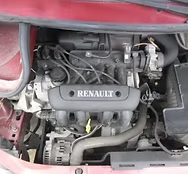
1.2L D7F 58-60 hp Engine: The Improved Overhead Cam Design
Technical Specifications:
- Oil capacity: 4.0 liters (with filter replacement)
- Oil filter location: Accessible from underneath, passenger side
- Recommended oil: Elf Evolution 900 SXR 5W-40 (view on Amazon)
- Oil standard: RN0700 or API SN
- Timing system: Belt-driven (requires periodic replacement)
- Service interval: 10,000 km or 1 year (whichever comes first)
- Valve configuration: Single overhead camshaft (SOHC) with 8 valves
The D7F engine represents a significant evolution from the C3G, employing a more modern single overhead camshaft design that improves efficiency and reduces mechanical complexity compared to the pushrod configuration. Producing 58-60 horsepower depending on specific variant and model year, this four-cylinder engine delivers slightly stronger performance while maintaining excellent fuel economy and generally good reliability. The overhead cam design provides better breathing characteristics and higher rev potential compared to the older overhead valve layout.
Elf Evolution 900 SXR 5W-40 provides excellent protection for the D7F engine, meeting Renault specifications while offering enhanced protection through modern semi-synthetic formulation. The 5W-40 viscosity grade provides superior cold-start protection compared to the C3G’s 10W-40, important for overhead cam engines where oil must be pumped to the cylinder head immediately upon starting. At operating temperature, the oil maintains adequate film strength for protecting bearings and other wear surfaces while the advanced additive package prevents deposit formation on critical components.
The cylinder head gasket represents the D7F engine’s primary vulnerability, with failures becoming increasingly common as vehicles accumulate high mileage or experience overheating events. The gasket seals the junction between the aluminum cylinder head and cast iron engine block, containing combustion pressures while preventing coolant and oil from mixing. Gasket failure typically results from thermal stress caused by overheating, gradual degradation from age and heat cycling, or improper installation during previous repairs.
Early warning signs of cylinder head gasket failure include white smoke from the exhaust indicating coolant burning in combustion chambers, oil contamination with coolant creating a milky appearance on the dipstick or under the oil filler cap, unexplained coolant loss without visible external leaks, overheating issues particularly under load, and rough running or misfires from coolant entering cylinders. If you notice any of these symptoms, have your Twingo inspected immediately by a qualified technician, as continued operation with a failing head gasket can cause severe engine damage including warped cylinder heads that require expensive machining or replacement.
Preventing head gasket failures requires vigilant cooling system maintenance and immediate attention to any overheating symptoms. Maintain proper coolant levels and concentration, replace coolant at recommended intervals (typically every two years), ensure the cooling fan operates properly, and investigate any overheating symptoms immediately rather than continuing to drive. The modest cost of cooling system maintenance represents excellent insurance against expensive head gasket repairs that can easily exceed one thousand dollars when accounting for parts, labor, and potential cylinder head machining.
The timing belt system on the D7F requires the same attention as the C3G, with replacement recommended every 60,000-80,000 kilometers depending on driving conditions and service history. The same principles apply: replace the belt before it fails, and always replace tensioners, idler pulleys, and the water pump simultaneously to prevent premature failure of the new belt. Listen for unusual squealing noises from the timing belt area and watch for visible belt wear, cracking, or oil contamination during routine inspections.
Oil consumption represents another consideration for D7F engines, particularly in vehicles with higher mileage or those subjected to frequent high-speed operation. While modest oil consumption of up to 0.5 liters per 1,000 kilometers falls within Renault’s acceptable specifications, monitoring consumption patterns helps identify developing issues before they become serious problems. Check oil levels at least every two weeks and always before long journeys, maintaining levels between the minimum and maximum marks. Excessive consumption may indicate worn piston rings, degraded valve stem seals, or other issues warranting professional diagnosis.
Best Engine Oil for Renault Twingo I Diesel Engine
1.2L F8Q 40 hp Diesel: The Economical Alternative
Technical Specifications:
- Oil capacity: 4.5 liters (with filter replacement)
- Oil filter type: Spin-on cartridge
- Recommended oil: Total Quartz Diesel 7000 15W-40 (view on Amazon)
- Oil standard: RN0700 or API CF
- Fuel injection: Indirect injection (IDI)
- Service interval: 10,000 km or 1 year (whichever comes first)
- Turbocharger: Not equipped
The F8Q diesel engine offered Twingo I buyers exceptional fuel economy, regularly achieving figures exceeding 60 miles per gallon in combined driving. This naturally aspirated indirect-injection diesel produces modest power of just 40 horsepower but delivers approximately 85 Nm of torque that makes the Twingo feel adequately responsive despite the low power output. The simple indirect injection design prioritizes reliability and low maintenance costs over performance, making it an excellent choice for budget-conscious drivers prioritizing economy over speed.
Total Quartz Diesel 7000 15W-40 provides appropriate protection for the F8Q diesel, meeting Renault specifications while offering the enhanced protection of modern diesel oil formulations. The thicker 15W-40 viscosity grade suits the engine’s design tolerances and the higher operating pressures characteristic of diesel engines. The oil’s robust additive package provides superior dispersancy to manage soot contamination levels that accumulate in diesel engine oil, keeping contaminants suspended rather than allowing deposit formation on critical engine surfaces.
The indirect injection system employed by the F8Q proves relatively simple and reliable compared to modern common-rail direct injection designs. Fuel is sprayed into pre-combustion chambers where initial combustion occurs before the burning mixture enters the main combustion chamber. This two-stage combustion process reduces noise and vibration compared to direct injection but sacrifices some efficiency and power output. The simpler design means fewer high-pressure components to fail, though the fuel injectors still require periodic attention to maintain optimal spray patterns.
Fuel injector maintenance becomes particularly important for F8Q longevity and optimal performance. The injectors operate at modest pressures compared to modern diesels but can still accumulate deposits that affect spray patterns and combustion efficiency. Symptoms of injector problems include difficult starting particularly when cold, rough idling, excessive smoke during acceleration, reduced performance, and increased fuel consumption. Professional injector cleaning or testing every 100,000 kilometers helps maintain optimal combustion while preventing progressive performance degradation.
The F8Q diesel’s naturally aspirated design eliminates turbocharger maintenance concerns, but the engine remains sensitive to fuel quality issues that can affect injection system components. Always use quality diesel fuel from reputable suppliers with good fuel turnover, avoiding discount stations or remote locations where fuel may sit in underground tanks for extended periods accumulating water contamination or undergoing biological growth. Replace fuel filters at recommended intervals (typically every 20,000 kilometers) to prevent contaminants from reaching injection system components.
Glow plug maintenance represents another diesel-specific consideration that affects cold-start performance and combustion quality. The F8Q uses glow plugs to preheat combustion chambers before starting, essential for reliable starting in cold weather and reducing white smoke during warm-up. Failed glow plugs cause difficult starting particularly in cold weather, excessive white smoke during warm-up, rough running until the engine reaches operating temperature, and potentially misfires on the affected cylinder. Replace glow plugs at the first sign of starting difficulties or rough running when cold to maintain optimal cold-start performance.
Complete Oil Change Procedure for Twingo I
Performing oil changes on the Renault Twingo I requires some specific considerations due to the rear-engine layout and compact engine bay.
Required Tools and Materials:
- 21mm socket or wrench for drain plug
- Oil filter wrench for spin-on cartridge
- New oil filter meeting Renault specifications
- New drain plug crush washer (copper or aluminum)
- Appropriate quantity and specification of engine oil
- Oil drain pan with 5-liter capacity
- Funnel for oil filling
- Clean rags and protective gloves
- Jack and jack stands for safe vehicle support
Procedure:
Begin by warming the engine to operating temperature through a 10-minute drive or extended idle period. The Twingo I’s rear-engine layout means you’ll be working at the back of the vehicle rather than the front. Position the vehicle on level ground, engage the parking brake, then safely raise and support the rear end using appropriate jack stands placed under the chassis rails. Never work under a vehicle supported only by a hydraulic jack.
Access to the engine bay requires opening the large rear hatch and removing the engine cover panels. Locate the oil drain plug on the bottom of the oil pan. Due to the Twingo’s compact engine bay, you may need to access the drain plug from underneath the vehicle rather than from above. Place your drain pan beneath the plug, then carefully loosen using a 21mm socket or wrench. Be prepared for hot oil to flow immediately upon plug removal.
Allow oil to drain completely for 10-15 minutes. While draining, locate the oil filter mounted on the engine block (typically on the passenger side). Use an oil filter wrench to loosen the spin-on cartridge by turning counterclockwise. Be cautious as the filter contains residual oil that will spill when removed. Clean the filter mounting surface thoroughly with a clean rag, removing any old gasket material or debris.
Lightly lubricate the new oil filter’s rubber gasket with fresh oil to ensure proper sealing and facilitate future removal. Hand-tighten the new filter until the gasket contacts the mounting surface, then rotate an additional three-quarters turn. Never use tools to tighten spin-on filters, as over-tightening damages the gasket and can cause leaks or make future removal difficult.
Clean the drain plug thoroughly and inspect its threads for damage. Install a new crush washer on the drain plug, then reinsert it into the oil pan and tighten firmly by hand followed by a final snug with the wrench. Avoid over-tightening which can strip the aluminum oil pan threads.
Lower the vehicle and locate the oil filler cap on the valve cover. Remove the cap, insert your funnel, and begin adding oil gradually. For the C3G engine, add approximately 3.0 liters initially. For the D7F, start with 3.5 liters. For the F8Q diesel, begin with 4.0 liters. Allow several minutes for oil to drain into the pan, then check the level using the dipstick and add remaining oil in small increments until reaching the maximum mark.
Start the engine and allow it to idle for one minute while monitoring the oil pressure warning light, which should extinguish within a few seconds as pressure builds. Check underneath for any signs of leaks from the drain plug or filter. If everything appears normal, shut off the engine and wait five minutes for oil to drain back to the pan, then perform a final level check and adjust if necessary.
Seasonal Considerations and Driving Patterns
The Renault Twingo I’s engine oil requirements remain relatively consistent across seasons, though certain considerations apply for extreme climates and different driving patterns.
In regions experiencing severe winter temperatures regularly below -20°C, the 5W-40 grade specified for the D7F provides superior cold-start protection compared to the C3G’s 10W-40. The lower “5W” winter rating ensures adequate fluidity for rapid oil circulation during cold starts. For the C3G engine in very cold climates, consider switching to 5W-40 during winter months to improve cold-start protection and reduce wear during warm-up.
For vehicles operated in very hot climates with ambient temperatures regularly exceeding 35°C and frequent sustained high-speed driving, maintaining the recommended viscosity grades becomes particularly important. The thicker high-temperature viscosity (the “40” in 5W-40 or 10W-40) provides adequate film strength at elevated operating temperatures characteristic of sustained highway driving in hot weather.
Driving patterns significantly impact oil change interval requirements. While Renault specified 10,000-kilometer intervals, many experts recommend reducing this to 7,500 or even 5,000 kilometers for vehicles experiencing severe service conditions including frequent short trips under 10 kilometers where the engine never reaches full operating temperature, extensive idling, dusty environments, or operation in extreme temperatures. These conditions accelerate oil degradation and contamination, making more frequent changes advisable for optimal engine protection.
Common Problems and Preventive Maintenance
Understanding characteristic issues for each Twingo I engine variant allows owners to implement preventive maintenance that avoids costly repairs.
C3G Timing Belt Wear: The timing belt requires replacement every 60,000-80,000 km regardless of apparent condition. Listen for unusual squealing noises, watch for visible belt wear or cracking, and consider replacing early if you purchase a used vehicle with unknown service history. Replace tensioners, idler pulleys, and water pump simultaneously.
D7F Cylinder Head Gasket Issues: Head gasket failure becomes increasingly common with age and mileage. Maintain cooling system properly, replace coolant every two years, ensure cooling fan operates correctly, and investigate any overheating symptoms immediately. Watch for warning signs including white exhaust smoke, oil contamination with coolant, or unexplained coolant loss.
F8Q Fuel Injector Problems: Indirect injection diesel injectors can accumulate deposits affecting spray patterns. Use quality diesel fuel from reputable suppliers, replace fuel filters at recommended intervals, and consider professional injector cleaning every 100,000 km. Address starting difficulties or rough running promptly.
General Maintenance: All Twingo I engines benefit from regular oil changes using quality oils meeting appropriate specifications, timely replacement of air and fuel filters, proper cooling system maintenance, and immediate attention to any unusual noises or performance changes that might indicate developing problems.
Conclusion: Preserving Your Renault Twingo I Classic
Selecting and using the correct engine oil represents one of the most important maintenance decisions you’ll make as a Renault Twingo I owner. Whether you own a simple C3G-powered model, the improved D7F variant, or the economical F8Q diesel, following these recommendations ensures your classic Twingo receives adequate protection using modern oil formulations superior to those available when these vehicles were new.
By using oils meeting Renault RN0700 specifications or modern equivalents like API SN for gasoline engines or API CF for diesels, maintaining appropriate service intervals adjusted for your driving conditions, monitoring oil levels between changes, and addressing engine-specific maintenance concerns like timing belts and head gaskets proactively, you can expect your Twingo I to continue delivering economical, reliable transportation well into the future.
The modest cost of quality engine oil and regular maintenance represents excellent value for preserving these charming French classics that continue to provide practical, economical transportation while serving as reminders of an era when small cars prioritized cleverness and efficiency over complexity. Your commitment to proper maintenance ensures your Twingo I continues delivering the cheerful, economical motoring experience that made it an icon of European city car design.
Sources: Renault Twingo I Owner’s Manual and Service Documentation, Total Quartz Product Specifications 2023, Elf Evolution Product Data Sheets 2023, Renault Classic Vehicle Technical Information
Disclaimer: This guide provides general recommendations based on manufacturer specifications and industry best practices. Always consult your vehicle’s owner’s manual and consider professional advice for specific concerns about your individual vehicle. These engines were designed using older specifications, and recommendations balance original design parameters with modern oil quality improvements.