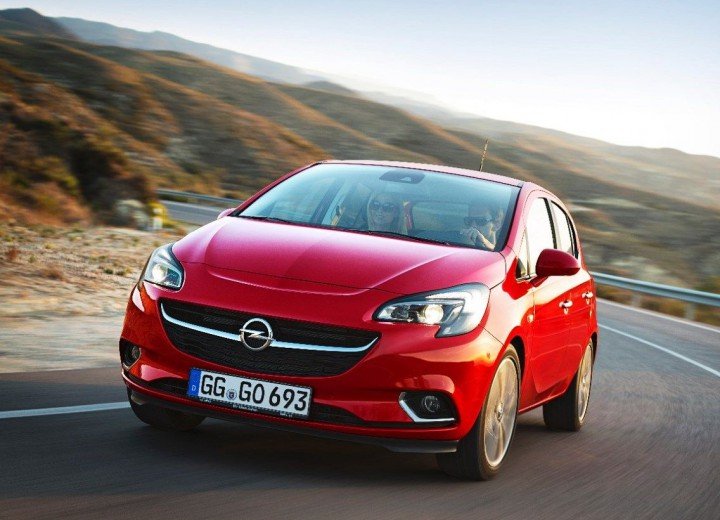
Best Engine Oil for Opel/Vauxhall Corsa E 1.0 Turbo 90/115 HP
The Opel/Vauxhall Corsa E with the 1.0 Turbo ECOTEC engine (2015-2019) delivers impressive fuel economy (4.3-5.0 L/100 km) and adequate performance (10.3-11.9s 0-100 km/h) from a compact three-cylinder turbocharged 999cc engine. Available in 90 HP and 115 HP outputs sharing identical 170 Nm torque, this aluminum-block engine faces documented timing chain guide premature wear requiring vigilant maintenance to prevent catastrophic failure. Understanding correct GM dexos1 Gen 2 oil specification, implementing shortened intervals (7,500-10,000 km vs official 15,000 km), recognizing warning signs (cold-start rattle, timing chain noise), and appreciating critical importance of consistent oil quality enables owners to maximize reliable operation while mitigating known timing chain vulnerabilities through conservative maintenance.
Quick Answer: Recommended Oil
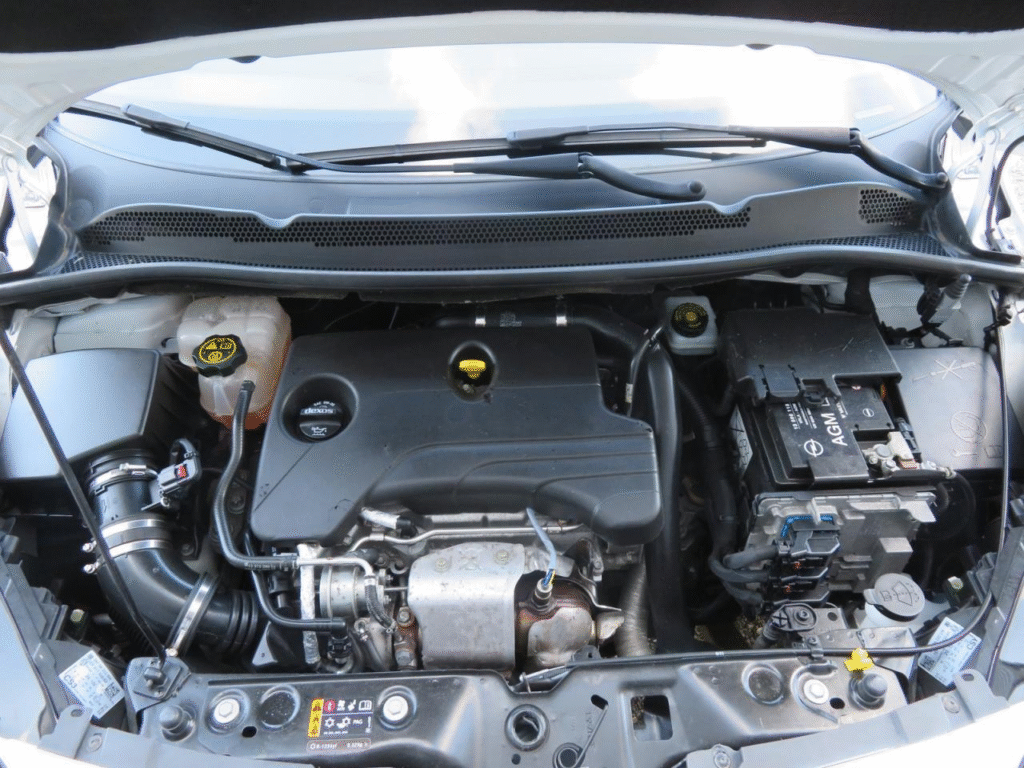
For Corsa E 1.0 Turbo (both variants):
- Viscosity: SAE 5W-30 (primary specification)
- GM specification: dexos1 Gen 2 (mandatory for timing chain protection)
- ACEA: C2 or C3 (low-SAPS for GPF compatibility)
- Capacity: 3.75 liters with filter
- Recommended oils:
- Opel GM Genuine 5W-30 dexos1 Gen 2 (OEM specification)
- Mobil 1 ESP 5W-30 (Excellent chain protection)
- Castrol Edge 5W-30 C3 (dexos1 approved)
- Shell Helix Ultra ECT C2/C3 5W-30 (Value quality)
Critical Timing Chain Warning: The 1.0 Turbo ECOTEC experiences documented timing chain guide premature wear leading to catastrophic chain failure—sometimes under 60,000 km. Conservative oil intervals (7,500-10,000 km) using quality dexos1 Gen 2 specification oil proves essential. Listen for cold-start rattle or timing chain noise when warm—if present, professional inspection mandatory. Timing chain replacement costs £600-1,000+ including guides, tensioner, and labor. Prevention through proper oil maintenance substantially more affordable than emergency chain replacement.
Technical Specifications by Power Output
1.0 Turbo 90 HP (66 kW) – Code B10XFT:
Power 90 HP @ 3,750 RPM, torque 170 Nm @ 1,800-4,500 RPM, 0-100 km/h 11.9s, 180 km/h top speed, 4.3-5.4 L/100 km combined. 5-speed manual or 6-speed automatic. Weight 1,088-1,124 kg. Entry-level efficiency, adequate urban/motorway operation.
1.0 Turbo 115 HP (85 kW) – Code B10XFT:
Power 115 HP @ 4,500 RPM, torque 170 Nm @ 1,800-4,500 RPM (identical to 90 HP!), 0-100 km/h 10.3s, 195 km/h top speed, 5.0-6.1 L/100 km combined. 6-speed manual. Weight 1,099-1,124 kg. Enhanced performance, same torque as 90 HP variant.
Oil Requirements (Both Variants):
Viscosity SAE 5W-30, GM dexos1 Gen 2 mandatory, capacity 3.75L with filter, ACEA C2/C3, recommended intervals 7,500-10,000 km (shortened from GM official 15,000 km protecting timing chain).
Both variants share identical B10XFT engine architecture—999cc aluminum block with iron liners, aluminum DOHC head, direct injection, turbocharger with wastegate, timing chain drive. Power difference achieved through ECU mapping and turbocharger calibration alone—importantly, both share identical 170 Nm torque curve.
Oil Specification: GM dexos1 Gen 2
GM dexos1 Gen 2 represents General Motors’ advanced gasoline oil specification emphasizing timing chain protection, low-SAPS GPF compatibility, and turbocharger bearing protection.
Timing Chain Protection Critical: The 1.0 Turbo’s documented timing chain guide premature wear stems from inadequate lubrication. Quality dexos1 Gen 2 oil at shortened intervals (7,500-10,000 km) maintains proper chain lubrication preventing premature wear leading to catastrophic failure.
ACEA C2/C3 Rating: Low-SAPS formulation protecting GPF while providing adequate wear protection for turbocharger bearings and chain system.
5W-30 Viscosity: Excellent cold-start protection (critical for timing chain tensioner), adequate high-temperature protection for turbocharged operation, fuel economy contribution.
Small Capacity Challenge (3.75L): Limited capacity provides reduced thermal margin and contaminant dilution versus larger engines. Small capacity combined with high specific output (115 HP from 999cc) and turbocharging justifies shortened service intervals.
Timing Chain Guide Failure: The Critical Issue
Documented Problem: The 1.0 Turbo ECOTEC experiences premature timing chain guide wear leading to catastrophic chain failure—multiple cases documented under 60,000 km.
Warning Signs:
- Cold-start rattle lasting more than 2-3 seconds
- Timing chain noise when engine warm
- Check engine light with timing codes
- Rough idle or misfires
- Any unusual noise from front of engine
Consequences: Chain failure causes bent valves, piston/head damage. Repair costs £2,000-4,000+ including engine rebuild or replacement.
Prevention:
- Shortened oil intervals: 7,500-10,000 km maximum
- Quality dexos1 Gen 2 oil exclusively
- Monitor for warning signs regularly
- Professional inspection for any concerning noise
- Consider preventive replacement if 50,000+ km with unknown history (£600-1,000)
Top Oil Recommendations
Best for Chain Protection: Mobil 1 ESP 5W-30
dexos1 Gen 2 approved with exceptional thermal stability. Superior film strength protecting timing chain under high loads. Excellent turbocharger bearing protection. Premium choice justifying cost for critical chain protection. Cost: £50-65/5L.
OEM Specification: Opel GM Genuine 5W-30 dexos1 Gen 2
Factory-specified oil meeting exact GM requirements. Proven protection for timing chain and turbocharger systems. Available through Opel/Vauxhall dealers. Guarantees specification compliance. Cost: £45-60/5L.
Proven Quality: Castrol Edge 5W-30 C3
dexos1 Gen 2 approved offering robust protection for timing chain. Widely available, reasonable pricing for 3.75L capacity. Adequate for 7,500-10,000 km intervals. Cost: £40-55/5L.
Value Quality: Shell Helix Ultra ECT C2/C3 5W-30
dexos1 approved providing adequate protection at mid-range pricing. Suitable for conservative service intervals. Ensure dexos1 approval on container. Cost: £38-48/5L.
Oil Change Intervals & Service Schedule
GM Official: 15,000 km or 12 months (flexible service regime)
Recommended Practice: 7,500-10,000 km or annually
Why Shortened Intervals Critical? GM’s official intervals prove excessive for this small-displacement turbocharged three-cylinder with documented timing chain issues. The 3.75L capacity provides limited oil volume for contaminant dilution. High specific output (115 HP/liter) creates elevated thermal stresses. Timing chain guide lubrication proves critical—extended intervals contribute to premature wear documented in multiple failure cases.
Interval Guidelines:
- Primarily urban driving with short trips: 7,500 km
- Mixed urban/motorway: 8,000-10,000 km
- Predominantly motorway: 10,000 km maximum
- Any vehicle with 40,000+ km: 7,500-8,000 km (increased chain wear risk)
- Always annually regardless of mileage
Additional Maintenance & Variant Comparison
Essential Maintenance: Spark plugs 30,000-40,000 km, air filter 15,000-20,000 km, turbocharger proper warm-up/cool-down (30-60 seconds), DPF management (weekly motorway 20+ km for GPF-equipped models), coolant system maintenance.
90 HP (170 Nm): Best fuel economy (4.3-5.4 L/100 km), available 5-speed manual or 6-speed automatic, adequate urban/motorway operation, entry-level pricing. Suitable solo/couple use.
115 HP (170 Nm): Enhanced performance (10.3s vs 11.9s 0-100 km/h) despite identical torque, 6-speed manual only, moderate economy penalty (5.0-6.1 L/100 km). More responsive acceleration—useful for overtaking and loaded operation. Worth premium for engaging driving.
Maintenance: Both require identical service—same shortened oil intervals (7,500-10,000 km), same timing chain vulnerability, same preventive maintenance requirements.
Maximizing Corsa E 1.0 Turbo Longevity
Essential Maintenance:
- dexos1 Gen 2 oil at 7,500-10,000 km (critical for timing chain)
- Monitor for cold-start rattle or timing chain noise
- Professional inspection any concerning sounds
- Spark plugs 30,000-40,000 km
- Air filter 15,000-20,000 km
- Turbocharger proper warm-up/cool-down
- Quality fuel exclusively
Timing Chain Best Practices:
- Never extend oil changes beyond 10,000 km
- Use only dexos1 Gen 2 approved oil
- Listen for warning signs at every cold start
- Professional evaluation for any timing noise
- Consider proactive chain replacement 60,000-80,000 km if service history unknown
Reality of Small Turbo Three-Cylinder: The 1.0 Turbo ECOTEC delivers impressive efficiency (4.3-6.1 L/100 km) and adequate performance from minimal displacement. However, timing chain guide premature wear represents documented vulnerability requiring conservative maintenance. Shortened oil intervals, quality dexos1 Gen 2 oil exclusively, and vigilant monitoring for warning signs enable reliable operation. Owners accepting these maintenance requirements achieve 100,000-150,000+ km service life—those neglecting oil quality or extending intervals risk catastrophic chain failure substantially below expected lifetime.
Conclusion
The Opel/Vauxhall Corsa E 1.0 Turbo (90/115 HP) requires GM dexos1 Gen 2 approved SAE 5W-30 oil with 3.75-liter capacity at shortened 7,500-10,000 km intervals for timing chain protection and turbocharger longevity.
Choose proven oils: Mobil 1 ESP (best chain protection), Opel GM Genuine (OEM specification), Castrol Edge (proven quality), Shell Helix Ultra ECT (value quality). Verify dexos1 Gen 2 approval.
Timing Chain Reality: Documented premature chain guide wear necessitates conservative maintenance. Shortened oil intervals (7,500-10,000 km vs 15,000 km official), quality dexos1 Gen 2 oil exclusively, vigilant monitoring for cold-start rattle or timing noise, and professional evaluation for any concerning sounds prove essential. Preventive chain replacement costs £600-1,000—substantially less than catastrophic failure requiring engine rebuild (£2,000-4,000+). The small-displacement turbocharged three-cylinder delivers impressive efficiency when maintained conservatively—neglected maintenance or extended oil intervals substantially increase catastrophic chain failure risk documented in multiple cases across mileage ranges.